Israeli Military Instructed to Accelerate Demolition of More Bridges, Lebanese Homes in 'Frontline Villages'

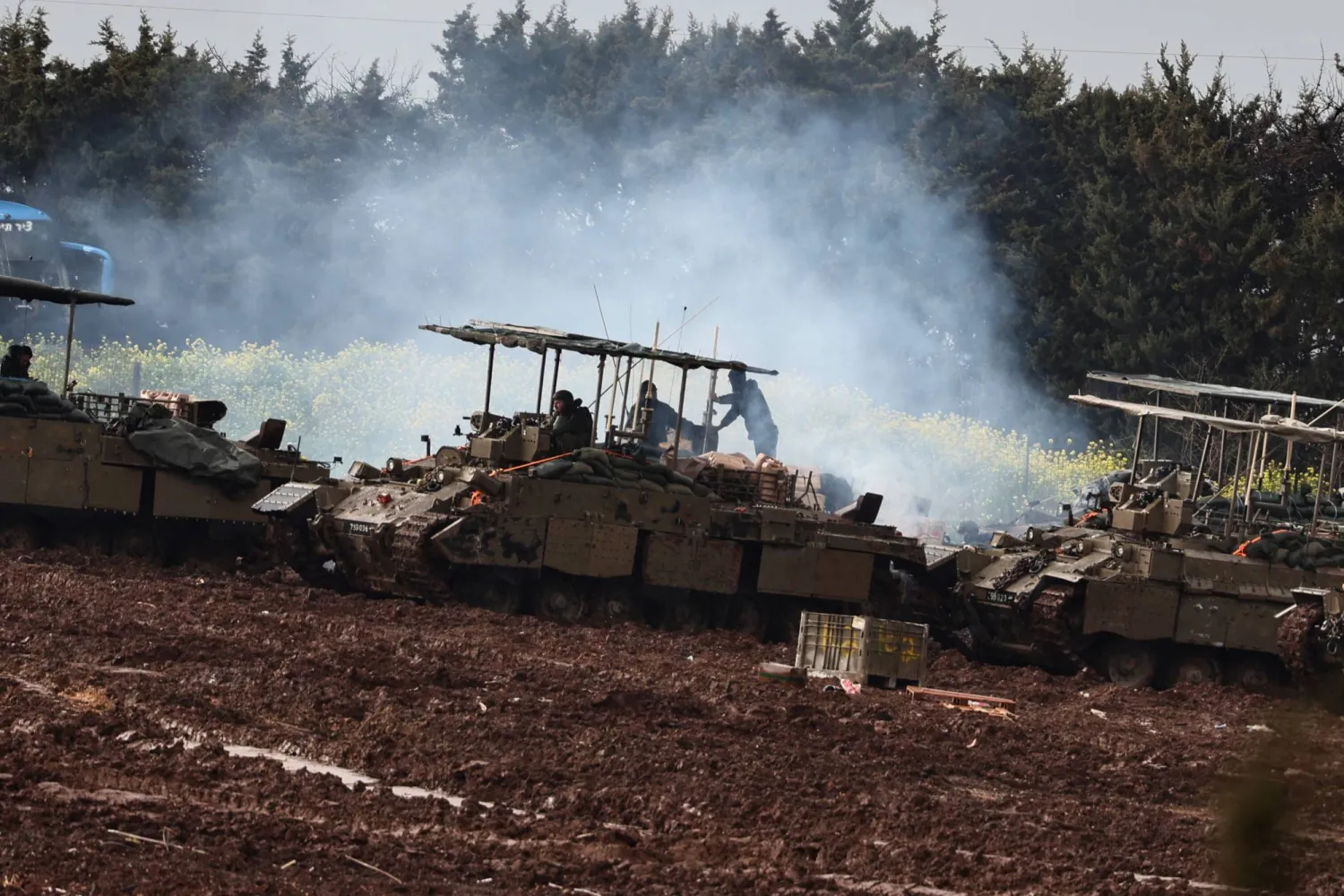
Israeli tanks are deployed along the northern Israeli border with Lebanon, 21 March 2026. EPA/ATEF SAFADI
TT

Israeli Military Instructed to Accelerate Demolition of More Bridges, Lebanese Homes in 'Frontline Villages'

Israeli tanks are deployed along the northern Israeli border with Lebanon, 21 March 2026. EPA/ATEF SAFADI

Israel's Defense Minister Israel Katz said on Sunday that he and the Prime Minister had instructed ‌the ⁠military to accelerate ⁠the demolition of Lebanese homes in frontline villages to ⁠end threats to ‌Israeli ‌communities.

"Prime Minister Benjamin Netanyahu and I instructed the IDF to immediately destroy all the bridges over the Litani River that are used for terrorist activity, in order to prevent Hezbollah terrorists and weapons from moving south," Katz said in a statement.

He said the military was also instructed to "accelerate the demolition of Lebanese houses in the contact villages in order to thwart threats to Israeli communities."

Earlier,  Israel said rocket fire from Lebanon killed one person as Hezbollah said it attacked soldiers in northern Israel, the first fatality there in fire from Lebanon since the latest war erupted.


Hamas Moves to Freeze Leadership Vote amid Regional Turmoil

Palestinians wave Hamas flags during the reception of released Palestinian prisoners in Ramallah, in the occupied West Bank, November 2023 (AFP) 
TT

Hamas Moves to Freeze Leadership Vote amid Regional Turmoil

Palestinians wave Hamas flags during the reception of released Palestinian prisoners in Ramallah, in the occupied West Bank, November 2023 (AFP) 

Hamas is moving toward freezing its leadership election process as the US-Israeli war against Iran reshapes the region’s political and security landscape, senior sources in and outside Gaza said.

The Palestinian militant group had been preparing to elect a new head of its political bureau, but multiple sources told Asharq Al-Awsat that a “near-final” decision has emerged to suspend the vote due to mounting complications.

For about 18 months, Hamas has been run by a “leadership council.” In recent weeks, efforts intensified to appoint a new leader to serve the remainder of the current political bureau’s term, extended to 2026. Broader internal elections had been expected later this year or early next year.

Four well-informed sources said current regional conditions, particularly with leading candidates based abroad, have pushed the movement toward delaying the process.

The race has focused on Khaled Meshaal, Hamas’ political chief abroad, and Khalil al-Hayya, a Gaza-based senior figure who leads ceasefire negotiations. Both are members of the leadership council chaired by Mohammed Darwish, head of the group’s Shura Council. Other members include Zaher Jabarin and Nizar Awadallah.

Sources said al-Hayya is believed to have backing from Hamas figures in Gaza and its armed wing, the Ezzedine al-Qassam Brigades, while Meshaal enjoys stronger support in the West Bank and among members abroad.

Two sources - one in Gaza and one outside - said a decision could be taken within days to cancel the current vote and instead hold full political bureau elections at the end of the year.

“The region is undergoing major security and political changes,” one source outside Gaza said. “Field conditions require postponement, and there is growing support for holding a single comprehensive election.”

After the killing of Hamas leader Ismail Haniyeh in Tehran in July 2024, the group appointed Yahya Sinwar as his successor. Following Sinwar’s death in clashes in Rafah in October 2024, Hamas shifted to collective leadership under the council.

A source in Gaza said time constraints were also a factor. “We are approaching April, and there is little time left before the end of the extended term. There is near consensus to cancel elections for now,” the source underlined.

He added that regional developments could significantly affect the Palestinian cause, while Hamas is focusing on diplomatic efforts linked to Gaza’s future.

However, not all Hamas officials support freezing the process. A source outside Gaza said the issue “has not been settled,” describing any delay as temporary.

A senior Hamas figure abroad said much of the election process had already been completed. “It is not logical to cancel after such progress,” he explained.

War impact

The war has also stirred internal tensions within Hamas over Iran’s strikes on Gulf countries.

Hamas, which maintains close ties with Tehran, initially faced pressure after its armed wing praised the Iranian attacks. The group later called on Iran to halt the strikes following criticism.

Sources said Qatar has taken measures in recent days against some Hamas figures over statements supporting Iran.



Attack on Iraqi Intelligence HQ Ends Opportunities for Dialogue between Govt, Armed Factions

Iraqi Prime Minister Mohammed Shia al-Sudani visits the intelligence HQ in Baghdad on Sunday after Saturday's attack. (Iraqi Prime Minister’s Office)
TT

Attack on Iraqi Intelligence HQ Ends Opportunities for Dialogue between Govt, Armed Factions

Iraqi Prime Minister Mohammed Shia al-Sudani visits the intelligence HQ in Baghdad on Sunday after Saturday's attack. (Iraqi Prime Minister’s Office)

Iraqi Prime Minister Mohammed Shia al-Sudani slammed on Sunday the attack by a “cowardly” armed faction against an intelligence headquarters in Baghdad.

His position effectively puts an end to opportunities to hold dialogue between his government and the factions to stop their attacks on various US interests in Iraq and Kurdistan in solidarity with Iran in its war with Washington and Tel Aviv.

One officer was killed and other intelligence personnel were wounded in Saturday’s drone attack.

Sudani called on the political forces to take a “clear and frank” stance against the attacks on state institutions, a reference to some members of the pro-Iran Shiite Coordination Framework that have yet to make their position clear about the attacks.

The factions continue to target the US embassy in Baghdad and have struck a diplomatic logistics support base affiliated with the embassy at Baghdad airport and the US consulate in the Kurdistan Region capital Erbil.

Sudani visited the intelligence headquarters on Sunday, urging the concerned agencies to investigate the “heinous terrorist” attack.

He called on them to not hesitate in exposing the truth and bringing the perpetrators to justice.

“The perpetrators are a cowardly group that have violated Iraqi blood and state institutions. Whoever dares to do so does not represent Iraq. There can be no justification for this crime,” he added.

“The government is acting wisely and responsibly, but it will not stand idly as the country’s higher interests are violated,” he went on to say.

Sudani called on the political forces to “assume their responsibilities and issue clear and frank statements against the violations that are gambling with the future of the country.”

“Some party gave itself the right to control decisions of war and peace. We declare that this decision is the state’s alone. It alone sets and protects Iraq’s interests,” he stressed.

The national intelligence agency said outlaws had carried out Saturday's “terrorist” attack.

Sudani also denied reports that he had tasked national security advisor Qasim al-Araji to hold dialogue with the armed factions to make them stop attacks on US interests and residential neighborhoods in Baghdad.


Army Chief: Israel to 'Advance Targeted Ground Operations' in Lebanon

People inspect a crater following an Israeli airstrike that hit the Qasmiyeh Bridge near the coastal city of Tyre, Lebanon, Sunday, March 22, 2026. (AP Photo/Mohammad Zaatari)
TT

Army Chief: Israel to 'Advance Targeted Ground Operations' in Lebanon

People inspect a crater following an Israeli airstrike that hit the Qasmiyeh Bridge near the coastal city of Tyre, Lebanon, Sunday, March 22, 2026. (AP Photo/Mohammad Zaatari)

Israel's military will expand its ground operations in Lebanon against Hezbollah, its army chief said Sunday, warning that the offensive against the group was still in its early stages.

"The operation against the Hezbollah terrorist organization has only begun... This is a prolonged operation," Lieutenant General Eyal Zamir said in a statement.

"We are now preparing to advance the targeted ground operations and strikes according to an organized plan," he added.

Zamir's comments came as Israel struck more targets in south Lebanon on Sunday, including a key bridge, triggering a warning from the Lebanese president that it could be launching a full ground invasion.

Destroying bridges further isolates residents from the rest of Lebanon.

The destruction of bridges and homes marks a significant escalation in Israel's military campaign in Lebanon, which was pulled into the regional war on March 2 when Hezbollah fired into Israeli territory.

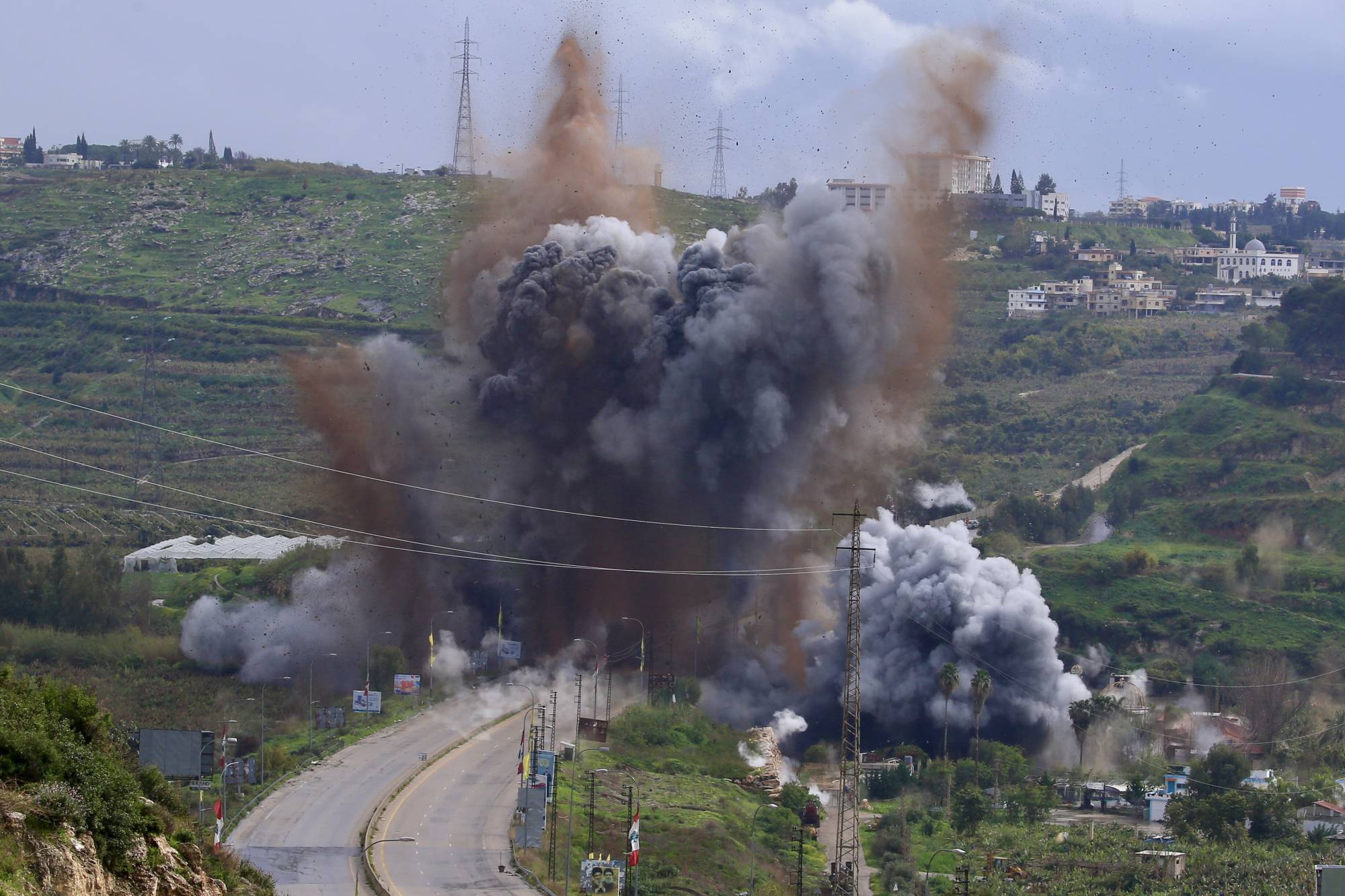
Sunday's strike damaged a crossing on Lebanon's coastal highway that runs through farmland and is one of the main routes linking southern and central Lebanon.

An Israeli military spokesperson had ‌announced the army would ‌strike the Qasmiyeh bridge earlier on Sunday.

Smoke and flames rise after an Israeli strike targeting the Qasmiyeh Bridge near Tyre, in southern Lebanon, 22 March 2026. EPA/STRINGER

Israel has sent troops into Lebanon and carried out extensive airstrikes, while Hezbollah has launched rocket barrages.

"In recent weeks, we have achieved significant accomplishments: we have struck more than 2,000 targets, dozens of weapons storage facilities, and struck and eliminated hundreds of terrorists," Zamir said.

"We will not stop until the threat is pushed away from the border and long term security is ensured for the residents of northern Israel," he added.

Lebanese authorities say Israel's strikes have killed more than 1,000 people and displaced more than 1 million.