
Israel and Hezbollah Shift to Multi-Dimensional Warfare

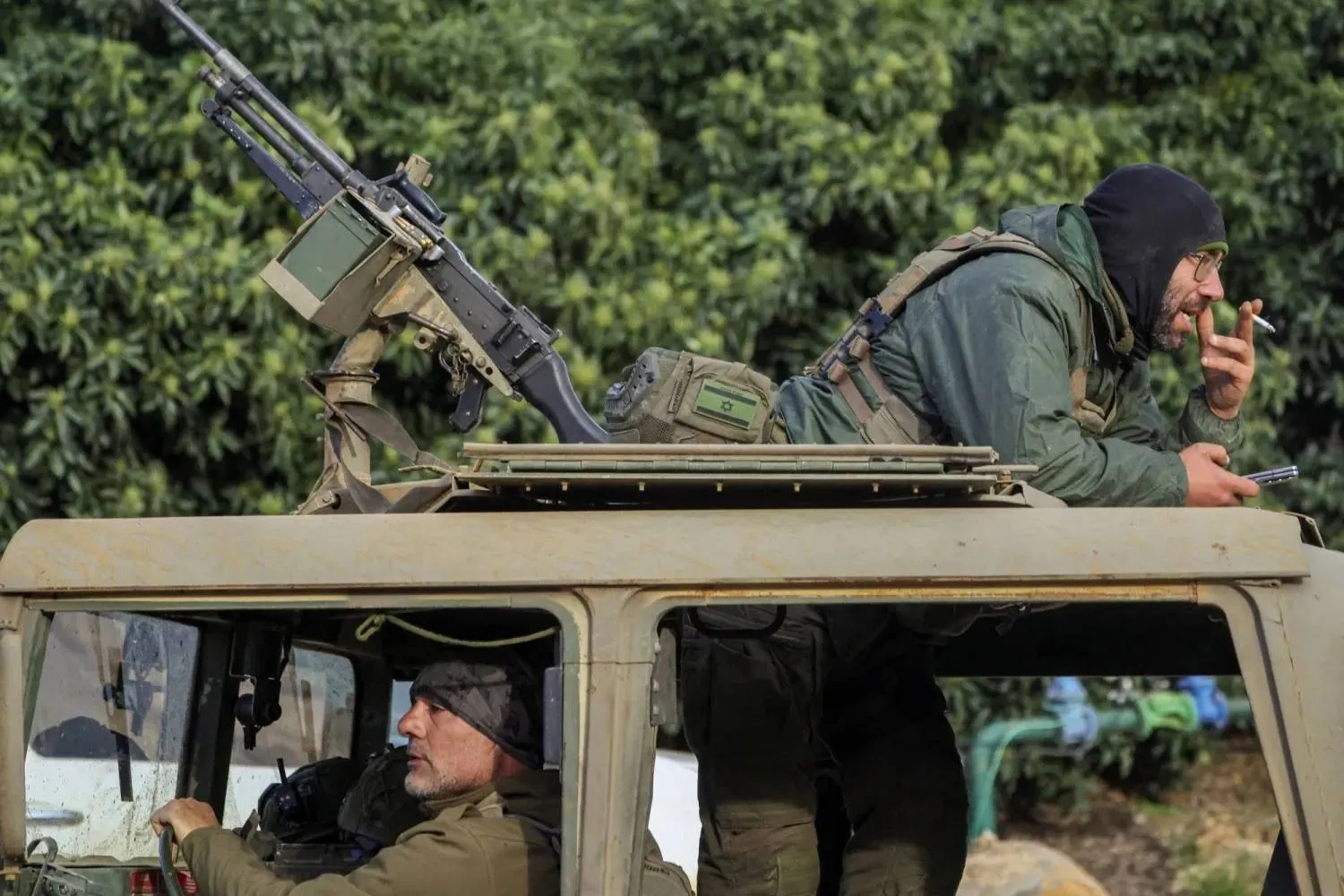
Israeli soldiers aboard a military vehicle at the Lebanese border (Reuters). 
TT

Israel and Hezbollah Shift to Multi-Dimensional Warfare

Israeli soldiers aboard a military vehicle at the Lebanese border (Reuters). 

The ongoing confrontation between Israel and Hezbollah is taking on a new character, with both sides moving beyond the largely conventional fighting seen in 2024 toward a more complex, multi-layered conflict shaped by technology, intelligence and flexible battlefield tactics.

Nearly a month into the conflict, neither side appears to be seeking a swift outcome. Instead, both are pursuing incremental gains, reflecting an understanding that victory is unlikely to come through a single blow but through sustained pressure over time.

Israel has maintained extensive use of drones, deploying them for surveillance as well as targeted strikes against Hezbollah commanders and key positions. This approach is backed by strong intelligence capabilities and technological superiority.

Hezbollah, meanwhile, has adjusted its approach, shifting toward a more decentralized and mobile style of warfare, an evolution from the more static defensive tactics that led to heavier losses during the 2024 conflict.

Military analyst Brigadier General Hassan Jouni says both sides have made clear strategic adjustments based on lessons learned from previous fighting.

“Geography remains a decisive factor in shaping military operations,” Jouni said, highlighting border areas such as the town of Khiam, which continues to serve as a key flashpoint due to its strategic location.

He said Hezbollah has moved away from a strategy of fixed defense toward a more dynamic and flexible model, allowing for greater mobility and adaptability on the battlefield.

Israel, for its part, appears to be probing Hezbollah’s defensive capabilities — testing coordination, morale and combat readiness — while avoiding immediate escalation into a full-scale ground assault.

According to military expert Brigadier General Said al-Qazah, Israel’s core tactics remain largely consistent with those used in the previous 66-day war.

Israel continues to focus on dismantling Hezbollah’s military infrastructure beyond the front lines, relying on intelligence superiority and precision strikes targeting leadership structures and logistical networks.

These operations have included strikes on missile stockpiles, launch platforms, command-and-control centers, as well as economic and financial entities linked to Hezbollah.

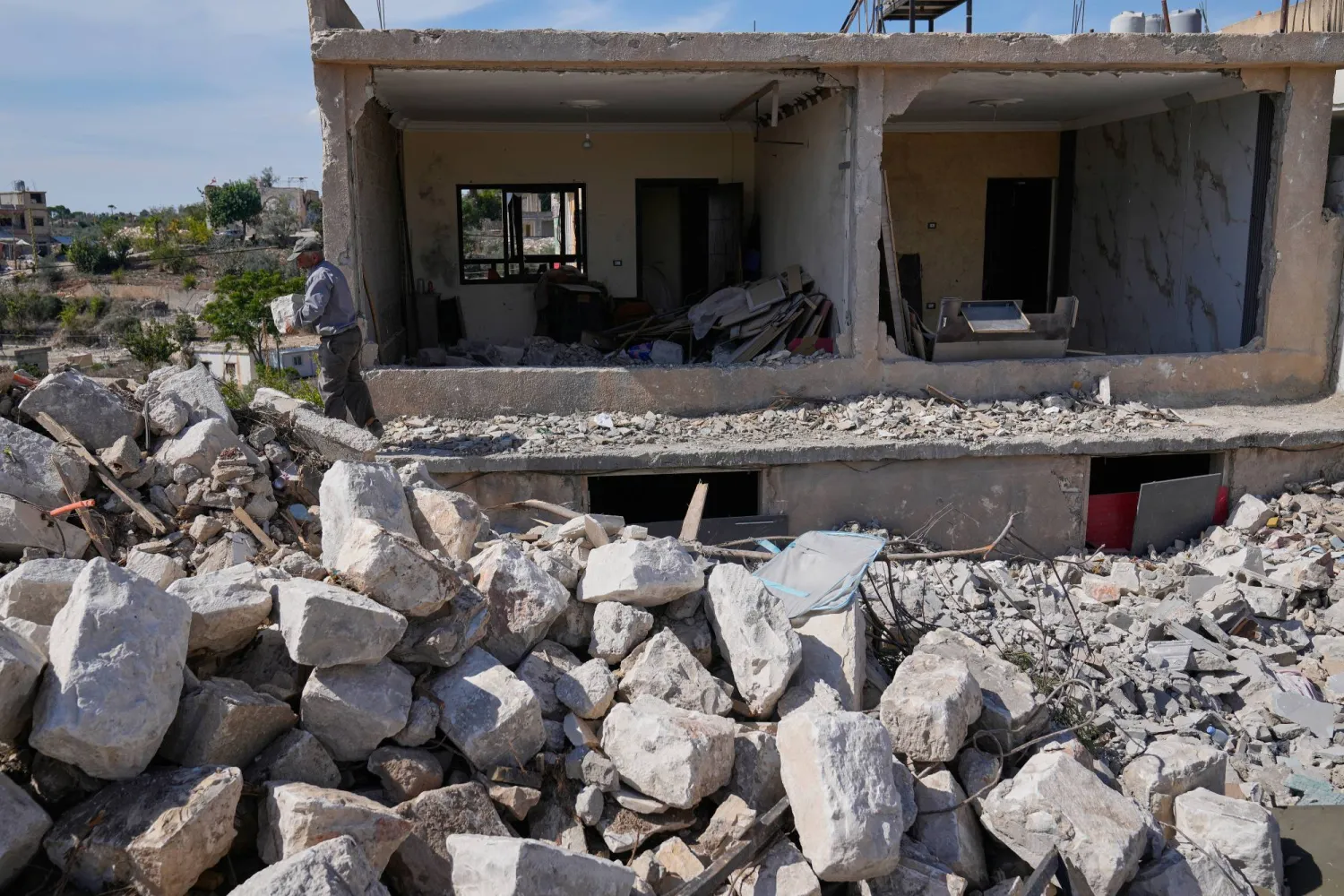
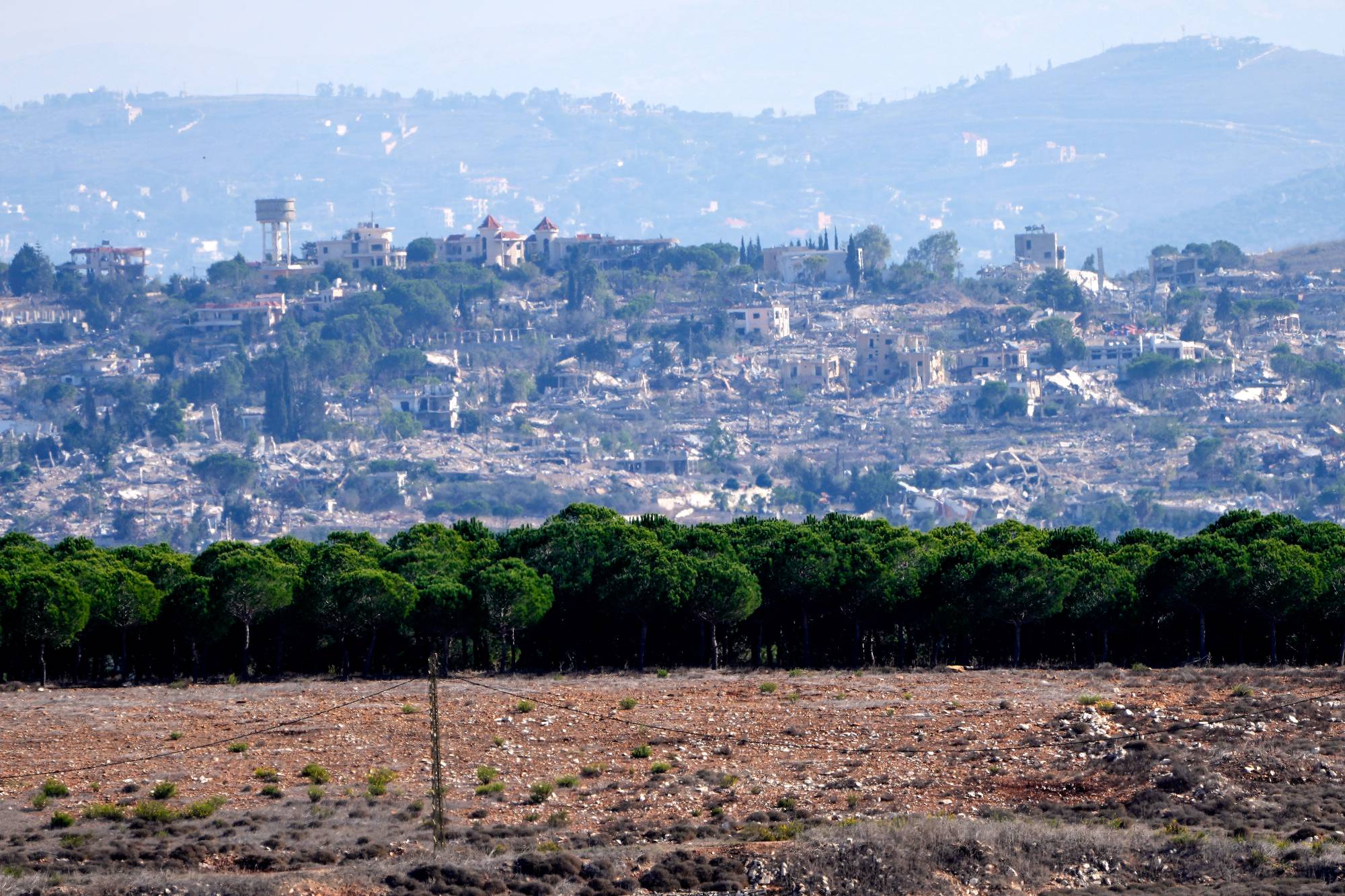
Qazah noted that a defining feature of the current campaign is Israel’s use of a “scorched earth” approach along the border, involving the systematic destruction of villages to create a buffer zone. This is intended to deny Hezbollah fighters the ability to use terrain and buildings for infiltration or anti-tank attacks against advancing troops and northern Israeli communities.

Hezbollah has sought to counter Israel’s air superiority by adapting its tactics. Taking advantage of the period following a ceasefire, the group has shifted toward decentralized defense, abandoning fixed lines in favor of small, semi-autonomous units.

These units operate with greater decision-making flexibility, drawing on guerrilla warfare principles. This approach complicates Israeli efforts to eliminate Hezbollah’s combat capability through a single strike.

So far, Israeli pre-emptive strikes have not fully degraded Hezbollah’s operational capacity, helping explain delays in launching a large-scale ground offensive.

Hezbollah is currently focusing on short-range rockets, aimed at maintaining sustained pressure on Israel’s northern front and disrupting stability rather than achieving a decisive military breakthrough.

Jouni said this strategy complements Iranian strikes, increasing strain on Israeli air defense systems while adding a psychological dimension to the conflict.

Hezbollah has also strengthened internal security measures to limit infiltration, particularly in response to drone strikes targeting its fighters. This has contributed to a relative reduction in casualties along the front lines.

The group appears intent on maintaining continuous engagement with Israeli forces — even in the absence of a major ground incursion — in an effort to wear them down over time.

A Fragile Balance

Israel’s current strategy centers on achieving fire control over areas south of the Litani River through sustained air and naval strikes, combined with psychological pressure aimed at prompting civilian displacement.

However, a broad ground advance has yet to materialize. Jouni said Israel appears to be weighing options between establishing a buffer zone extending 5 to 8 kilometers from the border or pushing deeper into southern Lebanon.

“The course of the fighting will determine the final decision,” he said, describing the current situation as a “careful balance” in which both sides seek to achieve their objectives without triggering a wider war.

Geopolitical Factor

A new factor shaping the conflict is the increased use of medium-range rockets by Hezbollah, often synchronized with Iranian ballistic missile strikes. Qazah said the aim is to overwhelm Israeli air defenses, allowing some missiles to penetrate while also attempting to prompt civilians in northern Israel to evacuate, an objective that has not yet been fully achieved.

He added that geography remains a key factor, with Israel relying on technological superiority and gradual advances to navigate complex terrain, while prioritizing its broader confrontation with Iran. Hezbollah, in turn, is using geography to prolong the conflict and stretch Israeli forces.

“The final outcome,” Qazah said, “will ultimately depend on developments on the ground.”


Report: Iran’s Ambassador Won’t Leave Lebanon Despite Expulsion

Iranian Ambassador to Syria Mohammad Reza Sheibani, shows his ink-stained finger as he votes in the first round of the Iranian presidential election on June 14, 2013 at the Iranian embassy in the Syrian capital, Damascus. (AFP)
TT

Report: Iran’s Ambassador Won’t Leave Lebanon Despite Expulsion

Iranian Ambassador to Syria Mohammad Reza Sheibani, shows his ink-stained finger as he votes in the first round of the Iranian presidential election on June 14, 2013 at the Iranian embassy in the Syrian capital, Damascus. (AFP)

Iran's ambassador will not leave Lebanon despite being declared persona non grata and ordered to leave the country by Sunday, an Iranian diplomatic source told AFP.

"The ambassador will not leave Lebanon, in accordance with the wishes of the speaker of parliament Nabih Berri and of Hezbollah," the source said, speaking on condition of anonymity.

Hezbollah has denounced the decision while Berri's Amal party joined Hezbollah ministers in boycotting a cabinet session this week in protest at the order to expel Mohammad Reza Sheibani.

The foreign ministry this week gave Tehran's envoy until Sunday to leave in the latest unprecedented step by Lebanese authorities since a new war erupted on March 2 between Israel and Hezbollah.

The ministry accused him of making statements "interfering in Lebanon's internal politics".

French Foreign Minister Jean-Noel Barrot called the expulsion "a courageous decision".

The Lebanese authorities have banned Hezbollah's military and security activities. It is the only armed non-state group in the country and a close ally of Iran.

It has also banned the presence and operations of Iran's Revolutionary Guards whom Prime Minister Nawaf Salam accused of directing Hezbollah operations against Israel.


Netanyahu Says Israel Will Widen Its Invasion of Southern Lebanon

Israeli army soldiers walk next to a self-propelled Howitzer artillery gun positioned in the upper Galilee in northern Israel near the border with southern Lebanon on March 29, 2026. (AFP)
TT

Netanyahu Says Israel Will Widen Its Invasion of Southern Lebanon

Israeli army soldiers walk next to a self-propelled Howitzer artillery gun positioned in the upper Galilee in northern Israel near the border with southern Lebanon on March 29, 2026. (AFP)

Prime Minister Benjamin Netanyahu announced Sunday that Israel will widen its invasion of southern Lebanon.

Netanyahu said Israel would expand what he called the “existing security strip” in Lebanon as Israeli forces continue to target the Iranian-backed Hezbollah militant group.

“We are determined to fundamentally change the situation in the north,” he said on a visit to northern Israel.

Netanyahu said Hezbollah still retained "residual capabilities" to fire rockets at Israel, but the group had been severely hit by Israeli forces.

"Iran is no longer the same Iran, Hezbollah is no longer the same Hezbollah, and Hamas is no longer the same Hamas," he added.

"These are no longer terrorist armies threatening our existence -- they are defeated enemies, fighting for their own survival."

"We are determined, we are fighting, and with God's help -- we are winning," Netanyahu said.

There were no immediate details.

In Lebanon, officials say more than 1,100 people have been killed and more than one million displaced since the Iran war began.


France Condemns Houthis for Entering Middle East War

A satellite image shows Bab el-Mandab Strait off the coast of Yemen, February 27, 2026. (2026 Planet Labs PBC/Handout via Reuters)
TT

France Condemns Houthis for Entering Middle East War

A satellite image shows Bab el-Mandab Strait off the coast of Yemen, February 27, 2026. (2026 Planet Labs PBC/Handout via Reuters)

France condemned on Sunday two attacks by Yemen's Houthi militants on Israeli targets, accusing them of escalating tension in the Middle East by entering the regional war.

A Houthi spokesman said on Saturday the Iranian-backed group had fired missiles and drones towards "several vital and military sites" in Israel, the same day that Israel said it had intensified attacks on Iran's military industry.

The escalation came after more than a month of Israeli and US bombardment of Iran, to which Iran has responded by attacking US-linked interests in wealthy Gulf states.

"The Houthis should abstain from all attacks," French foreign ministry spokesman Pascal Confavreux said. He accused them of being "irresponsible".

He said everything should be done "to avoid an even greater escalation of the conflict", which has killed thousands across the region and sent energy markets into a tailspin.

The war has disrupted global maritime traffic through the Strait of Hormuz, a key waterway in the Gulf through which a fifth of the world's crude supplies pass, along with substantial shipments of gas and fertilizers.

The only alternative routes are to sail through the Red Sea on the other side of the Arabian peninsula or make the much lengthier journey around the tip of southern Africa.

From Yemen, the Houthis could potentially disrupt shipping through the Red Sea, as they did at the height of Israel's war on Gaza.

The European Union said on March 16 it would not extend the bloc's existing naval mission in the Red Sea to help re-open the Strait of Hormuz.

US President Donald Trump had lashed out at EU and NATO countries for not agreeing to escort ships through the strait.