




Diplomatic efforts to resolve the crisis in southern Lebanon are running up against a gradual escalation on the ground, as fighting expands beyond the border area following four days of Israeli violations, with Hezbollah beginning limited attacks on Israeli forces deeper inside Lebanon and along the border.
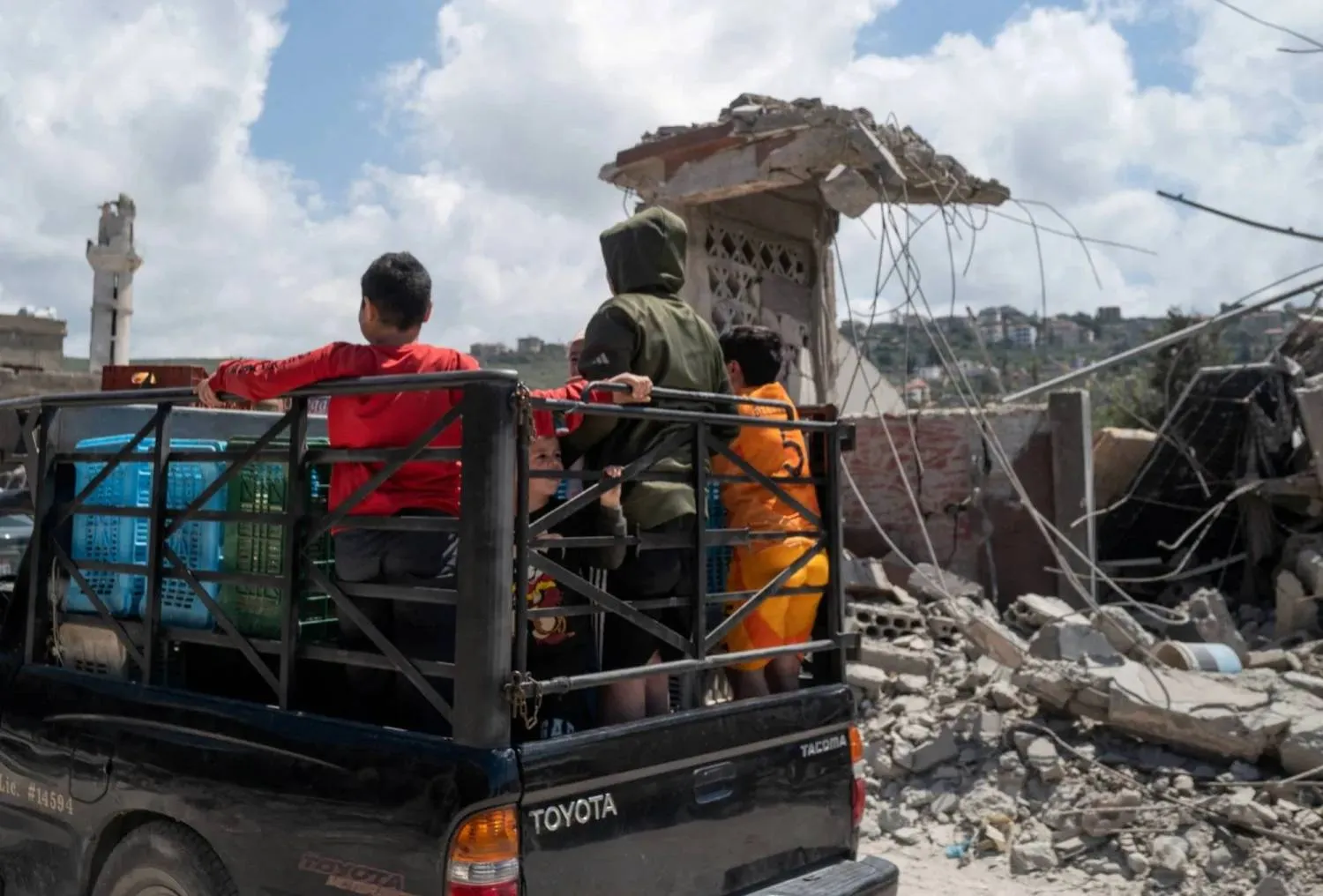
Israeli operations have intensified, with homes being blown up, demolished and burned, while no-return zones are expanding. The measures appear to go beyond military objectives, pointing to an attempt to impose a new demographic and security reality.
Escalation widens, no-return zones expand
On Thursday, the Israeli army carried out operations in several towns, including Beit Lif, Hanine, Mais al-Jabal, and Khiam. Powerful explosions were reported, homes were destroyed or set ablaze, and artillery hit Wadi al-Hujeir, Wadi al-Slouqi, and Qantara.
The campaign signals a shift from remote strikes to systematic destruction of the built environment.
Hezbollah fired a rocket toward the Metula settlement, which Israel’s Iron Dome intercepted. The Israeli army also said it intercepted an aerial target launched from Lebanon.
More significant, however, was the widening of Israeli warnings, with renewed calls for residents of dozens of villages not to return or move south of set lines, resembling a “fire belt” with political and demographic implications aimed at reshaping the border area.
Displacement persists, uncertainty deepens
Local sources told Asharq Al-Awsat that many residents have yet to return to villages in the Nabatieh district, while others are holding back from returning to Beirut’s southern suburbs despite the truce, citing doubts over its durability.
They said continued exchanges of fire in the south underline the fragility of the ceasefire, warning that relative calm north of the Litani River and deeper inside Lebanon could collapse at any moment. The situation reflects a tense waiting phase rather than real stability.
The crisis is also evident administratively. Civil registry records from Mais al-Jabal have been moved from their temporary location in Nabatieh to the Interior Ministry, a step that entrenches a reality preventing the return of state institutions, mirroring administrative displacement alongside population displacement.
Testimonies cited by Haaretz, quoting Israeli soldiers, described looting of civilian property as a “routine phenomenon,” underscoring the erosion of the social and economic fabric of border villages and reinforcing what sources describe as “silent emptying.”
Diplomacy under strain
Political positions reflect the pressure. Hezbollah lawmaker Hassan Fadlallah said the group wants to respect the ceasefire, but Israel must do the same. MP Hussein Hajj Hassan said the group is no longer bound by the truce and will respond based on its assessment.
Retired brigadier general Naji Malaeb told Asharq Al-Awsat that Hezbollah’s response, described as part of deterrence, falls short given the imbalance of power and risks undermining Lebanon’s diplomatic efforts at a critical time.
He said Lebanon would have been better served by sustaining diplomatic pressure over Israeli violations without military responses, noting that even limited rocket fire weakens Lebanon’s leverage.
Double standards, shrinking leverage
Malaeb said any Hezbollah military action would be framed internationally, particularly by the United States, as a breach of the truce, while Israeli violations are largely overlooked.
That dynamic, he said, erodes Lebanon’s negotiating position as it bets on talks in Washington, turning the conflict into a “war of narratives” shaped by power rather than legal standards.
Focus on securing the truce
Malaeb said Lebanon should prioritize securing a firm ceasefire to allow the army to assert control and ensure its deployment is not obstructed. He said this aligns with the US approach but depends on Israeli compliance, which is uncertain.
He warned that any deal could leave Israel room to act under security pretexts, effectively allowing continued strikes and setting the stage for renewed escalation, with Hezbollah likely to respond.


