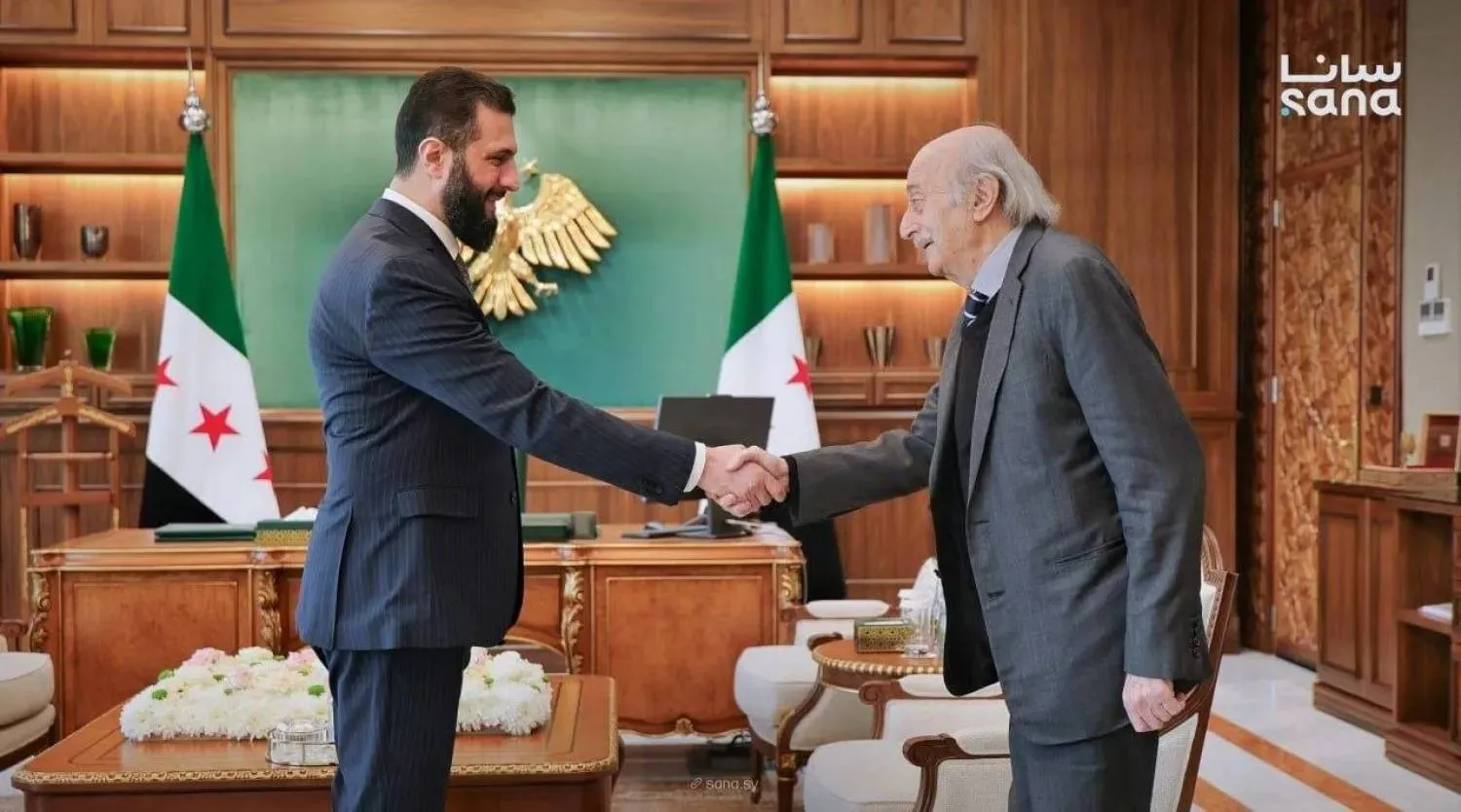

A meeting in Damascus on Saturday between Syrian President Ahmed al-Sharaa and Lebanese Druze leader Walid Jumblatt focused on containing the fallout from violence in Syria’s Sweida province, strengthening Lebanese-Syrian ties and rejecting what both sides described as an “alliance of minorities.”
Jumblatt, former head of Lebanon’s Progressive Socialist Party, met Sharaa at the People’s Palace in Damascus amid heightened regional tensions and strains along the Lebanese-Syrian border.
A statement from the PSP said the talks stressed improving Lebanese-Syrian relations in a way that serves the common interests of both countries, while rejecting the “alliance of minorities” theory and emphasizing the social and geographic ties linking the two neighbors.
The statement reaffirmed Syria’s unity and called for addressing the aftermath of the deadly unrest in Sweida, the predominantly Druze province in southern Syria.
A brief Syrian presidency statement said the two sides reviewed recent regional developments.
Accompanying Jumblatt to Damascus, Lebanese MP Hadi Abou Al-Hassan said the talks focused on deepening bilateral ties based on respecting the sovereignty and independence of each country, while recognizing longstanding historical and social links.
He told Asharq Al-Awsat Syria’s new leadership was seeking to redefine relations with Lebanon after what he called the end of Syrian tutelage following the fall of Bashar al-Assad.
Abou Al-Hassan said “some actors in Syria and Israel were trying to revive the idea of an ‘alliance of minorities’, but that Damascus no longer viewed the concept as relevant and was instead focused on its strategic Arab ties.”
Saturday's talks also touched on what he described as shared concerns over Israeli escalation against both countries, including fears of a proposed “yellow line” security belt stretching across southern Lebanon from Naqoura to Mount Hermon and potentially into southern Syria.
He noted that such concerns reflected worries over “a dangerous Israeli plan that required coordination and joint efforts to confront.”
Developments in Sweida took up much of the discussions, particularly given Jumblatt’s role in containing the repercussions and his rejection of calls to attach the province to Israel or seek Israeli protection for the region.
Abou Al-Hassan said the talks stressed addressing the fallout from the violence and building on a meeting in Amman involving Syria, Jordan and the United States.
Jumblatt also underscored “support for Syria’s unity and for a strong central state guaranteeing equal rights for all citizens, while preventing any forces from challenging state sovereignty,” he said.
The meeting comes as Lebanese-Syrian ties have improved through border coordination and anti-smuggling efforts, despite Syrian concerns over reported weapons-smuggling tunnels and reports of a security cell in Damascus allegedly linked to Hezbollah, an ally of the ousted regime.
Abou Al-Hassan said both countries needed to dispel mutual concerns and build trust.