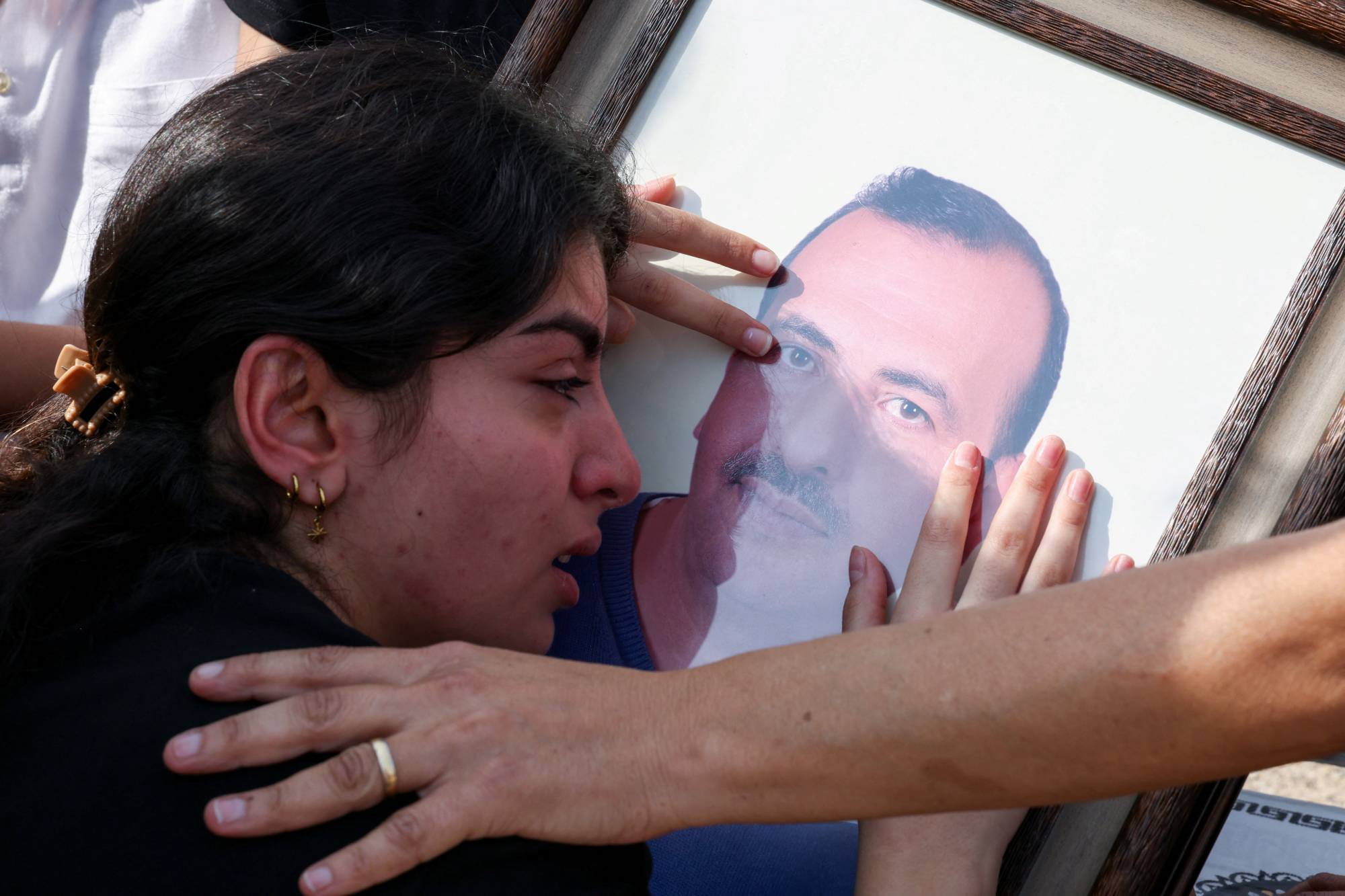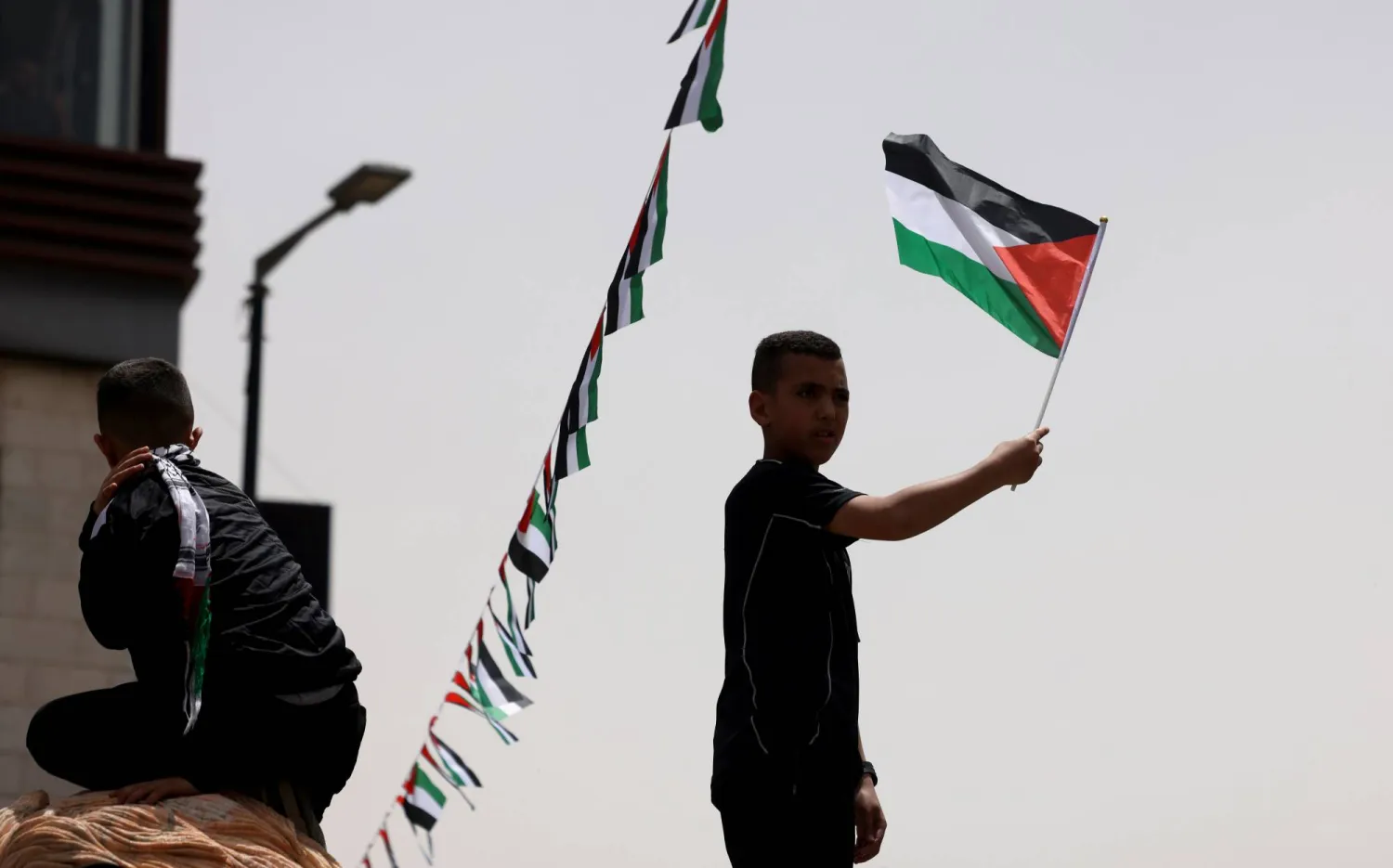

Palestinians in Gaza Mark Anniversary of 1948 Mass Expulsion and Say Today's Catastrophe is Worse

Palestinians attend a rally marking 'Nakba' day in the West Bank city of Ramallah, 12 May 2026. EPA/ALAA BADARNEH
TT

Palestinians in Gaza Mark Anniversary of 1948 Mass Expulsion and Say Today's Catastrophe is Worse

Palestinians attend a rally marking 'Nakba' day in the West Bank city of Ramallah, 12 May 2026. EPA/ALAA BADARNEH

Blink and you might miss the few stone walls that are all that’s left of the village that Yusuf Abu Hamam’s family was forced to flee when he was an infant in 1948.

The village, al-Joura, was demolished by the Israeli military at the time. It has since vanished under neighborhoods of the southern Israeli city of Ashkelon and the grounds of a national park.

The neighborhood where Abu Hamam’s family ended up — and where he spent most of his life — now lies also largely in ruins. Buildings in the Shati Camp in the northern Gaza Strip have been razed and wrecked by Israeli bombardment and demolitions during the past 2½ years of war, The Associated Press said.

On Friday, Abu Hamam and millions of Palestinians mark the 78th anniversary of the Nakba, Arabic for “catastrophe,” referring to the mass expulsion and flight of some 750,000 Palestinians from what is now Israel during the 1948 war surrounding Israel’s creation. It’s the third commemoration of the Nakba since the war in Gaza began.

The 78-year-old Abu Hamam, one of a dwindling number of Nakba survivors, says the current war is an even greater catastrophe.

More than six months after an October ceasefire, he and the rest of Gaza’s more than 2 million people are now crammed into less than half of the 25-mile-long strip along the Mediterranean coast, surrounded by an Israeli-controlled zone encompassing the rest of the territory.

“There is no country left,” Abu Hamam said, speaking next to his home, which was heavily damaged by Israeli shelling earlier in the war. “A square kilometer and a half extending from the sea, this is what we are living in ... It’s indescribable, unbearable.”

What was the Nakba? For Palestinians, the Nakba meant the loss of most of their homeland. Some 80% of the Palestinians who lived in the area that became Israel were driven from their homes by forces of the nascent state before and during the war. The fighting began when Arab armies attacked following Israel’s establishment as a home for Jews in the wake of the Holocaust. Palestinians who remained behind hold Israeli citizenship.

After the war, Israel refused to allow Palestinian refugees to return to ensure a Jewish majority within its borders. Palestinians became a seemingly permanent refugee community that now numbers some 6 million, with most living in refugee camps in the Israeli-occupied West Bank, Lebanon, Syria, Jordan and Gaza.

Around 530 Palestinian villages in what became Israel were destroyed, according to the Palestinian Bureau of Statistics.

Abu Hamam’s birth village was one of them. Al-Joura was seized by the Israeli military as it advanced against Egyptian forces in November 1948. Soldiers were ordered to destroy every home in al-Joura and neighboring villages to ensure their Palestinian populations couldn’t come back, according to military archives cited by Israeli historian Benny Morris.

Refugees swelled the population of the tiny patch of territory along the southern coast that became the Gaza Strip. They stayed in tent camps, run by a newly created UN agency for Palestinians, UNRWA, which provided aid and schooling. Those camps, like Abu Hamam’s Shati Camp, grew into dense urban neighborhoods over the decades, before many were flattened during the latest Gaza war by Israeli bombardment.

In Gaza, Palestinians live a new Nakba

The ancestors of Ne’man Abu Jarad and his wife, Majida, were already living in what would become the Gaza Strip in 1948. They both recall stories from their families about refugees streaming in by foot from areas further north, like the village Abu Hamam came from.

Though they avoided the original Nakba, there was no escaping from what Majida now calls “our Nakba.”

Their hometown has been wiped off the map. Over the past year, Israeli bulldozers and controlled detonations have razed nearly every building in the northern Gaza towns of Beit Lahiya and Beit Hanoun. A new Israeli military base stands about 700 meters (765 yards) from where the Abu Jarads’ house once stood, according to satellite photos.

Also gone is the southern Gaza city of Rafah, once home to a quarter million people, and other villages and neighborhoods located in the Israeli-held half of the Gaza Strip. The military says it is destroying positions used by Hamas and preparing the area for reconstruction. Satellite photos show nearly every structure reduced to rubble.

Over the last 31 months of war, the Abu Jarads and their six daughters have been displaced more than a dozen times as they fled Israeli bombardment and offensives. They currently live in a camp in the southern city of Khan Younis. Their tent offers little shelter from biting winter winds or summer heat, Majida said.

Their daughters have been out of school for over two years now.

“The Nakba of ’48, I don’t think it can be compared to our Nakba,” Majida said. “In ’48, they say people were displaced once and settled in one place, and they are still there until now. But our Nakba, honestly, is more severe because our displacement has happened multiple times. There is no stability.”

Around 90% of Gaza’s more than 2 million people have lost their homes, according to UN estimates, with most of them now sheltering in huge tent camps with rat infestations and pools of sewage. They are dependent on aid to survive.

Israel’s offensive has killed over 72,700 Palestinians, according to local health officials. It was triggered by Hamas’ Oct. 7, 2023, attack on southern Israel that killed some 1,200 people. Militants also abducted 251 hostages.

In the northern West Bank, tens of thousands of Palestinians are entering their 15th month of displacement, after the Israeli military ordered them out of their refugee camps as it launched an operation it said was targeting militant groups.

Since then, troops have demolished or heavily damaged at least 850 structures across the refugee camps of Nur Shams, Jenin and Tulkarem, according to an analysis of satellite imagery by Human Rights Watch released in December.

Saving what was lost, again and again

The 1948 Nakba also brought the loss of Palestinians’ history, as those fleeing struggled to keep hold of the documents and possessions tying them to their homes.

One of the largest archives of Palestinian documents dating back to the Nakba belongs to UNRWA.

UNRWA staff members, who fled their offices in Gaza after Israel ordered the north evacuated, had to leave behind the agency’s extensive archive.

The staff then launched a mission to rescue the most crucial documents — birth, death and marriage certificates and refugee registration cards, according to Juliette Touma, a former senior UNRWA official.

Without those documents, Palestinians could lose their rights and refugee status. Staffers crammed their personal suitcases full of papers and carried them through checkpoints and out of the territory, Touma said.

The current war has cost Palestinians in Gaza what little remained of their personal histories. Majida’s parents’ home in Beit Hanoun was destroyed, and with it family photos.

“There is nothing left,” she said.

Abu Hamam, too, says everything has been lost.

“When this war came, it devoured trees, stones and people,” he said. “Entire families were erased from the civil registry. Hundreds of families are still buried under the rubble.”


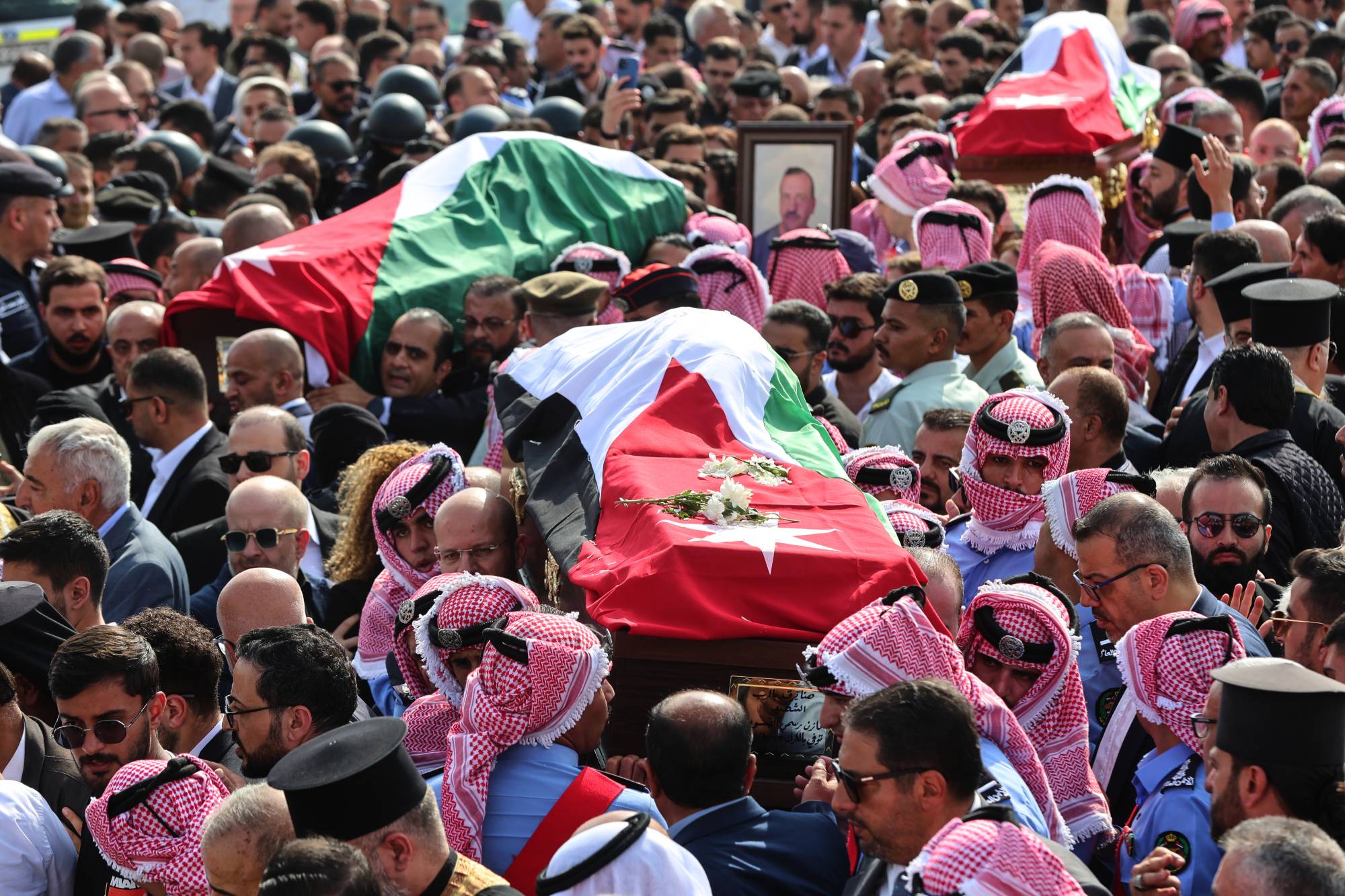
Gazans Turn to Clay, Rubble to Build New Homes

A Palestinian boy makes his way across rubble near a displacement camp in Nuseirat, in the central Gaza Strip, on Sunday. Credit: AFP/EYAD BABA
TT

Gazans Turn to Clay, Rubble to Build New Homes

A Palestinian boy makes his way across rubble near a displacement camp in Nuseirat, in the central Gaza Strip, on Sunday. Credit: AFP/EYAD BABA

While Gaza’s housing crisis remains catastrophic with cement and steel blocked by Israel from entering the Strip, some Palestinians are turning to improvised methods and other workarounds in a bid to make their shelters safer or more habitable.

Among those Palestinians is Jaafar Atallah, a potter in Gaza, who decided to build a home from the earth. It was to be like the bread ovens his family had been making for generations, but big enough for his parents to live in, according to the Financial Times.

Atallah gathered clay from an area of Gaza a few kilometers from his tent and — with the help of about 15 people, including his father, also a potter — he set about making mud bricks.

For months, they learned as they built. Finally, they completed a domed hut, “so solid you could stand on top of it”, said Atallah, whose project was backed by pottery groups around the world after he shared videos online.

The clay structure was a relief after the flimsy protection of the tent: “You can keep your food in this room. In a tent, tomatoes and cucumbers won’t last a day and will rot. Life in the tents is so hard. There is such heat in the summer, it is torture,” Atallah said.

Atallah’s experience reflects the reality of thousands of families looking for alternatives after almost all buildings in Gaza have been destroyed by two years of bombardment amid Israel’s ban on concrete and steel imports.

Several Gazans are reusing steel reinforcing bars and concrete from the debris of buildings, scavenging for cement lying underwater in the port and resorting to mud to make bricks and mortar.

“We already have clay in our land, we don’t have to manufacture it, we don’t need things that we have to get from the crossing [with Israel], which is at the whim of the occupation,” said Atallah, who even designed a waterproof glaze for the bricks. “The occupation does not control this. It’s from our land, our soil.”

According to the UN, 1.9 million Gazans are displaced or live in tents, which lack sanitation or other utilities.

Reconstruction of Gaza remains a distant dream for its people. Israel bans building materials from entering Gaza on the grounds that the materials may be used for military purposes such as tunnel construction.

In May, teenage sisters Tala, 17, and Farah Moussa, 15, won a youth-focused award from the Swiss-based Earth Foundation for recycling cement debris into bricks.

Displaced with their family five times since the start of the war, they now live in a tent in Nuseirat in the center of the Gaza Strip. “We got the idea when our house was bombed,” said Tala. “We thought we had to do something and find a solution that comes from the problem itself, so we are using the rubble.”

Tala said, “We made five or six prototypes before we got it right. We researched on the internet and in books. Now we want to use the [$12,500] prize money to set up workshops to teach others how to make bricks.”

Using mud and stones, Gaza residents rebuild homes destroyed in months of conflict, as lack of access to construction material leaves families with few options.

Their efforts reflect the ability to adapt to the most extreme conditions to restore a normal life, even within walls built from the earth and the debris of buildings.


Yemen Seeks Resumption of US Investments in Energy Sector

Al-Alimi during his meeting with the delegation from Hunt Oil Company (Saba)
TT

Yemen Seeks Resumption of US Investments in Energy Sector

Al-Alimi during his meeting with the delegation from Hunt Oil Company (Saba)

The head of Yemen’s Presidential Leadership Council (PLC), Rashad Al-Alimi, has met with a delegation from the American Hunt Oil Company, headed by the company’s Chief Executive Officer, Hunter Hunt.

The meeting on Sunday reviewed opportunities for partnership between the Yemeni government and Hunt Oil in the exploration, production, and export of oil and gas. It also discussed prospects for the company to resume its investments in Yemen in support of the country’s economic recovery and energy security.

Al-Alimi was briefed by the delegation on the company’s current operations, future plans, and promising investment opportunities in Yemen’s oil sector, building on its long-standing partnership with the Yemeni government.

The PLC President praised Hunt Oil’s pioneering role in establishing Yemen’s petroleum sector, including the discovery of the country’s first commercially viable oil reserves, its contributions to developing oil infrastructure, training national personnel, and its role as a key partner in the Yemen LNG project.

He said these contributions would remain a source of appreciation for both the government and the Yemeni people.

Al-Alimi also outlined the economic, financial, and administrative reforms being implemented by the government, particularly in the oil and gas sector.

He highlighted efforts to improve the investment climate, strengthen transparency and governance, and provide the necessary guarantees for the return of foreign companies across various sectors.

He commended Saudi support to Yemen’s economy, describing it as a key pillar for enhancing stability, advancing economic reform, and restoring investor confidence.

The PLC President reaffirmed the state’s commitment to providing all necessary support and facilities for investors. He said the government would work with regional and international partners to secure vital infrastructure and create conditions for the resumption of production activities.

He added that improving living standards and security across the country remains a top priority for the Yemeni government.


Syria, Iraq Agree to Expand Cooperation in Energy, Security and Economy

Syrian President Ahmed al-Sharaa receives Iraqi FM Fuad Hussein in Damascus on Monday. (SANA)
TT

Syria, Iraq Agree to Expand Cooperation in Energy, Security and Economy

Syrian President Ahmed al-Sharaa receives Iraqi FM Fuad Hussein in Damascus on Monday. (SANA)

Iraqi Foreign Minister Fuad Hussein visited Damascus on Monday on his first trip since there since the ouster of Bashar al-Assad's regime in December 2024.

He held talks with President Ahmed al-Sharaa and his Syrian counterpart Asaad al-Shaibani.

The meeting with Sharaa focused on bilateral relations and ways to expand cooperation across various sectors, reported Syria’s state news agency SANA.

The two sides also discussed regional and international developments and stressed the importance of strengthening coordination and consultation between Syria and Iraq in addressing shared challenges.

Talks with Shaibani focused on practical mechanisms to strengthen bilateral relations and advance mutual cooperation across various sectors.

The FMs agreed to establish a high committee for joint coordination, co-chaired by both ministers, to ensure the consistent follow-up and execution of outcomes stemming from bilateral cooperation while streamlining joint initiatives.

The discussions also focused on energy infrastructure, specifically looking into mechanisms for oil transit and grid integration, alongside a project to rehabilitate oil pipelines extending from Iraq to Syria.

They also addressed frameworks for strategic cooperation in the sectors of water management and agriculture, which aims to boost mutual food security, stimulate economic integration, and serve shared bilateral interests.

They explored avenues to upgrade security coordination and intelligence sharing, bolstering regional stability and supporting collaborative efforts to confront mutual security challenges.