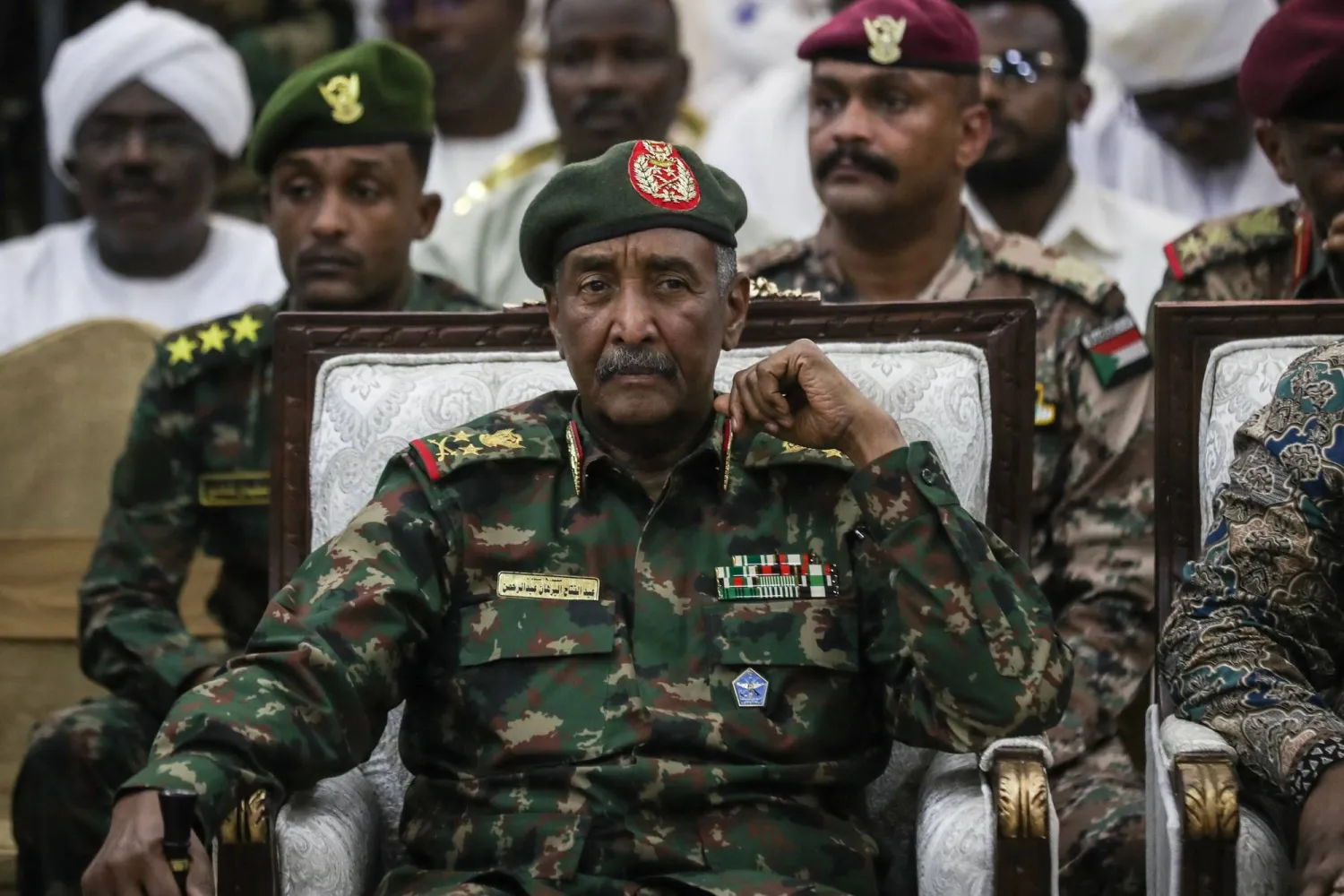

Sudan’s Sovereign Council chairman and army chief Gen. Abdel Fattah al-Burhan has renewed his accusations against neighboring countries of acting hostile toward Sudan, warning that they would “pay the price sooner or later.”
His remarks came as the army announced the recapture of new areas in the Blue Nile region following clashes with the Rapid Support Forces (RSF) and its ally, the Sudan People’s Liberation Movement-North (SPLM-N).
Meanwhile, Sudanese political forces agreed on a common vision calling for an urgent humanitarian truce leading to a comprehensive and lasting ceasefire.
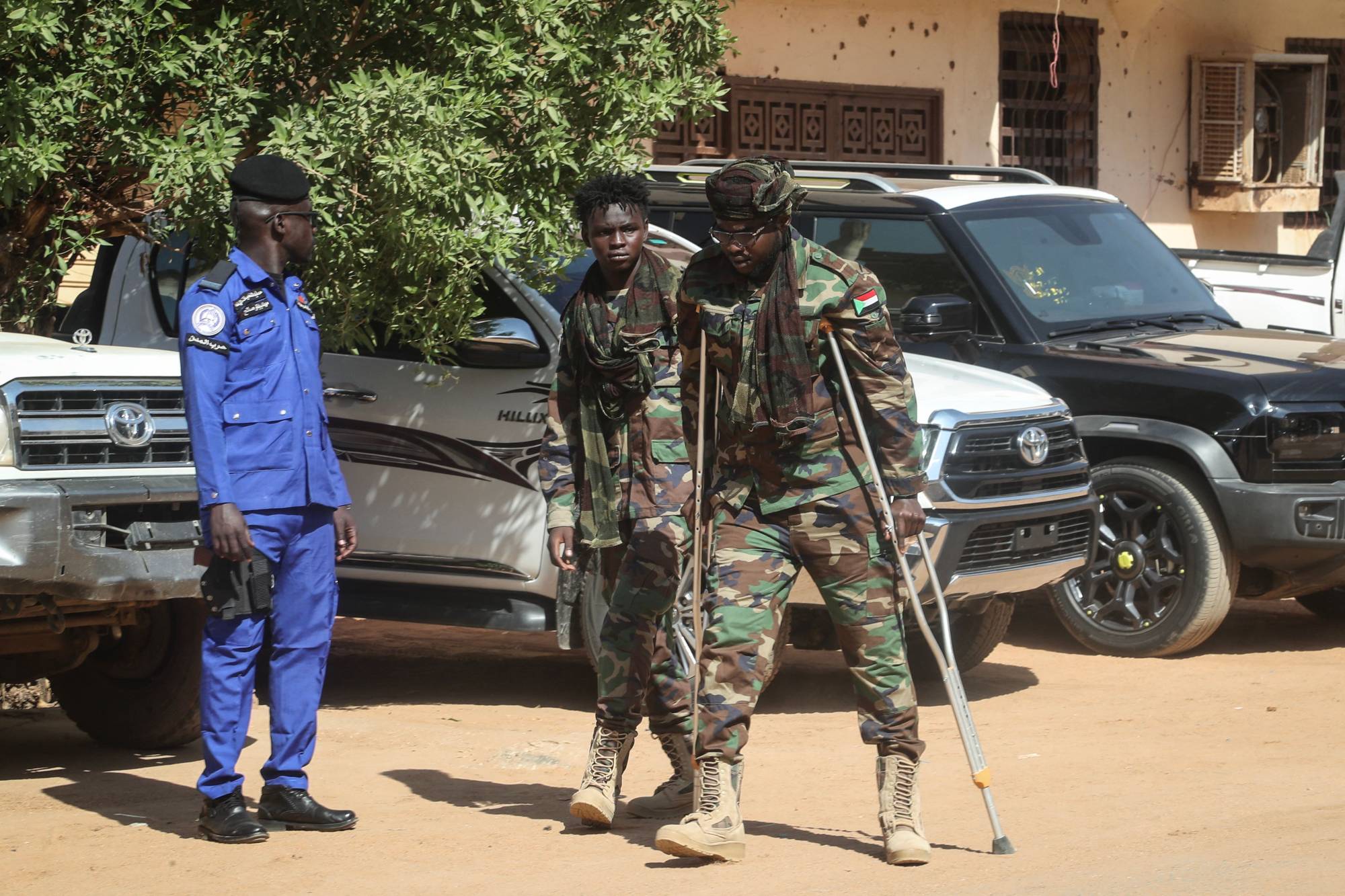
Speaking at a ceremony honoring wounded members of the Joint Force of Armed Movements allied with the army in Omdurman, Al-Burhan said on Saturday that “most neighboring countries have been turned against us through financial inducements.”
He added that the enemy is operating from Ethiopia, South Sudan, Chad, and Libya to attack Sudan.
He warned that everyone who has incited hostility against the Sudanese people “will pay the price sooner or later,” while stressing that Sudan would overcome its current challenges.
Al-Burhan reiterated the military’s commitment to continue fighting until every area under RSF control has been retaken, declaring that the armed forces “will not lay down their weapons before ending the rebellion.”
He said he had arrived late to the ceremony because he was following a battle in Ad-Damazin, the capital of Blue Nile State.
According to his account, anti-army forces withdrew from the battlefield, leaving behind 18 combat vehicles.
He also announced a $5 million contribution to a fund supporting wounded military personnel and pledged that the state would cover treatment costs for cases requiring medical care abroad.
Blue Nile Battles
The Sudanese army announced on Saturday that it had retaken the areas of Samsour and Village 11 in Blue Nile State after clashes with the RSF and the SPLM-N faction led by Abdelaziz al-Hilu.
The Fourth Infantry Division said in a statement that government troops and allied forces regained control of Village 11 following battles with forces allied to the RSF under Joseph Tuka. Military and local sources also reported the recapture of Samsour.
The advance followed the army’s announcement a day earlier that it had regained control of Khor Maganza in Bau County, days after the RSF and its allies said they had seized the area.
Conflicting reports emerged regarding casualties, with pro-RSF platforms claiming they had ambushed Sudan Shield Forces and inflicted dozens of deaths, while army-aligned sources reported heavy losses among opposing forces.
In a related development, Ad-Damazin was targeted early Saturday by new drone attacks. Military sources said the strikes targeted positions belonging to the Fourth Infantry Division and other sites in the city. Ground defenses reportedly intercepted several drones, though local reports spoke of explosions inside the division’s headquarters. No confirmed casualty figures were released.
Call for a Humanitarian Truce
Politically, Sudanese political and civilian groups concluded four days of consultations in Switzerland by agreeing on a shared vision emphasizing the need for an urgent humanitarian truce that would pave the way for a comprehensive and permanent ceasefire. Participants stressed that any truce must not become a prelude to the partition of Sudan.
The meetings were held as part of the seventh round of the Neuchâtel Process informal peace consultations, sponsored by the Swiss Foreign Ministry and facilitated by the organization Promediation.
Participants included representatives from the Civil Democratic Alliance of the Forces of the Revolution (Somoud), the army-aligned Democratic Bloc, the National Movement Forces, the Arab Socialist Baath Party, the Umma Party led by Mubarak al-Fadil, and a number of independent national figures.
The final statement reaffirmed the participants’ commitment to Sudan’s unity, sovereignty, and territorial integrity, rejecting any political or security arrangements that might entrench division or threaten national unity.
The groups also called for greater coordination between regional and international mediation mechanisms and for linking security arrangements to a broader political process that would restore civilian life and bring the war to an end.
The consultations also addressed the increasing use of drones against civilians, markets, and infrastructure, and the resulting deterioration of the humanitarian situation and growing risk of famine.
Participants called for continued dialogue among political and civilian actors and the creation of a national mechanism to bridge differences and prepare the ground for a comprehensive peaceful settlement.
The agreement was particularly significant because it brought together groups that have opposed the war and others that have supported the army, despite their sharply differing positions since the conflict erupted in April 2023.