PetroBangla Sign 15 Year Deal with QatarEnergy to Buy LNG

QatarEnergy offshore gas field (QatarEnergy website)
TT

PetroBangla Sign 15 Year Deal with QatarEnergy to Buy LNG

QatarEnergy offshore gas field (QatarEnergy website)

Bangladesh's state-owned gas company PetroBangla will sign a 15-year deal with QatarEnergy on Thursday to buy two million tons of liquefied natural gas (LNG) annually.

PetroBangla chairman Zanendra Nath Sarker said on Tuesday, "Under the new deal with Qatar, the LNG will be supplied from January 2026," according to Reuters.

Reuters reported on Tuesday that QatarEnergy would sign a long-term LNG supply deal with an Asian entity.

The agreement will be one of many to come in 2023 as state-owned QatarEnergy secures sales for its mega expansion of North Field, a source with direct knowledge of the new contract agreement, who did not wish to be identified, said.

Qatar is the world's top LNG exporter, and competition for LNG has ramped up since the start of the Ukraine war, with Europe, in particular, needing vast amounts to help replace Russian pipeline gas that used to make up almost 40 percent of the continent's imports.

But Asia has been far ahead in securing gas from Qatar's massive production expansion project.

The contract will be QatarEnergy's second to Asia since it started selling the gas expected to come onstream from the North Field expansion project.

The two-phase expansion plan will raise Qatar's liquefaction capacity to 126 million tons annually by 2027 from 77 million.

Qatar's first Asian deal with Sinopec, the longest to be signed at 27 years for the supply of four million tons a year, was followed by the state-owned Chinese company taking a five percent stake in the equivalent of one North Field East LNG train.

QatarEnergy's sales and purchase agreements to supply Germany with around two million tons of LNG annually through a partnership with ConocoPhillips cover at least 15 years.

The North Field expansion project will help guarantee long-term supplies of gas globally. North Field is part of the world's biggest gas field that Qatar shares with Iran, which calls its share South Pars.

QatarEnergy chief Saad al-Kaabi said last week there was significant demand for LNG and that by the end of the year, he expects to have signed supply deals for all the gas expected to come on stream from the North Field expansion.


Türkiye Not Facing Energy Security Problem Amid War but Situation ‘Volatile’

Travelers cross from Iran into Türkiye at the Kapikoy border crossing in eastern Van province, Türkiye, Saturday, April 4, 2026. (AP)
TT

Türkiye Not Facing Energy Security Problem Amid War but Situation ‘Volatile’

Travelers cross from Iran into Türkiye at the Kapikoy border crossing in eastern Van province, Türkiye, Saturday, April 4, 2026. (AP)

Türkiye is not ‌facing any problems regarding energy supply security due to the Iran war, but the situation is "volatile", Energy Minister Alparslan Bayraktar was quoted as saying by Turkish media on Tuesday.

"We hope the war will not last any longer. But the process is currently under our control," Bayraktar told reporters on Monday evening after a cabinet meeting, broadcaster Haberturk reported.

"There is no problem or difficulty in energy ‌supply security."

Türkiye ‌is a big energy importer which ‌neighbors ⁠Iran and is among ⁠the most exposed emerging market economies to the global energy price jump.

Bayraktar said in late March that Türkiye’s dependence on Middle East oil was at a "manageable" 10% of total supplies and that the country had taken protective diversification steps.

At the ⁠time he said every $1 increase in ‌oil prices adds about $400 million ‌to Türkiye’s energy bill, while there had not been ‌any natural gas supply cuts so far from ‌Iran, Türkiye’s fourth largest supplier last year.

On Monday, Bayraktar told reporters that he had spoken with the Hungarian foreign minister and discussed the issue of protecting the security ‌of the TurkStream pipeline, which carries Russian natural gas to southern Europe through ⁠the ⁠Black Sea and Türkiye.

Explosives were found near the TurkStream pipeline in Serbia at the weekend, prompting Hungarian Prime Minister Viktor Orban to convene an emergency defense council.

Russia and Türkiye formally launched the TurkStream pipeline, which has a capacity of 31.5 billion cubic meters per year, in January 2020. The pipeline allows Moscow to bypass Ukraine as a transit route to Europe.

"The security of the pipeline in the Black Sea and on our side is important," Bayraktar said.


SME Financing Moves to the Core of Saudi Arabia’s Non-Oil Economy

A night view of Riyadh, Saudi Arabia (SPA file)
TT

SME Financing Moves to the Core of Saudi Arabia’s Non-Oil Economy

A night view of Riyadh, Saudi Arabia (SPA file)

In a sign of a deep shift in the structure of financing within Saudi Arabia’s economy, and reflecting the goals of Vision 2030 to diversify the production base, credit facilities extended to micro, small and medium-sized enterprises reached a record high at the end of 2025.

Banks and finance companies injected around SAR 467.7 billion ($124.5 billion) into the sector last year, marking a 33 percent annual increase. The surge highlights the transition of these enterprises from the margins of economic activity to the center, positioning them as a key driver of non-oil growth and job creation.

On a yearly basis, total facilities rose 33 percent from about SAR 351.7 billion ($93.6 billion) in 2024, according to monthly bulletin data from the Saudi Central Bank (SAMA).

The banking sector accounted for the largest share, with facilities provided by banks reaching approximately SAR 446.6 billion, up 34 percent year on year. Finance companies contributed around SAR 21.1 billion, an annual increase of 15.4 percent.

By enterprise size, growth rates varied. Lending to medium-sized firms rose 18 percent year on year to SAR 220.9 billion. Small enterprises recorded stronger growth of 34 percent, reaching SAR 163.5 billion. Micro-enterprises saw the sharpest increase, with facilities surging 97 percent to SAR 83.3 billion, underscoring a notable expansion in financing to this segment.

Structural shift

The strong growth has been driven by several factors, most notably the clear strategic direction under Vision 2030, which places SMEs at the heart of economic diversification, along with the expanding role of institutions supporting the sector.

Among these is Monsha’at, which has helped improve the business environment and connect enterprises with funding sources, according to economist Hussein Al-Attas.

“This level of facilities is not just a record figure. It reflects a structural shift in the philosophy of financing within the Saudi economy,” Al-Attas told Asharq Al-Awsat.

He identified four main drivers behind the growth: a clear economic vision, a stronger regulatory environment, the expansion of credit guarantee programs, and a shift in how banks view the SME sector.

The Kafalah program has been particularly important, helping reduce lending risks and enabling banks to increase exposure to SMEs. This has coincided with improvements in financial data quality and governance practices, which have strengthened lenders’ confidence in the sector.

Sustainable growth

Al-Attas said the current trend reflects not a temporary expansion in credit but a redefinition of the role of SMEs in the economy, with growth expected to continue over the medium term.

However, he pointed to several challenges that could affect the pace of expansion. These include limited managerial expertise in some firms, the risk of defaults if financing is poorly managed, concentration of lending in specific sectors, and the potential impact of future interest rate increases.

Authorities are aware of these risks. This is reflected in a growing focus on improving governance, strengthening management efficiency, and linking financing more closely to actual operating performance to ensure funds are directed toward sustainable and productive activities.

The importance of this expansion extends beyond the headline figures. It supports a higher contribution of SMEs to non-oil GDP and plays a central role in job creation, given the sector’s labor-intensive nature.

According to Al-Attas, the growth also strengthens economic diversification by supporting the entry of new firms into promising sectors such as technology, industry, and services. It also increases local value added and reduces reliance on imports and large corporations.

Looking ahead, he expects financing growth to continue at a healthy pace over the next three to five years. This outlook is supported by the expansion of digital financing solutions, continued integration between government and banking sectors, and improving market maturity and enterprise quality. Large-scale projects and non-oil expansion are also expected to create new financing opportunities, gradually shifting the focus from the volume of funding to the quality of its economic impact.

Digital transformation

Mohammed Al-Farraj, senior head of asset management at Arbah Capital, said the development reflects alignment between ambitious government policies aimed at raising SMEs’ contribution to GDP to 35 percent and a responsive banking sector that has led the growth and captured the largest share of financing.

He noted that guarantee and incentive programs, as well as the SME Bank, have played a key role in reducing credit risks and boosting banks’ willingness to lend.

Digital transformation and the rise of fintech companies have also marked a turning point by improving access to financing and lowering operating costs. This has created a more flexible and attractive environment for business growth beyond traditional constraints.

Despite these positive indicators, Al-Farraj cautioned that rapid expansion requires strategic vigilance, particularly regarding credit risks and potential defaults amid interest rate volatility and increased competition in sectors such as retail.

He continued that the next phase will require a shift from quantitative growth, focused on expanding financing volumes, to qualitative growth that emphasizes credit quality, project sustainability, and resilience to economic changes.

Alternative financing tools such as venture capital are expected to play a growing role. These tools can ease pressure on bank balance sheets while directing funding toward strategic sectors including technology, tourism, and industry to ensure meaningful value creation in the national economy.

Developments seen in 2026 suggest early returns from this expansion. These include the emergence of a new generation of high-growth firms, increased SME contribution to non-oil exports, and greater use of instruments such as sukuk tailored for SMEs as a cost-effective long-term financing option.

Al-Faraj said SMEs are no longer a peripheral segment but a central driver of innovation and growth in Saudi Arabia’s economy. Sustaining this momentum will require continued regulatory development and more flexible repayment mechanisms to ensure durable growth aligned with long-term economic development goals.



Iraq Could Restore Oil Exports to Pre-War Level within a Week if Hormuz Reopens, Basra Oil Chief Says

 Bassem Abdul Karim, director general of the state-run Basra Oil Company (BOC), speaks during an interview with Reuters, in Basra, Iraq, April 6, 2026. (Reuters)
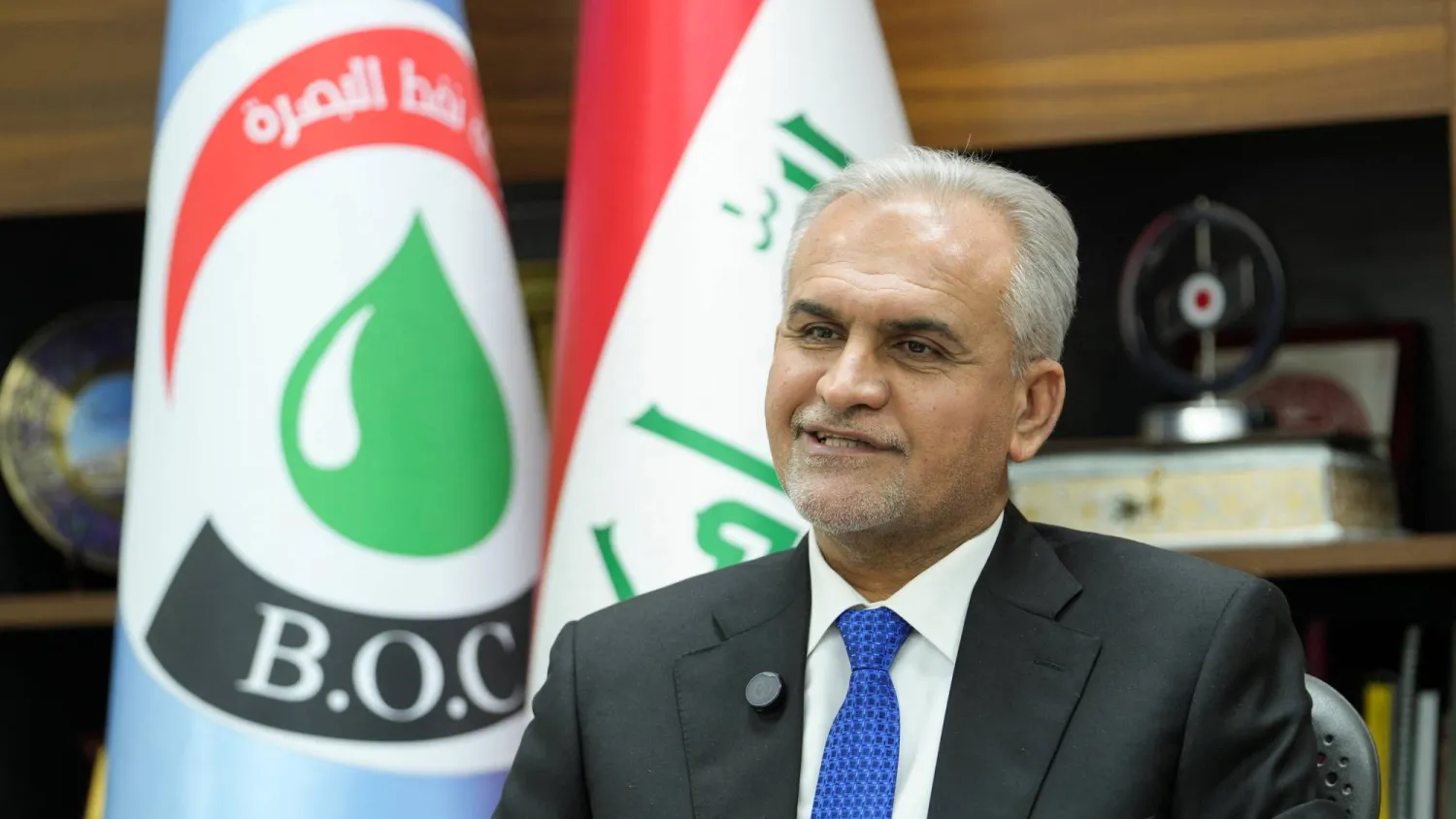
Bassem Abdul Karim, director general of the state-run Basra Oil Company (BOC), speaks during an interview with Reuters, in Basra, Iraq, April 6, 2026. (Reuters)
TT

Iraq Could Restore Oil Exports to Pre-War Level within a Week if Hormuz Reopens, Basra Oil Chief Says

 Bassem Abdul Karim, director general of the state-run Basra Oil Company (BOC), speaks during an interview with Reuters, in Basra, Iraq, April 6, 2026. (Reuters)
Bassem Abdul Karim, director general of the state-run Basra Oil Company (BOC), speaks during an interview with Reuters, in Basra, Iraq, April 6, 2026. (Reuters)

Iraq could restore crude oil exports to around 3.4 million barrels per day within a week provided the Iran war ends and the Strait of Hormuz reopens, the head of the country’s state-run Basra Oil Company said.

Among Gulf oil producers, Iraq has suffered the biggest drop in oil revenue as a result of the effective closure of the Strait, a Reuters analysis has found, because it lacks alternative shipment routes.

But the country, the second biggest producer in the Organization of the Petroleum Exporting Countries, can quickly restore output to levels before US-Israeli attacks on Iran at the end of February led to the effective closure of the waterway. The Strait typically is the route for about a fifth of global oil and LNG flows.

SO FAR IRAN HAS MADE ONLY VERBAL PROMISES

Bassem Abdul Karim said Iran has ‌so far provided ‌only verbal guarantees that would allow Iraqi tankers permission to transit the Strait.

“We have not ‌received ⁠any formal documents ⁠regarding permission for Iraqi tankers to pass,” he said in an interview with Reuters.

He said production from Iraq's southern oilfields was around 900,000 barrels per day, but if the war ends and safe passage through the Strait is guaranteed exports could reach 3.4 million bpd within a week.

US President Donald Trump has threatened to rain "hell" on Tehran unless it makes a deal by the end of Tuesday that would allow traffic to move through the Strait of Hormuz.

STEEP DROP IN IRAQI OIL OUTPUT

Last month, Iraq’s oil production dropped by about 80% to around 800,000 barrels per day, Iraqi energy officials told Reuters last month as the war meant Iraq could not ⁠export and storage tanks filled.

With limited outlets for Iraqi oil, production from the Rumaila field fell ‌to around 400,000 bpd, down from about 1.35 million bpd before the conflict, ‌and at the Zubair field the level was about 300,000 bpd, down 340,000 bpd before the war, Abdul Karim said.

Several smaller fields are ‌being operated at limited levels to ensure continued production of associated gas, used in domestic power generation, while shutdowns at ‌other sites have been used as an opportunity to carry out maintenance work, he added.

Production from Iraq's fields was around 4.3 million bpd before the war, which should leave enough leeway to export 3.4 million bpd even allowing for war-related damage.

Storage has filled up as the closure of the Strait of Hormuz blocked exports, but Iraq produces more crude than it consumes domestically, allowing it to boost shipments quickly by tapping inventories ‌without immediately affecting domestic supply, two Iraqi energy sources said.

Local refineries are primarily fed from ongoing production rather than export tanks, according to the sources, who have direct knowledge of ⁠downstream operations.

Gas output from ⁠fields in Basra has dropped to around 700 million standard cubic feet per day, compared with about 1.1 billion standard cubic feet mscf per day before the war, largely because of the reduced oil production, Abdul Karim said.

MEETING REFINERY DEMAND

To supply domestic demand, BOC is sending around 400,000 bpd of crude to northern Iraq. That includes about 150,000 bpd by truck and roughly 250,000 bpd via a domestic pipeline, to supply refineries that have demand of around 500,000 bpd.

Production from the northern Kirkuk fields is roughly 380,000 barrels per day, Abdul Karim said.

Asked about the impact of drone attacks, Abdul Karim said strikes on oil facilities had caused “major losses to the continuity of production and oil operations,” adding that both foreign and Iraqi service companies had been targeted.

A two-drone attack that targeted the Rumaila oilfield on Saturday wounded three Iraqi workers, security and energy sources told Reuters.

Abdul Karim said the attack on the northern part of the Rumaila field hit sites used by US oilfield services companies Schlumberger and Baker Hughes, causing a fire that was later brought under control.

A Baker Hughes spokesperson said the company’s priority was personnel safety and that its employees were safe and accounted for across the region.

Schlumberger did not immediately respond to a request for comment.