


Türkiye to Expand Gas Export Hub to Europe, Resumes Iraqi Oil Flow

Türkiye's Energy Minister Alparslan Bayraktar at a press conference in Ankara (Reuters)

t
Türkiye's Energy Minister Alparslan Bayraktar at a press conference in Ankara (Reuters) t
TT

Türkiye to Expand Gas Export Hub to Europe, Resumes Iraqi Oil Flow

Türkiye's Energy Minister Alparslan Bayraktar at a press conference in Ankara (Reuters)

t
Türkiye's Energy Minister Alparslan Bayraktar at a press conference in Ankara (Reuters) t

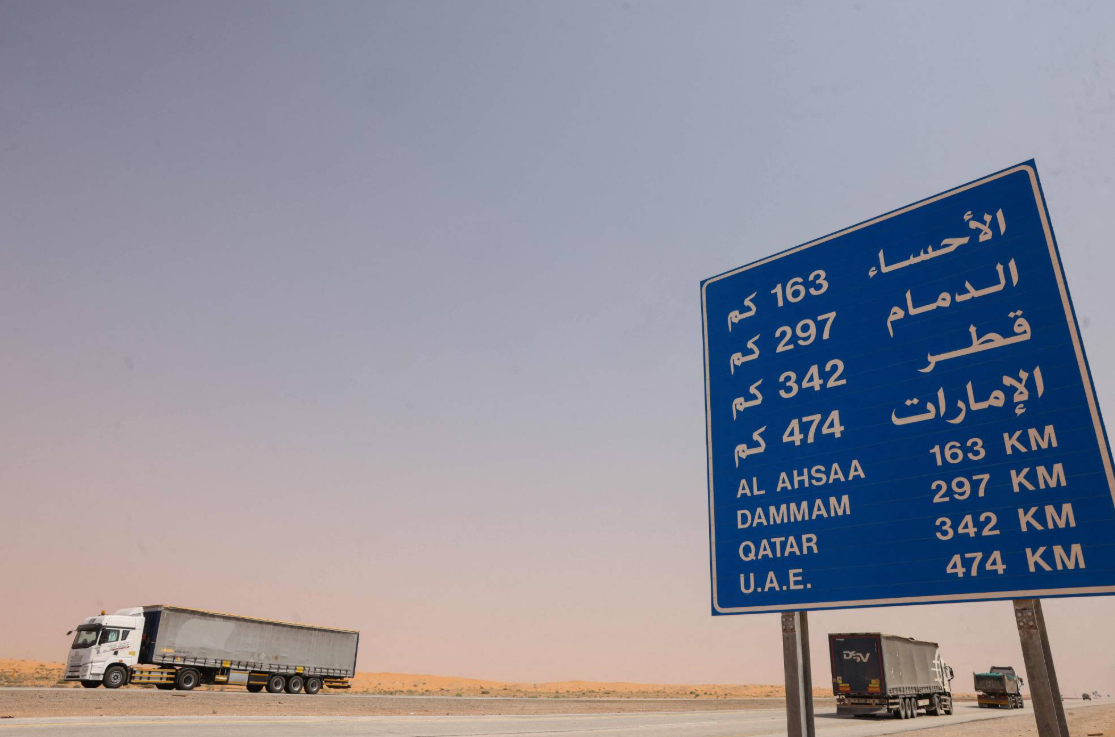
Türkiye believes its presence is indispensable to the success of energy and transport corridors in the region, revealing plans to expand its gas infrastructure to facilitate the transit of Russian gas to Europe.

Turkish Foreign Minister Hakan Fidan asserted that effective, sustainable operation of energy transportation corridors without Türkiye's involvement is not possible.

Speaking at the 10th World Turkish Business Council (DTIK) Congress in Istanbul, Fidan said: "We hope to move into the implementation phase of the Development Road project, which is of great importance for prosperity and stability in the Middle East within the next few months."

He highlighted ongoing intense negotiations with Iraq, the UAE, and Qatar about the project.

Fidan emphasized the significance of new trade routes, especially in light of recent geopolitical developments, including the COVID-19 pandemic, the Russo-Ukrainian war, and the rivalry between the United States and China, or more broadly, the West and China.

He noted that these developments have revived discussions of other trade routes previously considered theoretically, emphasizing that trade routes don't merely cater to commerce but also reflect geostrategic competition.

- A gas hub

Meanwhile, Energy Minister Alparslan Bayraktar stated that Türkiye plans to expand its gas infrastructure as it lays the groundwork to establish a gas exchange from which countries in southeast Europe can source gas.

Following its incursion into Ukraine in February of the previous year, Russia proposed setting up a gas hub in Türkiye last year to replace lost sales to Europe.

Turkish President Recep Tayyip Erdogan and Russian President Vladimir Putin have given directives to commence the project.

They discussed specific steps during their recent meeting in Sochi after the project's delay due to the earthquake catastrophe in Türkiye last February and the presidential and parliamentary elections in May.

Türkiye plans to expand its gas infrastructure in northwest Türkiye's Thrace region, connecting LNG gasification terminals and an upgraded storage facility in Silivri, west of Istanbul.

Bayraktar told a press briefing on Thursday that gas coming from Azerbaijan, Iran, and Russia through pipelines could also feed into this hub and be priced in a local gas exchange.

- Iraqi Oil Exports Resumption

Furthermore, Bayraktar confirmed that Iraq's northern oil export route through Türkiye will soon be ready to resume operation after checks on pipeline maintenance and repairs to flood damage.

Bayraktar mentioned that an inspection of the oil pipeline is complete, and it will soon be "technically" ready for operations.

Türkiye halted flows on Iraq's northern oil export route on March 25 after an arbitration ruling by the International Chamber of Commerce (ICC) ordered Ankara to pay Baghdad damages for unauthorized exports by the Kurdistan Regional Government (KRG) between 2014 and 2018.

"As of today, the independent surveyor completed their survey, and now they're preparing their report," Bayraktar said without mentioning a date for resumption of oil flows.

Iraq and Türkiye previously agreed to wait until maintenance works were complete before resuming the pipeline that contributes about 0.5 percent of the global oil supply. Sources said oil flows are not expected to start before October.

The Kurdistan Regional Government lost roughly $4 billion in lost exports.

- Nuclear power plant

The Minister revealed that the ongoing negotiations with Russia, China, and South Korea regarding constructing a second nuclear power station in Thrace, northwestern Türkiye, are progressing.

"We came to a very important point that we need to finalize [the deal] in a few months," said Bayraktar.

He also pointed to ongoing talks with Russia concerning the third nuclear power station in the Sinop.

Bayraktar said Türkiye needs to produce 20 gigawatts from the nuclear power plants in the future.

Russia is currently constructing the Akkuyu station, Türkiye's first nuclear power plant, situated in Mersin.

Bayraktar revealed that Türkiye aims to establish a broader nuclear ecosystem that requires atomic power to transition to clean energy by 2050.

ESCWA: Conflict Could Cut Arab Economic Output by $150 Billion in 1 Month

The tanker RARITY sits at anchor as lightning flashes in the distance, amid the US-Israeli conflict with Iran, off Sultan Qaboos Port in Muscat, Oman, March 21, 2026. REUTERS/Stelios Misinas
TT

ESCWA: Conflict Could Cut Arab Economic Output by $150 Billion in 1 Month

The tanker RARITY sits at anchor as lightning flashes in the distance, amid the US-Israeli conflict with Iran, off Sultan Qaboos Port in Muscat, Oman, March 21, 2026. REUTERS/Stelios Misinas

The regional war is imposing heavy economic costs across the Arab region, with preliminary estimates pointing to about $63 billion in regional losses within two weeks, the United Nations Economic and Social Commission for Western Asia (ESCWA) warned in a recently issued policy brief.

Under the title “Conflict and its shockwaves: escalation of a crisis in the Arab region,” the brief warns that if the conflict continues for a month, losses could reach nearly $150 billion, or 3.7% of regional GDP.

ESCWA comprises 21 Arab States: Algeria, Bahrain, Egypt, Iraq, Jordan, Kuwait, Lebanon, Libya, Morocco, Mauritania, Oman, State of Palestine, Qatar, Saudi Arabia, Somalia, Sudan, Syria, Tunisia, United Arab Emirates, Djibouti and Yemen.

The brief affirmed that GCC economies represent the most immediate and globally visible transmission channel of the conflict.

It said the current conflict risks disrupting energy markets, maritime trade routes, aviation networks, supply chains and financial flows, and heightening humanitarian pressure.

It noted that the assessment of GDP losses in the first two weeks assumes a war lasting two weeks and incorporates a reduction in oil production in affected countries of nearly 20 million barrels per day due to disruption to logistic networks.

Concerning natural gas markets, the North-West European liquefied natural gas (LNG) benchmark rose from approximately $28.80/MMBtu to $50.95/MMBtu, representing an 80% increase following disruptions to Qatari LNG production at Ras Laffan and Mesaieed, which together account for roughly 19% of global gas supply.

ESCWA said the conflict has also generated severe disruptions to maritime trade flows through the Strait of Hormuz.

Daily vessel arrivals at Gulf ports declined from 95–137 vessels per day before the strikes to around 5 vessels per day by early March 2026, representing a decline of approximately 96–97% in shipping activity.

Based on average cargo values for crude oil, gas, containerized goods and bulk commodities, the implied economic value of disrupted trade is estimated at approximately $2.4 billion per day.

For the first two weeks of the war and under an escalation scenario of one month, ESCWA said cumulative trade losses could reach around $30 billion in the first two weeks and around $55–60 billion within one month.

Also, the brief said transport and logistics networks represent one of the most immediate operational channels through which the conflict affects regional economies.

Airspace closures and security risks forced airlines to suspend operations across major Gulf aviation hubs.

Between 28 February and 12 March 2026, a total of 18,441 flights were cancelled across nine major regional airports, namely Dubai, Doha, Abu Dhabi, Kuwait, Bahrain, Riyadh, Jeddah, Muscat and Beirut.

Using airport-specific revenue estimates based on airline financial data, the estimated airline revenue loss from cancelled flights during the first 12 days of the conflict is approximately $1.9 billion, equivalent to an average of around $102,000 per cancelled flight.

If disruptions persist, cumulative losses could reach around $2.2 billion in the first two weeks and around $3.6 billion within one month.

The repercussions of the current war have extended to hit the economic and social depths of ESCWA's member states.

In Lebanon, Israeli strikes are already generating significant socioeconomic impacts. Escalating airstrikes and widespread displacement had claimed 634 lives by 11 March, and forced over 816,000 to flee their homes.

In Egypt and Tunisia, at $100 per barrel of oil, the additional annual oil import cost amounts to about $6.8 billion compared with levels assumed in their national budgets for 2026.

In the State of Palestine, Somalia, Sudan and Yemen, poverty has risen sharply and continue to face chronically high poverty levels.

According to ESCWA, many Arab economies entered the crisis with high debt and limited fiscal space.

Even before this war, 210 million people (43% of the region’s population) lived in conflict-affected settings, including 82 million needing humanitarian assistance.

ESCWA placed an assessment of the economic costs of the war using two scenario-based approaches that reflect the duration and intensity of the escalation.

Preliminary analysis captures estimates of the impacts observed during the first two weeks of the conflict, while scenario A considers the effects if the war extends to one month.

Scenario B represents a more severe escalation in which the war persists for a year or longer, and generates systemic and potentially catastrophic economic and humanitarian consequences.

The UN agency said the current escalation presents risks that extend beyond immediate economic disruptions.

Rising living costs, weaker job creation and increasing pressure on already strained social protection systems could deepen poverty and inequality while exacerbating an already chronic humanitarian crisis.

“These pressures may also undermine food and water security and risk reversing progress toward the Sustainable Development Goals across the Arab region,” it noted.

ESCWA said in the most severe scenario, the conflict extends beyond a month to one year, escalating major disruption in critical maritime and energy corridors, particularly the Strait of Hormuz and Red Sea shipping routes.

Under this scenario, it added, the shock becomes systemic, affecting global oil and gas supply chains and generating widespread supply-chain disruptions across trade routes linking Asia, Europe and the Middle East.


European Gasoline Heads to Asia as Iran War Sparks Supply Fears

Oil, gasoline, and diesel storage tanks in Carson, California (Reuters)
TT

European Gasoline Heads to Asia as Iran War Sparks Supply Fears

Oil, gasoline, and diesel storage tanks in Carson, California (Reuters)

European and US gasoline cargoes are heading to the Asia Pacific after Asian prices surged on tightening supply due to the US-Israeli war with Iran, according to trade sources and shipping data.

The war has disrupted crude and oil product shipments from the Middle East to Asia, causing Asian refineries to cut output and forcing fuel distributors to seek supply from as far as the United States and buy more Russian fuel.

The extra shipping costs will exacerbate already soaring fuel prices for consumers and businesses, said Reuters.

At least three gasoline cargoes totaling about 1.6 million barrels have loaded last week from Europe for Asia, according to traders ‌and ship tracking data ‌from Kpler, as companies including Vitol and TotalEnergies ship the ‌fuel ⁠to the East ⁠to cash in on better margins in Asia.

Vitol and TotalEnergies declined to comment. Earlier, Exxon Mobil booked US gasoline cargoes for Australia.

Europe typically only sends small parcels of gasoline to the East of Suez markets, while its key markets are the US, Latin America and West Africa.

Asian refiners' profits from making a barrel of gasoline from Brent crude are hovering near 2022 highs of about $37 a barrel over Brent crude last week versus $8 before the ⁠war.

"One key factor is refinery behavior under crude supply uncertainty. ‌As disruptions around the Strait of Hormuz increase feedstock ‌risk, some refiners are becoming more cautious about run rates or export commitments," Nithin Prakash, analyst at ‌consultancy Rystad Energy, said.

Even if inventories currently appear comfortable, lower refining throughput could tighten ‌the supply outlook and support gasoline margins, he said. Singapore inventories of light distillates, which include gasoline and naphtha, are about 6% higher than the same time last year, at 17.93 million barrels, LSEG data showed.

REGIONAL SUPPLY FALLS

Gasoline supply from within the region is falling as shipments from ‌top fuel exporter South Korea are expected to drop to between 5 million and 6 million barrels in March from a three-month ⁠average of about ⁠10 million barrels, preliminary Kpler and LSEG data showed.

China, another big supplier, has banned fuel exports to shore up its domestic market. Thailand and Vietnam have also restricted fuel exports. Traders are now pinning their hopes on Asia's second largest fuel exporter, India, which typically sends about 40% of its monthly shipments of between 7 million and 8 million barrels to the Middle East, to pivot to the East.

India typically sends about 22% of its gasoline to Asia, LSEG data showed. However, the country's gasoline exports have plummeted to about 5 million to 6 million barrels in March from around 12 million barrels last month, preliminary LSEG and Kpler data showed, as state-run Mangalore Refinery and Petrochemicals has temporarily suspended cargo loadings.

Vessel Load port Discharge Volume Load Charterer port (bbl) date Maui Ventspils Singapore 770,000 March 18 Vitol Metro Mistral Amsterdam Karachi 500,000 March 14 TotalEnergies ST Connaught Amsterdam Singapore 400,000 March 17.


Gold Slides to Nearly 4-month Low

FILED - 02 February 2026, Bavaria, Munich: Gold bars lie in a safe on a table at the precious metal dealer Pro Aurum. Photo: Sven Hoppe/dpa
TT

Gold Slides to Nearly 4-month Low

FILED - 02 February 2026, Bavaria, Munich: Gold bars lie in a safe on a table at the precious metal dealer Pro Aurum. Photo: Sven Hoppe/dpa

Gold prices slipped more than 2% on Monday, hitting a nearly four-month low, as an escalating Middle East conflict stoked inflation concerns and expectations of higher global interest rates.

Spot gold fell 2.7% to $4,366.94 per ounce as of 0432 GMT, extending losses into a ninth straight session. The metal, which fell to its lowest since January 2 on the day, lost more than 10% last week.

US gold futures ⁠for April delivery ⁠fell 4.5% to $4,369.90, Reuters reported.

"With the Iranian conflict into its fourth week, and oil prices hanging around the $100 level, expectations have pivoted from rate cuts to potential rate hikes, which have tarnished gold's appeal from a yield point of view," said Tim Waterer, chief market analyst, KCM Trade.

"Gold's high liquidity appears to be hurting it during this risk-off period. 

Downturns in stock markets are leading to gold portions being closed to cover margin calls on other assets," Waterer said.

Asian shares fell and oil prices stayed well above $110 a barrel, as investors weighed US and Iranian threats to target energy ⁠facilities.

The closure ⁠of the Strait of Hormuz kept crude elevated, stoking inflation fears by pushing up transport and manufacturing costs. While rising inflation typically boosts gold's appeal as a hedge, high rates curb demand for the non-yielding asset.

Market pricing for a US Federal Reserve rate hike this year has shot up, and is now seen as far more likely than a rate cut, with rate futures pricing in around a 32% chance of a rate hike by December, per the CME FedWatch tool.

Spot silver lost 3.4% to $65.45 per ounce. Spot platinum fell 3.4% to $1,857.67 and palladium was steady at $1,403.10.
