

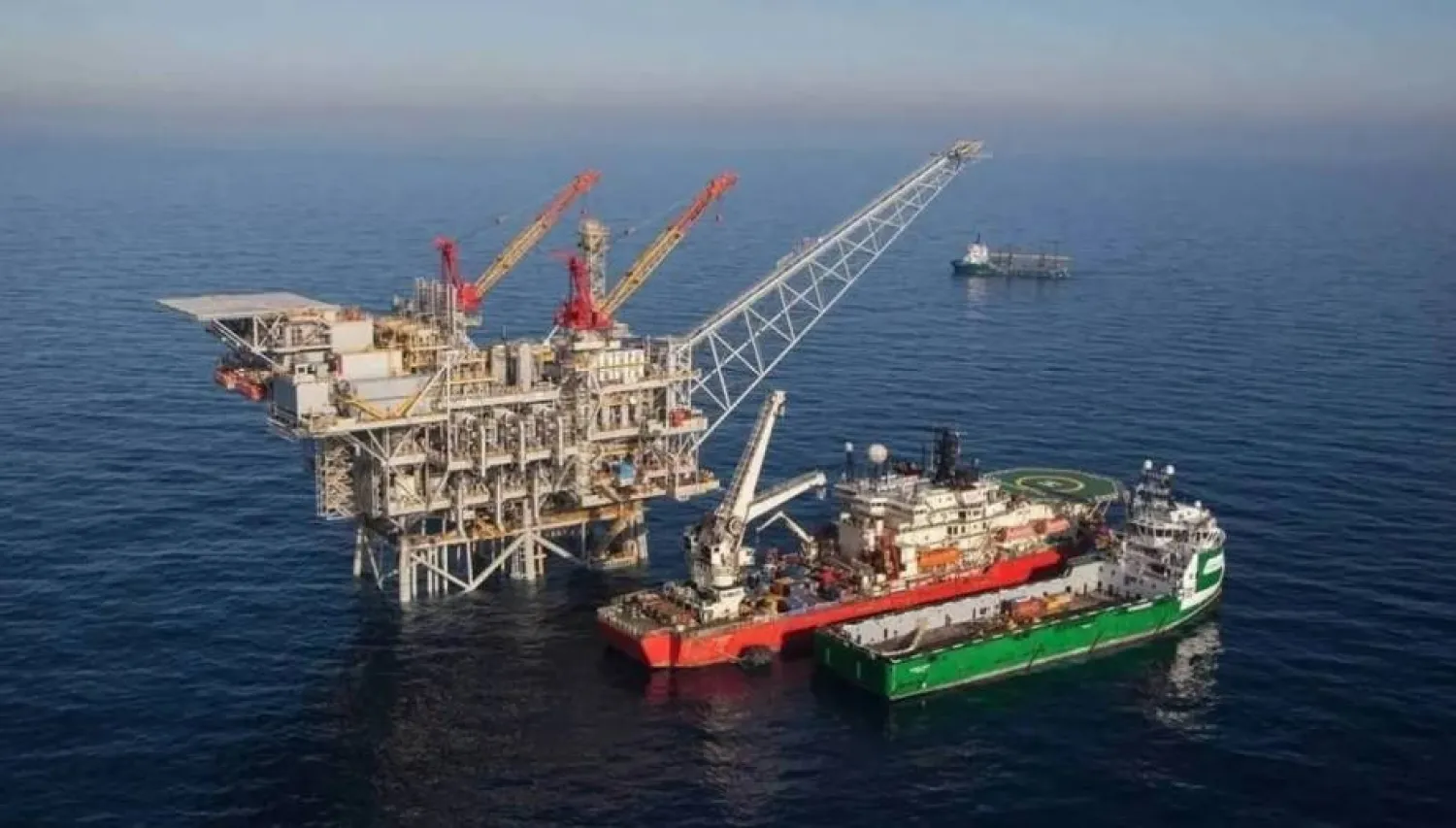

Egypt Kuwait Holding Achieves $185 Million Net Profit in 2024

An offshore gas platform (Reuters)
TT

Egypt Kuwait Holding Achieves $185 Million Net Profit in 2024

An offshore gas platform (Reuters)

Egypt Kuwait Holding Company (EKH) on Sunday said it recorded a net profit of $185 million for the full fiscal year of 2024.

EKH posted revenues of $642 million, supported by solid gross and earnings before interest, taxes, depreciation and amortization (EBITDA) margins of 40% and 39%, respectively.

The company recorded a net profit of $185 million, with a 2% point expansion in net profit margin, reaching 29%. Meanwhile, net profit attributable to EKH shareholders stood at $163 million during the same period.

The company successfully maintained profitability margins despite economic challenges, with gross profit and EBITDA margins reaching 41% and 42%, respectively during the period, EKH said in a statement.

Commenting on the Group’s performance and business outlook, EKH Chairman Loay Jassim Al-Kharafi emphasized that EKH successfully navigated operational and economic challenges throughout 2024, attributing this resilience to the Group’s well-defined strategy and flexible business model.

These factors, he said, have enhanced EKH’s ability to achieve sustainable growth and drive long-term success.

Al-Kharafi added that the positive financial results reflect a notable recovery in prices and an increase in sales volumes of core products, reinforcing confidence in the strength and sustainability of the Group’s business portfolio and paving the way for ambitious expansion plans in 2025.

Al-Kharafi affirmed that the Group’s top priorities include boosting foreign currency revenues, expanding exports, and strengthening its financial position, while continuing to contribute to regional economic development.

He also noted that EKH’s first investment in Saudi Arabia is expected to commence commercial operations in the coming months.

Additionally, the Group is advancing its ambitious investment strategy, which includes its first strategic investment beyond the Middle East and North Africa region during the current year, expanding its global operational footprint, Al-Kharafi said.

This reflects EKH’s commitment to managing foreign exchange risk, expanding into high-growth markets, and diversifying its investment portfolio across sectors and geographies, he added.

“Looking ahead to 2025, we will continue to optimize our capital deployment and prioritize investments that align with our strategic objectives, to maximize returns for our stakeholders,” Al-Kharafi said.

Subsidiaries/Fertilizers

Meanwhile, the gross profits of the Alexandria Fertilizers Company (AlexFert) expanded, supported by steady natural gas supply secured by way of recent government interventions and sustained recovery in export urea prices.

In Fiscal Year 2024, revenues recorded $213 million, impacted by natural gas availability, while gross profit and EBITDA margins remained strong at 36% and 44%, respectively, coupled with a 2 percent point year-on-year expansion in the company’s bottom-line margin.

“Looking ahead, the company expects to sustain its strong performance, benefiting from stable natural gas supplies supported by government measures and the continued recovery in global urea prices,” it said in a statement.

Urea prices increased by 8% quarter-on-quarter in 4Q 2024 to reach $364 per ton, while the average global urea price stood at $387 per ton in January 2025.

Petrochemicals

Sprea Misr recorded revenues of 5.84 billion Egyptian pounds in FY 2024, up 19% year-on-year.

Net profit stood at 2.64 billion Egyptian pounds in 2024, reflecting a 2 percent point year-on-year expansion in bottom-line profitability to 45%, driven by gains from interest income and foreign exchange movements.

Sprea Misr is well-positioned to capitalize on the recovery of domestic prices following the devaluation of the Egyptian Pound and increased demand for Sulfonated Naphthalene Formaldehyde (SNF) due to the revival of Egypt’s construction sector.

Utilities Sector

NatEnergy recorded revenues of 5.3 billion Egyptian pounds, a 30% year-on-year increase, while net profit rose 21% to 1.8 billion Egyptian pounds.

Moving forward, NatEnergy is expected to benefit from recent electricity tariff hikes and will continue targeting higher-margin customers. Additionally, Kahraba is investing in a second substation in the 10th of Ramadan industrial zone to support growing energy demand.

Oil and Gas Sector

The North Sinai Offshore Concession reported total revenues of $62 million, reflecting a 7% year-on-year increase.

Meanwhile, net profit amounted to $31 million, with a net profit margin of 50%.

The company continues to deliver strong operational results, supported by its expansion initiatives. The commencement of production at the Aton-1 and KSE2 wells is expected to sustain stable gas production levels at approximately 55 million cubic feet per day (MMSCFD) until the end of 2026.

Additionally, the North Sinai Offshore Concession will benefit from the recent 10-year extension of its Concession Agreement, approved by the Egyptian General Petroleum Corporation (EGPC) during the year, further enhancing the long-term sustainability of its operations.

Non-banking financial services & other diversified sectors

Both Delta Insurance and Mohandes Insurance achieved strong growth, with net profit increasing by 72% and 27% year-on-year, respectively, in Egyptian pound terms during Fiscal Year 2024.

Looking ahead, management expects the insurance sector to maintain its positive trajectory, supported by continued upward revaluation of insured assets, stable premium growth, and a favorable macroeconomic environment, the company said.

Additionally, NileWood is making significant progress toward the commercial launch of its MDF board production line, with operations set to commence in the first half of 2025.



Sources: Spain, Algeria in Talks to Increase Pipeline Gas Supply by Up to 10%

Spanish Foreing Affairs Minister Jose Manuel Albares speaks during a press conference after the Cabinet meeting at Moncloa Palace in Madrid, Spain, 24 March 2026.  EPA/CHEMA MOYA
Spanish Foreing Affairs Minister Jose Manuel Albares speaks during a press conference after the Cabinet meeting at Moncloa Palace in Madrid, Spain, 24 March 2026. EPA/CHEMA MOYA
TT

Sources: Spain, Algeria in Talks to Increase Pipeline Gas Supply by Up to 10%

Spanish Foreing Affairs Minister Jose Manuel Albares speaks during a press conference after the Cabinet meeting at Moncloa Palace in Madrid, Spain, 24 March 2026.  EPA/CHEMA MOYA
Spanish Foreing Affairs Minister Jose Manuel Albares speaks during a press conference after the Cabinet meeting at Moncloa Palace in Madrid, Spain, 24 March 2026. EPA/CHEMA MOYA

Spain and Algeria are in talks to increase the supply of natural gas via the Medgaz pipeline from Algeria by as much ⁠as 10%, two ⁠sources familiar with the matter said.

Talks are in advanced stage, one of the ⁠sources said, adding that a preliminary agreement may be reached during Spanish Foreign Minister Jose Manuel Albares's visit to Algiers this week.

The increase would be possible as the ⁠pipeline ⁠between the countries has capacity to increase the flow of gas by around 1 billion cubic meters (bcm) per year, Reuters quoted them as saying.

Spain and Algeria agreed to strengthen their energy partnership, Albares said on Thursday after meeting Algerian President Abdelmadjid Tebboune.

Algeria is "a stable and reliable" supplier of gas, Albares said.

The Iran conflict has upended energy markets and increased volatility, leading some to look elsewhere ⁠for their gas. Spanish power ⁠utility Naturgy's CEO Francisco Reynes said this week the company wanted to strengthen its relationship with its Algerian supplier and shareholder Sonatrach.

Naturgy has gas contracts with the Algerian state oil and gas company for ⁠about 5 billion cubic meters per year, according to figures the Spanish company gave to the market in 2022.

Algerian gas made up more than 29% of Spain's total gas imports in the first two months of the year, according to data from Spanish gas grid operator Enagas.

It comes via the Medgaz pipeline, in which Naturgy is ⁠a minority ⁠partner and Sonatrach holds a 51% stake. Sonatrach also has a stake of about 4% in Naturgy.

Other countries are also asking Algeria for more gas in the face of disruption caused by the conflict in the Middle East.

Italian Prime Minister Giorgia Meloni said she hoped Algeria would send more gas to her country during a visit to Algiers this week.


TotalEnergies to Honor All LNG Contracts Despite Qatar Outages

FILE PHOTO: The logo of French oil and gas company TotalEnergies is seen at a petrol station in Paris, France, March 25, 2026. REUTERS/Abdul Saboor/File Photo
TT

TotalEnergies to Honor All LNG Contracts Despite Qatar Outages

FILE PHOTO: The logo of French oil and gas company TotalEnergies is seen at a petrol station in Paris, France, March 25, 2026. REUTERS/Abdul Saboor/File Photo

TotalEnergies' CEO Patrick Pouyanne said on Thursday that the company made a decision not to declare force majeure to any of its liquefied natural gas customers, and that it would respect all the LNG contracts in terms of price and ⁠volume.

Qatar, the world's biggest ⁠LNG producer, has declared force majeure on all of its LNG output after being attacked as part of the US-Israeli war with Iran.

"We said to our customers we will ⁠not invoke force majeure and not deliver the gas... We want to be security of supply for our customers," Pouyanne said.

"Yes, we'll miss energy coming from Qatar and Abu Dhabi, but our portfolio is large enough to redirect part of it," he added, according to Reuters.

Analysts estimate TotalEnergies takes 5.2 million metric tons per annum (mtpa) from ⁠its ⁠share of the QatarEnergy LNG trains.

Sources have said Shell, the world's biggest LNG trader, had declared force majeure on cargoes it buys from QatarEnergy and sells on. Analysts estimate Shell takes 6.8 mtpa of Qatari LNG.

Pouyanne also said that the current energy crisis makes renewables more attractive as they are not subject to the volatility from geopolitical instability.


India Secures 60 Days of Oil Supply amid Hormuz Disruption

Small boats sail loaded with goods in front of a container ship in the waters of the Strait of Hormuz off the coast of Oman, June 25, 2025 (AFP)
TT

India Secures 60 Days of Oil Supply amid Hormuz Disruption

Small boats sail loaded with goods in front of a container ship in the waters of the Strait of Hormuz off the coast of Oman, June 25, 2025 (AFP)

India has secured crude oil supplies for the next 60 days, ensuring stable fuel supplies in the country despite disruption in shipments from the Middle East, the oil ministry said in a statement on Thursday.

India, the world's third biggest oil consumer and importer, was buying over 40% of its oil imports from the Middle East. Those supplies are disrupted due to the US-Israeli war on Iran.

Higher availability of crude in global markets, mainly from the Western hemisphere, has helped offset the shortfall, the government said.

Taking advantage of a temporary US waiver, Indian refiners have also ramped up purchases of Russian crude, securing millions of barrels to fill the supply gap.

"Despite the situation at the Strait of Hormuz, India is today receiving more crude oil from its 41-plus suppliers across the world than what was previously arriving through the Strait," the ministry said.

As a net exporter of petroleum products, India’s domestic availability of petrol and diesel remains structurally secure, the government said.

The world's fourth-largest refiner has oil and fuel stocks sufficient to meet 60 days of demand, against a total storage capacity of 74 days, it added.

"Nearly two months of steady supply is available for every Indian citizen, regardless of what happens globally. The next two months of crude procurement have also been secured," it added.

India has asked refiners to maximize production of liquefied petroleum gas, used as cooking fuel, as the nation was buying 90% of its LPG imports from the Middle East.

Domestic daily LPG production has been increased by 40% to 50,000 metric tons against a requirement of 80,000 tons, it said.

In addition, Indian companies have secured 800,000 tons of LPG cargoes from the United States, Russia, Australia, and other countries, it said.

These shipments, arriving across India's 22 LPG import terminals, provide roughly one month of assured supply, with further procurement underway, the government said.