
Saudi Banks Post Record-Breaking Profits in Q1 2025

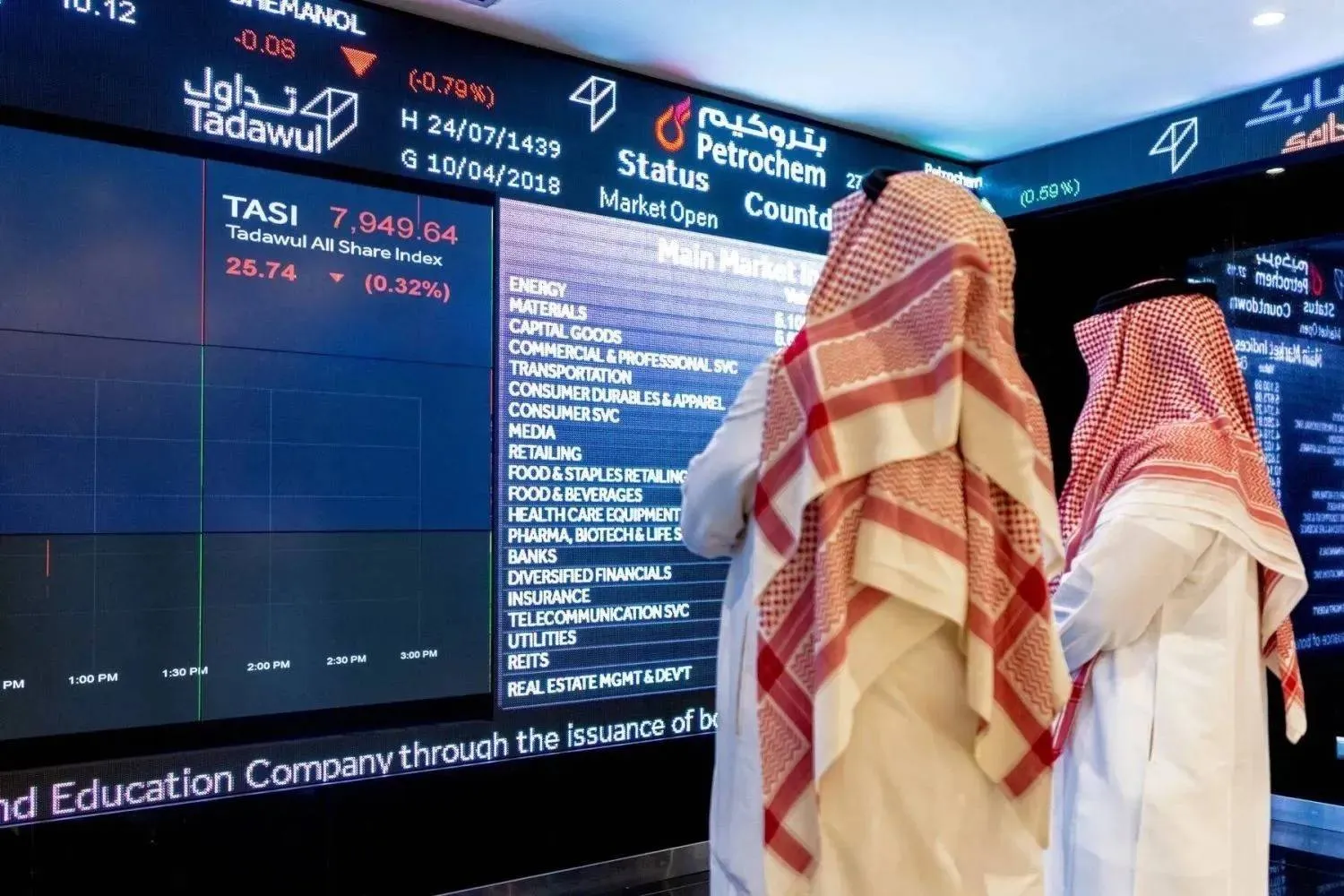
People monitoring the performance of the Saudi stock market (Bloomberg) 
TT

Saudi Banks Post Record-Breaking Profits in Q1 2025

People monitoring the performance of the Saudi stock market (Bloomberg) 

Saudi banks achieved historic profits in the first quarter of 2025, recording their highest-ever quarterly earnings at $5.94 billion (SAR 22.26 billion). This marks a notable 19% increase compared to the same quarter in 2024, representing a gain of $965 million (SAR 3.62 billion).

All ten listed banks on the Saudi stock exchange reported growth in net profits during the first quarter, reflecting robust performance across the industry. The National Commercial Bank (NCB) led the way with SAR 6.02 billion in net profit, up 19.48% from the first quarter of last year. Al Rajhi Bank ranked second with SAR 5.9 billion in profit, posting the highest growth rate among its peers at 34%. Riyad Bank came in third, with SAR 2.48 billion in net income, reflecting a 19.94% increase.

Operating Income Drivers

Dr. Suleiman Al-Humaid Al-Khalidi, a financial markets analyst and member of the Saudi Economic Association, attributed this record-breaking performance to several key factors: the expansion of lending portfolios, higher net commission and operating income, and a decline in loan loss provisions.

He noted that the reduction in provisions -funds set aside to cover potential loan defaults- was a significant factor supporting profit growth. Additionally, banks benefited from returns on debt instruments and a notable expansion in mortgage financing, both of which contributed to the strong results.

Al-Khalidi expects Saudi banks to maintain this strong momentum in the coming quarters, projecting that total annual profits could reach SAR 85–90 billion by year-end. Such figures, he said, would set new historical benchmarks and reflect the strength, resilience, and diversification of the Saudi economy.

Interest Rates and Market Conditions

Mohamed Hamdy Omar, economic analyst and CEO of GWorld, echoed this positive outlook, crediting the sector’s performance to the continued robustness of Saudi banks. He cited persistently high global interest rates, contractionary monetary policies, and the Saudi riyal’s peg to the US dollar as key drivers that boosted lending margins.

He pointed out that growth in lending portfolios, especially in real estate and corporate loans, has been driven by Vision 2030 initiatives and major infrastructure projects, all of which significantly enhanced fee income and operational earnings.

Looking ahead, Omar predicted continued strong performance for the banking sector in the remainder of 2025, supported by steady interest rates and strong demand for financing. However, he cautioned that any global move toward lowering interest rates could pressure profit margins, underscoring the importance of income diversification and enhanced digital services.

He stressed the need for vigilance regarding geopolitical developments and oil prices, both of which influence liquidity and credit activity in the Saudi market. Omar concluded by highlighting the importance of investing in financial technology and digital transformation to boost competitiveness and attract new customer segments, while also encouraging banks to diversify their portfolios to hedge against future risks.


Lebanese Cabinet Approves Draft Law on Financial Crisis Losses

A photograph released by the Lebanese Government Press Office on December 26, 2025, show Prime Minister Nawaf Salam speaking during a press conference after a cabinet session in Beirut on December 26, 2025. (Photo by Handout / Lebanese Government Press Office / AFP)
TT

Lebanese Cabinet Approves Draft Law on Financial Crisis Losses

A photograph released by the Lebanese Government Press Office on December 26, 2025, show Prime Minister Nawaf Salam speaking during a press conference after a cabinet session in Beirut on December 26, 2025. (Photo by Handout / Lebanese Government Press Office / AFP)

Lebanon's government on Friday approved a draft law to distribute financial losses from the 2019 economic crisis that deprived many Lebanese of their deposits despite strong opposition to the legislation from political parties, depositors and banking officials.

The draft law will be submitted to the country's divided parliament for approval before it can become effective.

The legislation, known as the "financial gap" law, is part of a series of reform measures required by the International Monetary Fund (IMF) in order to access funding from the lender.

The cabinet passed the draft bill with 13 ministers in favor and nine against. It stipulates that each of the state, the central bank, commercial banks and depositors will share the losses accrued as a result of the financial crisis.

Prime Minister Nawaf Salam defended the bill, saying it "is not ideal... and may not meet everyone's aspirations" but is "a realistic and fair step on the path to restoring rights, stopping the collapse... and healing the banking sector.”

According to government estimates, the losses resulting from the financial crisis amounted to about $70 billion, a figure that is expected to have increased over the six years that the crisis was left unaddressed.

Depositors who have less than $100,000 in the banks, and who constitute 85 percent of total accounts, will be able to recover them in full over a period of four years, Salam said.

Larger depositors will be able to obtain $100,000 while the remaining part of their funds will be compensated through tradable bonds, which will be backed by the assets of the central bank.

The central bank's portfolio includes approximately $50 billion, according to Salam.

The premier told journalists that the bill includes "accountability and oversight for the first time.”

"Everyone who transferred their money before the financial collapse in 2019 by exploiting their position or influence... and everyone who benefited from excessive profits or bonuses will be held accountable and required to pay compensation of up to 30 percent of these amounts," he said.

Responding to objections from banking officials, who claim components of the bill place a major burden on the banks, Salam said the law "also aims to revive the banking sector by assessing bank assets and recapitalizing them.”

The IMF, which closely monitored the drafting of the bill, previously insisted on the need to "restore the viability of the banking sector consistent with international standards" and protect small depositors.

Parliament passed a banking secrecy reform law in April, followed by a banking sector restructuring law in June, one of several key pieces of legislation aimed at reforming the financial system.

However, observers believe it is unlikely that parliament will pass the current bill before the next legislative elections in May.

Financial reforms in Lebanon have been repeatedly derailed by political and private interests over the last six years, but Salam and Lebanese President Joseph Aoun have pledged to prioritize them.


Türkiye Says Russia Gave It $9 Billion in New Financing for Akkuyu Nuclear Plant

Türkiye’s Energy Minister Alparslan Bayraktar talks during a meeting in Ankara, Türkiye, September 14, 2023. (Reuters)
TT

Türkiye Says Russia Gave It $9 Billion in New Financing for Akkuyu Nuclear Plant

Türkiye’s Energy Minister Alparslan Bayraktar talks during a meeting in Ankara, Türkiye, September 14, 2023. (Reuters)

Türkiye's energy minister said Russia had provided new financing worth $9 billion for the Akkuyu nuclear power plant being built by ​Moscow's state nuclear energy company Rosatom, adding Ankara expected the power plant to be operational in 2026.

Rosatom is building Türkiye's first nuclear power station at Akkuyu in the Mediterranean province of Mersin per a 2010 accord worth $20 billion. The plant was expected ‌to be operational ‌this year, but has been ‌delayed.

"This (financing) ⁠will ​most ‌likely be used in 2026-2027. There will be at least $4-5 billion from there for 2026 in terms of foreign financing," Alparslan Bayraktar told some local reporters at a briefing in Istanbul, according to a readout from his ministry.

He said ⁠Türkiye was in talks with South Korea, China, Russia, and ‌the United States on ‍nuclear projects in ‍the Sinop province and Thrace region, and added ‍Ankara wanted to receive "the most competitive offer".

Bayraktar said Türkiye wanted to generate nuclear power at home and aimed to provide clear figures on targets.


China Bets on Advanced Technologies to Revive Tepid Industrial Sector

A humanoid robot Tiangong by Beijing Innovation Center of Humanoid Robotics Co, moves an orange as a demonstration at its company, during an organized media tour to Beijing Robotics Industrial Park, in Beijing Economic-Technological Development Area, also known as Beijing E-Town, China May 16, 2025. (Reuters)
TT

China Bets on Advanced Technologies to Revive Tepid Industrial Sector

A humanoid robot Tiangong by Beijing Innovation Center of Humanoid Robotics Co, moves an orange as a demonstration at its company, during an organized media tour to Beijing Robotics Industrial Park, in Beijing Economic-Technological Development Area, also known as Beijing E-Town, China May 16, 2025. (Reuters)

China pledged on Friday to double down on upgrading its manufacturing base and ​promised capital to fund efforts targeting technological breakthroughs, after its industrial sector delivered an underwhelming performance this year.

China's industry ministry expects output of large industrial companies to have increased 5.9% in 2025 compared with 2024, state broadcaster CCTV said on Friday, almost unchanged from the 5.8% pace in 2024.

It would also be less than the ‌6% pace ‌of the first 11 months of ‌2025, ⁠based ​on ‌data released by the National Bureau of Statistics, as a weak Chinese economy suppressed domestic demand.

Industrial output, which covers industrial firms with annual revenue of at least 20 million yuan ($2.85 million), recorded growth of 4.8% in November, the weakest monthly year-on-year rise since August 2024.

Chinese policymakers have been looking ⁠to create new growth drivers in the economy by focusing on advancing ‌its industrial sector.

China has also vowed stronger ‍efforts to achieve technological self-reliance ‍amid intensifying rivalry with the United States over dominance ‍in advanced technology.

At the annual two-day national industrial work conference in Beijing that ended on Friday, officials pledged to deliver major breakthroughs in building a "modern industrial system" anchored by advanced manufacturing.

The ​focus will be on sectors such as integrated circuits, low-altitude economy, aerospace and biomedicine, an industry ministry ⁠statement showed.

The statement comes after China launched on Friday a national venture capital fund aimed at guiding billions of dollars of capital into "key hard technologies" such as quantum technology and brain-computer interfaces.

On artificial intelligence, the industry ministry said it will expand efforts to help small and medium-sized enterprises adopt the technology, while fostering new intelligent agents and AI-native companies in key industries.

Officials also vowed to "firmly curb" deflationary price wars, dubbed "involution", referring to excessive and low-return competition among ‌firms that erodes profits.