

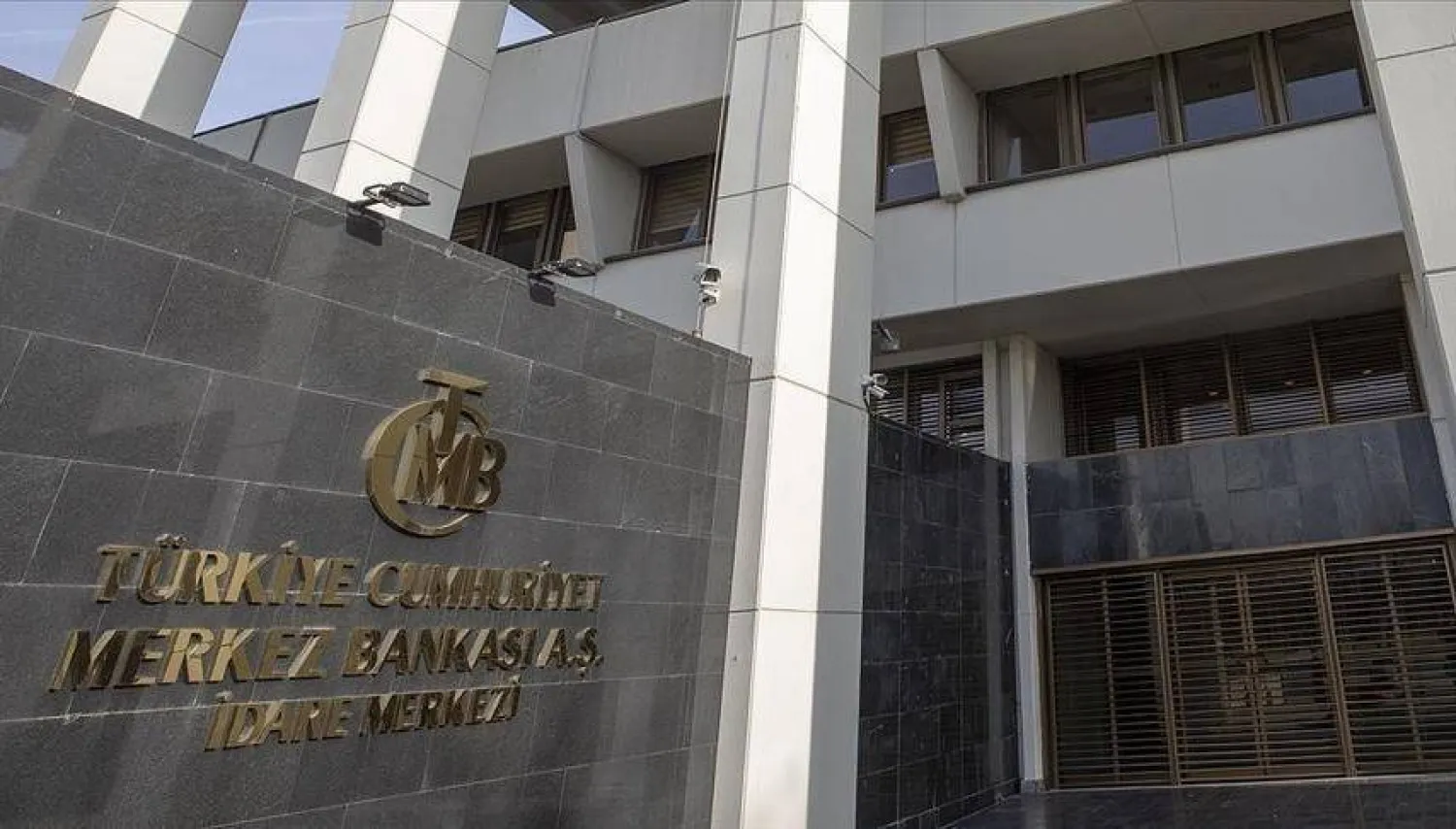

Türkiye Central Bank Holds Rates at 37% as it Eyes Iran War Fallout

Central Bank of Türkiye (official website)
TT

Türkiye Central Bank Holds Rates at 37% as it Eyes Iran War Fallout

Central Bank of Türkiye (official website)

Türkiye's central bank held its key interest rate at 37% as expected on Wednesday, deciding not to hike but warning that fallout from the Iran war could yet change the inflation outlook.

It was the second straight policy meeting at which the bank held steady despite some expectations that it could tighten, suggesting it was preparing to stand pat well into the summer, analysts said.

The central bank also did not adjust its overnight lending and borrowing rates from 40% and 35.5% respectively. Since the war started in late February, it has halted an easing cycle that began in late 2024 and taken other liquidity steps that pushed the lira overnight rate up to the 40% limit - moves that prompted some analysts to predict a 300-point hike this week.

The bank said it is closely monitoring any "potential second-round effects" on inflation, for which "leading indicators suggest a slight increase in the underlying trend in April".

"Amid geopolitical developments and the resulting uncertainties, energy prices remain elevated and exhibit notable volatility," its policy committee added.

In a Reuters poll, 19 of 23 economists predicted no change to borrowing costs, while four forecast a rate hike. The war-related surge in energy prices has rattled import-heavy economies like Türkiye where inflation was 30.87% last month, but where expectations have risen. On Tuesday, US President Donald Trump extended the war ceasefire indefinitely.

The ceasefire allowed the central bank "to refrain from tightening," William Jackson, economist at Capital Economics, said in a note. "So long as energy prices don't spike again, we think the CBRT will opt to leave interest rates on hold for at least a few more months."

Economists generally anticipate that rate cuts may resume in September. The Reuters poll predicted rates would be cut to only 32.75% by year-end. A separate poll found end-2026 consumer price inflation at 27.53%, compared with 25.38% in a previous poll.

In its quarterly inflation report in February - before the war began - the central bank had kept its end-2026 interim inflation target at 16%, while lifting its forecast range to 15-21% from 13-19% previously.

A year ago, the central bank temporarily reversed course and hiked rates in the face of political instability that rattled markets, though it returned to rate cuts by mid-2025.



FAO: World Food Prices at Highest Since 2022 as Supply Risks Mount

A vendor loads coconuts into a cart to transport them by tricycle in Quezon City, Metro Manila, Philippines, 04 September 2026. EPA/ROLEX DELA PENA
TT

FAO: World Food Prices at Highest Since 2022 as Supply Risks Mount

A vendor loads coconuts into a cart to transport them by tricycle in Quezon City, Metro Manila, Philippines, 04 September 2026. EPA/ROLEX DELA PENA

World food prices rose in August to their highest since late 2022, as adverse weather and war disruption in the Gulf and Black Sea heightened concern over supply of staples, the United Nations' Food and Agriculture Organization said on Friday.

Extreme heat and drought in Europe, the threat of a severe El Nino weather pattern and trade upheaval caused by the Ukraine and Iran wars have unsettled agricultural markets, pushing grain prices to three-year highs and sugar to a one-year ⁠peak.

The FAO Food ⁠Price Index, which tracks monthly changes in a basket of internationally traded food commodities, averaged 133.3 points in August, up from July's revised reading of 130.8.

That was the highest score since November 2022, though nearly 17% below a record peak from March 2022, ⁠after Russia's full-scale invasion of Ukraine.

"August’s increase in global food prices is a warning that the risk premium is returning to food markets: climate shocks, geopolitical tensions and disrupted trade logistics are converging to tighten supply expectations," FAO Chief Economist Maximo Torero said in a statement, according to Reuters.

The FAO's price benchmarks for cereals, vegetable oils, sugar, meat and dairy all rose in August.

The extreme weather in Europe affected prospects for the maize and sugar beet ⁠harvests ⁠as well as livestock output, while the anticipated El Nino phenomenon fueled concerns for vegetable oil and sugar output, it said.

Escalating attacks in the Black Sea have curtailed grain shipments from Russia and Ukraine in their 4-1/2-year-old war, while the US-Iran conflict was still straining flows of fertilizer for crops.

In a separate report, the agency cut its 2026 global cereal production forecast by 3.4 million metric tons from July to 2.980 billion tons, now 2.0% below 2025, though still the second-largest harvest on record.


Nepal Floods Could Cost Insurers Over $130 Mln Even Before Death, Injury Claims

People hold onto a cage on a makeshift zip line as they cross the Trishuli River from Koloni following deadly flash floods that damaged bridges and temporarily stranded residents, in Nuwakot district, Nepal, September 4, 2026. REUTERS/Adnan Abidi
TT

Nepal Floods Could Cost Insurers Over $130 Mln Even Before Death, Injury Claims

People hold onto a cage on a makeshift zip line as they cross the Trishuli River from Koloni following deadly flash floods that damaged bridges and temporarily stranded residents, in Nuwakot district, Nepal, September 4, 2026. REUTERS/Adnan Abidi

The devastating flood in Nepal last week could result in commercial insurance losses exceeding 20 billion Nepali rupees ($132.3 million), with hydropower projects accounting for most claims, according to a top official at one of the country's leading insurers.

The insurance cover, when paid out, covers losses borne by the operators of the power plants.

Life insurance, personal accident and workers' compensation claims are expected separately as authorities verify deaths and missing persons in inaccessible areas.

The disaster on Nepal's border with China's Tibet region caused an estimated $2.56 billion in economic losses in the Himalayan nation of 30 million people, the country's disaster authority chief told Reuters on Friday, leaving more than 1,200 dead and many more missing.

Eleven ⁠Nepali hydropower projects ⁠lie in the affected region, some covered by standard commercial insurance policies that are still being assessed, Toton Chakraborty, CEO of Oriental Insurance Company Nepal, told Reuters.

Oriental Insurance Nepal, a unit of the New Delhi-based Indian insurer, is among the leading insurers in the region.

"Hydropower projects along the affected river corridor have suffered the largest damage. In many cases, access roads and above-ground infrastructure have been washed away," he said.

Projects including Rasuwagadhi, Upper Trishuli-3A, Chilime and Devighat, were directly affected, ⁠while assessments at five others are ongoing, he said.

Data from the Nepal Insurance Authority show the regulator has so far received 583 flood-related claims worth 25.87 billion Nepalese rupees ($171.13 million) as of August 31.

Chakraborty said these figures largely reflect insured exposure rather than final claims, which will only be clear once detailed surveys are completed.

Claims could rise further if repairs delay project commissioning, as some policies compensate developers for lost revenue resulting from postponed commercial operations, he said.

Nepal's non-life insurance market is small by global standards. The country's 14 non-life insurers generated premiums of about 5.3 billion Nepali rupees ($35.06 million) during July-August, regulatory data showed, compared with 314 billion Indian rupees ($3.3 billion) written by Indian insurers during a similar period.

The market is supported by domestic reinsurers ⁠Nepal Re and Himalayan ⁠Re, alongside international players including India's GIC Re and Germany's Hannover Re.

The floods could have lasting implications for insurance coverage of Himalayan infrastructure, four industry executives said.

The Himalayan region faces severe risks from earthquakes and any future glacial floods, a senior UN official told Reuters this week.

"The recent mountain floods in South Asia may lead insurers to further review hydropower and infrastructure risks, particularly in highly exposed locations," said Benjamin Ng, power leader for Asia at Aon, an international insurance broker.

Insurers may increasingly impose exclusions, lower sub-limits and narrow coverage, resulting in higher premiums and more selective underwriting, Ng said.

Other recent Himalayan catastrophes include the 2023 glacial lake outburst flood in India's Sikkim and the flash flood in the northern Indian state of Uttrakhand in 2021.

The latest floods could reshape industry views on risk accumulation and glacial lake outburst flood exposure, said Sanjay Mokashi, chief underwriting officer at Indian state-owned reinsurer GIC Re.


Gold Heads for Modest Weekly Gain as Investors Await US Payrolls Data

Gold jewelry is displayed at an exhibition in Kabul, Afghanistan, 03 September 2026. (EPA)
TT

Gold Heads for Modest Weekly Gain as Investors Await US Payrolls Data

Gold jewelry is displayed at an exhibition in Kabul, Afghanistan, 03 September 2026. (EPA)

Gold prices were steady on Friday and poised for a modest weekly gain, as traders' attention turned to key US payrolls data for clues on the Federal Reserve's next interest rate decision.

Spot gold held its ground at $4,469.26 per ounce, as of 0633 GMT. Prices jumped 2% on Thursday as traders scaled back expectations for a September rate ‌hike after Fed ‌Governor Christopher Waller said he would support ‌leaving ⁠rates unchanged if data ⁠continued to show inflation pressures moderating.

US gold futures for December delivery fell 0.5% to $4,515.70.

Traders are pricing in an about 50% chance of a Fed rate hike later this month, according to the CME FedWatch Tool.

The US nonfarm payrolls report is due at 1230 GMT.

"Weak figures and a ⁠rise in unemployment could weaken the case for ‌a rate hike. In ‌this case, gold could recover. However, the metal could remain exposed to ‌changing sentiment, with inflation data releases coming next week," ‌said Ross Maxwell, global strategy operations lead, VT Markets.

"The market continues to benefit from central bank demand, which could limit the extent of any decline."

Though gold is often viewed as an inflation ‌hedge, elevated interest rates tend to weigh on the non-yielding asset.

Data on Thursday showed the ⁠number of ⁠Americans filing claims for unemployment benefits rose marginally last week amid low layoffs, pointing to stable labor market conditions.

Meanwhile, US Vice President JD Vance said the fighting between Washington and Tehran was not a war and declined to provide a timeline for when the conflict would be over, underscoring the challenge the Trump administration faces as the hostilities enter their seventh month and mid-term elections loom.

Among other metals, spot silver fell 0.5% to $66.59 per ounce. Platinum lost 1.2% to $1,803.53 and palladium declined nearly 1.3% to $1,403.03, with both metals on track for slight weekly declines.