


Saudi Development Bank to Inject $8 Billion to Empower Citizens, Drive Growth

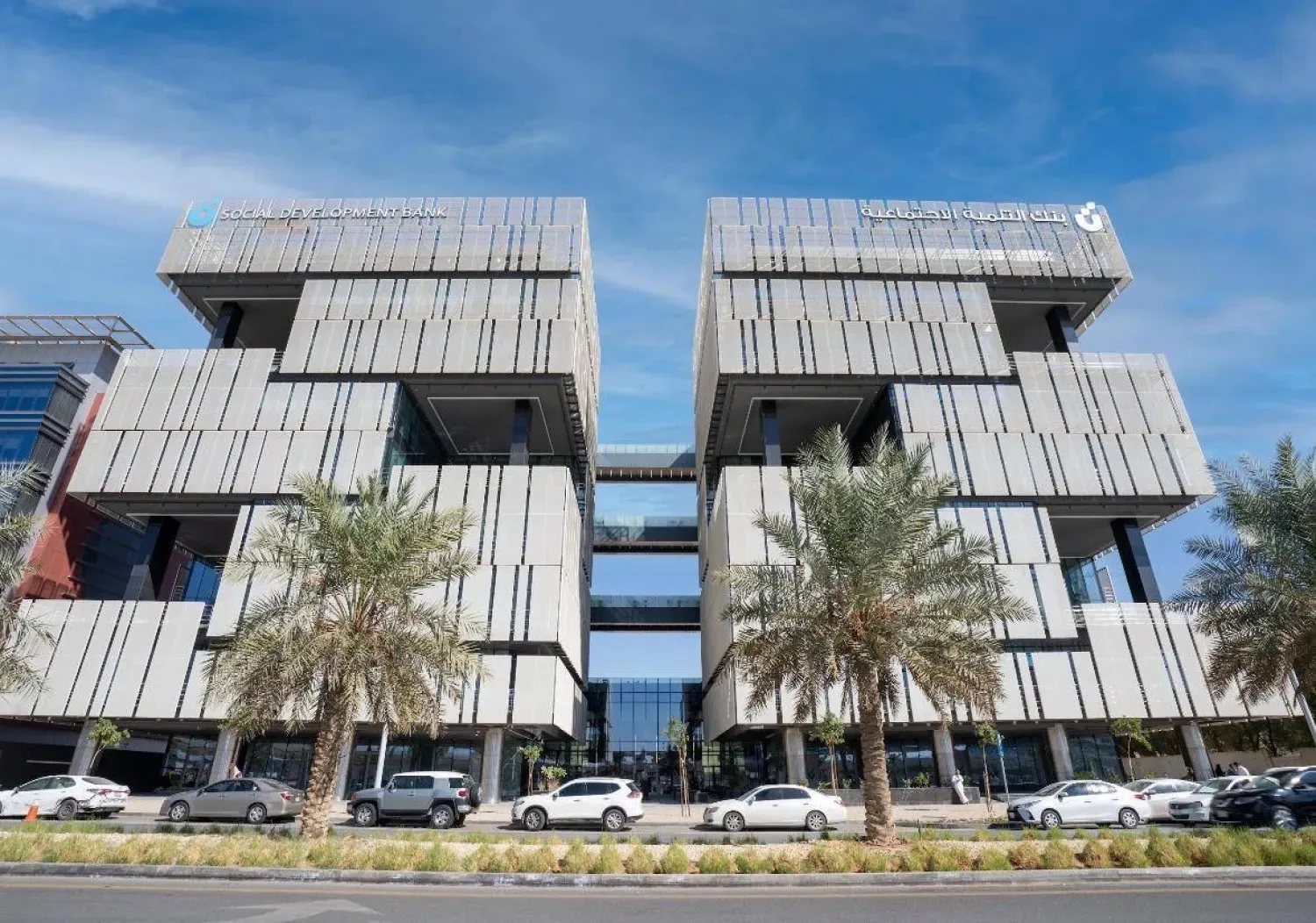
The SDB headquarters (SPA)
TT

Saudi Development Bank to Inject $8 Billion to Empower Citizens, Drive Growth

The SDB headquarters (SPA)

Saudi Arabia is pressing ahead with its Vision 2030 reform agenda, focused on empowering individuals, accelerating economic growth, and diversifying income sources. At the heart of this effort stands the Social Development Bank (SDB), which has evolved from a traditional lending body into a key driver of social and economic empowerment.

Over the next three years, the bank plans to inject SAR30 billion ($8 billion) into the national economy. The focus extends beyond numbers: priority is being given to underserved groups, women entrepreneurs, and promising new sectors such as technology and e-gaming, underscoring a commitment to building a sustainable, knowledge-based economy founded on innovation.

SDB’s CEO Sultan Al-Humaidi told Asharq Al-Awsat that the bank continues to develop innovative financing pathways and expand access to savings products, with a goal of reaching 250,000 participants in its “Zood Al-Ajyal” savings program.

The bank’s performance in the first half of 2025 reflects its growing impact. Social financing exceeded SAR1 billion ($266 million), benefiting 20,000 citizens, while more than SAR3.6 billion ($1 billion) was directed toward productive projects and self-employment. In total, over 39,000 individuals and enterprises across the kingdom received support.

According to Al-Humaidi, women have been at the forefront of this growth. He explained that fifty-six percent of financing for small and emerging businesses went to female entrepreneurs, earning the bank international recognition as the Middle East and North Africa’s best financier for women-led businesses for two consecutive years.

SDB is also backing national initiatives in emerging industries, he added. Financing has supported the gaming sector and the National Program for IT Development, aiming to transform entrepreneurial ideas into tangible projects and strengthen Saudi Arabia’s innovation-driven economy.

Tangible Economic Impact

The SDB CEO noted that the bank’s financing has contributed more than SAR200 billion ($54 billion) to GDP since inception and created over 177,000 jobs by the end of 2024. Its support has reached 56,000 small and emerging enterprises, fueling entrepreneurship nationwide.

On the social side, SDB has extended SAR120 billion to more than 3 million citizens, covering essential needs such as marriage and home renovation. The bank has also cultivated a culture of savings through initiatives like “Zood” and “Zood Al-Ajyal,” with over 334,000 savings accounts and deposits exceeding SAR570 million ($152 million) by mid-2025.

Moreover, Al-Humaidi stressed that productive financing remains central to the mission. He explained that since establishment, the bank has disbursed SAR166 billion ($44.2 billion) to more than 10 million Saudis. Small and emerging enterprises have received SAR22 billion in financing, creating 140,000 jobs, while self-employment and family businesses were backed with SAR24 billion, benefitting more than 557,000 individuals.

Non-Financial Support and Innovation

Beyond loans, the bank provides integrated non-financial services. Its “Dulani Business Center” has supported more than 150,000 beneficiaries with guidance from 2,600 volunteer consultants. Another initiative, “Jada 30,” offers incubators and accelerators, with more than 4,000 startups supported across 13 branches, with expansion to 17 planned.

Al-Humaidi noted that roughly 70 percent of the bank’s financing now supports productive projects. He stressed that SDB’s mission is not only to provide funds but also to equip citizens with entrepreneurial skills, promote financial independence, and create a sustainable base for innovation.

Looking Ahead

The bank’s long-term vision is to position itself as a key enabler of Vision 2030, transforming financing into a tool for empowerment and development. Upcoming priorities include expanding developmental financing, maximizing economic and social impact, and supporting strategic sectors such as IT, gaming, and e-sports.

Through specialized portfolios and partnerships with both public and private sectors, the bank aims to strengthen the digital economy and create high-quality jobs for Saudi citizens.

Al-Humaidi added that SDB’s mission is to make financing a powerful tool for economic empowerment, innovation, and entrepreneurship. He pointed that by enabling individuals to translate ideas into successful ventures, the bank hopes to sustain growth, broaden citizen participation, and build a stronger, more inclusive national economy.


UN's FAO: World Food Prices Fall for 3rd Month in November

FILE PHOTO: Prices of food are displayed at the Borough Market in London, Britain May 22, 2024. REUTERS/Maja Smiejkowska/File Photo
TT

UN's FAO: World Food Prices Fall for 3rd Month in November

FILE PHOTO: Prices of food are displayed at the Borough Market in London, Britain May 22, 2024. REUTERS/Maja Smiejkowska/File Photo

World food commodity prices fell for a third consecutive month in November, with all major staple foods except cereals showing a decline, the United Nations' Food and Agriculture Organization said on Friday.

The FAO Food Price Index, which tracks a basket of globally traded food commodities, averaged 125.1 points in November, down from a revised 126.6 in October and the lowest since January, Reuters reported.

The November average was also 2.1% below the year-earlier level and 21.9% down from a peak in March 2022 following Russia's full-scale invasion of Ukraine, the FAO said.

The agency's sugar price reference fell 5.9% from October to its lowest since December 2020, pressured by ample global supply expectations, while the dairy price index dropped 3.1% in a fifth consecutive monthly decline, reflecting increased milk production and export supplies.

Vegetable oil prices fell 2.6% to a five-month low, as declines for most products including palm oil outweighed strength in soy oil.

Meat prices declined 0.8%, with pork and poultry leading the decrease, while beef quotations stabilized as the removal of US tariffs on beef imports tempered recent strength, the FAO said.

In contrast, the FAO's cereal price benchmark rose 1.8% month-on-month. Wheat prices increased due to potential demand from China and geopolitical tensions in the Black Sea region, while maize prices were supported by demand for Brazilian exports and reports of weather disruption to field work in South America.

In a separate cereal supply and demand report, the FAO raised its global cereal production forecast for 2025 to a record 3.003 billion metric tons, compared with 2.990 billion tons projected last month, mainly due to increased wheat output estimates.

Forecast world cereal stocks at the end of the 2025/26 season were also revised up to a record 925.5 million tons, reflecting expectations of expanded wheat stocks in China and India as well as higher coarse grain stocks in exporting countries, the FAO said.


World Bank Forecasts 4.3% Growth for Saudi Economy, Supported by Non-Oil Activities

The Saudi flag. Asharq Al-Awsat
TT

World Bank Forecasts 4.3% Growth for Saudi Economy, Supported by Non-Oil Activities

The Saudi flag. Asharq Al-Awsat

The World Bank affirmed on Thursday that Saudi Arabia's economy has gained significant momentum for 2026-2027, driven by robust non-oil sector expansion under Vision 2030.

In a report titled “The Gulf’s Digital Transformation: A Powerful Engine for Economic Diversification,” the World Bank said growth is expected to persist in the Kingdom with non-oil activities expanding by 4% on average.

The report lifted its forecast for Saudi Arabia’s real GDP growth to 3.8% in 2025 compared to a 3.2% last October.

The forecast represents a major upward revision affirming the resilience of the Saudi economy and its ability to absorb external volatility. It also indicates growing confidence in the effectiveness of ongoing structural reforms within Vision 2030.

On Tuesday, Saudi Arabia approved its state budget for 2026, projecting real GDP growth of 4.6% in 2026.

The report showed that in the Kingdom, economic momentum is strengthening across oil and non-oil sectors with non-oil activities expanding by 4% on average and oil activities expanding by 5.4%, bringing overall real growth to an average of 4.3%.

It said oil activities grew by 1.7% y/y in the first half of 2025, benefiting from the phase-out of OPEC+ voluntary production cuts starting in April 2025.

At the financial level, the fiscal deficit between 2025 and 2027 is projected to remain at an average of 3.8% of GDP.

Meanwhile, the current account balance slightly recovered, settling at 0.5% of GDP in the first quarter of 2025 against -2.6% in the second half of 2024.

The report said real GDP growth remained stable at 3.6% y/y in the first half of 2025, thanks to the stabilization of the oil sector and sustained non-oil growth.

Non-oil activities expanded by 4.8% over the period, in line with the performance of 2024 while non-oil growth was driven by the wholesale, retail trade, restaurants, and hotels sector (+7.5% y/y in the first half of 2025), consolidating the role of hospitality and tourism as engines of economic diversification.

The report also indicated that oil activities grew by 1.7% y/y in the first half of 2025, benefiting from the phase-out of OPEC+ voluntary production cuts starting in April 2025.

These trends are expected to persist in 2026-2027, with non-oil activities expanding by 4% on average and oil activities expanding by 5.4%, bringing overall real growth to an average of 4.3%.

Job Market and Inflation
The report said the labor market mirrors the stabilization of the real economy and is rapidly becoming more inclusive to women.

Overall unemployment decreased by 0.7 point between the first quarter of 2024 and the first quarter of 2025, with the female unemployment rate dropping from 11.8% to 8.1% over the same period.

Also, inflation remained low and stable in Saudi Arabia, settling at an average of 2.2% in the first half of 2025.

However, price increases have been concentrated in the housing and utilities sector as rental prices have become a key issue, largely because rental supply has failed to match demographic growth, especially in Riyadh.

While this reflects the government’s efforts to dynamize the Kingdom’s urban centers, the price increases prompted the government to freeze rental prices in Riyadh for the next five years, as anticipated increases in housing supply should help control rental prices.

Finally, the report said Saudi Arabia’s external position stabilized in the second half of 2024 and the first quarter of 2025.

Although net foreign direct investment has remained relatively stable, the World Bank has emphasized that recent changes in foreign ownership regulations in Saudi Arabia, coupled with continued structural reforms, are positive steps to attract greater flows of foreign direct investment (FDI).


Visa Relocates European Headquarters to London's Canary Wharf

FILE PHOTO: A drone view of London's Canary Wharf financial district, two days before the government presents its critical pre-election budget, in London, Britain March 3, 2024. REUTERS/Yann Tessier/File Photo
TT

Visa Relocates European Headquarters to London's Canary Wharf

FILE PHOTO: A drone view of London's Canary Wharf financial district, two days before the government presents its critical pre-election budget, in London, Britain March 3, 2024. REUTERS/Yann Tessier/File Photo

Visa is relocating its European headquarters to London's Canary Wharf financial district, the Canary Wharf Group said on Friday.

The firm is leasing 300,000 square feet on a 15-year term at One Canada Square, and is set to relocate from Paddington in the summer of 2028, the group added.

Canary Wharf Group, which runs the wider financial district and is co-owned by QIA and Canada's Brookfield, was hit hard by the pandemic-induced fall in office demand.

The area is now enjoying a rebound as more firms push staff to return to office, Reuters reported.

"Canary Wharf continues to attract a diverse range of global businesses. We are delighted to welcome Visa who have chosen the Wharf for their European headquarters as the best location to support their business growth," Shobi Khan, Canary Wharf Group CEO, said.

JPMorgan Chase last week unveiled a plan to build a tower in the Canary Wharf financial district that will contribute 9.9 billion pounds ($13.2 billion) over six years to the local economy - including the cost of construction - and create 7,800 jobs.

Qatar's sovereign wealth fund is revising plans for a revamp of its HSBC skyscraper in the east London district to retain more office space, Reuters reported in November.
