Saudi Arabia Provides Grant to Supply Syria with 1.65 Million Crude Oil Barrelshttps://english.aawsat.com/business/5185201-saudi-arabia-provides-grant-supply-syria-165-million-crude-oil-barrels
Saudi Arabia Provides Grant to Supply Syria with 1.65 Million Crude Oil Barrels
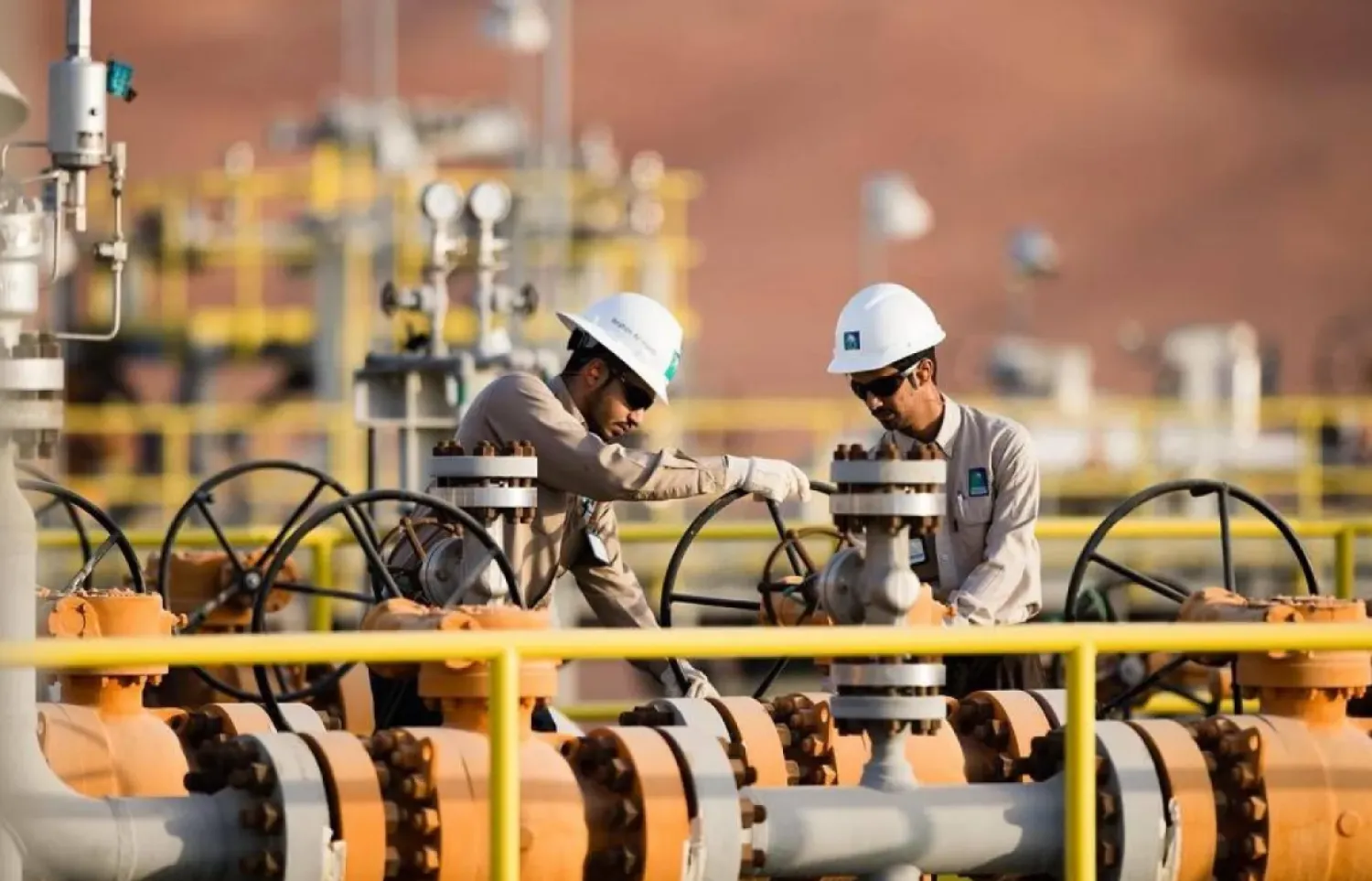
Workers are seen at a Saudi Aramco facility. (SPA)
Under the directives of Custodian of the Two Holy Mosques King Salman bin Abdulaziz Al Saud and Prince Mohammed bin Salman bin Abdulaziz Al Saud, Crown Prince and Prime Minister, the Kingdom of Saudi Arabia, represented by the Saudi Fund for Development (SFD), has provided a grant to supply the Syrian Arab Republic with 1,650,000 barrels of crude oil, SPA reported.
SFD CEO Sultan Al-Marshad and Syrian Minister of Energy Mohammed Al Bashir signed a memorandum of understanding in this regard.
The grant aims to enhance the operations of Syrian refineries and achieve both operational and financial sustainability.
Its goals include supporting economic development, addressing economic challenges, fostering the growth of vital sectors, and contributing to the achievement of sustainable development goals.
The grant reflects the Kingdom of Saudi Arabia’s continued efforts to improve the living conditions of the brotherly Syrian people, building on the close relations between the two countries.
Saudi Debt Market Gathers Pace as Sovereign, Bank and Corporate Borrowing Convergeshttps://english.aawsat.com/business/5314429-saudi-debt-market-gathers-pace-sovereign-bank-and-corporate-borrowing-converges
Saudi Debt Market Gathers Pace as Sovereign, Bank and Corporate Borrowing Converges
King Abdullah Financial District (KAFD) in Riyadh
Saudi Arabia’s debt market is seeing growing activity as the government, banks and companies tap international markets simultaneously, highlighting their widening use of debt instruments to diversify funding sources.
The kingdom is seeking to finance budget needs and investment projects, while Saudi banks and companies are moving to strengthen their capital bases and diversify funding channels.
The latest move came from the Saudi government, which raised $3.25 billion through a two-tranche offering of US dollar-denominated Islamic bonds, or sukuk.
Al Rajhi Bank has also begun offering Tier 2 sukuk for an amount yet to be determined. Arab National Bank, meanwhile, said it had completed a $750 million Additional Tier 1 sukuk offering with an annual yield of 6.5%.
In the corporate sector, Saudi Arabian Mining Co., known as Ma’aden, raised $1 billion through its first international term loan and revolving credit facility.
The simultaneous transactions illustrate the growing importance of the debt market as an alternative to traditional financing, with Saudi issuers benefiting from international demand for dollar-denominated debt despite persistently high global borrowing costs, said Abdullah Al-Mair, assistant professor of economics at King Fahd University of Petroleum and Minerals.
The International Monetary Fund expects Saudi public debt to reach 32.6% of gross domestic product this year, up from 29.8% in 2025, a level that remains low by global standards. The Finance Ministry forecasts the ratio at 33.9%, according to the kingdom’s 2026 budget statement.
The IMF had raised its growth forecasts for the Saudi economy for this year and next, citing its resilience in the face of global challenges, an expected improvement in oil revenue and accelerating growth in non-oil activities that have come to drive the country’s economic transformation.
Strong demand for Saudi debt
The latest sovereign issuance stands out as an indicator of investor appetite for Saudi debt instruments. Orders exceeded $16.5 billion, according to the National Debt Management Center, more than four times the $3.25 billion issue size.
The deal comprised a $1.25 billion five-year tranche and a $2 billion 10-year tranche. The final spreads were set at 70 basis points over US Treasury yields for the first tranche and 80 basis points for the second.
Al-Mair said the strength of demand reflected “a high level of confidence among international investors in the kingdom’s creditworthiness and its ability to meet its financial obligations.”
Orders exceeding four times the issue size “indicate that Saudi Arabia continues to enjoy strong access to global debt markets,” even amid high interest rates and geopolitical tensions, he said.
The kingdom’s ability to price the sukuk at relatively narrow spreads over US Treasury yields “reflects investors’ positive view of Saudi sovereign risk compared with many other emerging markets,” he added.
From government to banks and companies
Debt-market activity is not limited to government financing. Saudi banks are also turning to international markets to issue instruments that bolster their capital bases and provide additional sources of funding.
Arab National Bank said it had completed a $750 million Additional Tier 1 capital sukuk offering with an annual yield of 6.5%. The perpetual sukuk are callable after five years.
Al Rajhi Bank, meanwhile, has begun offering US dollar-denominated social Tier 2 sukuk with a maturity of 10-1/2 years and an option to redeem them after 5-1/4 years. The final size and pricing terms will be determined according to market conditions.
At the same time, Saudi companies are turning to international financing markets. Ma’aden raised $1 billion through its first international term loan and revolving credit facility in a move aimed at supporting its general needs and diversifying its funding sources.
The concurrent transactions indicate that the debt market is no longer merely a tool for financing the government deficit, but has become a broader channel for meeting the funding needs of financial institutions and companies, allowing them to reach a wider investor base and manage maturities and liquidity sources.
Borrowing rises, but debt costs pose a challenge
The moves come as part of Saudi Arabia’s 2026 borrowing plan, which aims to raise about $57.9 billion. Of that, about $44 billion will finance an expected budget deficit, while roughly $13.9 billion will be used to repay debt maturing during the year.
Al-Mair said continued borrowing would “naturally lead to an increase in public debt,” but noted that Saudi Arabia’s debt-to-GDP ratio did not exceed 33%, a level that, in his view, “remains manageable compared with many major economies.”
Continued government efforts to diversify revenue and manage maturities provide support for debt sustainability, he said, while debt-servicing costs represent the main challenge in the next phase.
“With global bond yields and interest rates remaining relatively high, new issuance and debt refinancing are becoming more expensive than in the years when interest rates were low,” Al-Mair said, warning that interest payments in the budget could rise in the coming years.
Can debt become a driver of growth?
Higher debt does not necessarily create fiscal pressure if it is used to finance investments capable of supporting growth and generating future revenue.
Al-Mair said the kingdom was directing part of its borrowing toward tourism, infrastructure and industrial projects, which could “increase non-oil revenue” and support the economy’s ability to absorb higher debt levels.
For Saudi Arabia, the issue therefore appears to be less about the volume of borrowing alone than about how it is managed, its cost and the economic return generated by its use. While the government continues to finance budget needs and projects through debt markets, banks and companies are using the same channel to strengthen their capital and diversify funding sources.
Al-Mair said demand for Saudi debt instruments at this time underscored their continued appeal to international investors, adding that “public debt is an important component in diversifying financing methods and has a clear impact on economic development.”
As the range of Saudi borrowers in international markets expands, continued demand for their debt instruments and issuers’ ability to maintain competitive funding costs will be key to determining how effectively the debt market can support the investment and spending phase associated with the kingdom’s economic transformation.
Saudi Arabia Targets 18 Water Products in Supply Security, Export Pushhttps://english.aawsat.com/business/5314420-saudi-arabia-targets-18-water-products-supply-security-export-push
Saudi Water Authority President Abdullah Al-Abdulkarim, left, accompanies Environment, Water and Agriculture Minister Abdulrahman Al-Fadley on a tour of the event’s facilities. (Asharq Al-Awsat)
Saudi Arabia Targets 18 Water Products in Supply Security, Export Push
Saudi Water Authority President Abdullah Al-Abdulkarim, left, accompanies Environment, Water and Agriculture Minister Abdulrahman Al-Fadley on a tour of the event’s facilities. (Asharq Al-Awsat)
Saudi Arabia is moving to localize 18 strategic water-sector products in a drive to secure critical supplies, cut reliance on foreign supply chains and build an export-ready industry.
Drawing on decades of operational expertise, the kingdom aims to become a regional hub for developing, manufacturing and exporting water technologies.
Supply security was central to selecting the 18 products, Saudi Water Authority President Abdullah Al-Abdulkarim told Asharq Al-Awsat, saying geopolitical tensions and global shifts had increased the need for stable supply chains and reliable, sustainable services.
Speaking at a news conference in Riyadh on Wednesday on the sidelines of the “Localizing the Water Industry: Knowledge Transfer and Capacity Building” ceremony, Al-Abdulkarim said the authority had worked with relevant government bodies since early 2024 to identify the products.
They include key components used across Saudi Arabia’s water production, transmission and distribution system. The initiative is part of a broader effort to unlock the economic and knowledge-based value the sector has built over decades, he said.
$4 billion domestic market
Saudi Arabia’s market for the 18 products is expected to reach about 15 billion riyals ($4 billion) by 2033, Al-Abdulkarim said. Across the Middle East and North Africa, the market is estimated at around 65 billion riyals ($17.3 billion).
The opportunity could boost the water sector’s contribution to the kingdom’s trade balance, attract new industrial investment and increase local content.
Saudi Arabia was once one of the world’s largest water consumers. Today, it has become an experienced operator with advanced technical expertise built through managing one of the most complex water systems in the world, Al-Abdulkarim said.
That expertise is no longer limited to running the system. It is now helping drive the development of equipment and technology.
The sector is developing advanced tools and indicators to track equipment performance and improve efficiency. Each machine is monitored against as many as 17 indicators daily, allowing operators to identify improvements early and raise operational efficiency.
The 18 products are also closely tied to other industrial and service sectors through their inputs and requirements. Localizing them could therefore support national economic growth and deepen domestic value chains, Al-Abdulkarim said.
Developing the next generation
“Saudi Arabia was the largest water consumer and has now become an expert operator. It then became a source of expertise for manufacturers of the system’s various components, bringing us to a new stage in which we become a partner in developing the next generation of technologies,” Al-Abdulkarim said.
The kingdom is now entering a new phase of supply-chain localization, targeting a 90% domestic supply reliability rate for key components.
The goal is to strengthen the sector’s ability to withstand geopolitical and global disruptions while making the national water system more resilient and sustainable.
The integrated approach could transform Saudi Arabia from a consumer of water technology into a regional platform for its development, manufacture and export, expanding the sector’s economic impact and strengthening the kingdom’s presence in regional and global markets.
Localization is not solely about meeting the sector’s current needs, Al-Abdulkarim said. It is also intended to build an industrial and knowledge base capable of innovation, product development and exports.
That would position the water sector as a driver of economic growth, income diversification and Saudi competitiveness in water technology.
Seven factories planned
Marking the shift from identifying opportunities to delivering projects, the Saudi Water Authority announced that six investment opportunities had entered the industrial implementation phase, including five new opportunities.
The announcement came during a ceremony attended by ministers, senior government officials, ambassadors and chief executives.
Three industrial localization agreements were signed and two factories inaugurated. The agreements provide for seven factories, with total investment across the six opportunities reaching 2.8 billion riyals ($746.6 million).
The projects move the localization program from presenting opportunities to building domestic industrial and technical capacity.
The initiative is being carried out with the Local Content and Government Procurement Authority, which oversees the contracting mechanism for industrial localization and knowledge transfer, and with support from the industry and mineral resources and investment sectors.
It seeks to turn the water sector’s purchasing power into a manufacturing and investment engine by matching project requirements and future demand with domestic production opportunities.
This gives investors and international manufacturers greater visibility over the scale of demand, encouraging them to transfer knowledge and technology and establish production in Saudi Arabia.
The kingdom already has at least 70% of the production inputs required for the targeted components.
Its water-sector supplier base has expanded from 739 companies in 2022 to 3,441 in 2026. Local content rose from 45% in 2020 to 68.27% in the first half of this year.
Those gains strengthen Saudi Arabia’s position as an industrial base capable of rapid growth and regional and international expansion.
Specialized jobs
Localization will go beyond transferring production lines. It will include research and development, technology and knowledge transfer, and the skills needed to operate these industries and improve their products.
The agreements require Saudi nationals to account for at least 70% of workers in specialized positions, linking industrial investment directly to the development of national engineering and technical talent.
Products being localized through the contracting mechanism for industrial localization and knowledge transfer include reverse-osmosis membranes, antiscalants and membrane-cleaning chemicals.
The Saudi Water Authority has also worked to meet its localization targets for energy-recovery devices, high-pressure pumps, distributed control systems and supervisory control and data acquisition systems, known as SCADA.
Together, they will form an interconnected industrial and technological chain supporting water production and facility operations.
Several of the components can also be used in energy, mining, agriculture and food processing, extending the impact of localization across multiple value chains.
Global manufacturers
The projects underscore Saudi Arabia’s growing place on the global water-technology manufacturing map and the reach of its strategic partnerships.
They include four Italmatch Chemicals factories across Wa’ad Al-Shamal, Jubail and Jeddah. The Wa’ad Al-Shamal facilities will form the company’s largest industrial complex outside Italy. All four factories are scheduled to begin production in 2028.
The projects also include Torishima’s high-pressure pump factory in Jeddah and Energy Recovery’s energy-recovery device factory in Dammam — the company’s only manufacturing facility outside the United States.
Alfanar will operate a distributed control systems factory in Riyadh, bringing the total number of factories linked to the opportunities now under implementation to seven.
From the first quarter of 2027, Energy Recovery’s Saudi factory is expected to supply about one-third of the company’s customers worldwide.
Spread across several regions of the kingdom, the projects are expected to strengthen value-chain integration and increase the export potential of Saudi-made products.
‘Nomura’ to Asharq Al-Awsat: Bond Yields Reshape Region’s Cost of Capitalhttps://english.aawsat.com/business/5314404-%E2%80%98nomura%E2%80%99-asharq-al-awsat-bond-yields-reshape-region%E2%80%99s-cost-capital
‘Nomura’ to Asharq Al-Awsat: Bond Yields Reshape Region’s Cost of Capital
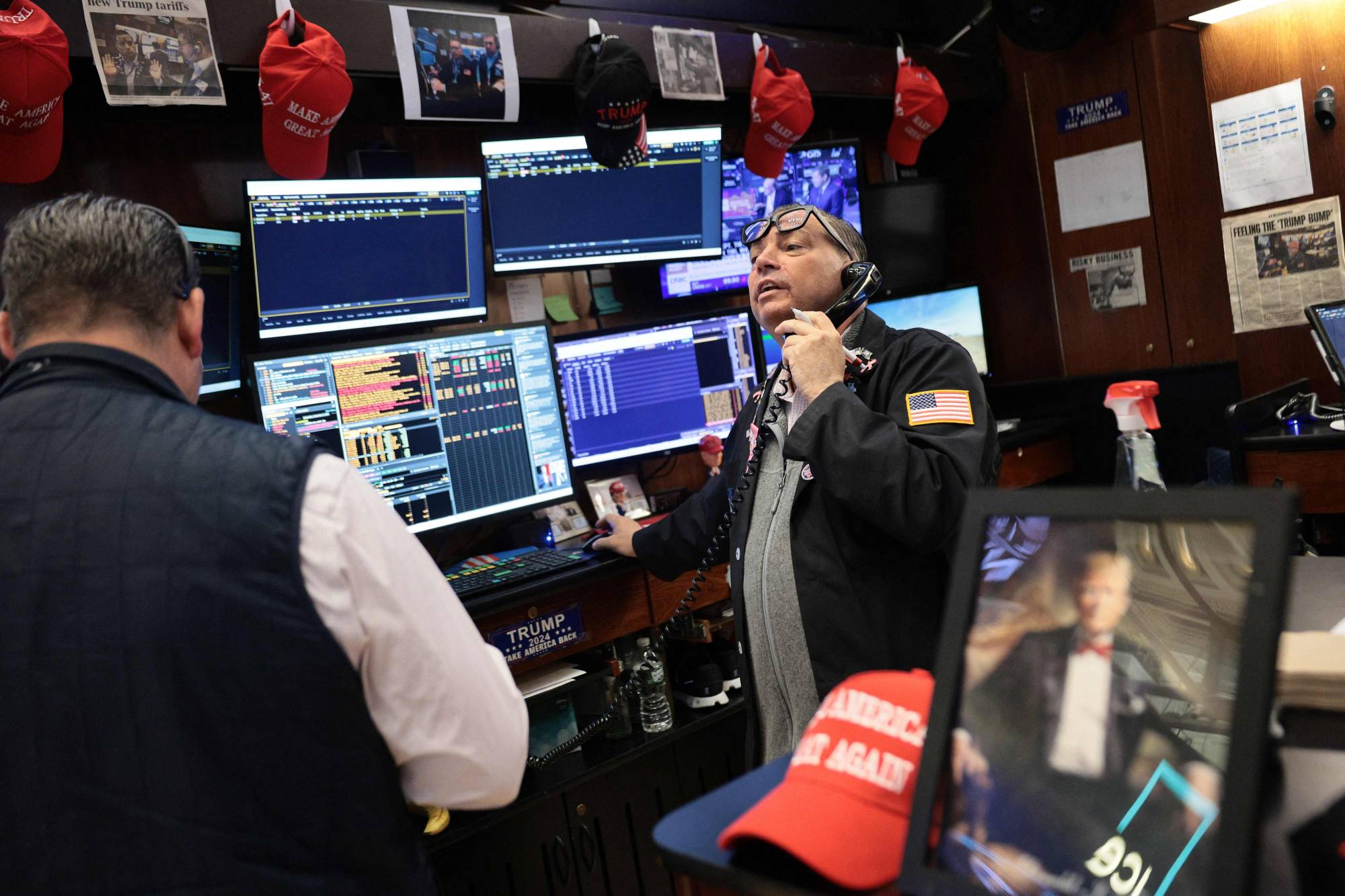
Traders work on the floor of the New York Stock Exchange during morning trading on September 02, 2026 in New York City. (Getty Images/AFP)
Global debt markets are entering a new era of higher borrowing costs, with US, Japanese and British bond yields climbing to levels not seen in years amid three overlapping pressures: inflation fueled by oil prices, ballooning fiscal deficits and rising government borrowing needs.
As investors reassess the risks of holding long-term debt, the repercussions are spreading to regional markets through higher financing costs for governments and companies. This is placing Gulf economies under a fresh cost-of-capital test, although they have stronger financial buffers than many emerging markets.
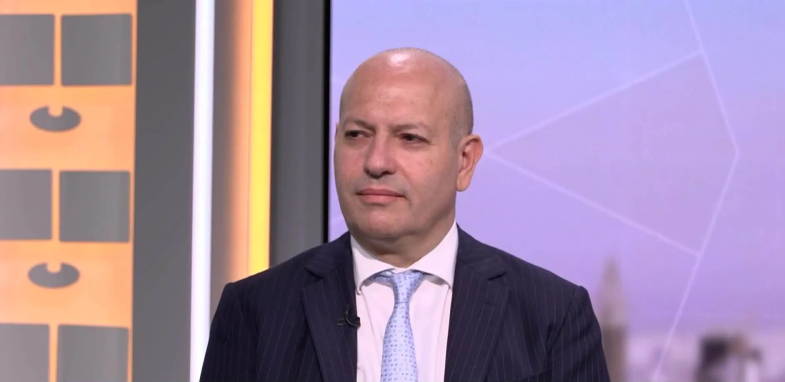
In an exclusive assessment for Asharq Al-Awsat, Tarek Fadlallah, chief executive officer of Nomura Asset Management Middle East, said the latest jump in bond yields had a temporary component linked to geopolitical tensions and oil prices.
“But it also reveals a deeper shift in debt markets, amid growing concerns that elevated yields could prove more persistent because of chronic fiscal deficits and increasing borrowing needs in major economies,” he said.
Fadlallah’s assessment comes as global bond markets undergo a broad repricing, with yields on major government debt rising as concerns over energy-driven inflation converge with widening fiscal deficits and growing borrowing requirements.
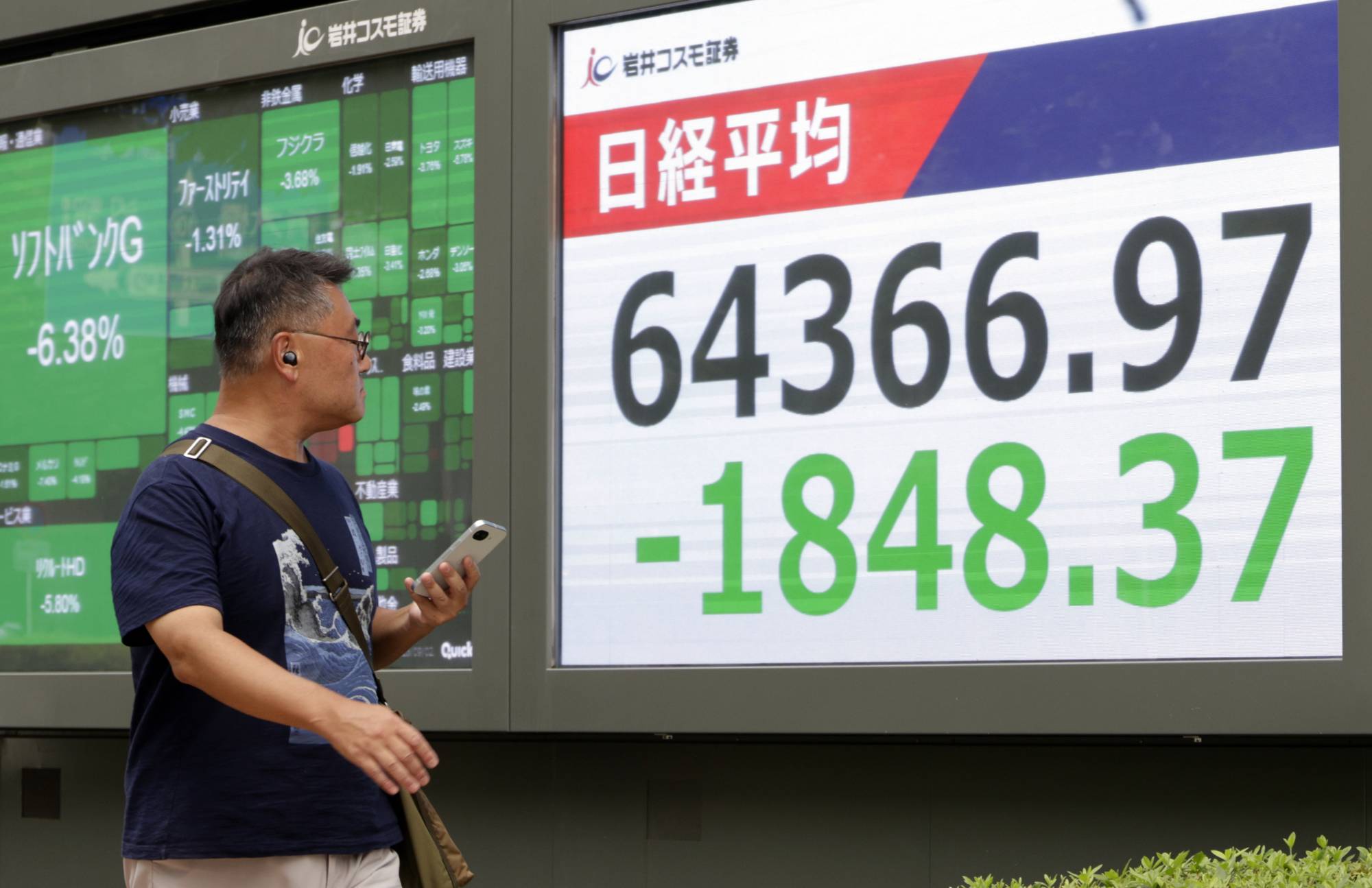
In the United States, the 10-year Treasury yield approached 5% after rising by more than 80 basis points since the beginning of March, while the 30-year yield surpassed levels not seen in nearly 19 years. In Japan, the 10-year government bond yield exceeded 3% for the first time since 1996, while its British counterpart climbed to 5.268%, its highest level since June 2008.
These moves are particularly significant because they point to a change in how debt-market risks are priced, with investors focusing increasingly on long-term fiscal prospects rather than only on central banks’ next policy decisions. That means borrowing costs could remain elevated even if some short-term pressures subside, placing public finances and debt sustainability under greater market scrutiny.
Bond markets showed early signs of stabilizing on Thursday, with the US 10-year Treasury yield easing to about 4.77% and its Japanese counterpart falling back below 3%. Yields, however, remained elevated compared with their levels before the latest sell-off, leaving open the question of whether the recent turbulence represents a temporary correction or the start of a deeper shift in global borrowing costs.
The surge in yields coincided with growing global attention to borrowing costs and public debt, which have emerged among the economic and financial issues under discussion within the G20. Finance ministers and central bank governors have been examining the implications of tighter financing conditions for the global economy and financial markets. This reflects how the bond issue has broadened beyond market movements into a wider economic and financial concern involving fiscal sustainability, the trajectory of inflation and major economies’ capacity to shoulder mounting debt burdens.
These concerns have also coincided with International Monetary Fund warnings that rising bond yields in advanced economies are increasing borrowing costs worldwide and putting greater pressure on financial markets, as global public debt approaches 100% of gross domestic product and progress in bringing down inflation loses momentum in several economies.
Energy shocks and rising investment linked to artificial intelligence are adding new sources of pressure on inflation and growth.
A passerby walks past a stock market indicator board in Tokyo, Japan, 02 September 2026. (EPA)
Is the rise temporary or the start of a new yield regime?
Fadlallah said the most important shift in the bond market was the move away from pricing based on short-term monetary policy expectations toward a reassessment of the risks involved in holding long-term debt, with investors demanding higher returns to compensate for duration, inflation and fiscal risks.
US debt lies at the heart of this equation after the national debt exceeded $40 trillion - a development Fadlallah described as “a clear reminder of the scale of the fiscal challenge facing the world’s largest bond market.”
“With long-term bonds leading the sell-off, markets are repricing what governments must pay to finance their needs, not merely what central banks determine through short-term interest-rate decisions,” he said.
The consequences of this shift extend beyond debt markets. US Treasuries serve as the main pricing benchmark for what is known as the “risk-free asset,” meaning that higher Treasury yields raise the discount rate used to value a broad range of assets, from equities to sovereign and quasi-sovereign bonds worldwide.
5% puts equities to the test
This equation is particularly important for US equities as the 10-year Treasury yield approaches 5%, a level investors view as a psychological threshold that could prompt some to shift their portfolios away from riskier assets and toward bonds.
The developments follow a strong US corporate earnings season, potentially shifting investors’ attention gradually from company results to broader economic and financial variables, led by yields, inflation and monetary policy.
Equity valuations also remain relatively high. The S&P 500’s forward price-to-earnings ratio stood at about 19.7, down from 22.2 at the beginning of the year but still above its historical average of about 16.
For Fadlallah, the combination of fiscal concerns, higher yields, elevated asset valuations and concentrated investment portfolios presents an important test for equities.
The market response has so far remained relatively limited, he said, “but the coming weeks will be crucial in determining whether investors can absorb higher yields or whether the pressure will trigger a broader shift toward reducing risk.”
Traders work on the floor of the New York Stock Exchange during morning trading on September 02, 2026 in New York City. (Getty Images/AFP)
Japan: The end of cheap money?
The significance of the yield surge is not limited to the US and Europe. Fadlallah said the more profound development could come from Japan, which for nearly three decades has played a central role in supplying low-cost capital to global markets.
With the 10-year Japanese government bond yield reaching 3%, the equation is becoming more complicated for investors accustomed to borrowing cheaply in yen and investing the proceeds in higher-yielding assets abroad through what is known as the “carry trade.”
“The era of near-zero Japanese yields may be approaching its end, potentially changing the direction of global capital flows,” Fadlallah said.
“Higher domestic yields in Japan could make Japanese assets more attractive to hold while reducing the appeal of borrowing in yen to finance investments in overseas markets.”
A trader talks on the phone during a bond auction on a trading floor in Madrid July 5, 2012. (Reuters)
Gulf faces higher borrowing costs, but has buffers
These developments have a “direct” impact on Gulf economies because most regional currencies are pegged to the US dollar. This transmits the effect of higher US yields to the borrowing costs of governments and companies, both in domestic markets and when issuing debt internationally.
Fadlallah said this would raise the cost of financing projects and refinancing existing debt.
“But it does not eliminate the region’s ability to continue pursuing its investment and economic diversification plans, given its oil revenue, financial buffers and strong sovereign positions,” he added.
Higher financing costs do not necessarily mean a decline in Gulf investment.
“But they will make efficient capital allocation and the economic returns generated by projects more important, with priority given to investments capable of delivering sustainable returns and benefiting from the strong fiscal and sovereign positions that give regional states greater room to maneuver,” he noted.
Will the yield surge subside?
Despite the structural shift in some of the bond market’s driving forces, Fadlallah does not believe yields are destined to keep rising in a straight line.
He said the fastest scenario for reversing the current surge “would be an easing of geopolitical tensions and a decline in oil prices, which would reduce the risk premium and calm inflation expectations.”
“A sharp fall in equity markets, data confirming that inflation has returned to a clear downward path, or coordinated intervention by central banks” could also “drive investors back toward bonds and push yields lower,” he stressed.
The greater risk, according to Fadlallah, is that large fiscal deficits and mounting borrowing needs become a permanent reality.
“This would mean markets may have to live with ‘higher for longer’ yields, not only because of monetary policy but also because investors will demand greater returns in exchange for financing heavily indebted governments,” he explained.
The current sell-off may therefore be more than a temporary episode in the interest-rate cycle. It could mark the beginning of a broader repricing of the cost of global capital - an equation that will shape equities, bonds and investment, as well as Gulf economies entering this phase from a position of greater strength but not insulated from the worldwide rise in borrowing costs.
لم تشترك بعد
انشئ حساباً خاصاً بك لتحصل على أخبار مخصصة لك ولتتمتع بخاصية حفظ المقالات وتتلقى نشراتنا البريدية المتنوعة