Bessent Says US, China Reach Framework Deal on Rare Earths, Trump’s Tariff Threat

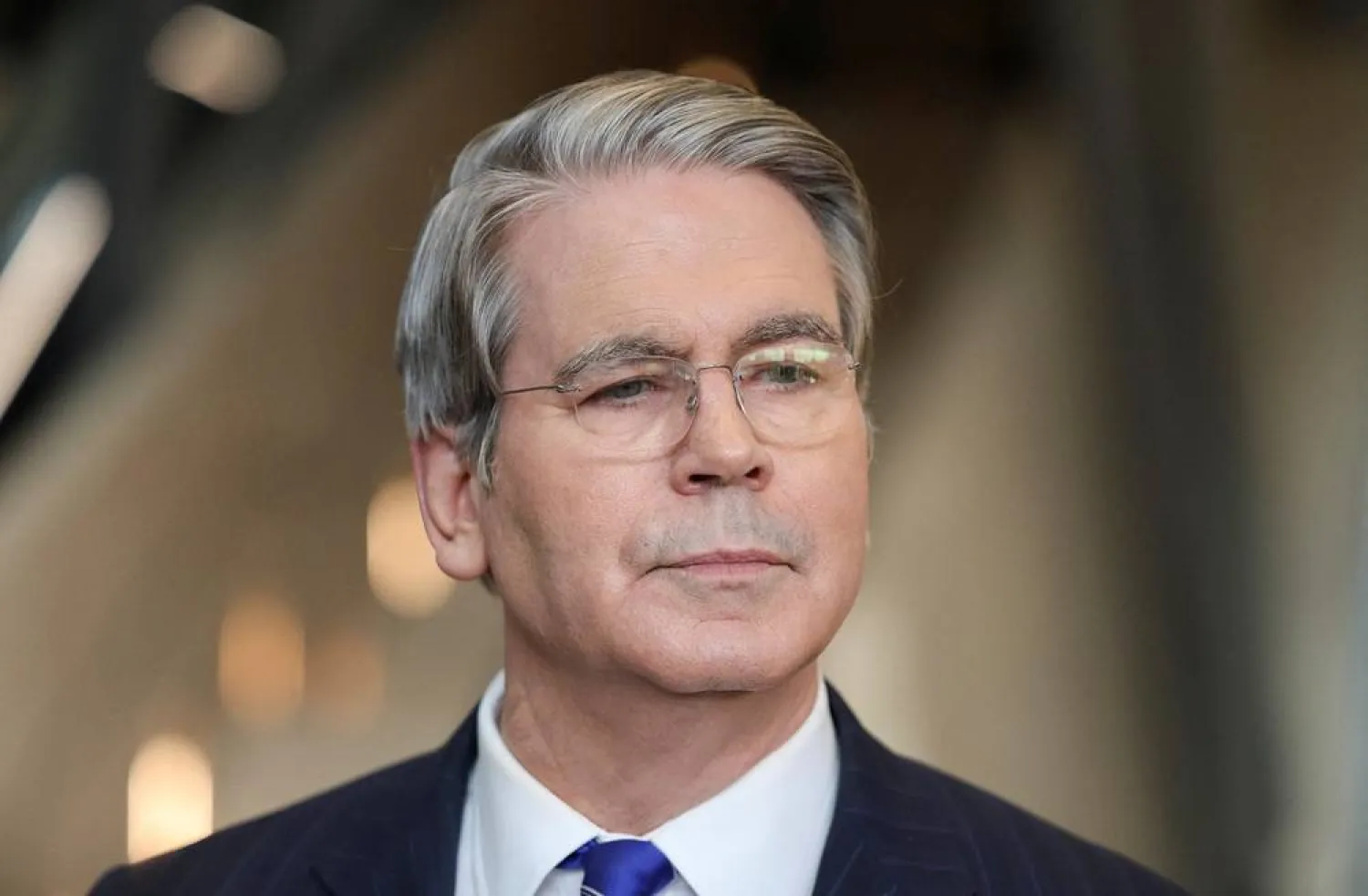
US Treasury Secretary Scott Bessent looks on as he speaks to the media, following the trade talks between the US and China, in Kuala Lumpur, Malaysia October 26, 2025. (Reuters)
TT

Bessent Says US, China Reach Framework Deal on Rare Earths, Trump’s Tariff Threat

US Treasury Secretary Scott Bessent looks on as he speaks to the media, following the trade talks between the US and China, in Kuala Lumpur, Malaysia October 26, 2025. (Reuters)

US Treasury Secretary Scott Bessent said on Sunday he has reached a "very substantial framework" with Chinese Vice Premier He Lifeng that will avoid 100% US tariffs on Chinese goods and achieve a deferral of China's rare earths export controls.

Bessent said during the taping of an interview with NBC's "Meet the Press" program that the framework reached in Kuala Lumpur, Malaysia will allow President Donald Trump and Chinese President Xi Jinping to discuss further trade cooperation next week.

The agenda would include more balanced US-China trade, Chinese purchases of American soybeans and other agricultural products, and getting the US fentanyl crisis under control.

Asked if he anticipated that the US would proceed with Trump's threat of 100% tariffs on Chinese goods, Bessent said: "No, I'm not, and I'm also anticipating that we will get some kind of a deferral on the rare earth export controls that the Chinese had discussed."

Bessent added that final terms would be decided by the two leaders.


US Consumer Inflation Expected to Have Increased Further in April Amid Iran War

People shop at a Lidl Supermarket on May 11, 2026 in the Crown Heights neighborhood of the Brooklyn borough in New York City. (Getty Images/AFP)
TT

US Consumer Inflation Expected to Have Increased Further in April Amid Iran War

People shop at a Lidl Supermarket on May 11, 2026 in the Crown Heights neighborhood of the Brooklyn borough in New York City. (Getty Images/AFP)

US consumer prices likely rose at a solid pace for a second straight month in April, which would result in the largest annual increase in inflation in more than 2-1/2 years and further bolster expectations the Federal Reserve would keep interest rates unchanged for a while.

The Consumer Price Index report from the Labor Department on Tuesday is also expected to show an acceleration in the monthly underlying inflation rate, though that would be because of a one-time adjustment to rent measures after last year's shutdown of the federal government prevented data collection.

It would follow on the heels of news last week of a bigger-than-anticipated increase in nonfarm payrolls in April.

The US-Israeli war with Iran has driven oil prices higher, immediately reflected in higher costs for gasoline, diesel and jet fuel.

Economists believe the second-round effects would be felt in the months ahead. Financial markets expect the US central bank to keep rates unchanged into 2027.

Back-to-back strong inflation readings would escalate political risk for President Donald Trump and his Republican party ahead of November's midterm elections.

Trump won ‌re-election in 2024 in ‌large part because of his promise to reduce inflation, but Americans have soured on his handling ‌of ⁠the economy and ⁠many blame him for the pain at the pump.

"People are now realizing that the pitch they got about lowering the cost of goods and services is a fairy tale," said Brian Bethune, an economics professor at Boston College. "They were basically treading water with their nose just above the surface, now they are being pulled down below the surface. There is no air to breathe."

The CPI likely increased 0.6% last month after jumping 0.9% in March, a Reuters survey of economists predicted. Estimates ranged from a 0.4% gain to a 0.9% rise.

The moderation after posting the largest increase since June 2022 was mostly mechanical, economists said. Oil prices shot above $100 a barrel in March following strikes against Iran, before pulling back to still-high levels after a ⁠ceasefire in early April.

Gasoline prices likely accounted for most of the increase in the CPI last month ‌after a record surge in March.

Food prices were also expected to have accelerated ‌after an unusual flat reading in March. Economists expected food prices to rise in the coming months, partly reflecting higher energy prices and fertilizer shortages amid shipping ‌disruptions in the Strait of Hormuz.

ONE-TIME BOOST FROM RENTS

In the 12 months through April, the CPI is projected to have advanced 3.7%. ‌That would be the biggest year-on-year increase since September 2023 and follow a 3.3% rise in March.

The Fed, which tracks the Personal Consumption Expenditures price indexes for its 2% inflation target, last month left its benchmark overnight interest rate in the 3.50%-3.75% range.

Excluding food and energy, the CPI is forecast to have risen 0.3% last month, with a greater chance of rounding up to 0.4%. The so-called core CPI gained 0.2% in March.

The Bureau of Labor Statistics, ‌which compiles the CPI report, is expected to make a one-time adjustment to rents and owners equivalent of rent.

The BLS splits its rent survey into six panels. Each panel is sampled ⁠every six months on a rotating ⁠basis. But because of last year's 43-day government shutdown, no data was collected in October. The BLS used a method called carry-forward imputation for rent and OER to account for the missing data, which artificially lowered the indexes.

"The April report will include hard data for that part of the shelter panel, which should lead to a significant catch-up effect," said Lou Crandall, chief economist at Wrightson ICAP. "We expect that special factor to add roughly a tenth of a percent to the increase in the core this month."

Underlying inflation was also expected to get a lift from healthcare costs after a surprise decline in March.

Core goods prices are expected to have been muted, with most economists saying the pass-through from tariffs was probably over. The US Supreme Court struck down Trump's sweeping tariffs in February.

"It's unlikely that retailers will pass on savings they are now seeing following the decline in the effective tariff rate in February, after the Supreme Court's ruling, but the pressure to raise prices further has eased," said Samuel Tombs, chief US economist at Pantheon Macroeconomics.

Core CPI inflation is expected to have increased 2.7% year-on-year in April after rising 2.6% in March. Some economists were dismissive of core CPI inflation.

"The problem is that the average person, the working people, they don't live in core CPI," said Sung Won Sohn, a finance and economics professor at Loyola Marymount University. "They live in higher gasoline prices, they live in higher grocery prices, and they are getting hurt."


Dollar Rises on Fading Hopes of Middle East Peace Deal

 A money changer counts US Dollar notes at a money exchange office in Jakarta on May 12, 2026, amid the Rupiah's depreciation against the USD. (AFP)
A money changer counts US Dollar notes at a money exchange office in Jakarta on May 12, 2026, amid the Rupiah's depreciation against the USD. (AFP)
TT

Dollar Rises on Fading Hopes of Middle East Peace Deal

 A money changer counts US Dollar notes at a money exchange office in Jakarta on May 12, 2026, amid the Rupiah's depreciation against the USD. (AFP)
A money changer counts US Dollar notes at a money exchange office in Jakarta on May 12, 2026, amid the Rupiah's depreciation against the USD. (AFP)

The US dollar strengthened broadly on Tuesday as talks to end the war in the Middle East showed no signs of progress, pushing oil prices higher and worrying investors that interest rates may need to stay higher to tackle inflationary pressures.

Investors now fear that the ceasefire that has been in place since April 7 could be in danger and hostilities could resume in the conflict, which began at the end of February, killing thousands and halting vital energy flows.

With the crucial Strait of Hormuz staying largely closed, Brent crude futures were up 0.6% at $104.88 a barrel. US West Texas Intermediate was at $98.93 per barrel, up 0.89% on the day.

US President Donald Trump said the ceasefire with Iran was "on life support" after the latest back and forth on a proposal to end the war ‌made clear the ‌two sides were still far apart on a number of issues.

The currency ‌market ⁠was in a ⁠risk-off mood, with focus shifting to Trump's visit to China later this week, as well as the US inflation report due later in the day. US Treasury Secretary Scott Bessent is also in Asia for meetings in Japan and South Korea.

The euro weakened 0.24% to $1.1754, while sterling last bought $1.3575, down 0.26% on the day. The dollar index , which measures the US currency against six others, was at 98.17, up 0.2%.

The dollar initially benefited from safe haven flows when the war first broke out but has since given up much of those gains and remains choppy on ⁠shaky prospects of a peace deal and a ceasefire that appears to be ‌hanging by a thread.

Christopher Wong, currency strategist at OCBC, said ‌Trump's rejection of Iran's response to the US peace proposal has kept markets cautious and helped to put a floor ‌under the dollar.

"Still, USD gains were contained, suggesting markets are not yet treating the latest headlines as ‌a full risk-off shock," Wong said, noting a formal breakdown in diplomatic discussions or fresh military escalation could bring a bigger reaction.

INFLATION DATA TAKES THE STAGE

The spotlight will be on a US inflation report, which is forecast to show consumer prices rose 0.6% last month after jumping 0.9% in March, according to a Reuters survey of economists. Estimates ranged from a ‌0.4% gain to a 0.9% rise.

The data will reinforce the view that the Federal Reserve is likely to keep interest rates unchanged in the ⁠near term. Traders have priced ⁠out the prospect of rate cuts for the year compared to the two cuts expected before the Iran war broke out.

"The risk is that core inflation is stronger than consensus expectations because of spillover from energy prices to other prices such as airfares and food," said Sarah Hammoud, currency strategist at Commonwealth Bank of Australia.

"An upside surprise to US core inflation will push up US interest rates and the dollar."

Meanwhile, the Japanese yen was choppy at 157.12 per US dollar as traders weighed comments from Bessent and his Japanese counterpart, Satsuki Katayama, after their meeting in Tokyo.

The US and Japan maintain "constant and robust" coordination in tackling undesirable, excessively volatile currency moves, Bessent said.

The remarks suggest Washington broadly consents to Japan's recent round of yen-buying intervention aimed at propping up its sagging currency, which is inflicting pain on the economy by pushing up import costs.

The risk-sensitive Australian dollar was 0.27% lower at $0.723 ahead of the federal budget release, while the New Zealand dollar eased 0.17% to $0.59531. Bitcoin was last down 0.65% at $81,272.

The firmer dollar cast a shadow on emerging market currencies with the Indonesian rupiah and Indian rupee hitting new all-time lows.


Shipping Industry Fears Fuel Shortages as Iran War Squeezes Bunker Fuel Supply

Tugboats assist a container ship as it prepares to dock at the Manila International Container Terminal at the Philippine capital April 8, 2025. (AP)
TT

Shipping Industry Fears Fuel Shortages as Iran War Squeezes Bunker Fuel Supply

Tugboats assist a container ship as it prepares to dock at the Manila International Container Terminal at the Philippine capital April 8, 2025. (AP)

Ship operators rely on a sludgelike substance known as bunker fuel to keep vessels running. The Iran war's closure of the Strait of Hormuz has choked off the supply of this fuel that powers the global maritime industry and its largest refueling hub in Asia.

Bunker fuel is a literal bottom of the barrel product — heavier and dirtier than the more expensive kinds of refined crude oil used by other vehicles like cars and airplanes — it sinks to the bottom of storage containers.

But it helps move the 80% of globally traded goods that are transported by sea, and experts say that means a shortage of bunker fuel will translate to higher shipping costs, increase consumer prices and hurt the bottom lines of businesses worldwide.

That will be an issue first in Asia, which relies heavily on Middle Eastern oil. In Singapore, the world’s biggest refueling hub for bunker fuel, reserves are dwindling and prices are spiking.

Shipping companies are trying to adapt to the energy shock, reducing vessel speeds and revising schedules to cut costs in the short term while making plans to acquire ships that can run on alternative fuels.

But some companies won’t survive this triage for long, according to Henning Gloystein of the Eurasia Group consultancy firm, who warned that the pain will spread beyond Asia through global supply chains.

Southeast Asia turns to ‘energy triage’

Asia, which was hit first and hardest by the energy shock, has adopted various forms of “energy triage " to cope, increasing its use of coal, buying more crude oil from Russia and reviving plans to develop nuclear power.

But Asia is bracing for further impacts as energy reserves dwindle and government subsidies dry up.

More than half of global seaborne trade moved through Asian ports in 2024, according to United Nations data, so what happens there will have global consequences.

For now, Singapore's supplies of bunker fuel have held up even as the price races up.

But the prolonged cutoff from major sources of the heavier crude oil needed for bunker fuel, like Iraq and Kuwait, will cause shortages, said Natalia Katona of the commodity site OilPrice.

“We just see the price in Singapore going up, up, up,” Katona said.

Before the war, bunker fuel in Singapore cost about $500 per metric ton ($450 per US ton). That went up to more than $800 ($725 per US ton) as of early May.

Fuel shortages drive consumer costs Shipping companies are absorbing the brunt of the costs for now, said June Goh, an oil analyst for market intelligence firm Sparta Commodities, but this may soon "pass on to the customers.”

The daily cost of the Iran war for the global shipping industry is 340 million euros (nearly $400 million), according to the European Federation for Transport and Environment.

“Bunker fuel shortages tend to feed through to shipping costs more quickly than many other cost pressures,” said Oliver Miloschewsky of risk consultancy firm Aon.

Individual product impact may appear incremental but the cumulative effect of higher shipping costs “can ripple across supply chains and ultimately influence consumer prices across a broad range of sectors," he said.

Singaporean consumers are also feeling the pinch in other ways as local ferries increase fares and luxury cruise liners tack on fuel surcharges.

Ship operators face limited options

Shippers have limited choices to deal with the situation, Miloschewsky said. They can pay more for fuel or implement fuel-saving measures like slowing shipping or suspending voyages.

The average speed of bulk carriers and container ships has slowed globally by around 2% since the war began on Feb. 28, industry group Clarksons Research reported.

High prices are also driving more interest in green fuels, said Håkan Agnevall of marine and energy technology manufacturer Wartsila.

The good news is the technology to create lower-emitting fuels exists, he said. The bad news is production isn't yet at scale and greener fuels are often more expensive.

Though US President Donald Trump derailed efforts to shift global shipping away from fossil fuels in 2025, Agnevall said the current conflict could prompt strategically minded companies and countries to renew their push toward greener alternatives.

Rising fossil fuel prices are narrowing the cost gap. “That improves the business case for green fuels,” he said.

The Caravel Group owns one of the world’s largest ship management companies, Fleet Management Limited, which oversees more than 120 shipbuilding projects.

About a third of ships that the company is managing the construction of will be “dual fuel capable,” meaning they can run on both conventional bunker fuel and alternatives such as liquified natural gas, CEO Angad Banga told The Associated Press.

Ship owners are willing to pay a premium to have vessels that can switch between fuels because “in a volatile environment optionality has a measurable economic value,” he said.

Alternative fuels are not yet as flexible as conventional fuel bunkering, Banga said. While there are more than 890 LNG-fueled vessels in operation globally, a lack of supporting infrastructure has created bottlenecks for them.

But the industry is catching up and limits on bunker fuel are driving even more interest in LNG-capable ships, he said, “that progress is real.”