


Al-Sarhan to Asharq Al-Awsat: Barclays Returns to Riyadh ‘at the Right Moment’

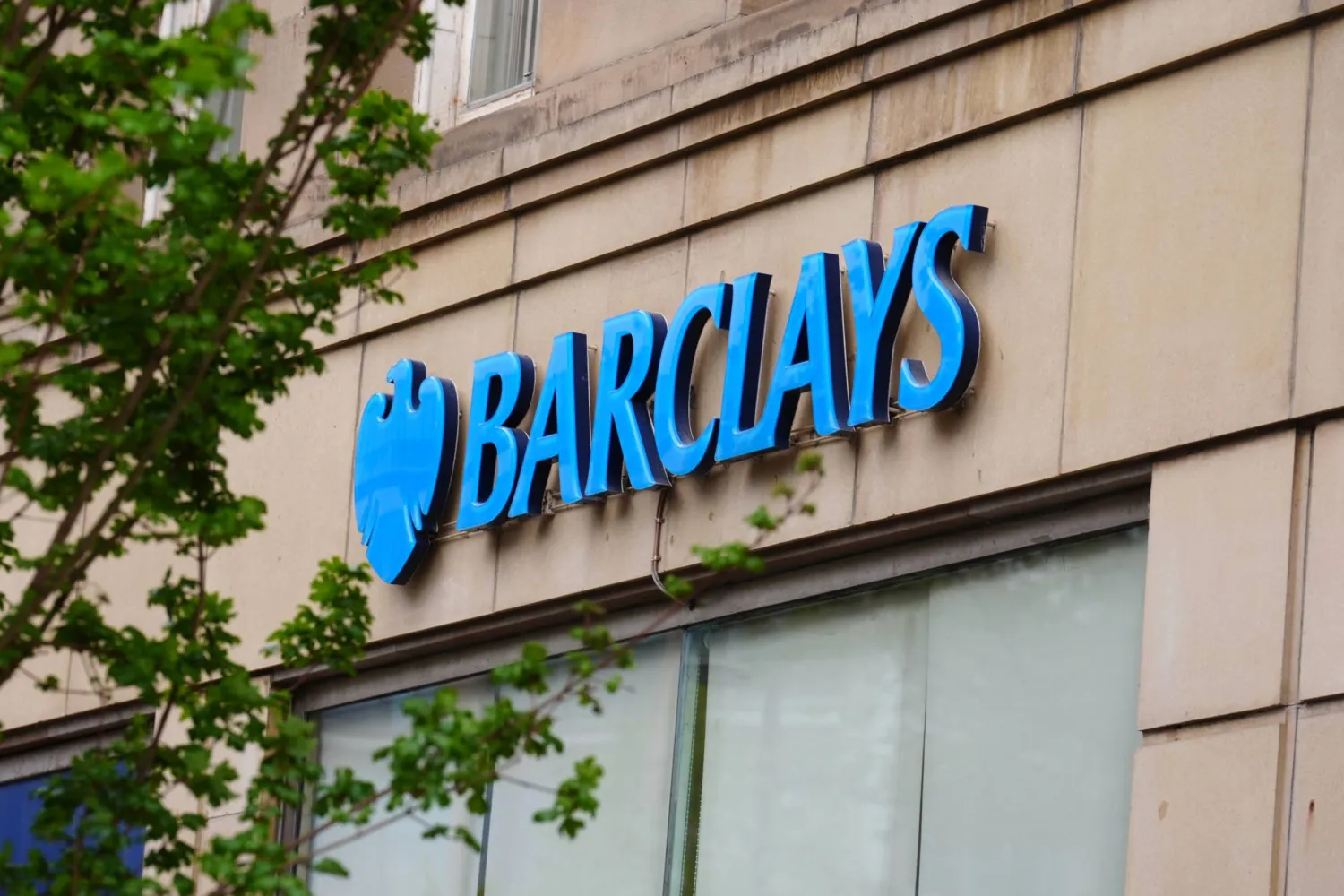
FILED - 05 May 2025, United Kingdom, Sheffield: The logo of the  British multinational universal bank Barclays seen outside its offices in Sheffield. Photo: Mike Egerton/PA Wire/dpa
FILED - 05 May 2025, United Kingdom, Sheffield: The logo of the British multinational universal bank Barclays seen outside its offices in Sheffield. Photo: Mike Egerton/PA Wire/dpa
TT

Al-Sarhan to Asharq Al-Awsat: Barclays Returns to Riyadh ‘at the Right Moment’

FILED - 05 May 2025, United Kingdom, Sheffield: The logo of the  British multinational universal bank Barclays seen outside its offices in Sheffield. Photo: Mike Egerton/PA Wire/dpa
FILED - 05 May 2025, United Kingdom, Sheffield: The logo of the British multinational universal bank Barclays seen outside its offices in Sheffield. Photo: Mike Egerton/PA Wire/dpa

Mohammed Al-Sarhan, who has recently joined as Independent Non-Executive Chairman of the Board for Barclays' Saudi Arabia franchise, has said that the return of the prestigious British bank to the Saudi market “comes at the right moment for an economy experiencing exceptional momentum and in need of global financing channels.”

In remarks to Asharq Al-Awsat, he revealed that Barclays Saudi Arabia has received preliminary approval from the Capital Market Authority to license an investment company and has secured headquarters in King Abdullah Financial District (KAFD) in preparation for an official launch “by the end of the first or second quarter of next year.”

Al-Sarhan said that Barclays, which is over a century old, had a presence in Saudi Arabia about 14 years ago. “However, its withdrawal at that time was linked to a regulatory environment that was not sufficiently clear,” he explained.

“Today, everything has changed. The regulatory environment in our country has become exemplary.”

Project Financing and Liquidity Growth
Al-Sarhan said there is a need “to attract foreign liquidity through direct investments in Saudi infrastructure or through loans and debt instruments.”

“The government has massive projects, and so does the private sector, which is putting pressure on local liquidity. Therefore, it is important to bring in additional liquidity from abroad,” he told Asharq Al-Awsat.

“Over the past five or six years, we have seen abundant issuances of sukuk and bonds for this purpose,” he said, adding “Barclays is one of the largest lenders in the world, and it also lends to major global banks.”

Board of Directors and Strategy
Al-Sarhan revealed that the formation of the Board of Directors is currently underway, “to include six members in accordance with the requirements of the Capital Market Authority, one-third of whom will be independent.”

“I am keen for some of the independent members to be Saudis. We are also looking for an experienced CEO who understands the financial and investment environment in the country,” he said.

He stressed that the regional office in Riyadh “will need clear authority and speed in decision-making to meet local needs.”

Dual Listings and Cross-Continental Expertise
Al-Sarhan highlighted a competitive advantage that Barclays offers to Saudi companies seeking public listings, saying: “The bank has the capability to arrange dual listings thanks to its high level of expertise and familiarity with these markets.”

“Having Barclays in Riyadh is extremely important; it is now the center of major developments. Projects such as NEOM, the Red Sea, Qiddiya, Diriyah, and others require significant financing, and the private sector also needs private credit instruments.”

A Timely Return and a Mature Environment
Al-Sarhan believes that “Barclays’ return to the Kingdom is successful on two fronts: the Saudi financial and investment ecosystem needs a well-established bank with strong solvency, and in turn, Barclays should take part in this remarkable renaissance.”

“Without this visionary leadership and these massive projects, the bank would not have considered returning,” he stated.



Egypt Imposes Business Curfew to Counter Soaring Fuel Costs

Cairo was forced to raise fuel prices by more than 30 percent, after strikes on regional oil infrastructure and threats against the Strait of Hormuz (File Photo)
TT

Egypt Imposes Business Curfew to Counter Soaring Fuel Costs

Cairo was forced to raise fuel prices by more than 30 percent, after strikes on regional oil infrastructure and threats against the Strait of Hormuz (File Photo)

Egypt has ordered shops, restaurants and shopping malls to close from 9:00 pm from Saturday, hoping to curb energy bills that have more than doubled because of the Iran war.

Prime Minister Mostafa Madbouly announced the curfew and said it would last for a month initially.

"Shops, shopping centers, restaurants and cafes will all close at 9:00 pm on weekdays," he said, adding that on Thursdays and Fridays at the weekend they will be allowed to stay open until 10:00 pm, Reuters reported.

The premier said that before the war, Egypt's monthly energy bill was $560 million. Today, for the same quantity, he said Egypt is paying $1.650 billion.

Madbouly said Cairo must work on the "worst-case scenario" in the face of a war whose outcome is unpredictable.

Tourism Minister Sherif Fathy said the new restrictions "will not affect tourists" or flagship destinations, a statement from his office said.

At the beginning of March, Cairo was forced to raise fuel prices by more than 30 percent, after strikes on regional oil infrastructure and threats against the Strait of Hormuz, the crucial shipping route now virtually paralysed by the war.

Around a fifth of global crude oil and liquefied natural gas passes through the waterway in peacetime.

The rerouting of shipping away from the Suez Canal is also depriving Cairo of a vital source of foreign currency.


Turkish Central Bank Forex Sales since Start of Iran War Close to $45 Billion

Turkish Central Bank (official website)
TT

Turkish Central Bank Forex Sales since Start of Iran War Close to $45 Billion

Turkish Central Bank (official website)

The Turkish Central Bank's balance sheet for this week will show foreign exchange sales amounting to near $20 billion, bringing the total forex sales since the beginning of the Iran war to nearly $45 billion, bankers said, Reuters reported.

According to calculations made by four bankers, based on preliminary data for the first part of the week and their estimates for the rest of the week, the central bank's balance sheet will show $18-21 billion in foreign exchange sales.

Bankers said that although $8 billion of the total $20 billion was made before a public holiday last week, this figure will be reflected in the balance sheet on the first day of this week.

The central bank sold $26 billion in foreign exchange in the first three weeks of the war, using its gold reserves as well, resulting in a $35 billion decrease in its net reserves.


Mawani Adds Marsa Ocean Shipping's RSX Service to Jeddah Islamic Port

Mawani Adds Marsa Ocean Shipping's RSX Service to Jeddah Islamic Port
TT

Mawani Adds Marsa Ocean Shipping's RSX Service to Jeddah Islamic Port

Mawani Adds Marsa Ocean Shipping's RSX Service to Jeddah Islamic Port

The Saudi Ports Authority (Mawani) has announced the addition of the RSX service by Marsa Ocean Shipping to Jeddah Islamic Port, featuring a capacity of up to 372 TEUs and connecting Jeddah with the regional ports of Aden, Hodeidah, and Djibouti, SPA reported.

This expansion aligns with the National Transport and Logistics Strategy, aiming to enhance the Kingdom’s operational efficiency and its ranking in global performance indicators.

As a primary gateway, Jeddah Islamic Port utilizes its 62 multipurpose berths and specialized terminals to support a total capacity of 130 million tons, reinforcing Saudi Arabia’s position as a global logistics hub connecting three continents.