


Abu Dhabi Seeks Partners to Carry Out Infrastructure Projects Worth $54 Billion

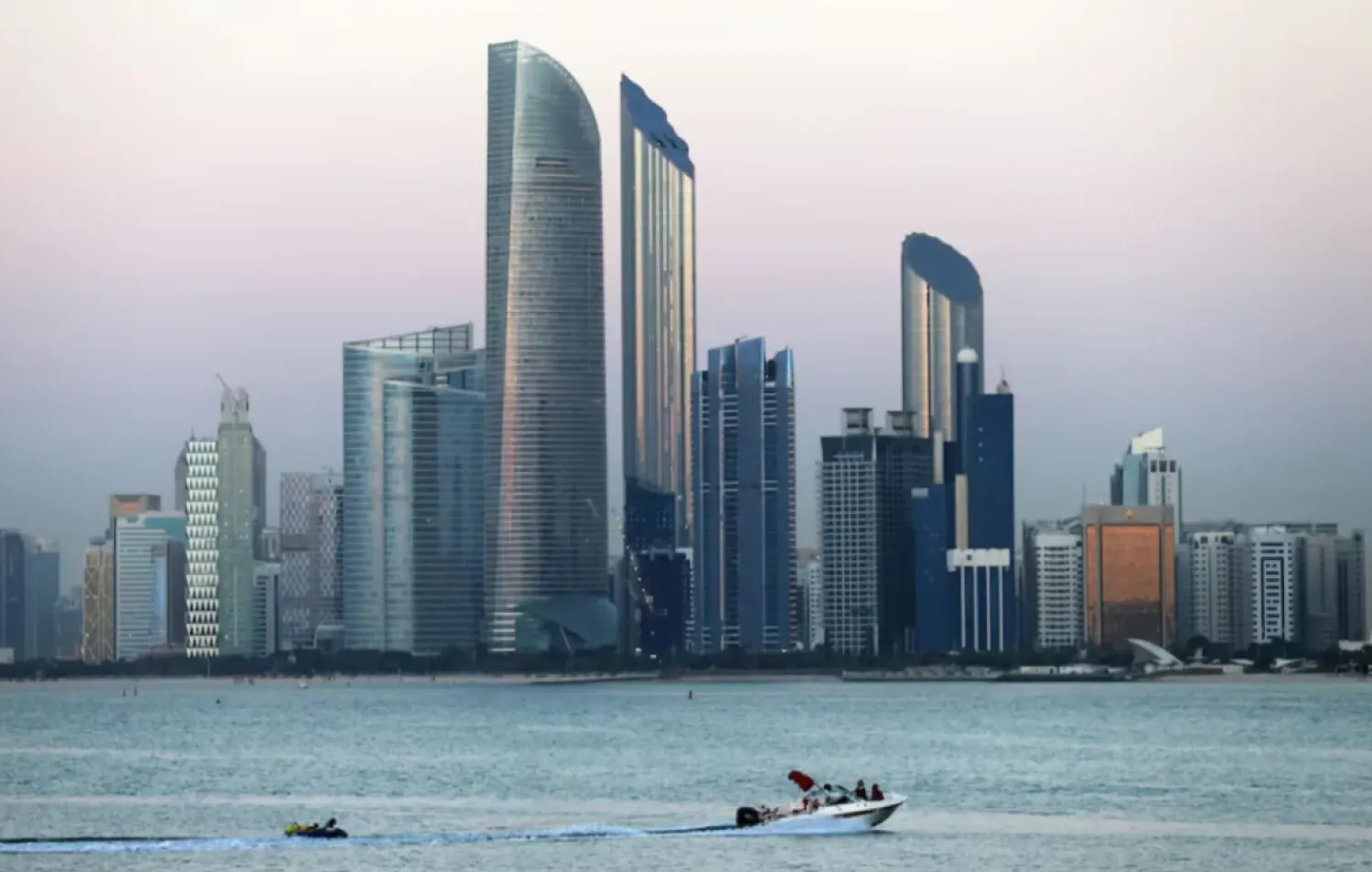
General view of Abu Dhabi, United Arab Emirates, January 3, 2019. Picture taken January 3, 2019. REUTERS/ Hamad I Mohammed/File Photo
TT

Abu Dhabi Seeks Partners to Carry Out Infrastructure Projects Worth $54 Billion

General view of Abu Dhabi, United Arab Emirates, January 3, 2019. Picture taken January 3, 2019. REUTERS/ Hamad I Mohammed/File Photo

Abu Dhabi is seeking partners to carry out infrastructure projects worth $54 billion over the next five years, and aims to double that amount by 2040, the head of Abu Dhabi Projects and Infrastructure Centre (ADPIC) said on a tour of Istanbul.

Officials from ADPIC, which manages government capital projects, met with Turkish contractors, developers and construction companies during the visit to Türkiye, which came after separate trips to Singapore and China.

The group will decide on a short list of companies from Türkiye, Singapore and China for the planned domestic projects, ADPIC director Maysarah Mahmoud Salim Eid told reporters on Wednesday, in remarks for release on Thursday, Reuters reported.

ADPIC, which also oversees project implementation and delivery for the emirate, shares "a common vision (in) infrastructure development" with Türkiye, Eid said.

"We are still in the discussion phase (and) there are some short-listed companies," he said, adding announcements will be made after mutual agreements are set.

China and Türkiye are first and second respectively in a global ranking this year of top contractors, according to ENR's "Top 250 International Contractors" list.

Eid said that as part of the group's "mega portfolio" of projects are bridges and tunnels that are linked to the UAE's broader economic growth and diversification plan.

Much of the planned investments are in "social infrastructure" including national housing, accounting for about 50% of the portfolio, as well as schools and community facilities, he said.

"Our budget, until 2030, is $54 billion. This is for the coming five years. And we are expecting this number to double across the next years until 2040," Eid said.

The projects, including public–private partnerships, will be in Abu Dhabi, Al-Ain city and the Al-Dhafra region, he said.

Financing can be funded through the Abu Dhabi government directly and executed through foreign consultants and contractors, based on outcomes of the roadshow, Eid said.

It can also be funded through partnerships, investment with either real estate developers or investors who are ready to invest in infrastructure and enter a long-term partnership, he added.



Russia’s LNG Exports up 8.6% in January to April, Data Shows

A general view of the liquefied natural gas plant operated by Sakhalin Energy at Prigorodnoye on the Pacific island of Sakhalin, Russia July 15, 2021. (Reuters)
TT

Russia’s LNG Exports up 8.6% in January to April, Data Shows

A general view of the liquefied natural gas plant operated by Sakhalin Energy at Prigorodnoye on the Pacific island of Sakhalin, Russia July 15, 2021. (Reuters)

Russia's ‌exports of liquefied natural gas rose 8.6% in January to April to 11.4 million metric tons from the same period last year due to supplies from the Arctic LNG 2 project, which reached 1 million tons in the first four months of the year, preliminary LSEG data ‌showed on Tuesday.

US ‌sanctions against Moscow over ‌the ⁠Ukraine conflict have restrained ⁠Russian LNG exports, particularly from the Arctic LNG 2 plant, where operations have been hindered owing to difficulty securing buyers.

In April alone, total Russian exports of LNG rose ⁠13.2% from a year ago to ‌2.92 million ‌tons.

Data also showed that Russian LNG ‌exports to Europe in January to April ‌jumped 20.8% year-on-year to 6.4 million tons. In April, they rose to around 1.6 million tons from 1.2 million tons ‌a year earlier.

In January, EU countries gave their final ⁠approval ⁠to ban Russian gas imports by late-2027.

Total exports from Novatek's Yamal LNG plant in the January to April period fell by 1.5% year-on-year to 6.5 million tons.

Asia-oriented Sakhalin-2, controlled by Gazprom, exported 3.7 million tons in the first four months of the year, up from 3.6 million tons during the same period last year.


G7 Trade Ministers Set to Meet but Not Discuss Latest US Tariff Threat

Discussion of the repercussions of the Middle East war is expected to dominate an informal session on Tuesday. Ludovic MARIN / AFP/File
TT

G7 Trade Ministers Set to Meet but Not Discuss Latest US Tariff Threat

Discussion of the repercussions of the Middle East war is expected to dominate an informal session on Tuesday. Ludovic MARIN / AFP/File

G7 trade ministers are set to meet in Paris on Tuesday and Wednesday to discuss issues such as critical minerals and small packages but will not directly address the latest US threat to impose additional tariffs on European vehicles.

The second meeting of trade ministers under the French G7 presidency is taking place as the global economy has been upended by the closure of the Strait of Hormuz, through which a fifth of the world's oil normally flows, said AFP.

Discussion of the repercussions of the Middle East war is expected to dominate an informal session on Tuesday, according to the office of France's junior trade minister Nicolas Forissier.

Meanwhile President Donald Trump's threat last Friday that he will hike US tariffs on cars and trucks from the European Union will likely be addressed separately.

US Trade Representative Jamieson Greer is expected to meet with EU Trade Commission Maros Sefcovic in the French capital.

They also have a meeting scheduled with Forissier and French Economy Minister Roland Lescure.

The US and EU struck a deal last summer to cap US tariffs on EU autos and parts at 15 percent, which is lower than the 25-percent duty that Trump imposed on many other trading partners.

In late March, EU lawmakers gave their green light to the bloc's tariff deal with Trump, but with conditions. It must still be approved by member countries.

"Our position for the moment is not to overreact," said Forissier's office.

"We will discuss it among Europeans when the time comes, but in any case not within the framework of the G7," it added.

"This agreement is useful and we must continue to implement it."

- Four priorities -

On Wednesday the trade ministers of the G7 nations (Britain, Canada, France, Germany, Italy, Japan and the United States) are expected to discuss the four priorities set by the group's French presidency.

The first is find a collective and effective response to industrial overcapacity that undermines free trade.

Even if the discussion doesn't formally target China, the country's subsidizing of certain sectors has created trade tensions for years.

A second priority is economic security, in particular securing and diversifying supplies of critical minerals that are indispensable in producing strategic products such as computer chips, electric vehicle batteries and super magnets.

France favors creating a system of groups of producing, processing and consuming nations that share a commitment to implementing good practices.

- Small parcels, big problem -

The ministers will also touch on the failure in March of the latest round of World Trade Organization negotiations, with the body's role as a trade referee having been paralyzed by the United States for years.

"The goal is for this organization to be better suited to current challenges," Forissier's office said.

The ministers will also discuss cross-border sales via e-commerce sites which have generated huge volumes of small parcels that escaped customs duties and posed unfair competition to local retailers.

The US last year suspended the tariff exemption on small parcels valued at less than $800 and the EU will this summer put in place a flat-rate customs duty on packages valued at under 150 euros.

The summit of G7 heads of state and government is scheduled for June 15 to 17 in the eastern town Evian along the shore of Lake Geneva.


Egypt Aims for Self-Sufficiency in Wheat for Subsidized Bread in 2028, Minister Says

People are seen out at night in downtown Cairo on April 28, 2026. (AFP)
TT

Egypt Aims for Self-Sufficiency in Wheat for Subsidized Bread in 2028, Minister Says

People are seen out at night in downtown Cairo on April 28, 2026. (AFP)

Egypt, often the world's biggest wheat importer, aims to achieve self-sufficiency in wheat for its heavily subsidized bread in 2028, Agriculture Minister Alaa Farouk told Reuters on Tuesday.

Egypt needs 8.6 ‌million metric ‌tons of wheat for ‌its subsidized ⁠bread scheme, according ⁠to the draft budget for the full year of 2026/27, but the minister declined to give an estimate for how much wheat the government needs to achieve its self-sufficiency target.

The date Farouk gave is ⁠one year later than originally intended, ‌as the country ‌had hoped it would achieve the target by ‌2027, the head of Future of ‌Egypt Agency for Sustainable Development, the government's exclusive grain importer, had said during a conference in May 2025.

The Egyptian government offers competitive prices ‌to local farmers to cultivate wheat.

This season, which began mid-April, the government ⁠intends to ⁠buy 5 million tons of local wheat, Farouk said.

Procurement has so far exceeded that of last year but is lagging behind the 2024 harvest.

As of Tuesday, the government had bought 1.39 million tons, up by 17% from 1.19 million tons in the same period last year, but down by 13% from 1.6 million tons in 2024, according to official data seen by Reuters.