Operations Suspended at Major Iraq Gas Field Following Drone Attack

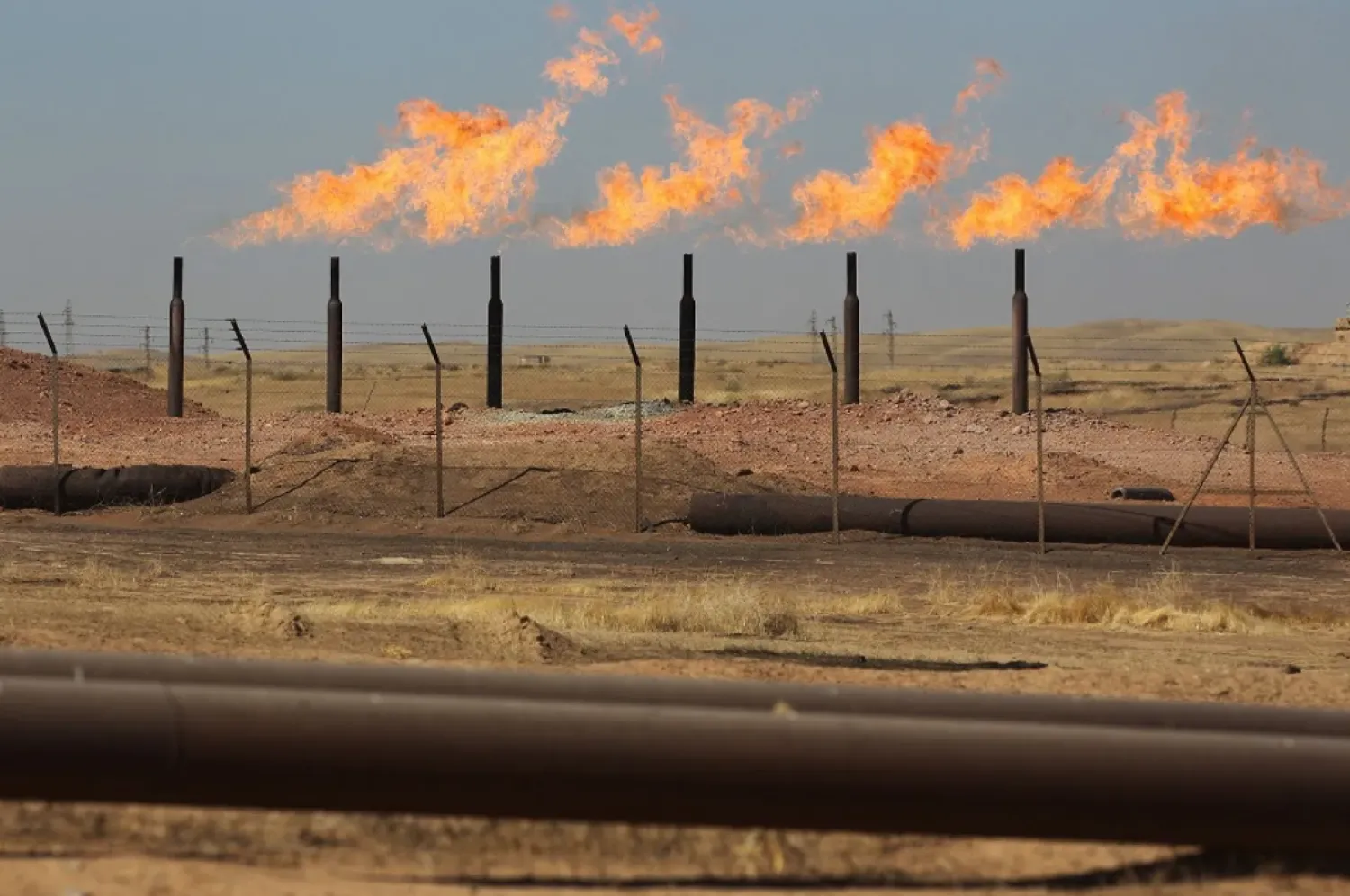
This file photo taken on October 17, 2017 shows excess flammable gasses burning from gas flares at the Bai Hassan oil field, west of the multi-ethnic northern Iraqi city of Kirkuk. (AFP)
TT

Operations Suspended at Major Iraq Gas Field Following Drone Attack

This file photo taken on October 17, 2017 shows excess flammable gasses burning from gas flares at the Bai Hassan oil field, west of the multi-ethnic northern Iraqi city of Kirkuk. (AFP)

A drone attack prompted the suspension of operations at the Khor Mor gas field, one of the largest gas fields in Iraqi Kurdistan, field engineers said on Wednesday.

All gas supplies to power stations in the Kurdistan region were halted following the attack, the Natural Resources and Electricity ministries said in a joint statement.

The attack, which hit field storage tanks, started a fire and wounded some workers, security sources said.

"A drone struck a key gas storage facility at the field, causing extensive damage, and a fire is still burning,” a worker told Reuters from the field shelter where staff had taken cover amid fears of further attacks.

A video posted on Kurdish broadcaster Rudaw on X showed smoke billowing from the site after the drone attack.

It was not immediately clear who was behind the attack.

This is the second drone that has targeted the field in days as Iraqi Kurdish security forces opened fire at a drone to prevent it from reaching the field late on Sunday.


G7 Trade Talks Target Critical Minerals as US-EU Tariff Rift Strains Unity

(L-R): EU commissioner for trade and economic security Maros Sefcovic, German Economy and Energy Minister Katarina Reiche, British State Secretary in charge of Trade Peter Kyle, US representative for Trade Jamieson Greer, French minister for trade Nicolas Forissier, Canadian state secretary in charge of international trade Maninder Sidhu, Italian Vice-Minister of Foreign Affairs and International Cooperation Maria Tripodi and Japanese Foreign Affairs delegate Minister Iwao Horii and Japanese Economy and Trade Minister Ryosei Akazawa prepare to pose for a group picture during the G7 Trade ministerial meeting in Paris, France, 06 May 2026. EPA/CHRISTOPHE PETIT TESSON / POOL
TT

G7 Trade Talks Target Critical Minerals as US-EU Tariff Rift Strains Unity

(L-R): EU commissioner for trade and economic security Maros Sefcovic, German Economy and Energy Minister Katarina Reiche, British State Secretary in charge of Trade Peter Kyle, US representative for Trade Jamieson Greer, French minister for trade Nicolas Forissier, Canadian state secretary in charge of international trade Maninder Sidhu, Italian Vice-Minister of Foreign Affairs and International Cooperation Maria Tripodi and Japanese Foreign Affairs delegate Minister Iwao Horii and Japanese Economy and Trade Minister Ryosei Akazawa prepare to pose for a group picture during the G7 Trade ministerial meeting in Paris, France, 06 May 2026. EPA/CHRISTOPHE PETIT TESSON / POOL

Group of Seven trade ministers meeting in Paris on Wednesday sought common ground on securing critical mineral supplies that are dominated by China, but fresh US tariff threats against European Union-made cars risked straining unity.

France wants critical minerals supplies to be among the most concrete deliverables during its G7 presidency as ministers prepare for a leaders' summit in mid-June, Foreign Trade Minister Nicolas Forissier ‌said as ‌he arrived for talks.

"I believe we will ‌make ⁠very concrete progress ⁠on rare earths and critical minerals, securing our supply chains and ensuring we are not held hostage by certain countries," he said.

Officials involved in the discussions said there was broad agreement on the need to reduce reliance on China, but significant differences remained about how to do so, said Reuters.

G7 unity is also being ⁠tested by comments from US President Donald Trump, who ‌said Washington would raise tariffs on ‌EU-made cars to 25% from 15%, arguing that Brussels was ‌not complying with a trade deal that was agreed upon ‌in Turnberry, Scotland, last year.

German Economy Minister Katherina Reiche said that she was in intensive talks with US officials over the tariffs. Germany's export-dependent automotive sector has already been under strain from weakening demand in China, ‌slower global growth and higher input and labor costs.

EU Trade Commissioner Maros Sefcovic said he and ⁠US Trade Representative ⁠Jamieson Greer had discussed the Turnberry agreement at a meeting in Paris on Tuesday and that he would be heading to the European Parliament, where negotiations on EU legislation related to the trade deal will take place later on Wednesday.

"We both clearly concluded that it's important to respect the deal from Turnberry from both sides, so we have to deliver on what was promised in Scotland," Sefcovic said.

The trade ministers are also expected to discuss industrial overcapacity - China being the main source - and reform of the World Trade Organization, Forissier said.


Gulf Markets Higher as US-Iran Ceasefire Holds

An investor watches a stock screen at the Saudi Stock Exchange in Riyadh (AFP)
TT

Gulf Markets Higher as US-Iran Ceasefire Holds

An investor watches a stock screen at the Saudi Stock Exchange in Riyadh (AFP)

Saudi Arabia's ⁠benchmark stock ⁠index rose 0.4% on Wednesday, with most constituents trading in positive territory. Gains were led by information technology, materials and healthcare stocks.

Saudi Arabian Mining Co added 4.5%, while Arabian Mills for Food Products surged 8% after reporting a 32% rise in first-quarter net profit.

US President Donald Trump said he would briefly pause an operation escorting ships through the Strait of Hormuz, a key waterway that carries about a fifth of global oil supplies and has been blockaded by Iran since late February, triggering a global energy crisis.

So the fragile US-Iran ceasefire held firm despite a fresh flare-up in tensions, allowing investors to turn their attention back to corporate earnings.

Dubai's benchmark stock index rose 1.5%, rebounding from losses in the previous session.

Among individual stocks, blue-chip developer Emaar Properties gained 1.7%, while Dubai's largest lender, Emirates NBD, added 1.5%.

The Abu Dhabi benchmark index advanced 0.5%, with most constituents trading higher. ⁠Gains were led by utilities, healthcare and technology shares.

Presight AI Holding jumped 5%, while Alpha Dhabi climbed 2.3%.

The Qatari benchmark index edged up 0.3%, as most stocks traded higher. Industries Qatar gained 0.7%, while Qatar Fuel Co added 0.6%.


Saudi Non-Oil Private Sector Defies ‘Hormuz Winds’, Regains Growth Momentum

A commercial street in Riyadh (AFP) 
TT

Saudi Non-Oil Private Sector Defies ‘Hormuz Winds’, Regains Growth Momentum

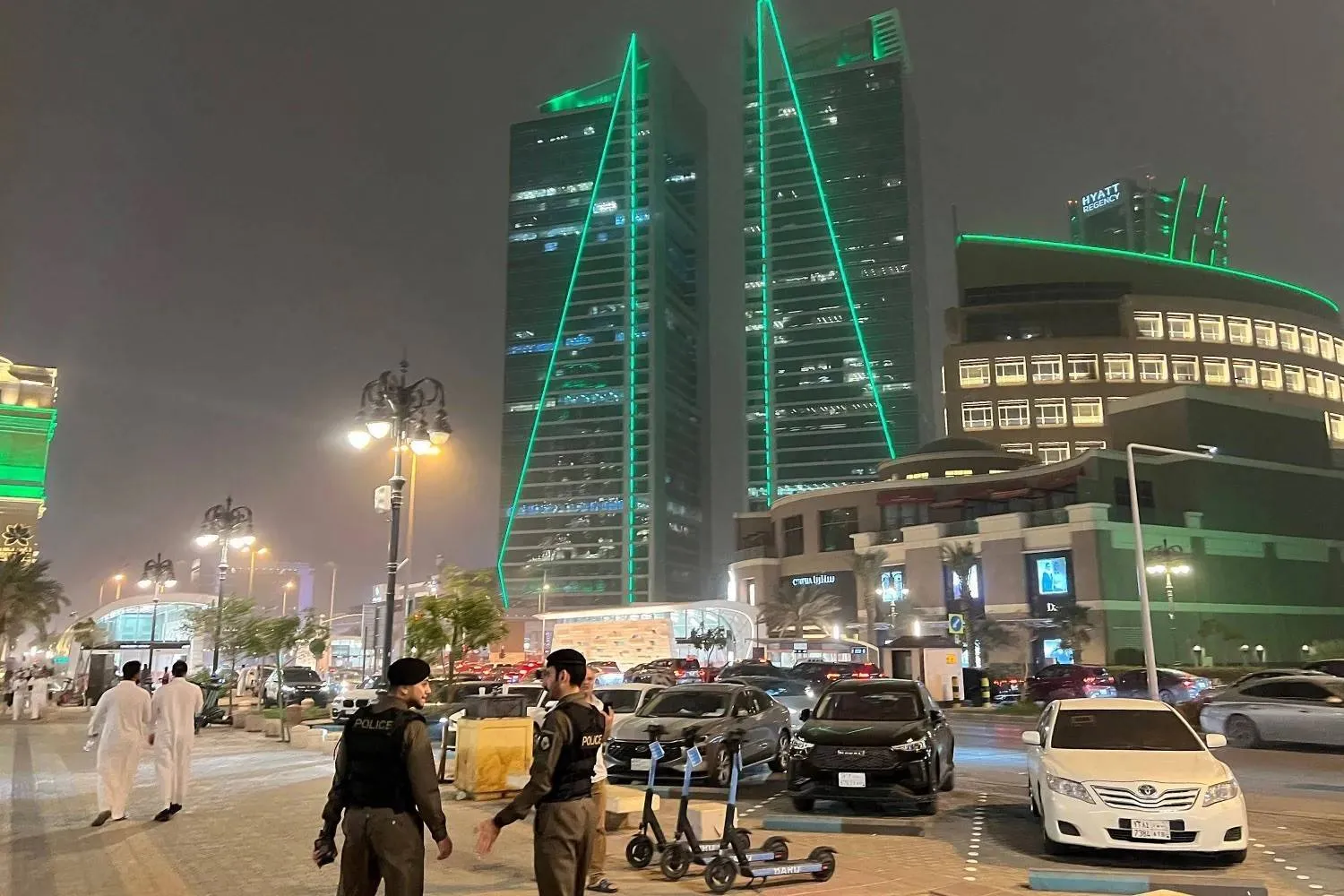
A commercial street in Riyadh (AFP) 

Saudi Arabia’s non-oil private sector posted a notable positive shift in April 2026, regaining growth momentum despite escalating geopolitical pressures and disruptions to international shipping routes — described as the “winds of Hormuz” — that affected supply chains and market expectations.

The Riyad Bank Purchasing Managers’ Index (PMI) rose to 51.5 points, surpassing the neutral 50-point mark. The recovery reflected companies’ ability to increase output levels in response to an influx of new business and progress on existing projects, despite continuing geopolitical challenges in the region and ongoing global supply chain disruptions that continued to weigh on customer spending decisions.

In this context, Riyad Bank Chief Economist Naif Alghaith said the results confirmed that the non-oil sector remained on a constructive and resilient trajectory, supporting the strategic goals of economic diversification under Saudi Vision 2030.

He added that the return of the index to expansion territory demonstrated that underlying business conditions remained fundamentally strong, with domestic demand and purchasing power offsetting the noticeable weakness in export orders. This, he noted, highlighted the growing importance of the Kingdom’s domestic economic engine in reducing reliance on external cycles.

Operationally, April saw a rapid and unprecedented increase in cost burdens, with input prices rising at the fastest pace since the survey began in August 2009. Sharp increases in raw material prices, shipping costs and logistics expenses resulting from regional disruptions pushed companies to implement near-record increases in selling prices in an effort to pass costs on to customers.

Alghaith said supply chain dynamics remained a key area of focus, particularly as delivery times continued to lengthen, prompting companies to adopt proactive behavior by increasing inventories as a precautionary measure to ensure business continuity.

Although the pace of overall business expansion remained slow by historical standards due to investor and customer caution surrounding the conflict in the Middle East, future expectations remained optimistic. The survey showed an improvement in business confidence regarding activity over the next 12 months, driven by long-term expansion prospects and major domestic infrastructure projects.

Alghaith said the Kingdom’s stable and robust economic fundamentals positioned it strongly to sustain long-term growth and stability, adding that optimism and strong domestic demand continued to reinforce confidence in Saudi Arabia’s economic transformation path.

For his part, Osama bin Ghanem Al-Obaidy, adviser and professor of commercial law, told Asharq Al-Awsat that the rise in the Purchasing Managers’ Index reflected the ability of Saudi companies to deal with the Strait of Hormuz crisis and its repercussions on the economy and global supply chains.

He said the improvement was driven by increased domestic demand, national economic diversification programs, Vision 2030 projects and infrastructure development, as well as stronger purchasing activity, reflecting the growing positive momentum of the Kingdom’s non-oil economic activities.

Al-Obaidy added that the improvement came despite mounting cost pressures resulting from higher raw material prices, transportation costs and rising wages.