


Jefferies Joins Wall Street Heavyweights in Saudi Private Credit Push

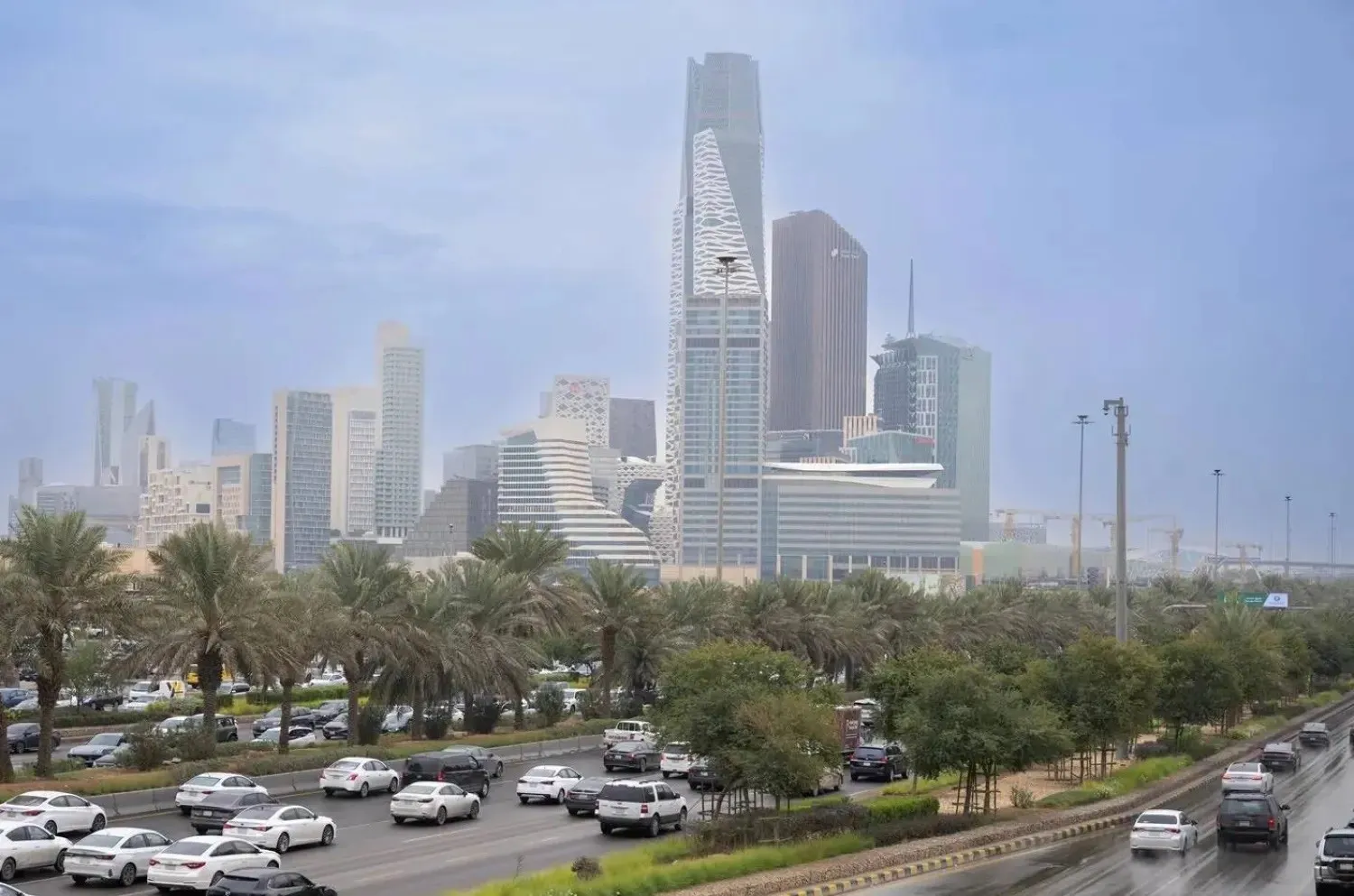
The Saudi capital, Riyadh (SPA)
TT

Jefferies Joins Wall Street Heavyweights in Saudi Private Credit Push

The Saudi capital, Riyadh (SPA)

Jefferies Financial Group has entered Saudi Arabia’s private credit market for the first time, leading a USD125 million financing facility for Riyadh-based SME lender erad.

The deal, arranged in partnership with co-investor Channel Capital, provides an asset-backed and expandable structure designed to help erad scale its lending to small and medium-sized enterprises across the Kingdom.

The agreement reflects rising interest among major global financial institutions seeking to tap into Saudi Arabia’s fast-growing private credit opportunities. By backing erad’s expansion, Jefferies joins the ranks of Wall Street firms moving into the region’s alternative-finance landscape.

Erad has reported rapid growth, achieving more than six-fold year-on-year expansion and receiving over USD700 million in financing requests. Funds dedicated to Saudi SMEs will be deployed through direct-financing vehicles licensed by the Capital Market Authority and managed by Erad Partners Capital.

Erad co-founder Salem Abu-Hammour described the partnership as a milestone for SME finance in the region, saying: “Our partnership with Jefferies represents a transformative moment for SME financing in the region. By embedding financing directly into existing supplier and platform relationships, we’re making working capital as accessible as a payment transaction.”

He added that support from regulators, Jefferies, and Channel Capital underscores the strategic importance of alternative financing in advancing Saudi Arabia’s SME-growth objectives.

SMEs form a cornerstone of economic-diversification efforts across the Gulf, contributing roughly half of regional GDP and employing nearly two-thirds of the workforce. Despite this central role, the sector faces an estimated USD250 billion financing gap, which continues to restrict its growth potential.

“We are proud to work with erad and the Channel team on one of our first asset-backed financing solutions in the GCC,” said Mark Collier, managing director at Jefferies. “Our partnership with erad represents a significant step forward in improving access to capital for GCC SMEs.”

Channel Capital’s chief investment officer Johan Nisser highlighted that the deal builds on seven years of Sharia-compliant, asset-backed financing activity in the region and expressed enthusiasm for supporting erad’s next phase of growth.

Erad plans to expand into multiple sectors and products, including embedded-finance tools that allow suppliers and digital platforms to offer financing at the point of sale. This model is already in use with strategic partners, including suppliers in healthcare, food, and beverage markets in both Saudi Arabia and the UAE.

The transaction marks a significant step in the rapid development of the Kingdom’s private credit market, as both local and international institutions move to meet growing demand for flexible, alternative financing across the Gulf’s SME ecosystem.



Saudi Food Self-Sufficiency Shields Economy from Hormuz Crisis

Containers are seen at a port in Saudi Arabia. (SPA)
TT

Saudi Food Self-Sufficiency Shields Economy from Hormuz Crisis

Containers are seen at a port in Saudi Arabia. (SPA)

The closure of the Strait of Hormuz has pushed global energy and food security to the brink. Saudi Arabia responded by positioning itself as a stabilizing force, turning its western coastline into a lifeline that not only protected its domestic market but also helped offset shortages in neighboring countries.

A proactive strategy that raised self-sufficiency in key food products above 100% helped the Kingdom mitigate the fallout from the geopolitical crisis. Backed by efficient logistics and strong local content, Saudi food security has evolved beyond a statistical benchmark into a pillar capable of absorbing global shocks and keeping goods flowing smoothly amid turbulence.

Official data underlines that shift. The General Authority for Statistics’ 2024 food security report showed record increases in self-sufficiency across several plant and animal products compared with 2023, with some exceeding 100%.

The gains were driven by sustained investment in agriculture, stronger domestic supply chains and diversified import sources. Together, they shielded the local market from sharp disruptions, helping stabilize prices and maintain supply, reinforcing food security as a core pillar in managing global crises.

Ports have been central to that effort. Shura Council member Fadel bin Saad Al-Buainain said Saudi Arabia’s strategic location on the Red Sea and the Gulf provides multiple high-efficiency ports supported by integrated logistics that sustain flows of goods and cargo.

He said the Kingdom faced no difficulty meeting demand or exporting goods after the closure of the Strait of Hormuz, successfully using Red Sea ports as an alternative route. That ensured uninterrupted flows, avoided shortages or price spikes, and strengthened confidence in government measures to contain the impact of geopolitical tensions.

Saudi efforts extended beyond its borders. Al-Buainain said the Kingdom helped compensate for shortages in Gulf states whose imports were disrupted, using Red Sea ports, expanding storage capacity, activating fast-track transit agreements and linking Gulf ports to move goods, alongside overland transport.

“These are tremendous efforts that went beyond the Kingdom’s borders to reach all Gulf states, reinforcing cooperation and integration and underscoring the importance of the Gulf Cooperation Council,” he told Asharq Al-Awsat.

Strengthening local content has been key. Al-Buainain said the Kingdom achieved significant self-sufficiency, particularly in agriculture, alongside other goods including oil-sector industrial parts, whose local availability helped facilities recover quickly after what he described as Iranian attacks.

Sustained local supply has been central to curbing inflation and stabilizing prices, while strategic reserves of essential goods have served as an effective buffer, enabling the state to absorb shocks and meet market demand without disruption, he stressed.

The availability of imports does not guarantee price stability, as rising costs, particularly in air freight, have driven price increases in markets rather than shortages, he added.

Strategic reserves also help regulate prices, Al-Buainain said, noting the role of the Ministry of Commerce in pricing stockpiles at reasonable levels and preventing exploitation during crises.

Saudi Arabia’s transport and logistics system has leveraged its strategic location to generate economic returns while strengthening national security in its broader sense, including food, medical and commodity security, whether sourced locally or imported through western ports.

Osama bin Ghanem Al-Obaidy, an adviser and professor of commercial law, said the Kingdom’s push to develop agriculture and livestock sectors had driven self-sufficiency rates above 100% in several products, reflecting the strength of local production and its ability to meet both domestic and external demand.

Those efforts helped maintain supply and stabilize prices during the Hormuz crisis, which disrupted shipments and drove up shipping and insurance costs, contributing to a sharp rise in global food prices, particularly wheat and rice, he told Asharq Al-Awsat.

Al-Obaidi said the crisis strained global supply chains, causing bottlenecks in goods and vital fertilizers as shipping through the strait declined. Saudi western ports, led by Jeddah Islamic Port and Yanbu, have become key logistics hubs, securing domestic supply while serving as vital arteries for neighboring countries.

Data from the statistics authority showed shrimp self-sufficiency at 149%, dairy products at 131% and table eggs at 103%.

Vegetable self-sufficiency also reached high levels, with eggplant at 105%, okra at 102%, cucumbers at 101% and zucchini at 100%. Dates recorded the highest rate among fruits at 121%, followed by figs at 99%.

In livestock, data from the Ministry of Environment, Water and Agriculture showed the Kingdom met 61% of its red meat needs locally, with production exceeding 270,000 metric tons. That stability boosted market resilience and its ability to meet rising demand, especially during peak seasons.

In poultry, a key component of the Ramadan food basket, self-sufficiency reached 72%, with production surpassing 1 million metric tons. The surplus not only met local demand but also supported exports, alongside tighter oversight to ensure market stability and protect supply chains from external shocks.

The result has reinforced Saudi Arabia’s position as a global contributor to sustainable food security, backed by an outward investment strategy that includes stakes in major producers such as Brazil’s BRF and Ukraine’s MHP, helping secure supplies at source.


US Renews Russian Oil Waiver for a Month to Curb Global Energy Prices

US Treasury Secretary Scott Bessent speaks with reporters in the James Brady Press Briefing Room at the White House, Wednesday, April 15, 2026, in Washington. (AP)
TT

US Renews Russian Oil Waiver for a Month to Curb Global Energy Prices

US Treasury Secretary Scott Bessent speaks with reporters in the James Brady Press Briefing Room at the White House, Wednesday, April 15, 2026, in Washington. (AP)

Washington renewed on Friday a waiver allowing countries to buy sanctioned Russian oil at sea for about a month, even as lawmakers accused the government ‌of going easy on Moscow as its war on Ukraine grinds on.

The Treasury Department's waiver lets countries purchase Russian oil and petroleum products loaded on vessels as of Friday through May 16.

It replaces a 30-day waiver that expired on April 11 and excludes transactions involving Iran, Cuba and North Korea.

Reversal

The move is part of the administration's effort to control global energy prices that have shot higher during the US-Israeli war with Iran.

It came after countries in Asia, suffering from the global energy shock, pressed Washington to allow alternative supplies to reach markets.

“As negotiations (with Iran) accelerate, Treasury wants to ensure oil is available to those ⁠who need it,” a Treasury Department spokesperson said.

Last Wednesday, Treasury Secretary Scott Bessent said Washington would not be renewing the waiver for Russian oil and another for Iranian oil, which is set to expire on Sunday.

Global oil prices tumbled 9% on Friday to about $90 a barrel after Iran temporarily reopened the Strait of Hormuz, an oil choke point in the Gulf. But the war has already created the worst global energy supply disruption in history, the International Energy Agency has said.

The war, which enters its eighth week on Saturday, has damaged more than 80 oil and gas facilities in the Middle East, and Tehran has warned it could close the strait again if the recent US Navy blockade of Iranian ports continued.

High oil prices are a threat to President Donald Trump's fellow Republicans ahead of November's midterm elections.

Trump has also faced pressure from partner countries on the oil price.

A US source told Reuters partner countries on the sidelines of Group of 20, World Bank and International Monetary Fund meetings ‌in Washington ⁠this week had requested the US extend the waiver. Trump also spoke about oil this week in a call with Prime Minister Narendra Modi of India, a big purchaser of Russian oil.

The waiver on Iranian oil, which the Treasury Department issued on March 20, allowed about 140 million barrels of oil to reach global markets and helped relieve pressure on energy supply, Bessent said last month.

Lasting damage

US lawmakers from both political parties had slammed the administration over the sanctions waivers, saying they stood to help the economy of Iran while it was at war ⁠with the US and of Russia as it was at war with Ukraine.

The waivers could impede the West's efforts to deprive Russia of revenue for its war in Ukraine and put Washington at odds with its allies. European Commission President Ursula von der Leyen has said now is not the time to relax sanctions against Russia.

Russian President Vladimir Putin's special envoy Kirill Dmitriev ⁠said an extension of the US waiver will affect another 100 million barrels of Russian oil, bringing the total volume affected by both waivers to 200 million barrels.

Dmitriev, who travelled to the US on April 9 for meetings with members of the Trump administration ahead of the previous waiver expiry, said on his Telegram channel that the ⁠extension faced “active political opposition.”

Brett Erickson, a sanctions expert at the consulting firm Obsidian Risk Advisors, said Friday's renewal is likely not the last waiver Washington will issue.

“The conflict has done lasting damage to global energy markets, and the tools available to stabilize them are nearly exhausted,” Erickson said.


Turkmenistan, China Launch Expansion of World’s Second-largest Gas Field

Former Turkmen president Gurbanguly Berdymukhamedov and Chinese Vice Premier Ding Xuexiang applaud during a ceremony launching the fourth of seven planned development phases at Galkynysh gas field, the world's second-largest gas field in the Karakum desert about 400 kilometres (250 miles) east of the capital Ashgabat, on April 17, 2026. (Photo by AFP)
TT

Turkmenistan, China Launch Expansion of World’s Second-largest Gas Field

Former Turkmen president Gurbanguly Berdymukhamedov and Chinese Vice Premier Ding Xuexiang applaud during a ceremony launching the fourth of seven planned development phases at Galkynysh gas field, the world's second-largest gas field in the Karakum desert about 400 kilometres (250 miles) east of the capital Ashgabat, on April 17, 2026. (Photo by AFP)

Turkmenistan and China broke ground Friday on works to expand production at the giant Galkynysh gas field, strengthening Beijing's already dominant position in the secretive Central Asian nation's energy sector.

The former Soviet republic, which holds the world's fourth-largest gas reserves, has exported nearly all its production to China since 2009, when the Central Asia-China pipeline opened.

In the middle of the desert, former president Gurbanguly Berdymukhamedov -- who effectively runs the country alongside his son, President Serdar Berdymukhamedov -- formally inaugurated the launch of the fourth of seven planned development phases at Galkynysh.

The ceremony was attended by Chinese Vice Premier Ding Xuexiang, an AFP correspondent saw.

"Turkmen gas is a symbol of happiness -- it is present in every Chinese household," Ding said.

The event featured songs and dances celebrating Turkmen-Chinese friendship, staged with the lavish pomp typical of Turkmenistan's state-sponsored events.

Gurbanguly Berdymukhamedov, officially titled "Hero-Protector" and vested with sweeping powers, presided over the gathering.

Galkynysh, in the Karakum desert about 400 kilometers (250 miles) east of the capital Ashgabat, has been producing gas since 2013 and is the world's second-largest gas field, according to the British consulting firm GaffneyCline.

Expansion works are being carried out by the state-owned China National Petroleum Corporation (CNPC).

On a visit to Ashgabat the day before the ceremony, CNPC chairman Dai Houliang said "the friendship between China and Turkmenistan is as deep as the roots of a tree."