


Saudi Finance Minister at Davos: Fiscal Discipline Drove Our Credit Upgrades

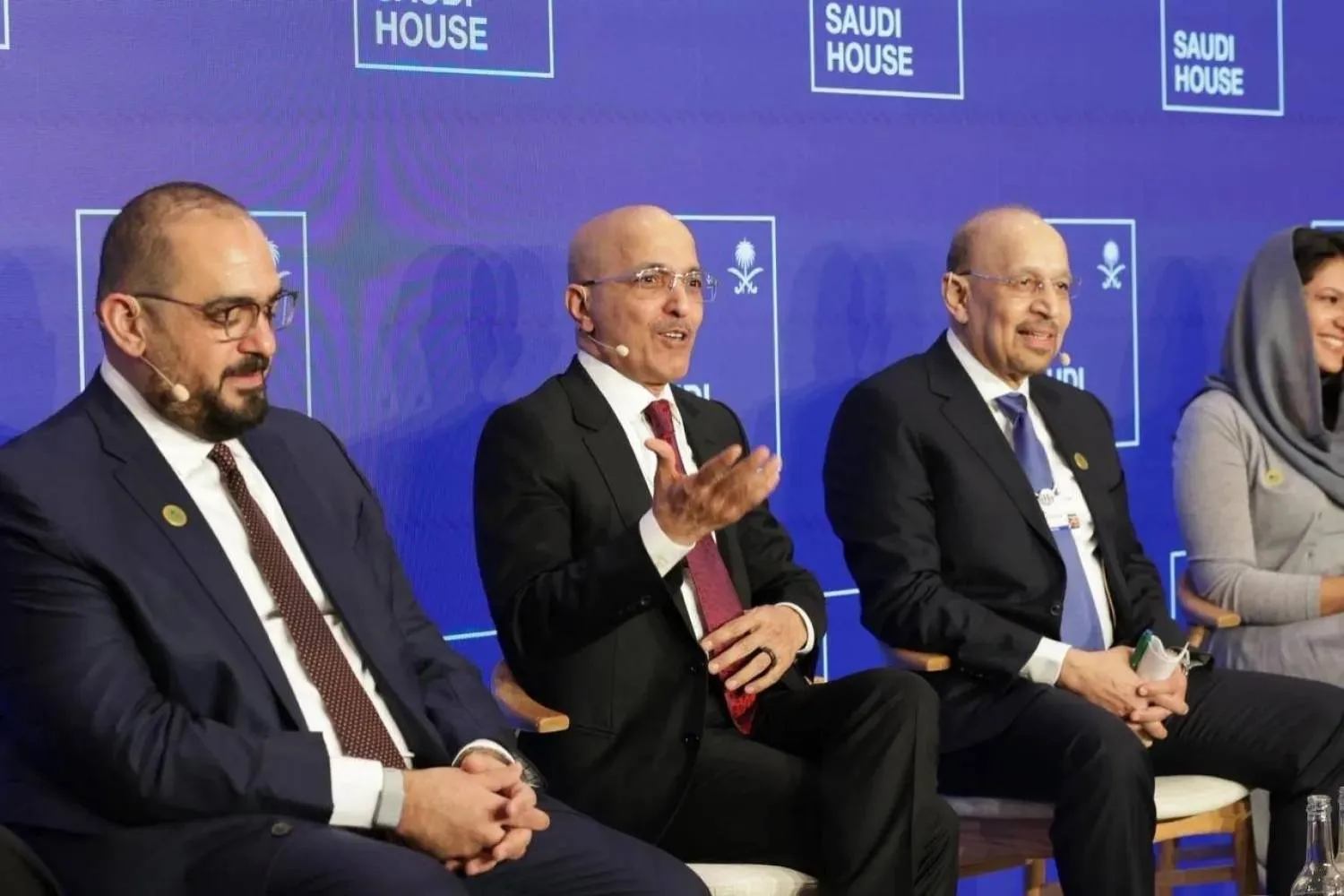
Finance Minister Mohammed Al-Jadaan and senior Saudi officials at a panel at the World Economic Forum in Davos on Tuesday.
TT

Saudi Finance Minister at Davos: Fiscal Discipline Drove Our Credit Upgrades

Finance Minister Mohammed Al-Jadaan and senior Saudi officials at a panel at the World Economic Forum in Davos on Tuesday.

Saudi Finance Minister Mohammed Al-Jadaan said on Tuesday strict fiscal discipline lay behind the Kingdom’s string of credit rating upgrades, arguing that Saudi Arabia has built a buffer against oil price shocks after restructuring its economy to lift the non-oil sector’s share to 56%.

Speaking to CNBC on the sidelines of the World Economic Forum in Davos, Al-Jadaan said dialogue, not confrontation, remains the only viable path to rebalancing global geoeconomic power.

He stressed that the Kingdom’s receipt of three credit rating upgrades last year was no coincidence, describing it as an international vote of confidence in the government’s fiscal discipline.

Global rating agencies and the International Monetary Fund are now clearly seeing the results of structural transformation, he remarked, noting that the Saudi budget is no longer hostage to energy price volatility, but instead rests on strong institutional foundations.

He also reaffirmed that Saudi-US relations remain “strategic” and ongoing at all levels of leadership and the ministerial level, adding that a previously cited figure of one trillion dollars in Saudi investment in the United States is not only realistic but could be exceeded.

The US market represents a core growth area, offering the Kingdom financial returns as well as knowledge and expertise transfers that serve national interests, the minister added.

In the face of the threat of global tariff hikes, Al-Jadaan called for resolving trade disputes through multilateral institutions, stressing that companies need certainty and that constructive dialogue with Washington and other strategic partners is essential to safeguarding global trade stability.

Investment discipline

Responding to questions about budget deficits alongside massive investments, Al-Jadaan outlined a different fiscal philosophy, describing the deficit as a deliberate policy design rather than a result of financial strain.

The Kingdom is borrowing to finance tomorrow’s growth, not today’s operating expenses, he said.

He pointed to last year’s three credit upgrades as evidence of the policy’s success, saying fiscal space is being managed with high discipline to channel resources toward jobs and gross domestic product, particularly as the non-oil economy now accounts for about 56% of total output.

Breaking the historical link

Asked about the US administration’s preference for oil prices around $50 a barrel, Al-Jadaan said Saudi Arabia has succeeded over the past decade in decoupling its economy from oil volatility, with non-oil revenues now making up 30% of total revenues.

He warned that excessively low prices could discourage global investment and trigger sharp price spikes in the future due to supply shortages, stressing that Saudi Arabia’s priority is market stability that balances the interests of both investors and consumers.

On monetary policy, Al-Jadaan underlined the Kingdom’s firm commitment to the riyal’s peg to the US dollar, calling it a cornerstone of stability and investor expectations.

He downplayed the impact of ongoing investigations into the US Federal Reserve on the Saudi economy, saying the Kingdom has policy tools beyond monetary policy that have kept inflation at very safe levels.

He added that markets determine long-term borrowing costs based on supply and demand, rather than short-term Federal Reserve decisions, helping reduce currency volatility risks and boost investor confidence.

Al-Jadaan announced a landmark step, starting on February 1, when the stock and real estate markets will be further opened to foreign investors.

The rise in institutional investor ownership in 2025 is a vote of confidence in the Saudi market's value, despite challenges, he stressed.

He warned, however, that the greatest risk facing any economy is complacency, stressing that Saudi Arabia is working institutionally to ensure sustainable results and that reforms no longer depend on daily interventions but have become a default approach whose benefits are felt by citizens and investors alike.


Safran to Open Landing Gear Plant in Morocco

Safran Group logo is seen in this illustration taken July 26, 2025. REUTERS/Dado Ruvic/Illustration
TT

Safran to Open Landing Gear Plant in Morocco

Safran Group logo is seen in this illustration taken July 26, 2025. REUTERS/Dado Ruvic/Illustration

Safran Landing Systems, a subsidiary of French aerospace group Safran, signed a deal with Morocco to set up a landing gear factory near Casablanca worth 280 million euros ($332 mln) to supply the Airbus A320, Safran Chair Ross McIness said.

The new plant will help Safran support the production pace of the Airbus A320 family and prepare the next generation of short and medium-haul aircraft, McIness said at the deal's signing ceremony chaired by Morocco's King Mohammed VI at the Royal Palace in Casablanca.

The plant is a step forward in Morocco's plan to strengthen its position in global aerospace industry supply chains, Moroccan industry minister Ryad Mezzour said on the same occasion.

The factory, set to be one of the largest of its kind, is expected to start production in 2029, Safran's communications said.

In October, Safran signed deals with the Moroccan government to set up a new engine assembly line for Airbus jets and a new maintenance and repair plant in Midparc, an industrial zone near Casablanca dedicated to aerospace manufacturers.

With 150 firms, Morocco's aerospace sector employs 25,000 people. Its exports rose to 29 billion dirhams ($3 billion) in 2025 from 26.4 billion dirhams a year earlier.


China to Scrap Tariffs for Most of Africa from May

Visitors walk past illuminated lantern displays ahead of Lunar New Year in Beijing, China, Wednesday, Feb. 11, 2026. (AP Photo/Vincent Thian)
TT

China to Scrap Tariffs for Most of Africa from May

Visitors walk past illuminated lantern displays ahead of Lunar New Year in Beijing, China, Wednesday, Feb. 11, 2026. (AP Photo/Vincent Thian)

Beijing's scrapping of tariffs for all but one African country will start May 1, Chinese President Xi Jinping said Saturday, according to state media.

China already has a zero-tariff policy for imports from 33 African countries, but Beijing said last year it would extend the policy to all 53 of its diplomatic partners on the continent.

China is Africa's largest trading partner and a key backer of major infrastructure projects in the region through its vast "Belt and Road" initiative.

From May 1, zero levies will apply to all African countries except Eswatini, which maintains diplomatic relations with Taiwan.

China claims the democratic island as its own and does not rule out using force to take it.

Many African countries are increasingly looking to China and other trading partners since US President Donald Trump imposed steep tariffs worldwide last year.

Xi said the zero-tariff deal "will undoubtedly provide new opportunities for African development", announcing the date as leaders across the continent gathered in Ethiopia for the annual African Union summit.

The announcement came as Africa’s top regional body hosted its annual summit in Ethiopia this weekend to discuss the future of the continent of some 1.4 billion people.


Trump to Roll Back Some Tariffs on Steel, Aluminum

A worker in the coal fields at US Steel's Clairton Coke Works in Clairton, Pa., on Wednesday, Nov. 19, 2025. (Quinn Glabicki/Pittsburgh's Public Source via AP)
TT

Trump to Roll Back Some Tariffs on Steel, Aluminum

A worker in the coal fields at US Steel's Clairton Coke Works in Clairton, Pa., on Wednesday, Nov. 19, 2025. (Quinn Glabicki/Pittsburgh's Public Source via AP)

US President Donald Trump plans to scale back some tariffs on steel and aluminum goods, the Financial Times reported on Friday, citing people familiar with the matter.

Officials in the Commerce Department and US trade representative’s office believe the tariffs are hurting consumers by raising prices for goods including pie tins and food-and-drink cans, the FT report said.

Voters nationwide are worried about prices, and cost-of-living concerns are expected to be a major factor for Americans heading into the November midterm elections.

A recent Reuters/Ipsos poll showed that 30% of Americans approved of Trump’s handling of the rising cost of living, while 59% disapproved, including nine in 10 Democrats and one in five Republicans.

Trump hit steel and aluminum imports with tariffs of up to 50% last year and has repeatedly used levies as a negotiating tool with a range of trading partners.

The Trump administration is now reviewing a list of products affected by the levies and plans to exempt some items, halt the expansion of the lists and instead launch more targeted national security probes into specific goods, the FT report added.

Trump recently touted his economic record in Detroit, aiming to refocus attention on US manufacturing and his efforts to tackle high consumer costs as the White House seeks to show it is addressing the economic anxieties gripping US households.

The US Commerce Department last year hiked steel and aluminum tariffs on more than 400 products including wind turbines, mobile cranes, appliances, bulldozers and other heavy equipment, along with railcars, motorcycles, marine engines, furniture and hundreds of other products.

Prices Sink in Markets

Aluminum prices sank to a one-week low on Friday after the report Trump may trim some import tariffs.

On the London Metal Exchange, the benchmark three-month aluminum contract slipped more than 1.18% to $3,063.50 a ton by 0740 GMT, while the most-active contract on the Shanghai Futures Exchange fell 1.76% to 23,195 yuan ($3,355.27) a ton.

The metal has also recently received support from South32, an Australian company, which announced that it would place the Mozal aluminum plant in Mozambique, under care and maintenance next month.

Traders said the removal of tariffs would help ease the flow of aluminum into global markets, but the decision’s impact on supply and demand is limited.

On Friday, the price of aluminum dropped as trading has slowed in China since the Shanghai Futures Exchange will be closed from February 15 for the nine-day Lunar New Year break and reopen on February 24.

The most-active copper contract on the Shanghai Futures Exchange tumbled 2.24% to 100,380 yuan a metric ton.

In return, the three-month benchmark copper price rose slightly by 0.02% to $12,878 per ton, still hovering below the $13,000 level.
