

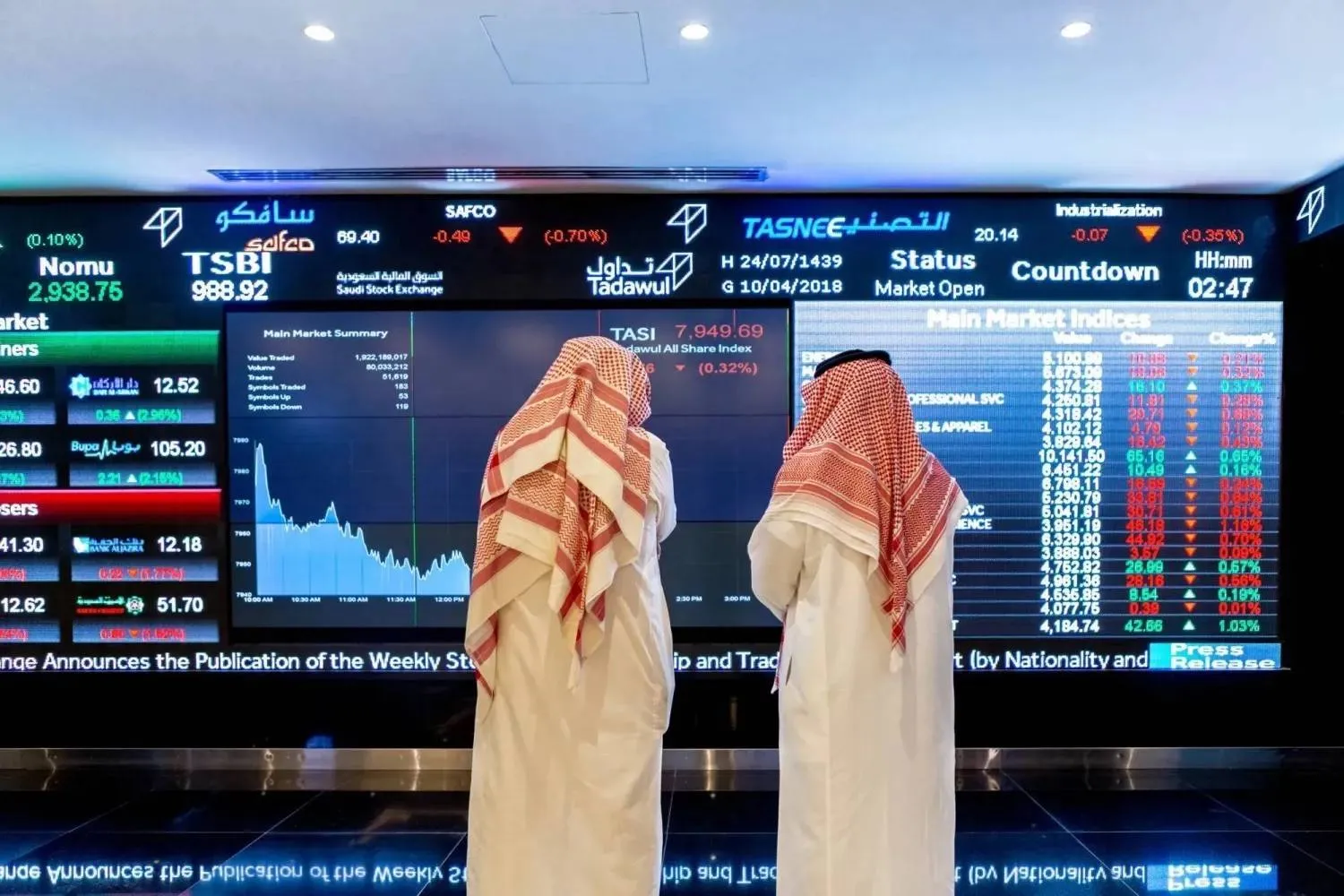

Saudi Stock Market Opens Its Doors to Direct Foreign Investment

Traders watch a screen at the Saudi stock market. (Reuters)
TT

Saudi Stock Market Opens Its Doors to Direct Foreign Investment

Traders watch a screen at the Saudi stock market. (Reuters)

When trading opened on this Sunday, Saudi Arabia’s stock exchange marked more than the start of a routine session. The day signaled a pivotal shift in the Kingdom’s financial history, as the market formally opened to direct foreign investment, positioning it as a destination for global capital and one of the most consequential milestones in Saudi Arabia’s economic transformation.

With the removal of long-standing restrictions and pre-qualification requirements, the Saudi market is moving beyond its earlier status as an ambitious emerging exchange. It is now seeking to stand shoulder to shoulder with advanced global markets, backed by a robust regulatory framework and an increasingly confident investor base.

Analysts say the reforms could pave the way for deeper liquidity, broader participation, and an eventual climb toward the 17,000-point level for the benchmark index.

Market specialists view the move as reinforcing Saudi Arabia’s appeal as an international investment hub and as a vote of confidence in the market’s regulatory maturity and capacity to absorb large capital inflows.

Expectations are that the changes will help attract long-term, strategic foreign investors, raise trading activity, and enhance market depth. Optimistic forecasts point to gains over the next two years, driven by anticipated interest in sectors such as banking, petrochemicals, and technology.

Sweeping regulatory reform

The decision by the Capital Market Authority in January to abolish the Qualified Foreign Investor regime and dismantle the framework governing swap agreements marked a fundamental regulatory overhaul rather than a technical adjustment.

The new rules allow non-resident foreign investors to access the main market directly, removing historic barriers and simplifying the process of opening and operating investment accounts.

Regulators say the reforms are aimed at attracting long-term capital that supports not only liquidity, but also higher standards of governance and transparency in line with global best practices.

The changes are part of a broader strategy to make the Saudi market more accessible to international investors, including Gulf Cooperation Council (GCC) residents and individuals with prior ties to the region.

Market gains ahead of the shift

The market has already reacted positively. Hamad Al-Olayan, chief executive of Villa Capital, told Asharq Al-Awsat that the benchmark index gained nearly 1,000 points in January alone, following the announcement of the regulatory changes.

“This rally comes ahead of foreign participation,” Al-Olayan said, noting that many listed companies had seen their share prices decline over the past two years. “Current investors are unlikely to sell strong stocks at these low levels, and recent sessions have seen concentrated buying in companies with solid balance sheets and promising outlooks.”

Key sectors in focus

Al-Olayan described the Saudi market as the strongest in the region, citing a stream of positive assessments from global banks and advisory firms, as well as optimistic growth projections for the Saudi economy in 2026.

He said the market continues to be anchored by two core sectors: banking, which plays the leading role, and petrochemicals, which remain attractive despite near-term challenges. Recent asset sales by SABIC in Europe and the United States—transactions that drew foreign investors—underscore sustained international confidence in Saudi companies.

Momentum has also been building around the Saudi Arabian Mining Company (Maaden), supported by rising global prices for gold, silver, and other metals. Al-Olayan noted that international investors increasingly favor companies with strategic assets, including Saudi Aramco and Maaden.

Toward advanced-market status

Mohamed Hamdy Omar, chief executive of G World, described the move as “a historic step that strengthens the Saudi market’s position as an emerging exchange steadily progressing toward developed-market status.”

He said the decision reflects strong regulatory and economic confidence and builds on earlier reforms following the market’s inclusion in major global indices.

Omar expects foreign inflows to build gradually from the second half of 2026, with clearer effects on trading volumes and prices emerging in 2027.

While short-term volatility linked to portfolio rebalancing is possible, he stressed that the medium- and long-term outlook remains firmly positive.

Key figures

Despite market volatility in 2025 driven by geopolitical tensions, global economic uncertainty, and oil price swings, foreign ownership in Saudi equities climbed to SAR 590 billion ($157.3 billion) by the end of the third quarter of the year, up from SAR 498 billion ($132.8 billion) a year earlier.

Total trading value reached SAR 1.30 trillion ($346.7 billion) in 2025, underscoring the market’s resilience and growing international appeal.


Japan, South Korea Say Ready to Act Against FX Volatility

FILE PHOTO: Japan's Finance Minister Satsuki Katayama speaks on the day Japan's Prime Minister Sanae Takaichi delivers her policy speech in the parliament, in Tokyo, Japan, February 20, 2026. REUTERS/Kim Kyung-Hoon/File Photo
TT

Japan, South Korea Say Ready to Act Against FX Volatility

FILE PHOTO: Japan's Finance Minister Satsuki Katayama speaks on the day Japan's Prime Minister Sanae Takaichi delivers her policy speech in the parliament, in Tokyo, Japan, February 20, 2026. REUTERS/Kim Kyung-Hoon/File Photo

Japan and South Korea expressed concern on Saturday about the rapid declines in their currencies, saying they were ready to act against excessive foreign-exchange volatility.

Finance Ministers Satsuki Katayama of Japan and Koo Yun-cheol of South Korea "expressed serious concern over the recent sharp depreciation of the Korean won and the Japanese yen," they said in a statement after their annual meeting in Tokyo.

The yen and won have slid as mounting tensions from the US-Israeli war on Iran have driven the dollar higher ⁠on safe-haven demand and ⁠battered the currencies of countries heavily reliant on imported oil.

"Furthermore, they reaffirmed that they will closely monitor foreign exchange markets and continue to take appropriate actions against excessive volatility and disorderly movements in exchange rates," the statement said.

The yen touched its lowest in 20 ⁠months on Friday and is near the line of 160.00 to the dollar that many in the market think might prompt Japan to intervene to support the currency. The won breached a psychological barrier of 1,500 per dollar this month for the first time since March 2009.

Tokyo and Seoul shared the view that significant volatility had emerged in financial markets, including foreign exchange, Katayama told a press conference after the meeting.

"The Japanese government ⁠is ⁠fully prepared to respond at any time, bearing in mind the impact that currency moves may have on people's livelihoods amid surging oil prices, and I believe both sides share that understanding," she said.

Katayama regularly says Japan is ready to act regarding yen moves, although some policymakers privately say that intervening to prop up the yen now could prove futile, as the flood of dollar demand will only intensify if the war persists.


BP Wins US Approval for Kaskida Project in Gulf of Mexico

FILE PHOTO: 3D-printed oil pump jacks and the British Petroleum (BP) logo appear in this illustration taken March 2, 2026. REUTERS/Dado Ruvic/Illustration/File Photo
TT

BP Wins US Approval for Kaskida Project in Gulf of Mexico

FILE PHOTO: 3D-printed oil pump jacks and the British Petroleum (BP) logo appear in this illustration taken March 2, 2026. REUTERS/Dado Ruvic/Illustration/File Photo

British energy major BP has received approval from the Trump administration to advance its Kaskida project in the Gulf of Mexico, a company spokesperson told Reuters in an emailed statement late ⁠on Friday.

The $5 billion ⁠investment would unlock 10 billion barrels of resources that BP has discovered in the Paleogene fields of the US Gulf, the spokesperson said.

The US Department of ⁠the Interior's approval of Kaskida follows a year-long review of the company's development plan, the statement said, according to Reuters.

Bloomberg News first reported on Friday that the Kaskida project is scheduled to start crude production in 2029. The Kaskida project will follow BP’s 2023 start-up of the Argos project, which ⁠was ⁠its first platform launch in the US. Gulf since 2008 and the first since the Deepwater Horizon disaster.

The explosion of BP's Deepwater Horizon rig in April 2010 killed 11 rig workers and caused $70 billion in damages in the largest oil spill in US history.


S&P: Saudi Arabia’s Robust Economy Guarantees its Ability to Withstand Regional Conflict

King Abdullah Financial District in Riyadh (Asharq Al-Awsat)
TT

S&P: Saudi Arabia’s Robust Economy Guarantees its Ability to Withstand Regional Conflict

King Abdullah Financial District in Riyadh (Asharq Al-Awsat)

Credit ratings agency S&P Global affirmed Saudi Arabia’s sovereign credit rating at “A+/A-1,” with a “stable outlook” on Friday.

The agency said that the Kingdom was well-positioned to withstand the ongoing conflict in the Middle East.

S&P stated in a press release that “the outlook reflects the Kingdom’s ability to redirect oil exports to the Red Sea port via the East-West oil pipeline, utilize its large oil storage capacity, and its ability to increase oil production post-conflict.”

It noted that “the outlook also reflects our view that non-oil growth momentum and associated non-oil revenues, as well as the government’s ability to calibrate investment expenditure tied to Vision 2030, should support the economy and fiscal trajectory.”

S&P forecast real GDP growth of 4.4% for 2026, saying real GDP growth will average 3.3% per year for 2027-2028.

It said the government diversifying away from oil, economic volatility is starting to decrease--albeit sensitivity to oil remains. “The non-oil sector (including government activities) now accounts for about 70% of GDP, up from 65% in 2018. This structural shift is a key objective of Vision 2030,” the agency noted.

It added that “Saudi Arabia’s substantial asset position should remain a key strength over our forecast period even as gross debt rises.”

The ratings agency noted that before the conflict, the government in Riyadh had already been looking at adjusting spending on diversification projects tied to Vision 2030 to manage plans more in line with available resources.

Saudi Arabia's Vision 2030, the Kingdom's “long-term transformation” plan, has a fiscal policy that is expansive to encourage economic diversification. This has been done despite oil price volatility which has put pressure on public finances.

The agency said: “We expect the authorities will continue to adopt a prudent and flexible approach in this regard, having stressed a commitment to achieving Vision 2030 goals without jeopardizing public finances.”

The US and Israeli war on Iran is causing the Strait of Hormuz to be close to shutting down, forcing regional producers to reduce oil output.
