
Rising geopolitical tensions are clouding the outlook for growth, inflation and capital flows across the Middle East, raising questions about the region’s ability to absorb fresh shocks.
Instability is not good for any region, World Bank President Ajay Banga told Asharq Al-Awsat, saying the scale of the fallout hinges on one factor: how long this escalation continues.
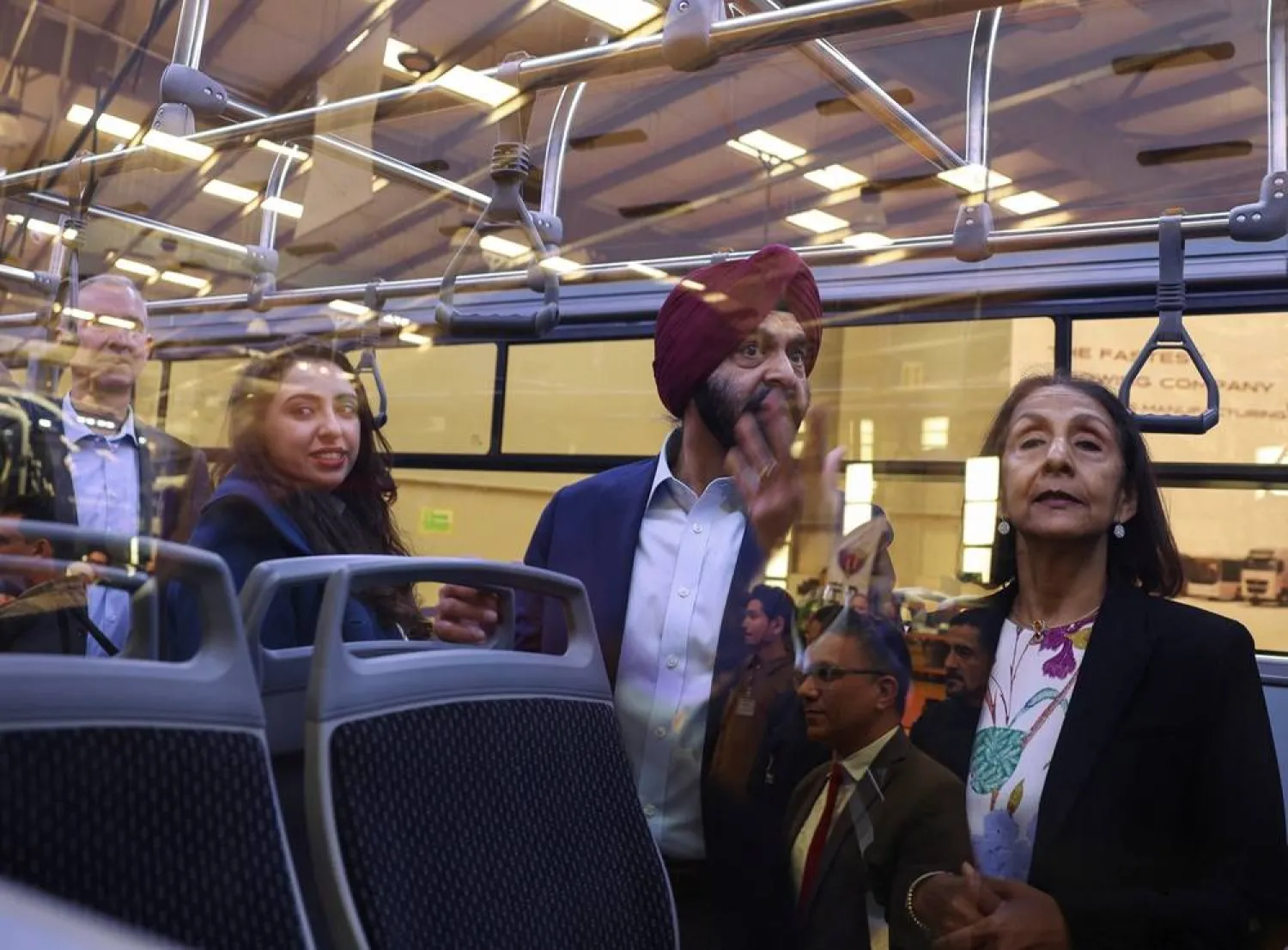
Banga was speaking on Tuesday on the sidelines of a visit to a factory in 10th of Ramadan City, northeast of Cairo.
He was responding to questions by Asharq Al-Awsat about the impact of the current escalation, the risk of disruption to the Strait of Hormuz, the possibility of oil prices topping $100 a barrel, and the implications for global growth, inflation and capital flows to emerging markets in 2026.
The answers, he said, are interlinked. The duration of the disruption will determine the depth of the economic impact.
Egypt offers a case in point. In recent years, it has navigated successive waves of uncertainty, from the COVID-19 pandemic to global volatility and, more recently, pressures linked to Suez Canal revenues, said Banga.
It is not hard to imagine the scale of challenges that creates for economic development, he added, pointing to strains on public finances, the currency and inflation in an unsettled global environment.
Fears are mounting that widening tensions in the Middle East could rattle energy markets and global supply chains. A sustained surge in oil prices would feed directly into higher global inflation, leaving central banks balancing price stability against growth.
At the same time, tighter global financial conditions could slow capital flows to emerging markets that depend, to varying degrees, on external financing and foreign investment.
On the short and medium term, Banga suggested the damage could be contained if instability proves short-lived.
Prolonged tensions, however, would amplify the pressure, he warned. The World Bank’s approach is to frame its outlook around time-based scenarios rather than issue numerical forecasts amid uncertainty.
Regarding Egypt, Banga said the World Bank continues to work with the government through a broad package of programs that extends beyond financing to support business and governance reforms and strengthen the private sector.
The cooperation spans physical infrastructure and investment in human capital to help generate sustainable jobs.
During his Cairo visit, Banga toured a Social Housing Project in 10th of Ramadan City and electric bus manufacturing lines. He described the housing project as among the largest globally in ambition and scale, noting that many beneficiaries are first-time buyers under 40.
Key lessons, he said, include government ambition, building a mortgage market and promoting financial inclusion - pillars he sees as essential to empowering young people and expanding home ownership.
More broadly, Banga linked infrastructure investment in housing, transport and energy to bolstering emerging economies against external shocks. Diversifying growth and backing sectors such as agriculture, tourism and manufacturing can help cushion volatility in energy markets and global trade.
The World Bank’s message, as outlined by its president, is clear: instability carries risks, but forecasts must be tempered by uncertainty over timing.
Whether 2026 is shaped by a brief disruption or a prolonged crisis will depend on how long tensions persist. Until then, resilience, structural reform and a stronger private sector remain central to weathering the storm in Egypt and across the region, Banga said.