


Asia Has Limited Options to Diversify from Middle East Energy Reliance

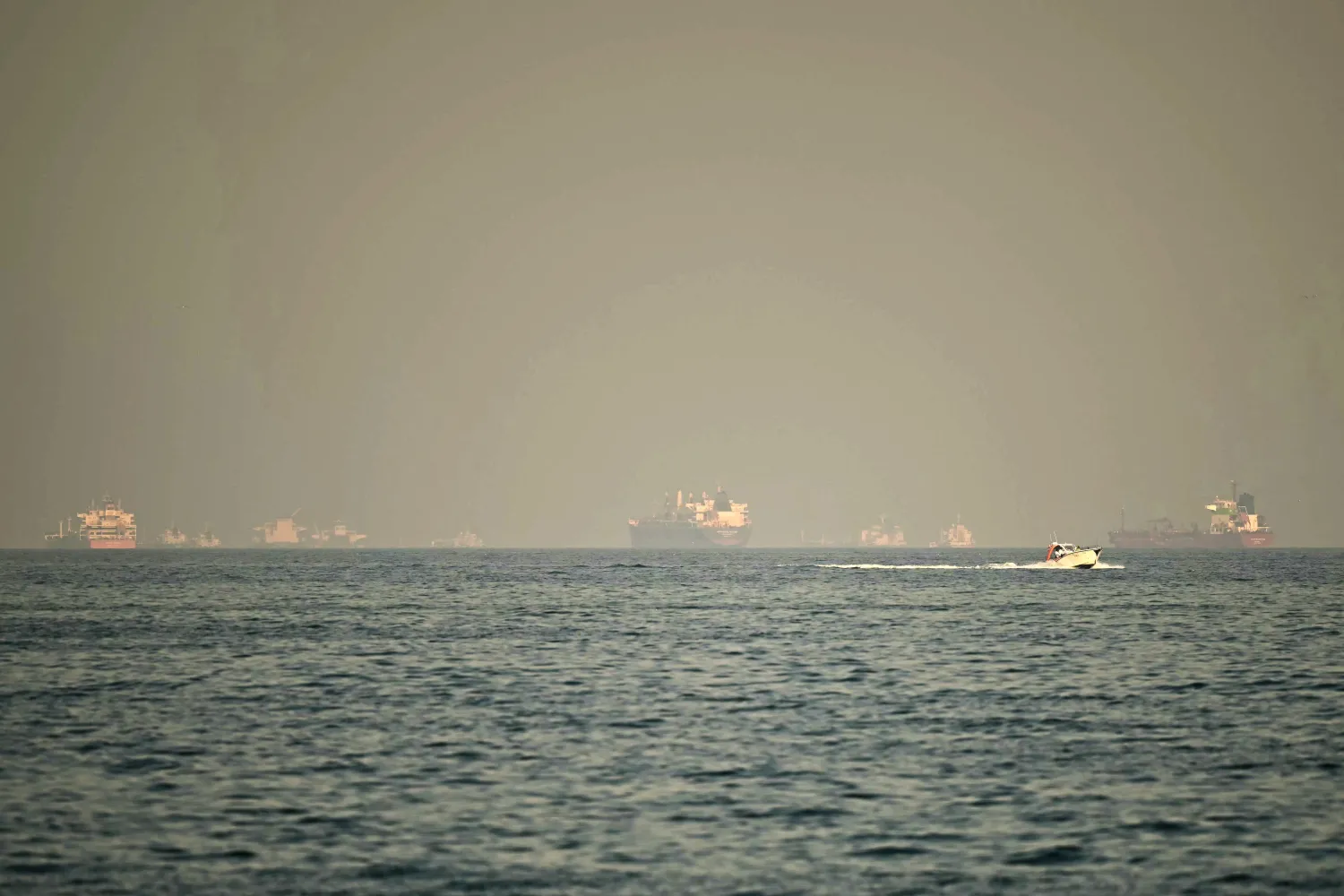
Cargo ships and tankers are seen off coast city of Fujairah, in the Strait of Hormuz in the northern Emirate on February 25, 2026. (AFP)
TT

Asia Has Limited Options to Diversify from Middle East Energy Reliance

Cargo ships and tankers are seen off coast city of Fujairah, in the Strait of Hormuz in the northern Emirate on February 25, 2026. (AFP)

Asian energy buyers are scrambling to find alternatives as the Iran war creates unprecedented supply disruption, but the region has limited longer-term options to reduce its heavy reliance on Middle Eastern oil.

The world's top crude importing region buys 60% of its oil and petrochemical feedstock from the Middle East, where the war that started with Israeli and US attacks on Iran nearly a week ago has pushed up global energy prices and threatens to drive inflation and hurt economic growth.

Unable to receive Middle Eastern crude, refiners from China to Southeast Asia are looking for expensive alternatives that will take weeks or months to arrive, while some are cutting output.

This week, China and Thailand suspended exports of oil products while Vietnam halted crude exports, which typically go to Australia.

However, alternative sources have drawbacks including distance, refinery configurations, long-term contracts and cost.

For example, oil shipped from West Africa and the Americas takes 1-1/2 to 2 months to reach China, meaning orders need to be placed three months in ‌advance.

By comparison, it ‌takes roughly 25 days for oil to reach China via the Strait of Hormuz.

Also, switching ‌crude ⁠grades changes product ⁠yields at refineries, which must adjust their operations.

"If you put a new crude into the refinery, you have to change the cutoff points (boundaries separating crude into different products). You have to change gasoline blending. There's a lot of things you need to change. It's hard work," said Adi Imsirovic, director of consultancy Surrey Clean Energy.

"This is why diversification has been so poor in a lot of countries," he said. Energy Aspects analyst Richard Jones said some governments may seek diversification at the margins, but many Asian refiners are tied to Middle East term contracts.

"Simply put, even replacing a modest share of the roughly 16 million barrels a day of Middle Eastern crude that ⁠arrives to Asia with Atlantic basin supply is not feasible," he said.

BIG ASIAN BUYERS

In Japan, ‌which has sourced 95% of its oil from the Middle East since halting ‌nearly all Russian oil imports after Moscow's invasion of Ukraine, refiners run ageing plants optimized for Middle Eastern crude.

With gasoline demand declining, refiners have ‌been wary of investing in upgrades needed to take on new sources such as Canada's heavy TMX.

Muyu Xu, senior analyst ‌at Kpler, said Japanese refiners could seek to blend lighter WTI or West African crude with heavier grades from the Americas to approximate the characteristics of Middle Eastern medium-sour.

"The caveat, however, is the logistical complexity and refinery operational risks," she said.

For the nearer term, Japan can tap a stockpile of roughly 250 days.

Top importer China has smaller reserves - roughly 78 days' worth - but a more diverse supplier profile, sourcing roughly ‌half of its oil from the Middle East including Iran, where it has been the top buyer.

China also buys from Russia despite western sanctions, as well as from mainstream producers. India, ⁠with just 25 days of ⁠reserves and reliance on the nearby Middle East for 55% of its oil, is scrambling to find alternatives, with Washington this week giving it a one-month reprieve to buy Russian oil after US President Donald Trump pressured it with punitive tariffs to curb its purchases from Moscow.

'GET SOME SOLAR PANELS'

The market for liquefied natural gas is much smaller and tighter. No.2 producer Qatar's move to halt production due to the war has had a swift impact, with India rationing gas to industrial customers.

Michal Meidan, head of China energy research at the Oxford Institute for Energy Studies, said the situation could lead to fuel switching and demand destruction.

"Long term, South Asian countries could look to limit the share of gas in their energy mix and follow China's model of reliance on coal and renewables," she said.

Tim Zhang, founder of Singapore-based Edge Research, said Asia could increase the share of non-fossil fuel such as renewables and nuclear in its energy mix or diversify its conventional fuel supply.

Surrey's Imsirovic said a prolonged disruption could prompt governments to reconsider their reliance on Middle East energy entirely.

"It's going to be like the Asian Currency Crisis or something. Definitely, people will seriously have to rethink," he said.

"In sunny Asia, get some solar panels and buy an EV. End of story."


TotalEnergies Output Down 15%; Operations at SATORP Refinery in Saudi Arabia Are Normal

FILE PHOTO: The logo of French oil and gas company TotalEnergies is seen on a gas station in Drancy, France March 17, 2025. REUTERS/Abdul Saboor/File Photo
TT

TotalEnergies Output Down 15%; Operations at SATORP Refinery in Saudi Arabia Are Normal

FILE PHOTO: The logo of French oil and gas company TotalEnergies is seen on a gas station in Drancy, France March 17, 2025. REUTERS/Abdul Saboor/File Photo

TotalEnergies has lost 15% of its oil and gas output as the US-Israeli war with Iran shuts fields across the Middle East, including in the UAE, Qatar and Iraq, the French oil major said on its investor website.

That output accounts for ⁠about 10% of ⁠Total's upstream cash flow, it added.

Total said its offshore production in the UAE is shut. The UAE produces around half its oil output from offshore fields.

The French firm said income from an $8 per barrel rise in oil prices that has occurred as a consequence of the ⁠war would ⁠more than offset the loss of output in the Middle East this year as it brings online additional production elsewhere.

Operations at its SATORP refinery in Saudi Arabia are normal, it added.

The impact of shutdowns in Qatar of liquefied natural gas production are limited to two million tons of LNG for Total.


Oil Unlikely to Hit $200 a Barrel, US Energy Chief Says

A foreign tanker carrying Iraqi fuel oil damaged after catching fire in Iraq's territorial waters, following unidentified attacks that targeted two foreign tankers, according to Iraqi port officials, near Basra, Iraq, March 12, 2026.  REUTERS/Mohammed Aty
A foreign tanker carrying Iraqi fuel oil damaged after catching fire in Iraq's territorial waters, following unidentified attacks that targeted two foreign tankers, according to Iraqi port officials, near Basra, Iraq, March 12, 2026. REUTERS/Mohammed Aty
TT

Oil Unlikely to Hit $200 a Barrel, US Energy Chief Says

A foreign tanker carrying Iraqi fuel oil damaged after catching fire in Iraq's territorial waters, following unidentified attacks that targeted two foreign tankers, according to Iraqi port officials, near Basra, Iraq, March 12, 2026.  REUTERS/Mohammed Aty
A foreign tanker carrying Iraqi fuel oil damaged after catching fire in Iraq's territorial waters, following unidentified attacks that targeted two foreign tankers, according to Iraqi port officials, near Basra, Iraq, March 12, 2026. REUTERS/Mohammed Aty

US Energy Secretary Chris Wright said on Thursday that oil prices are unlikely to reach $200 a barrel, with President Donald Trump touting US gains from higher prices as the war with Iran disrupted traffic through the Strait of Hormuz.

"I would say unlikely, but we are focused on the military operation and solving a problem," Wright told CNN when asked if prices would reach $200 a barrel - a level that an Iranian official said prices could hit if the war further escalates, Reuters reported.

Wright's use of the word "unlikely" was a veiled concession that a spike to $200 was possible, though he repeated that the price jump would be weeks not months.

Brent oil hit all-time highs in 2008 of around $147 per barrel, on tension between the West and Iran over its nuclear program, a weak US dollar, and inflation fears.

This time analysts say oil prices could remain high because of the strait's unprecedented shuttering.

"Get ready for the oil barrel to be at $200 because the oil price depends on the regional security which you have destabilized," Ebrahim Zolfaqari, the spokesperson for Tehran's Khatam al-Anbiya military command headquarters, said on Wednesday.

Wright told CNN: "We're in the midst of a significant disruption in the short term to fix the security of energy flow for the long term." The administration was focused on "pragmatic solutions ... to get through these few weeks of tight energy supply," he said.

Trump wrote in a social media post: "The United States is the largest Oil Producer in the World, by far, so when oil prices go up, we make a lot of money." He said he was more focused on stopping Iran from having nuclear weapons.

On Wednesday, Trump urged oil companies to travel through the strait despite the risks. "I think they should use the strait," Trump said. Asked if Iranian mines were in the strait, he added: "We don't think so."

Wright told CNBC on Thursday that the US Navy cannot escort ships through the Strait of Hormuz now but it was "quite likely" that could happen by the end of the month.

On Wednesday, more than 30 countries in the International Energy Agency agreed to the biggest-ever coordinated drawdown of global oil reserves of 400 million barrels, about 40% of which will come from the United States.

The war has forced Middle East Gulf countries to cut total oil production by at least 10 million barrels per day, about 10% of world demand. The IEA said on Thursday that is the biggest oil supply disruption in the history of the global market.

The US will release 172 million barrels of oil from the Strategic Petroleum Reserve, which Wright on Thursday said would be swapped with more than 200 million barrels that will be put back in the reserve within a year.

Wright told CNBC the energy shortages were less likely to affect the United States and other Western Hemisphere countries. "There's no shortage or even really tight oil market in the Western Hemisphere. The issue's in Asia."

US gasoline prices continue to spike 13 days into the war at an average of $3.60 per gallon, according to AAA. Rising oil prices are also likely to boost the costs of other goods, with the closed strait also stalling shipments of fertilizer ingredients and likely raising prices on household items that could hit consumers for months.

Trump had campaigned on lower gasoline and other prices, with Americans set to vote this November in midterm elections that will decide whether his fellow Republicans keep control of Congress.


Saudi Arabia Named Top 10 Global Mining Investment Destination

A view of the skyline of the Saudi capital, Riyadh (SPA)
TT

Saudi Arabia Named Top 10 Global Mining Investment Destination

A view of the skyline of the Saudi capital, Riyadh (SPA)

Saudi Arabia has been named among the world’s top ten mining investment destinations in the Fraser Institute’s Annual Survey of Mining Companies 2025, one of the most respected global benchmarks for assessing mining investment environments and a key reference for international investors.

The report shows that the Kingdom’s mining sector has capped an unprecedented rise on the main ‘Investment Attractiveness Index,’ climbing 13 positions and improving its score by 14.3% within a single year, becoming the only Asian jurisdiction ranked among the world’s top ten mining destinations in 2025, SPA reported.

This milestone reflects a remarkable transformation of the Kingdom’s mining sector, rising from 104th place in 2013 to 23rd in 2024, and now firmly establishing Saudi Arabia as a top ten global destination for mining investment.

This global recognition is based on strong gains in the two fundamental sub-indices. In the ‘Policy Perception Index,’ Saudi Arabia jumped from 20th place last year to 4th globally, scoring 94.99. In the ‘Mineral Potential Index,’ it grew from 24th to 16th, with a score of 73.33. These results reinforce the Kingdom’s message that its investment competitiveness rests on two interlinked criteria: promising geological resources and a modern regulatory framework supported by clear and efficient governance.

Across the detailed policy criteria, Saudi Arabia achieved exceptional results, ranking first globally in three key categories. The Kingdom ranked first globally in ‘Uncertainty Concerning the Administration & Regulations,’ reflecting clarity of mining regulations and executive administration, It recorded a remarkable 558% improvement, driven by the implementation of the new Mining Investment Law and its legal system, the establishment of ESNAD (Saudi Mining Services Company) to strengthen oversight and compliance, and the automation of licensing procedures through the Ta’adeen digital platform.

Saudi Arabia also ranked first globally in ‘Regulatory Duplication and Inconsistencies,’ reflecting success in coordinated efforts across government entities. In addition, the Kingdom ranked first globally in the ‘Taxation Regime,’ strengthening investor confidence and improving the financial competitiveness of mining projects.

In related indicators, Saudi Arabia ranked second globally in ‘Uncertainty Concerning Environmental Regulations’ and third globally in ‘Uncertainty Concerning Disputed Land Claims.’ These results reflect the strength, clarity, and stability of the Kingdom’s environmental regulatory framework, as well as the effectiveness of policies governing land claims and community development. The rankings highlight the impact of coordinated efforts with the Ministry of Environment, Water and Agriculture, alongside structured approaches to managing community engagement requirements around mining operations.

The Kingdom also recorded a significant improvement in the ‘Infrastructure indicator,’ which includes access to roads and energy availability. This progress reflects ongoing efforts to enhance infrastructure, notably through the launch of the Mining Infrastructure Enablement Initiative at the fifth edition of the Future Minerals Forum, held in January.

These top rankings were accompanied by exceptional qualitative leaps, averaging over 100% in other critical criteria. The ‘Legal System’ criterion

improved by 211%, while the ‘Quality of Geological Database’ rose by 203% due to the inclusion of extensive geological survey data, establishing a more transparent and reliable investment environment.

Commenting on the achievement, Vice Minister of Industry and Mineral Resources for Mining Affairs Eng. Khalid bin Saleh Al-Mudaifer said the Kingdom’s entry into the global top ten reflects the depth of reforms implemented under Saudi Vision 2030 in the mining sector.

He noted that the ranking demonstrates the maturity and resilience of Saudi Arabia’s investment environment as the Kingdom positions itself to meet rising global demand for minerals.

Looking ahead, the vice minister added that the ministry will continue to strengthen the sector as a driver of industrial and economic growth by developing legislative and regulatory frameworks that enhance investor confidence and reinforce the Kingdom’s long-term competitiveness.

In addition, he said the Fraser Institute results provide independent international recognition of the rapid transformation underway in Saudi Arabia’s mining sector.

He further noted that ongoing efforts focus on improving the investor experience through greater transparency, faster licensing procedures, and reduced exploration risks, while strengthening supply chain localization and supporting the creation of high-quality employment opportunities.

These regulatory developments are translating into tangible investment outcomes. In 2025, Saudi Arabia issued 61 exploitation licenses for mine development, with investment valued at $11.73 billion (SAR44 billion), compared with 21 licenses in 2024, which represents an increase of 221%.

Active exploration companies increased from six in 2020 to 226 in 2024, representing more than 38‑fold growth. Meanwhile, the number of active exploration mining licenses reached 1,018 by 2025, compared with 500 licenses in 2020, reflecting a growth of approximately 104%.

Saudi Arabia’s Ministry of Industry and Mineral Resources continues to attract investment and facilitate the investor journey through competitive exploration licensing rounds. These rounds have seen unprecedented international interest from leading global mining companies and consortia, including Barrick Gold, Ivanhoe Electric, Shandong Gold, Hancock Prospecting, and Zijin Mining.

As part of these efforts, the ministry recently launched the 11th licensing round, opening competition for exploration licenses across eight mining sites in the regions of Riyadh, Hail, and Aseer, covering a total area of 1,878 km² and targeting deposits of gold, silver, copper, zinc, and iron ore.

To support early‑stage exploration and reduce financial risk, the report also highlighted the ‘Exploration Enablement Program’ as an effective tool for supporting exploration companies. The Kingdom has allocated over $182.67 million (SAR685 million) to the program for the period 2024–2030, targeting exploration licenses in their first five years and requiring participating companies to share geological data to accelerate knowledge exchange and improve the quality of investment decisions.

This advanced ranking and historic progress reflect Saudi Arabia’s continued success in advancing the objectives of Vision 2030: positioning mining as the third pillar of the national industrial base and strengthening the Kingdom’s role as a leading global investment destination and a trusted partner in securing future mineral supply chains.

The survey evaluated 68 mining jurisdictions worldwide, based on 256 responses from senior executives representing global mining companies.
