Turkish Manufacturing Contracts at Fastest Pace in Five Months in March, PMI Showshttps://english.aawsat.com/business/5257582-turkish-manufacturing-contracts-fastest-pace-five-months-march-pmi-shows
Turkish Manufacturing Contracts at Fastest Pace in Five Months in March, PMI Shows
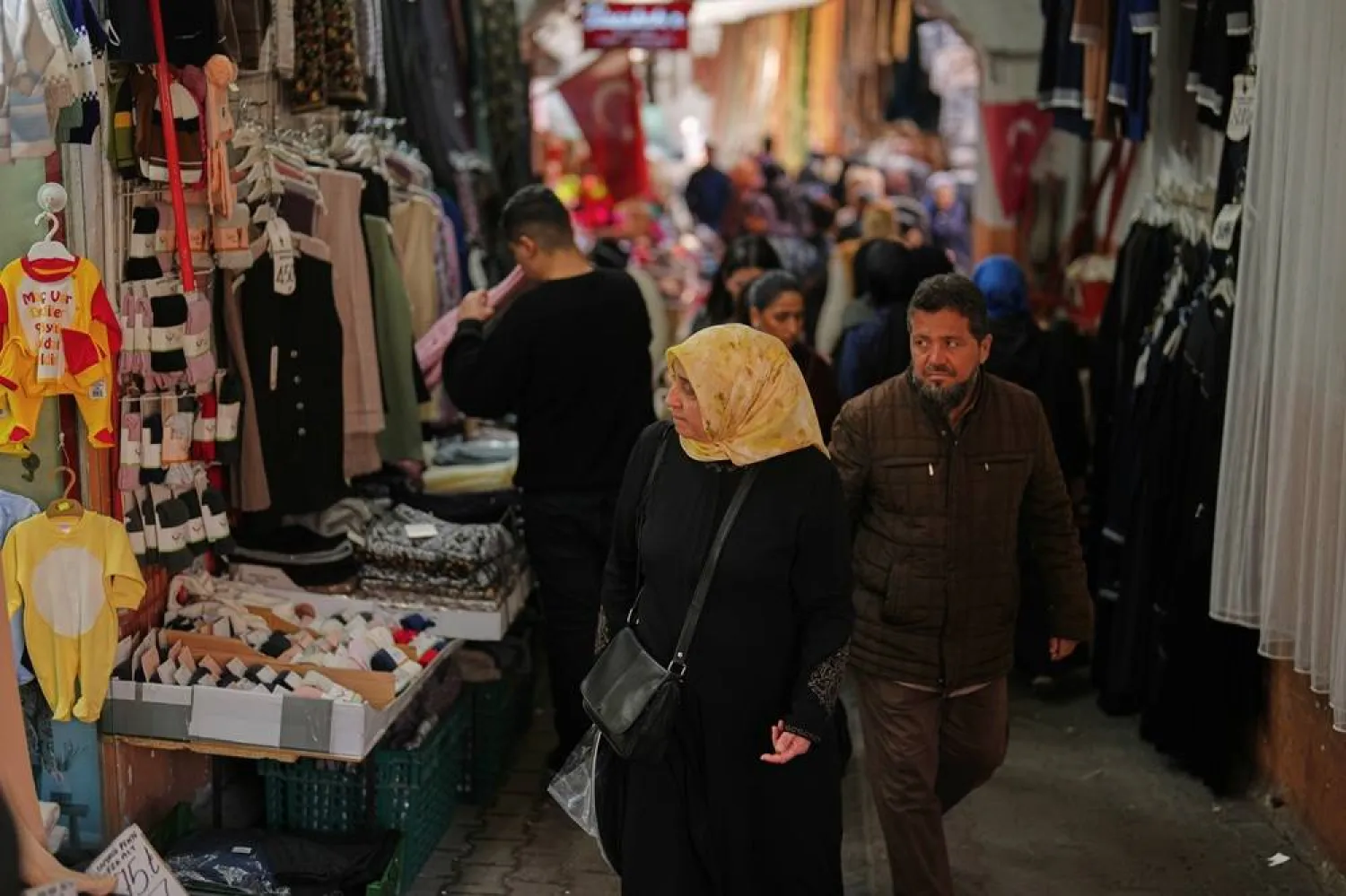
People walk past displayed items in a clothes shop at Eminonu commercial area, in Istanbul, Türkiye, Thursday, March 26, 2026. (AP)
TT
TT
Turkish Manufacturing Contracts at Fastest Pace in Five Months in March, PMI Shows
People walk past displayed items in a clothes shop at Eminonu commercial area, in Istanbul, Türkiye, Thursday, March 26, 2026. (AP)
Turkish manufacturing activity contracted at its fastest pace in five months in March as the war in the Middle East lifted costs, disrupted supply chains and weakened demand, a business survey showed on Wednesday.
The Istanbul Chamber of Industry Turkish Manufacturing Purchasing Managers' Index (PMI), compiled by S&P Global, fell to 47.9 in March from 49.3 in February, the survey showed.
The 50-mark separates growth from contraction.
"The Turkish manufacturing sector suffered something of a setback in March, after conditions had looked to be on the path to becoming more favorable in February," said Andrew Harker, economics director at S&P Global Market Intelligence.
New orders fell for a 33rd straight month and at the sharpest pace since last November, while export demand also weakened more quickly. Output was scaled back to the greatest extent since last November, S&P Global said.
Price pressures intensified as firms linked higher freight, fuel, oil and raw material costs to the Middle East conflict. Input costs rose at the fastest rate since April 2024, while output price inflation hit a 25-month high.
Supply-chain strains also worsened. Suppliers' delivery times lengthened to the largest extent since August 2024, while manufacturers cut employment at the sharpest pace in six months and reduced purchasing activity and inventories.
The survey said manufacturing conditions have now weakened in every month over the past two years. Business confidence fell to a five-month low in March, although firms still expected output to rise over the coming year.
Saudi Cybersecurity Market Tops $4.3 Billion in 2025
Employees working on computers (National Cybersecurity Authority).
Saudi Arabia’s cybersecurity market reached SAR 16.3 billion ($4.3 billion) in 2025, recording a compound annual growth rate of 10.7% over the past three years, according to a new report by the National Cybersecurity Authority (NCA).
Government spending on cybersecurity products and services totaled SAR 5.1 billion, accounting for 31% of the market, while private sector expenditure reached SAR 11.2 billion, representing 69%.
The figures were released in the NCA’s report, Key Economic Indicators in Saudi Arabia’s Cybersecurity Sector 2026, which examines market size, the sector’s contribution to gross domestic product, workforce trends and other measures of growth.
Contribution to GDP
The cybersecurity sector contributed approximately SAR 20 billion to Saudi Arabia’s GDP at current prices in 2025, registering a compound annual growth rate of 13.2%, the authority reported.
Of that amount, SAR 9.7 billion represented the direct contribution of cybersecurity products and service providers, while indirect contributions totaled SAR 10.3 billion.
The sector accounted for 0.42% of the Kingdom’s overall GDP and 0.71% of non-oil GDP.
The cybersecurity workforce exceeded 22,000 specialists last year, reflecting a compound annual growth rate of 5.9%.
The report linked this expansion to specialized training initiatives and programs designed to meet the needs of vital sectors and support economic and social development.
Women accounted for 33% of cybersecurity professionals in Saudi Arabia, surpassing the global participation rate of approximately 22%.
Spending on products and services
Cybersecurity products accounted for 51% of total market spending, valued at SAR 8.3 billion, while services represented 49%, or SAR 7.9 billion.
The report identified key areas of spending, including endpoint security and management, cybersecurity systems integration, network security, data security and security operations solutions.
Public-private cooperation
The NCA highlighted efforts to strengthen competitiveness, encourage investment and innovation, and promote cooperation between the public and private sectors as key drivers of market growth.
The study classified cybersecurity offerings into 100 products and services, drawing on internationally recognized methodologies, standards and practices.
The NCA is Saudi Arabia’s designated cybersecurity authority and national reference body, tasked with protecting the Kingdom’s vital interests, national security, critical infrastructure, priority sectors, and government services and activities.
Its responsibilities also include stimulating industry growth, promoting innovation and investment, conducting research and development, and issuing periodic reports on cybersecurity at the national and sectoral levels.
Bank of England's Breeden: Cost-cutting by Firms Helping Central Bankhttps://english.aawsat.com/business/5329842-bank-englands-breeden-cost-cutting-firms-helping-central-bank
FILE PHOTO: Deputy Governor for Financial Stability, Sarah Breeden during the Bank of England financial stability report press conference, at the Bank of England, London. Picture date: Tuesday July 7, 2026. Doug Peters/Pool via REUTERS/File Photo
Bank of England's Breeden: Cost-cutting by Firms Helping Central Bank
FILE PHOTO: Deputy Governor for Financial Stability, Sarah Breeden during the Bank of England financial stability report press conference, at the Bank of England, London. Picture date: Tuesday July 7, 2026. Doug Peters/Pool via REUTERS/File Photo
Bank of England Deputy Governor Sarah Breeden said on Thursday that cost-cutting by UK companies in response to the energy price shock caused by the Iran war would make it easier for the central bank to contain inflation.
"What's really different now, relative to when we had the last energy shock in 2022, is that people aren't looking to push costs through," Breeden said in an interview with CNBC television.
"There's a desire to absorb the shock rather than just pass it on, which makes our job as monetary policymakers a bit easier in these uncertain times,” Reuters quoted her as saying
The comments about cost-cutting by companies echoed those made by BoE Governor Andrew Bailey earlier this week.
Breeden has voted with the majority of the Monetary Policy Committee to keep borrowing costs on hold since the start of the Iran war but said in September that she might change her stance if the energy price shock feeds through into broader inflation.
Investors are pricing a quarter-point rate hike by the BoE next month as a near certainty.
Breeden, in Bangkok for the semi-annual International Monetary Fund meetings, also told CNBC she hoped wages would not rise sharply as they did in 2022 after Russia's full-scale invasion of Ukraine due to weakness in the labor market now.
Earlier on Thursday, BoE Chief Economist Huw Pill said a rate hike by the central bank should not be interpreted by investors as the start of a long series of increases.
IMF Expects Middle East Economies to Rebound to 6.6% Growth in 2027https://english.aawsat.com/business/5329826-imf-expects-middle-east-economies-rebound-66-growth-2027
Jihad Azour, Director of the Middle East and Central Asia Department at the International Monetary Fund (IMF) attends a press conference at the IMF/World Bank 2026 Spring Meetings in Washington, D.C., US, April 16, 2026. REUTERS/Elizabeth Frantz
IMF Expects Middle East Economies to Rebound to 6.6% Growth in 2027
Jihad Azour, Director of the Middle East and Central Asia Department at the International Monetary Fund (IMF) attends a press conference at the IMF/World Bank 2026 Spring Meetings in Washington, D.C., US, April 16, 2026. REUTERS/Elizabeth Frantz
The International Monetary Fund expects the economies of the Middle East, North Africa and Pakistan to rebound to growth of 6.6 percent in 2027, following a projected contraction of 1.3 percent this year, amid the economic fallout from the regional war and disruptions to energy production and trade, which have affected countries across the region to varying degrees.
Jihad Azour, the IMF's director for the Middle East and Central Asia, said economies directly affected by the conflict are facing severe pressures, while other economies in the region, along with most countries in the Caucasus and Central Asia, have shown greater resilience.
He explained that the path of the recovery will depend largely on how quickly energy production and trade return to normal and on countries’ ability to maintain macroeconomic stability.
The forecasts come after the economies of the Middle East, North Africa and Pakistan grew by 3.3 percent in 2025, illustrating the scale of the shock expected this year before a strong rebound next year.
Azour stressed, however, that the overall projections mask significant disparities among the region’s economies and that the recovery will not be uniform across countries.
Oil Exporters and Importers
Azour said oil-exporting countries directly affected by disruptions to energy production and trade will experience a marked contraction in 2026, although higher oil prices will provide some support to their fiscal and external positions.
A gradual recovery in production and trade is expected to drive a strong rebound in GDP growth in 2027, although output levels will remain below the trajectory projected before the outbreak of the conflict.
By contrast, economic activity in the region’s oil-importing countries has remained relatively resilient during 2026 and is expected to continue doing so. Workers’ remittances, tourism revenues, favorable financial conditions and government support have helped cushion the immediate impact of the shock, although the policy space available to governments is narrowing.
The IMF expects inflation in these economies to rise moderately in 2026 before gradually easing thereafter.
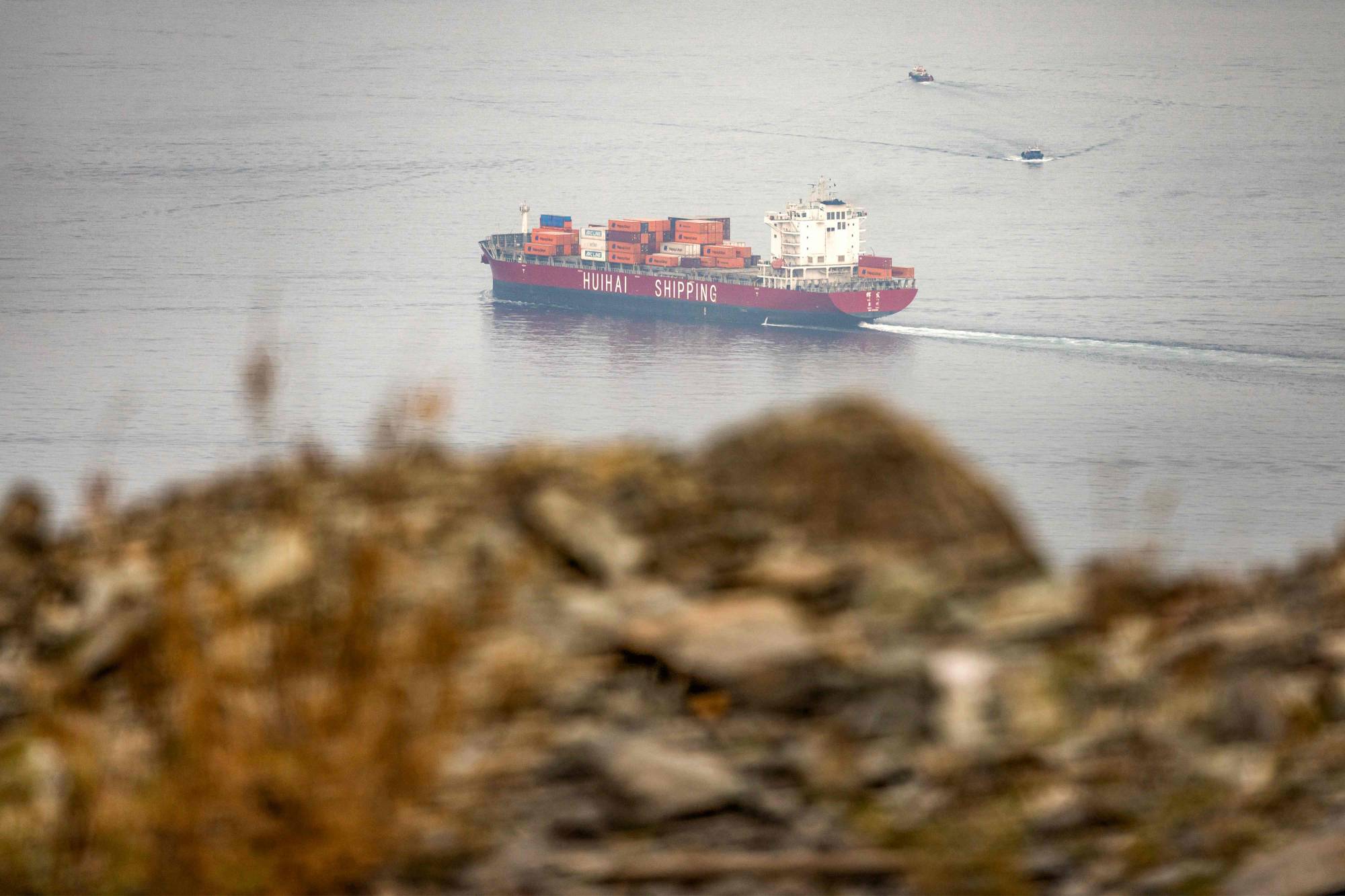
The Chinese-flagged container shipping vessel Hui Fa transits the Gulf of Oman on October 13, 2026. (Photo by AFP)
Lower Inventories, Greater Risks
Azour noted that the impact of the energy shock has been less severe than initial estimates suggested, thanks to surpluses accumulated before the war, production by non-Gulf countries, alternative transportation routes, adjustments in demand and drawdowns from inventories.
He cautioned, however, that these factors have provided time for adjustment but are not sustainable resources. Available inventories have declined and spare production capacity has narrowed, leaving markets more vulnerable to larger price increases should disruptions recur.
Azour identified a prolonged war as the most significant risk to the outlook, warning that further disruptions to energy production, shipping routes or critical infrastructure would weaken economic activity among Gulf oil exporters, increase inflationary pressures and exacerbate fiscal and external strains across the region.
He also warned that tighter global financial conditions could weaken demand, raise borrowing costs and increase pressure on currencies, particularly in economies with substantial sovereign debt-financing needs or a heavy reliance on external financing.
Low-income and fragile economies remain the most vulnerable to these risks because of their dependence on food imports and limited fiscal space, at a time when official development assistance is also declining.
Call for Targeted Support and Rebuilding Fiscal Buffers
Azour urged policymakers to prioritize price stability and fiscal sustainability, using monetary policy as the first line of defense when inflationary pressures emerge, complemented by prudent fiscal policy, particularly in countries with limited financial resources.
He stressed the importance of rebuilding fiscal buffers to withstand future shocks by strengthening domestic revenues, improving spending efficiency and developing stronger fiscal frameworks. He cautioned against broad-based subsidies, favoring instead temporary and targeted cash assistance for the groups most affected, helping keep the cost of intervention within budgetary limits.
Over the longer term, Azour emphasized the importance of strong institutions, credible monetary frameworks and central bank independence, alongside greater trade diversification, deeper regional integration and a stronger capacity to adopt new technologies, including artificial intelligence, to boost productivity and support growth.
Azour noted that the IMF has approved approximately $48 billion in financing for countries in the region since 2020. During fiscal year 2026, it also carried out around 437 technical assistance and capacity-building projects in 31 countries.
The IMF is scheduled to release its full regional report in Dubai on October 22, providing a more detailed assessment of economic developments and policy priorities.
لم تشترك بعد
انشئ حساباً خاصاً بك لتحصل على أخبار مخصصة لك ولتتمتع بخاصية حفظ المقالات وتتلقى نشراتنا البريدية المتنوعة