



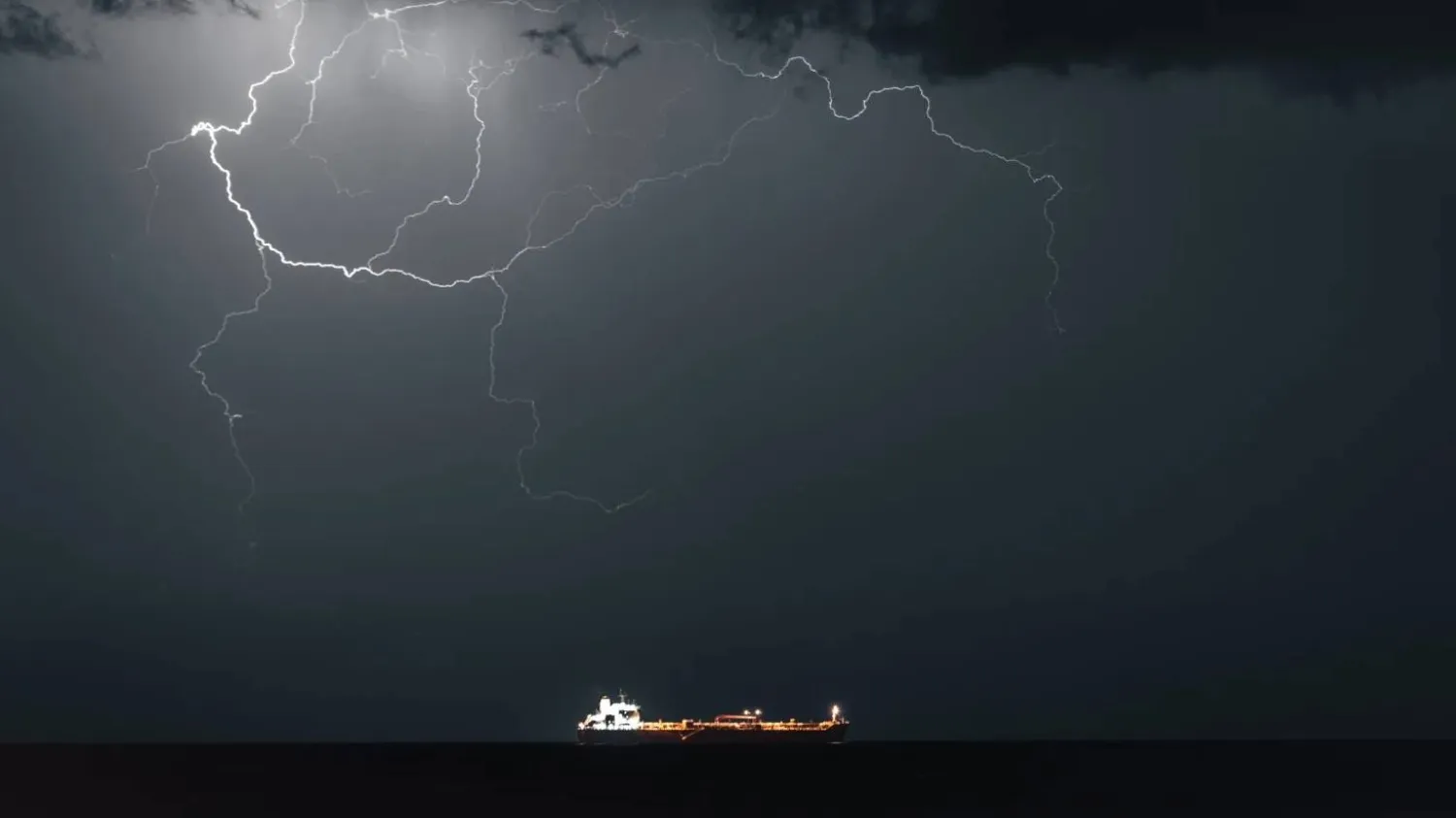

The global economy enters a new stage of uncertainty as the US Central Command (CENTCOM) said American forces began implementing a blockade of maritime traffic entering and exiting Iranian ports.
US President Donald Trump ordered the naval blockade after marathon peace talks with Iran in Islamabad, collapsed last week.
While the President’s decision aims to strangle the Iranian economy, it acts as a profound shock to the global economy and has far-reaching consequences that severely destabilize markets in East Asia and Europe.
Over the weekend, US Vice President JD Vance told reporters in Islamabad that negotiations with Iran on an end to hostilities have failed to result in a deal. Shortly after, Trump ordered the embargo on the strait with hoped that he can apply to Iran the model of his intervention in Venezuela, where the US seized then-president Nicolás Maduro in a military operation after a naval blockade of the Latin American nation.
“We’re putting on a complete blockade. We’re not going to let Iran make money on selling oil to people that they like, and not people that they don’t like, or whatever it is,” Trump told Fox News on Sunday.
“You saw what we did with Venezuela. It’ll be something very similar to that, but at a higher level.”
Direct Threat to Energy Stability
Analysts say the naval embargo risks further destabilizing global energy markets and triggering a new surge in oil prices.
Jennifer Kavanagh, military analysis director of Defense Priorities, a Washington think tank on restrained force, told the Financial Times that Trump appears to feel frustrated about his options for the war.
“Closing the strait entirely will spike oil prices even more than they did before, and put more pressure on the US from the international community,” Kavanagh said.
“It definitely shows how frustrated and at the end of his options the president feels,” she added.
Her comments came as OPEC issued its Monthly Oil Market Report.
It said OPEC crude oil production plummeted by approximately 7.87 million barrels per day (bpd) in March 2026 compared to February 2026, primarily due to the US-Israeli conflict with Iran which has largely closed the Strait of Hormuz.
OPEC's total output stood at about 20.7 million bpd, according to the group's latest Monthly Oil Market Report. The steepest production declines were recorded in Iraq, where crude output dropped by roughly 2.5 million bpd to about 1.63 million bpd.
Implication for Oil Flows
Blocking Iranian shipments would disconnect a significant source of oil from the world's markets, according to Reuters.
Iran exported 1.84 million barrels per day (bpd) of crude in March and has shipped 1.71 million bpd thus far in April, compared with a full-year average of 1.68 million bpd in 2025, according to Kpler data.
However, a surge in Iranian output before the war started on February 28 has led to near-record levels of Iranian oil loaded on ships, with more than 180 million barrels floating as of earlier this month, according to Kpler data.
“The US quarantine of Iran's ports will cost Iran about $435 million a day in economic damage,” Miad Maleki, a former official with the Treasury Department's Office of Foreign Assets Control, said.
The estimated losses include about $276 million in lost exports, mainly crude oil and petrochemicals.
He explained that the blockade would result in the disruption of imports worth nearly $159 million daily, amounting to monthly losses estimated at around $13 billion.
Data indicates that Iran’s heavy reliance on southern shipping lanes leaves its economy exposed to maritime disruption, with more than 90% of its $109.7 billion annual trade passing through the Strait of Hormuz, while oil and gas constitute approximately 80% of government export revenues and nearly 23.7% of GDP.
From Energy to Food
While the Strait of Hormuz closure has acutely touched hydrocarbon markets, it will also affect food safety as it coincides with spring planting across hundreds of millions of acres of global cropland.
Therefore, turning the Strait into a military zone creates an immediate and severe crisis in global agricultural supply chains, severing the flow of key petrochemicals and nitrogen-based fertilizers.
Urea spot prices at the US Gulf Coast approached $700 per metric ton (up over 30% from the start of the war), and dealers in major importing markets began limiting sales. Urea is a nitrogen fertilizer that increases the yields of many crops, especially staple grains like corn, rice, and wheat.
Also, transforming the Strait from a free-trade artery into a conflict zone under military control, forces major companies to reroute shipping, leading to significantly higher operational costs, “imported inflation,” and severe logistical bottlenecks that conventional monetary policies struggle to address.
The blockade also initiates strategic risks as disruption of fertilizers comes precisely during the Northern Hemisphere's spring planting season, when demand peaks.
Furthermore, the implications extend to the costs of food logistics. Even crops produced far from the conflict zone will be affected by an increase of shipping and insurance prices, adding significant costs along the supply chain.
Inflation
The Strait of Hormuz blockade represents the trigger of a transboundary inflation driven by supply-side constraints that traditional monetary policy tools cannot easily mitigate.
Surging maritime insurance premiums alongside forced route diversions away from the Red Sea and Gulf, have caused global logistics costs and freight rates to soar.
The blockade has shifted the global economy to a phase of “imported inflation” which represents a dilemma for major central banks, as a shock rise in the cost of some goods will depress household purchasing power, causing consumers to cut back on spending, which in turn puts downward pressure on other goods and services and leads to the risk of “stagflation.”
China in the Crosshairs
The blockade also risks drawing the world’s second-largest economy into the confrontation. China remains Iran’s largest oil buyer and has continued to receive shipments through the strait since the war began, analysts say.
A blanket ban on tankers carrying Iranian crude threatens to cut off that supply, potentially reigniting US tensions with Beijing ahead of Trump’s planned trip to China next month.
The Trump administration on Monday also threatened to impose an additional 50% tariff on China if Beijing supplies advanced defense equipment to Tehran.


