
Turkish Economy Grows Less-Than-Forecast 2.3% in Q2 as Domestic Demand Shrinks

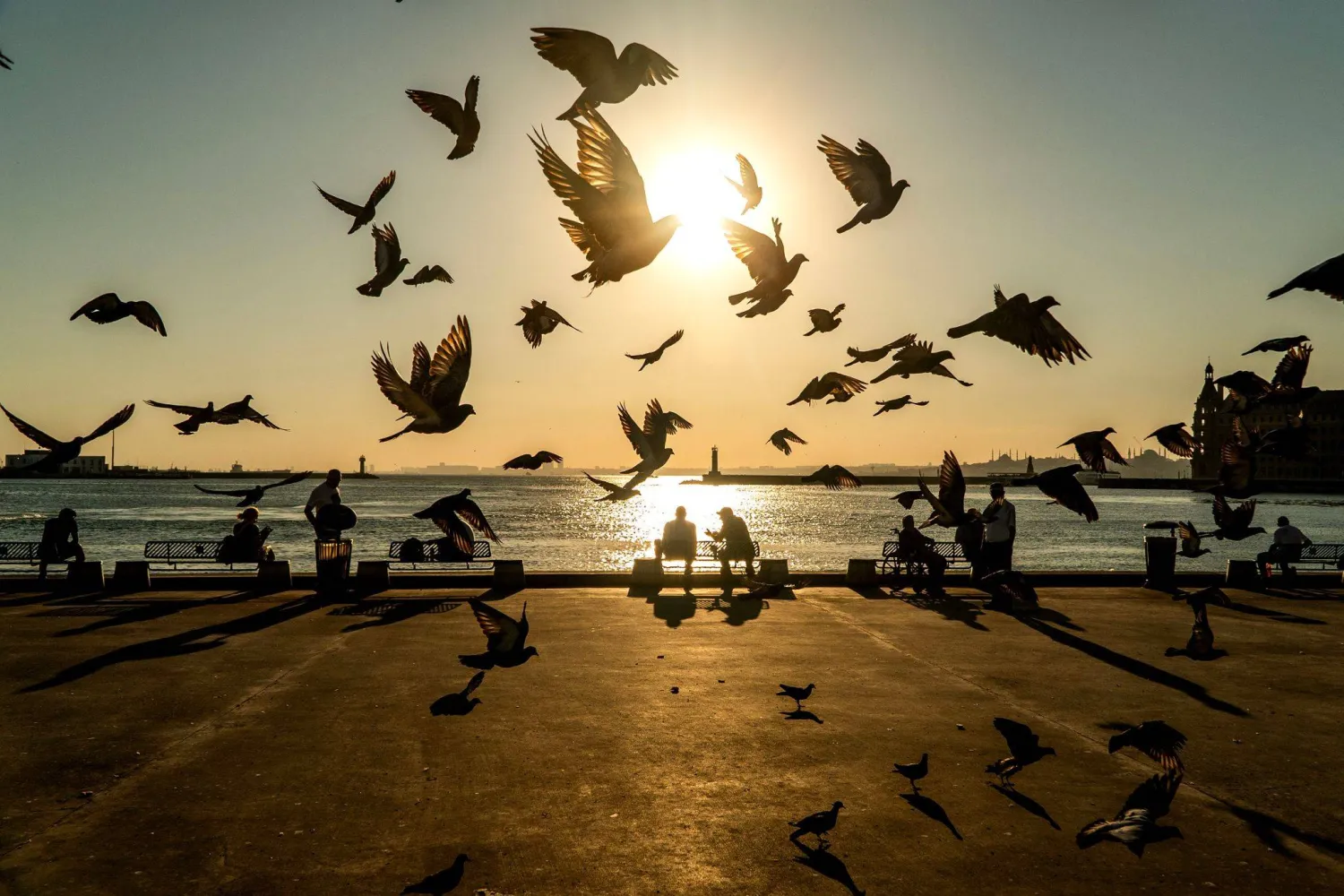
24 August 2026, Türkiye, Istanbul: Pigeons take flight at sunset as people sit along the waterfront in Istanbul. (dpa)
TT

Turkish Economy Grows Less-Than-Forecast 2.3% in Q2 as Domestic Demand Shrinks

24 August 2026, Türkiye, Istanbul: Pigeons take flight at sunset as people sit along the waterfront in Istanbul. (dpa)

Türkiye’s economy expanded 2.3% year-on-year in the second quarter, data showed on Monday, below forecasts as domestic demand shrank amid tight monetary policy and the Iran war impact. 

In a Reuters poll, economic growth was estimated to have risen by 2.9% in the second quarter and was forecast to expand by ‌3.05% in 2026. ‌It was the fourth consecutive quarter of slower ‌growth. 

Treasury ⁠and Finance Minister ⁠Mehmet Simsek said that growth would rise after the "balanced" second-quarter growth. 

"Thanks to progress in the disinflation process and more supportive global conditions, we expect growth to gradually increase in the coming period," Simsek said in a statement after the data. 

Second-quarter gross domestic product grew 1.1% from the previous quarter on a seasonally and calendar-adjusted basis, the Turkish ⁠Statistical Institute data showed. 

The strongest growth by ‌activity was shown by agriculture, forestry ‌and fishing, which expanded 13.3%, while information and communication grew 8.6%, the data ‌showed. 

Haluk Burumcekci from Burumcekci Research and Consultancy said there was ‌an "increasingly evident loss of momentum in domestic demand", adding that the "positive contribution from net external demand after six quarters suggests that the first signs of the 'rebalancing among demand components,' one of the key objectives of the economic ‌program, have begun to emerge". 

External demand contributed 0.6 percentage points to second quarter growth, while domestic ⁠demand shrank ⁠1.3% quarter-on-quarter, economists said, noting that this was a disinflationary development. 

Turkish annual consumer price inflation stood at 31.75% in July, underscoring the challenges for the central bank, which has held rates at 37% in the last four policy meetings as it monitors Iran war fallout. 

While tight monetary and fiscal policies implemented to balance domestic demand and combat high inflation put pressure on economic growth, the economy grew by 2.6% in the first quarter, according to revised figures. 

Growth in 2025 was revised to 3.7% from 3.6%. 

The government's current medium-term program projected growth of 3.8% in 2026. A new medium-term program will be announced on September 7. 


Japan Seeks Record $55.6 bln Defense Budget, with AI Focus, Says Ministry

This photo shows an exterior view of the Defense Ministry of Japan with its sign at the main entrance in Tokyo on Sept. 17, 2021. (AP Photo/Hiro Komae, File)
TT

Japan Seeks Record $55.6 bln Defense Budget, with AI Focus, Says Ministry

This photo shows an exterior view of the Defense Ministry of Japan with its sign at the main entrance in Tokyo on Sept. 17, 2021. (AP Photo/Hiro Komae, File)

Japan's defense ministry requested a record budget of 8.9 trillion yen ($55.6 billion) on Monday as Tokyo looks to artificial intelligence to speed up decision-making in the face of a tense security environment.

But the final budget reportedly could reach 10 trillion yen as Tokyo undergoes a sweeping upgrade of its defense in order to navigate growing tension with neighbors such as China, North Korea and Russia.


Crude Prices Rise on US-Iran Strikes, Equities Mixed After Warsh Remarks

Oil platforms and pumpjacks at Lake Maracaibo, in Cabimas, Venezuela, January 26, 2026. (Reuters)
TT

Crude Prices Rise on US-Iran Strikes, Equities Mixed After Warsh Remarks

Oil platforms and pumpjacks at Lake Maracaibo, in Cabimas, Venezuela, January 26, 2026. (Reuters)

Oil prices spiked more than two percent Monday after a fresh flare-up in the US-Iran war, while stocks were mixed as hawkish comments from Federal Reserve boss Kevin Warsh saw investors ramp up bets on a US interest rate hike.

With inflation remaining stubbornly high -- largely on the back of elevated energy costs -- the US central bank has come under pressure to act, while Warsh's refusal to provide guidance has stoked uncertainty.

But in a highly anticipated speech at the Jackson Hole symposium of central bankers and economists in Wyoming, he left traders with few doubts that he was ready to increase borrowing costs.

Warsh said: "We must be confident that underlying inflation is moving to our objective, clearly and at sufficient speed. Otherwise, we have work to do."

He called the spike in inflation -- currently at 3.7 percent and nearly double the Fed's two-percent target -- "concerning", and said he would be "hard-pressed" to describe current financial conditions as "restrictive", a potential hint that rate hikes could be on the horizon.

However, he stopped short of saying he would support a hike, adding: "I stand here today committed to a discipline, not to a decision."

All three main indexes on Wall Street fell Friday. Yields on short-term US Treasury bonds -- which reflect monetary policy expectations -- jumped, and the dollar rallied against its peers. Gold, which benefits from lower interest rates, fell.

Asia struggled in the morning but some markets rallied as the day progressed, leaving some in positive territory and others just below Friday's close.

Tokyo, Hong Kong, Sydney, Taipei, Jakarta and Mumbai ended down but Seoul, Shanghai, Singapore, Bangkok and Wellington rose.

Paris rose but Frankfurt dipped.

London was closed for a holiday.

Focus will now turn to a string of crucial data releases over the next two weeks before the Fed makes its decision, with jobs up this week and the consumer price index next week.

"Should we get an inline payrolls print that does not give the Fed too much to work with, next week's core CPI report will become the major decider for the market's Fed belief system," wrote Chris Weston at Pepperstone.

"The volatility priced around that outcome across rates, forex and equities could therefore be significant."

Still, Invesco's David Chao added: "While Jackson Hole has increased the possibility of a rate hike, I don't think a September rate hike is in the books.

"Chair Warsh wants to reduce forward guidance and he stopped short of explicitly signaling a September move. The upcoming inflation and labor market reports will be critically important."

The Fed's battle against inflation has been hobbled by the Iran war, which has pushed oil prices higher.

And after a run lower for most of last week, they spiked again Monday, a day after the United States said it had attacked Iranian rocket launchers on a small island in the Strait of Hormuz, its first strikes on the country in a month.

The attack prompted Tehran to retaliate by firing at Jordan. Both main crude contracts rose more than two percent Monday.

The exchange came shortly after the US-Iran war hit the six-month mark, and at a time when hostilities had been subsiding.

The news revived concerns about the conflict, with attempts and peace talks appearing to be going nowhere and the strait -- through which a fifth of global crude and gas passes -- largely closed.

US officials this month vowed the "economic asphyxiation" of Iran to make it open the waterway.

"Hormuz is once again threatening to put a floor under oil just as Warsh is putting a ceiling on how much inflation patience markets should assume from the Fed," said Quintex Intel's Stephen Innes.

"For oil traders, (the) move is another reminder of how quickly the geopolitical premium can return.

"Physical flows through Hormuz have improved materially from their worst levels, which is precisely why crude had started giving back some of the fear premium, but the latest exchange shows how fragile that progress remains and how quickly the shipping story can be pushed back onto the trading desk."


Riyadh Brings Tech Giants Together at LEAP 2026, with Major Deals and Investments Expected

Minister of Communications and Information Technology Abdullah Alswaha addresses attendees at a government press conference. (Ministry of Media) 
TT

Riyadh Brings Tech Giants Together at LEAP 2026, with Major Deals and Investments Expected

Minister of Communications and Information Technology Abdullah Alswaha addresses attendees at a government press conference. (Ministry of Media) 

Riyadh is gearing up for major deals and partnerships with global technology giants during the fifth edition of LEAP 2026, which opens Monday with more than 200,000 attendees, 1,900 investors and 1,000 speakers from around the world, as Saudi Arabia continues to expand its role as a global hub for technology and artificial intelligence.

Saudi Minister of Communications and Information Technology Abdullah Alswaha said on the eve of the event that major deals were expected with global companies including Amazon and Nvidia, alongside the launch of Microsoft’s Azure cloud services. He described LEAP as “the largest technology movement of the 21st century.”

Alswaha said Saudi Arabia’s digital economy had grown by more than 75 percent, from about SAR 300 billion ($80 billion) to SAR 522 billion ($139.2 billion), reflecting the sector’s expanding contribution to the national economy.

Speaking at a government press conference, the minister said LEAP 2026 would bring together more than 250,000 creators and innovators, as well as global technology leaders and investors, while showcasing the Kingdom’s achievements and success stories.

Global Technology Indicators

Alswaha highlighted Saudi Arabia’s progress in the technology sector, noting that it now has nine unicorn companies and ranks first globally in digital readiness while placing among advanced countries on global technology indicators.

Employment across the technology ecosystem has risen from 150,000 to 410,000 jobs, he said, adding that Saudi Arabia had become an exporter rather than an importer of technology. The Kingdom now has more than 80 specialized schools, while universities have adopted artificial intelligence programs aimed at training about 30,000 talented students.

Fiber-optic penetration stands at 32 percent, Alswaha underlined. By 2028, 5G coverage in Al-Baha, in southern Saudi Arabia, is expected to reach 64 percent, while 50,000 homes will be connected to fiber-optic networks.

The minister also highlighted the National Technology Development Program, which has supported more than 1,500 entrepreneurs and helped drive activity among 5,000 companies, including nine unicorns. About 60 percent of technology investments are being directed toward data centers.

Over four years, LEAP has evolved beyond a technology conference into a global gathering of technology and AI leaders, investors, innovators and entrepreneurs, as well as a platform for launching investments, partnerships and major projects. Announced launches and investments across its first four Riyadh editions exceeded $44.2 billion.

LEAP’s rapid growth reflects government support for the communications, technology and AI sectors, which has helped create a competitive digital environment, attract investment and advanced technologies, and strengthen Saudi Arabia’s position as a global center for innovation and the digital economy.

Expanding Beyond Riyadh

LEAP expanded into Asia in July 2026 with LEAP East in Hong Kong, its first international edition since launching in Riyadh. The expansion marked its transformation from an annual Riyadh event into a Saudi-born global platform connecting technology and investment ecosystems across the Middle East and Asia.

LEAP began in 2022, when its inaugural edition drew more than 100,000 visitors, over 500 speakers, 700 exhibitors, 403 startups and more than 330 investors.

Now in its fifth edition, the four-day event again brings together leading technology and AI executives, investors, innovators and entrepreneurs from around the world for discussions, announcements, partnerships and experiences exploring the future of the digital economy in the intelligent age.

This year’s edition is being held under the theme “Into New Worlds,” building on LEAP’s evolution from a global technology event in Riyadh into an international movement extending into Asia.