
Saudi Arabia projects spending of 1.392 trillion riyals ($371.2 billion) in 2027 against revenue of 1.202 trillion riyals ($320.5 billion), leaving a budget deficit of about 3.6% of gross domestic product as it funds economic growth and development and strategic priorities.
The Finance Ministry released its preliminary budget statement for fiscal 2027 on Wednesday as the kingdom presses ahead with economic transformation programs and expands non-oil activity. Its fiscal policy seeks to support growth while maintaining fiscal sustainability.
The ministry forecasts revenue rising to about 1.351 trillion riyals ($360.3 billion) by 2029, with spending increasing to about 1.544 trillion riyals ($411.7 billion).
The projections point to sustained spending on development and strategic priorities and projects with economic and social returns, backed by long-term fiscal planning designed to maintain sustainability across economic cycles.
Diversification initiatives and economic reforms have lifted non-oil revenue from about 166 billion riyals ($44.3 billion) in 2015 to 505 billion riyals ($134.7 billion) in 2025, strengthening revenue stability and broadening its sources.
Non-oil growth cushions oil slump
Saudi Arabia’s real GDP is expected to contract by 3.6% in 2026 as oil activity falls by 21.8%, according to preliminary estimates reflecting the impact of economic and geopolitical developments.
Non-oil activity is forecast to grow by 3.2%, cushioning the decline in the broader economy.
In the first half of 2026, non-oil activity grew by 1.8%, lifting its share of real GDP to a record 57.3%, driven by strong domestic demand and private investment inflows.
Saudi unemployment falls to 6.5%
Unemployment among Saudi nationals fell to 6.5% in the second quarter of 2026.
Inflation is estimated at about 2.1% for the full year, amid sustained domestic demand and developments in non-oil economic activity.
Government plans domestic and international financing
The government plans to continue raising funds domestically and internationally in 2027 and over the medium term under its medium-term debt strategy, through bond and sukuk issuance and loans.
It also plans to expand alternative government financing.
These channels include project and infrastructure financing and financing through export credit agencies, providing additional funding for projects and development priorities.
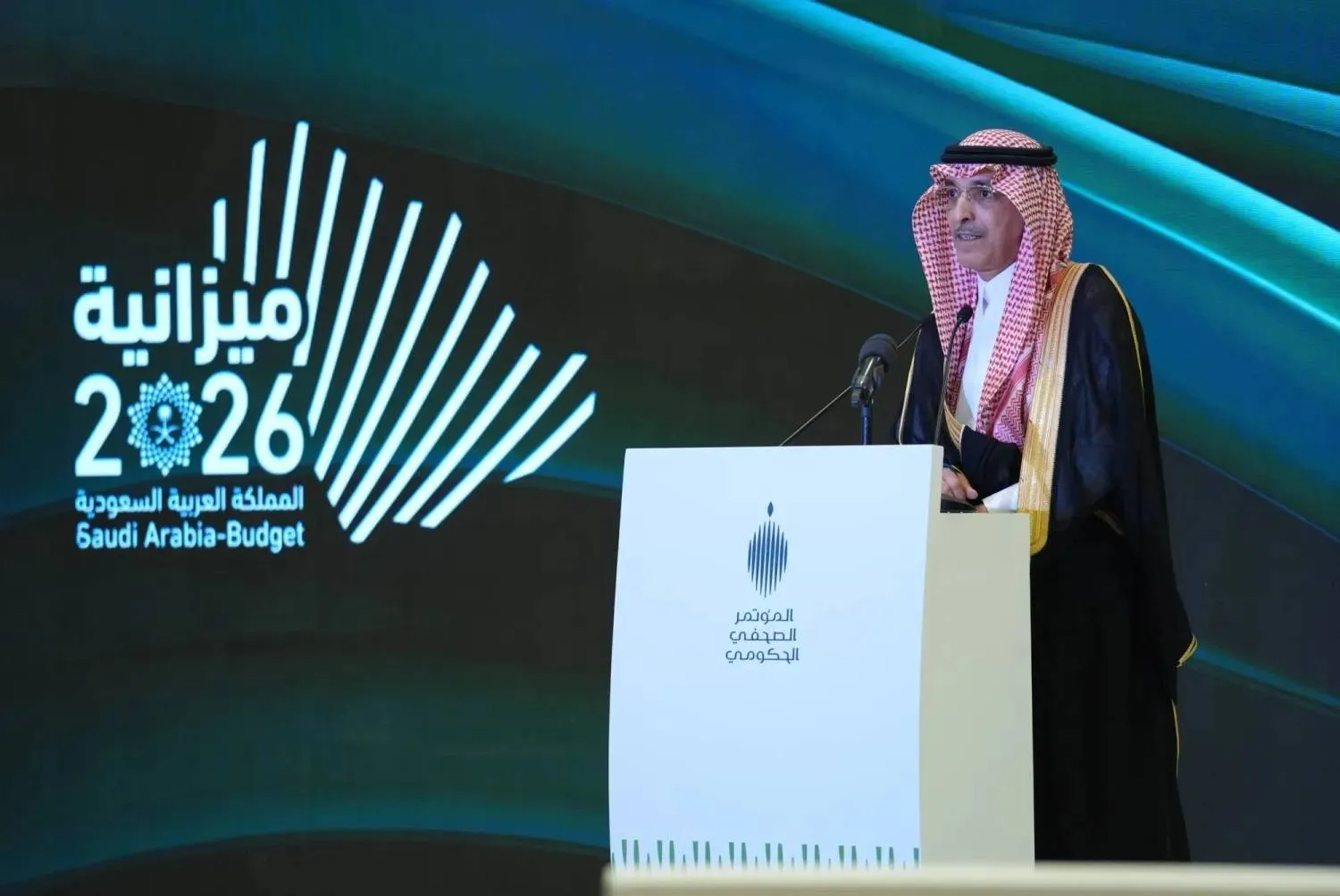
Finance Minister Mohammed Al-Jadaan said the preliminary 2027 budget estimates come amid persistent global economic uncertainty and accelerating geopolitical developments.
The kingdom continues to manage public finances with a long-term view, he said, strengthening its ability to respond to changing conditions and sustain spending on development and strategic priorities while preserving fiscal sustainability and financial strength.
The government is monitoring economic and geopolitical developments and assessing their potential impact on the global economy, supply chains and energy markets, he added. Flexible, proactive policies aim to support the economy and keep it on course toward Saudi Vision 2030 targets.
Al-Jadaan said economic transformation plans would continue to support growth and broaden the economic base, lifting non-oil revenue and making revenue more sustainable and stable over the medium and long term.
Deficit fits long-term fiscal policy
The projected 2027 deficit of 3.6% of GDP is part of a fiscal policy aimed at preserving financial strength and improving fiscal sustainability while maintaining spending on priority projects.
The Finance Ministry said the approach allows the government to pursue balanced fiscal policies across economic cycles, support growth, adapt to changing conditions and manage crises and emergency needs while keeping public debt sustainable and maintaining substantial fiscal reserves.
The government plans to continue domestic and international financing in 2027 and over the medium term under its medium-term debt strategy, issuing bonds and sukuk and securing loans at a fair cost.
It also plans to expand alternative government financing, including project and infrastructure financing and financing through export credit agencies.