


Islamic Civilization Village: Cultural, Educational Destination in Madinah

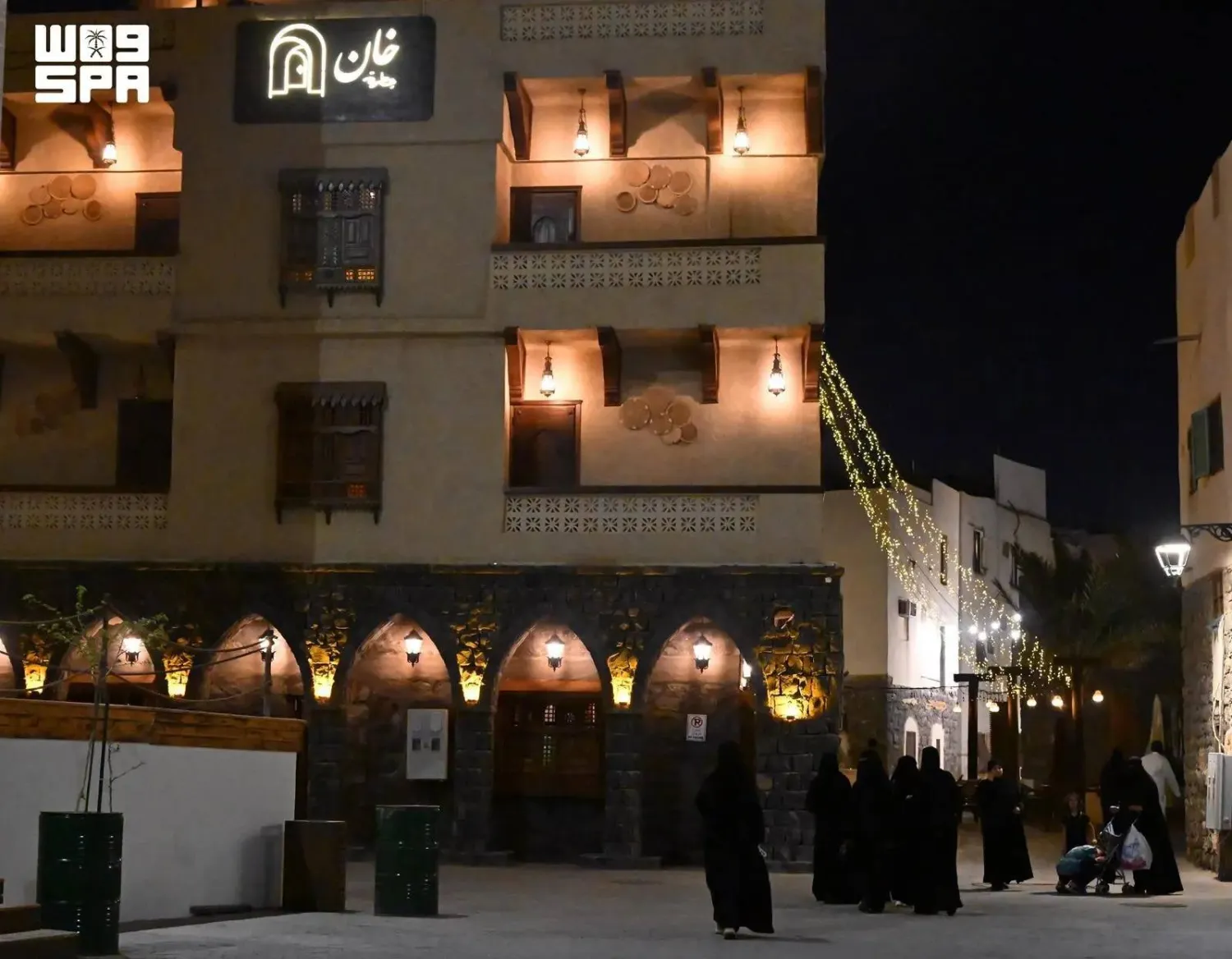
Rua Al Madinah Holding has announced the launch of the Islamic Civilization Village project, spanning over 257,000 square meters, in Madinah. SPA
TT

Islamic Civilization Village: Cultural, Educational Destination in Madinah

Rua Al Madinah Holding has announced the launch of the Islamic Civilization Village project, spanning over 257,000 square meters, in Madinah. SPA

Rua Al Madinah Holding has announced the launch of the Islamic Civilization Village project, spanning over 257,000 square meters, next to the Prophet's Mosque, to enrich the visitor experience in Saudi Arabia’s Madinah.

The project is set to become a cultural and educational destination that offers a wide array of activities, inclusive hospitality services and valuable historic shows that highlight several aspects of the Islamic history.

The Islamic Civilization Village is divided into eight distinct geographical zones: the Arabian Peninsula, Mashriq, Islamic South Asia, Maghrib, the Southeast Asian Nations, the Silk Road, Al Andalus and Africa, in addition to a zone highlighting the deep roots of the Kingdom's history as the cradle of Islam.

The project will also include diverse retail outlets (over 11,000 square meters), various dining options, culturally unique cafes and interactive shows, as well as around 12,000 square meters of green spaces.

Eng. Ahmed Al-Juhani, CEO of Rua Al Madinah Holding, described the project as an educational and entertaining cultural hub designed to showcase the scientific achievements and contributions of Muslims throughout history through its cultural components and interactive content.

He also noted that the project will enhance the cultural and educational experience of the visitors and pilgrims, and promotes Madinah as a tourism destination that meets the pilgrimage sector objectives in line with Saudi Vision 2030.

Rua Al Madinah Holding is part of the Saudi Investment Fund. Its work is focused on modern urban planning and development of diverse and comprehensive investment projects in Madinah, as a prestigious religious destination with a modern architectural system.

Among its plans is also to develop a network of hotels and commercial spaces, civilizational, cultural, and entertainment centers, as well as religious museums with modern infrastructure next to the Prophet’s Mosque.

The holding’s main goal is to accommodate 30 million visitors in Madinah by 2030, offering them an enjoyable stay and an exceptional visit that enriches their religious journey and cultural experience.

British Town to Open its 250-Year-Old Underground Tunnels to Public

The glassworks tunnels have never before been open to the public. (Stourbridge Glass Museum)
TT

British Town to Open its 250-Year-Old Underground Tunnels to Public

The glassworks tunnels have never before been open to the public. (Stourbridge Glass Museum)

A West Midlands glassmaking museum is set to open its 250-year-old underground tunnels to the public for the first time.

Stourbridge Glass Museum has unveiled a major new project that will transform its historic tunnel network into an immersive, family-friendly visitor experience, according to the Independent.

Visitors can expect VR and project mapping technology bringing local glassmaking heritage to life.

The tunnels were once used by generations of glassworkers in the local area to store materials and to control temperatures during the production of their fragile products.

The new experience hopes to attract more visitors to the area, giving a boost to the local economy through hotel stays and spending in other local businesses.

The mayor of Dudley, Pete Lowe, praised the new project, using the Black Country phrase “Bostin’” in response to the news.

Museum director Alexander Goodger said: “This is just one part of our new phase of capital development designed to boost the site for locals, expand the offer, give it a wider appeal and bring in tourists to the area who then go on to stay in hotels and eat in restaurants, regenerating the area.”

He added: “We want to bring in investment for the Black Country’s heritage. We have an incredible and unique history."

“Before opening the tunnels to the public, the museum will undertake essential improvements to health and safety, signage, public access, and lighting, ensuring a safe and free‑flowing visitor experience,” he added.

In exact date for the opening of the tunnels has not yet been announced.

Stourbridge Glass Museum currently has exhibitions showcasing 400 years of glassmaking in the town, depicting work within a “glass cone,” which is a towering brick structure with a furnace in the middle where workers would shape and blow the molten glass in the hot environment while letting gas escape from the top.


Gold Rings Around 2,000 Years Old Found During Dig at Thailand Archaeological Site

In this photo released by The Fine Arts Department, an archaeologist shows two rings with human bones during an ongoing dig at the Don Yai Thong archeological site in Phetchaburi province, Thailand Thursday, July 2, 2026. (The Fine Arts Department via AP)
TT

Gold Rings Around 2,000 Years Old Found During Dig at Thailand Archaeological Site

In this photo released by The Fine Arts Department, an archaeologist shows two rings with human bones during an ongoing dig at the Don Yai Thong archeological site in Phetchaburi province, Thailand Thursday, July 2, 2026. (The Fine Arts Department via AP)

Two gold rings aged around 2,000 years old were discovered during an excavation at a new archaeological site in western Thailand, officials said.

The rings were found with human bones during an ongoing dig at the Don Yai Thong archaeological site in Phetchaburi province last week, the Thai government's Fine Arts Department said in a statement.

One ring found Thursday was engraved with characters believed to be Bhrami script, an ancient Indian writing system. An initial assessment by experts identified the script reading as “pusarakhitasa,” meaning “the one protected by Pushya,” said to be one of the most auspicious zodiac signs in Indian astronomy, The Associated Press quoted the department as saying.

The other ring found with the same skeletal remains is a plain gold ring without any pattern. Experts believe the rings’ owner may have been a merchant of the Indian ancient caste system Vaishyas, the department said.

The Don Yai Thong archaeological site, about 130 kilometers (80 miles) southwest of the capital Bangkok, was discovered early this year after residents found pieces of ancient bronze drums in a rice field, leading to further excavation.

The site was dated to a late prehistoric era in Thailand, a period of human settlement also known as the Iron Age, established to be around 1,500 to 2,500 years ago.

Since February, archaeologists have discovered eight human skeletons, bronze and gold jewelry, pottery and other artifacts indicating a ceremonial burial of wealthy people or members of the society’s upper classes.

The excavation is expected to be complete in another month, with plans to showcase the archaeological finds to the public, the Fine Arts Department said.


Historic Clock at Two Holy Mosques Exhibition Reflects Timekeeping at Prophet's Mosque

A rare historic clock is on display at the Exhibition of the Two Holy Mosques Architecture in Makkah. (SPA)
TT

Historic Clock at Two Holy Mosques Exhibition Reflects Timekeeping at Prophet's Mosque

A rare historic clock is on display at the Exhibition of the Two Holy Mosques Architecture in Makkah. (SPA)

A rare historic clock is on display at the Exhibition of the Two Holy Mosques Architecture in Makkah, offering visitors a glimpse into the long history of care devoted to the Prophet's Mosque, the Saudi Press Agency reported on Sunday.

Believed to date back to 1277 AH (1860 AD), the clock reflects the enduring attention given to the architecture, maintenance and furnishings of the Two Holy Mosques over the centuries.

The clock is among the exhibition's most significant historical artifacts, representing valuable documentation of the development of timekeeping at the Prophet's Mosque during the 13th century AH.

It played an important role in organizing prayer times and acts of worship, while its precise craftsmanship and elegant design reflect the high level of artistry for which industries of that period were renowned.

The exhibition serves as a prominent cultural destination for Makkah visitors, offering an opportunity to explore rare historical treasures associated with serving the Two Holy Mosques and the efforts devoted to their care.

It also showcases the Saudi era, which has witnessed the largest expansion, development, and service projects in the history of the Two Holy Mosques, keeping pace with the growing numbers of visitors and enabling them to perform their acts of worship in an atmosphere of safety and tranquility.