


Fragmentary Sculptures from the Umayyad Palace of Qasr al-Mshatta

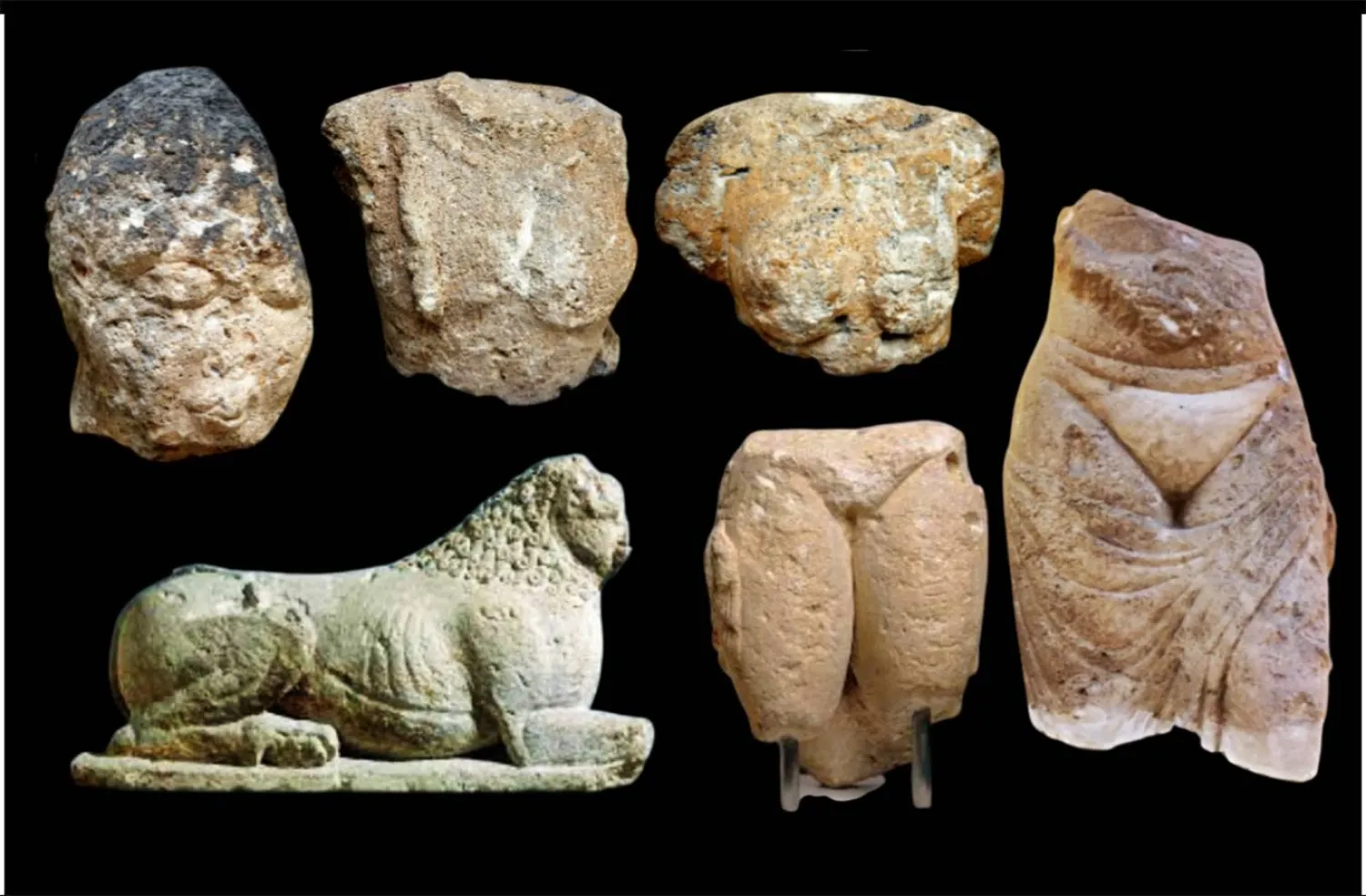
Five sculptures from Qasr al-Mshatta are preserved in the Museum of Islamic Art in Berlin, while a sixth sculpture is preserved in the Jordan Archaeological Museum in Amman.
TT

Fragmentary Sculptures from the Umayyad Palace of Qasr al-Mshatta

Five sculptures from Qasr al-Mshatta are preserved in the Museum of Islamic Art in Berlin, while a sixth sculpture is preserved in the Jordan Archaeological Museum in Amman.

by Mahmoud Zibawi

The Jordanian desert contains a series of Umayyad palaces, the largest of which is Qasr al-Mshatta, located in the Jiza District. Western Orientalist scholars first drew attention to this site in the late nineteenth century, and a German mission succeeded in transporting its massive southern facade to Berlin at the beginning of the twentieth century, after Sultan Abdulhamid II presented it as a gift to his ally, Kaiser Wilhelm II of Prussia.

The facade entered the Kaiser Friedrich Museum in 1903 and was later transferred to the Museum of Islamic Art in 1932. This museum is regarded as the oldest and largest institution dedicated exclusively to Islamic art in Europe and North America. The facade of Qasr al-Mshatta occupies the largest portion of this European complex, alongside a small, independent group of damaged sculptures that originally formed part of the palace’s furnishings. This group bears witness to a distinct Umayyad sculptural tradition, whose artistic identity became clearly defined through comparable assemblages discovered in other Umayyad palaces excavated during the 1930s.

The sculptures from Qasr al-Mshatta are displayed on white rectangular plinths in a corner of the gallery dedicated to the palace’s monumental facade at the Museum of Islamic Art in Berlin. At first glance, they resemble fragmented stone blocks positioned at the margins of this facade, which is adorned with limestone relief carvings that have largely preserved their original features. In this corner, one piece stands out for having retained most of its original form: a carved and polished block of limestone depicting a lion crouching on a white base, measuring 72 centimeters in length and 122 centimeters in width.

The lion appears firmly grounded on its folded hind legs atop a thin rectangular base devoid of ornament, with its front legs extended forward. Despite the loss of most of the head and the extremities of the forelegs, the sculptural composition remains clear and legible. The facial features have largely disappeared, making them difficult to reconstruct; however, the posture suggests an upright head pressed close to the chest, encircled by a dense mane composed of compact, parallel locks of hair that extend to include the beard, together forming a collar encircling the oval mass of the chin.

The body is elongated and smooth, with limbs clearly articulated in a manner that approaches naturalistic realism, as evidenced by the precise modeling of the joints. This approach is especially apparent in the treatment of the hind legs and is further emphasized by the pronounced protrusion of the claws marking their extremities. It is worth noting the existence of a small carved fragment originating from Qasr al-Mshatta in which these claws appear in a similar manner. It remains unclear whether this fragment originally belonged to the same sculpture or to a companion piece that formed a paired composition, in keeping with an artistic convention prevalent in the provinces of the Sasanian Empire. Although this empire came to an end with the Islamic conquest of Persia, its cultural legacy remained vibrant and left a profound imprint on Umayyad artistic production; the lion of Qasr al-Mshatta stands as compelling evidence of this cultural synthesis.

Facing this lion are several damaged sculptural fragments, each representing a small portion of a female figure whose original configuration is now difficult to reconstruct. One fragment preserves a head, retaining the wide eye sockets, the lower portion of the nose, and lips closed in a subtle smile. The cheeks are broad, suggesting that this youthful face belonged to a woman crowned by a voluminous mass of thick hair, whose upper surface is approximately twice the area of the face itself. By contrast, two additional fragments reveal a full and fleshy female torso.

A third fragment preserves the thighs of two closely set legs, which share the same robust character. This piece has retained its polished surface and is of medium scale, measuring 70 centimeters in height and 50 centimeters in width, indicating that it belonged to a statue conceived on a near life-size scale. This three-dimensional form preserves fine details of its execution, revealing a thin garment slipping away from the buttocks, with its edge still visible at the upper part of the left thigh. On this thigh appear traces of an inscription carved in Kufic script, running from top to bottom. Unfortunately, specialists have been unable to decipher the text, though one hypothetical reading suggests that it records the name of the woman represented by the statue.

The Jordan Archaeological Museum houses a comparable fragment uncovered during restoration and cleaning campaigns conducted by the Department of Antiquities in 1962 at Qasr al-Mshatta. This piece, likewise executed at near life size, measures 75 centimeters in height and 52 centimeters in width and represents the pelvis and upper portions of the legs. Here, the garment drapes over the right thigh, revealing the left thigh beneath, with sharply defined folds executed in accordance with the classical Greek style. The statue has lost its arms; however, the remaining lower portions indicate hands that once held objects whose identities can no longer be determined.

These sculptures attest to an Umayyad female sculptural ideal, whose formal characteristics first emerged through the study of the murals at an Umayyad desert site known as Qusayr ʿAmra, documented by the Czech scholar Alois Musil in a major two-volume publication issued in 1907. These characteristics were subsequently confirmed in the medium of sculpture through the discovery of similar female figures from an Umayyad palace located at Khirbat al-Mafjar, north of Jericho, during excavations conducted by a mission affiliated with the British Department of Antiquities in the mid-1930s.

This ideal is distinguished by a full, fleshy body inclined toward corpulence, as well as facial features that mirror this physical quality. The type recurs in multiple sculptural variants, and their study reveals the use of diverse hairstyles and ornamental schemes, forming a visual vocabulary that parallels the literary lexicon for which this remarkably productive period is renowned.


Once a National Obsession, Traditional Korean Wrestling Fights for Survival 

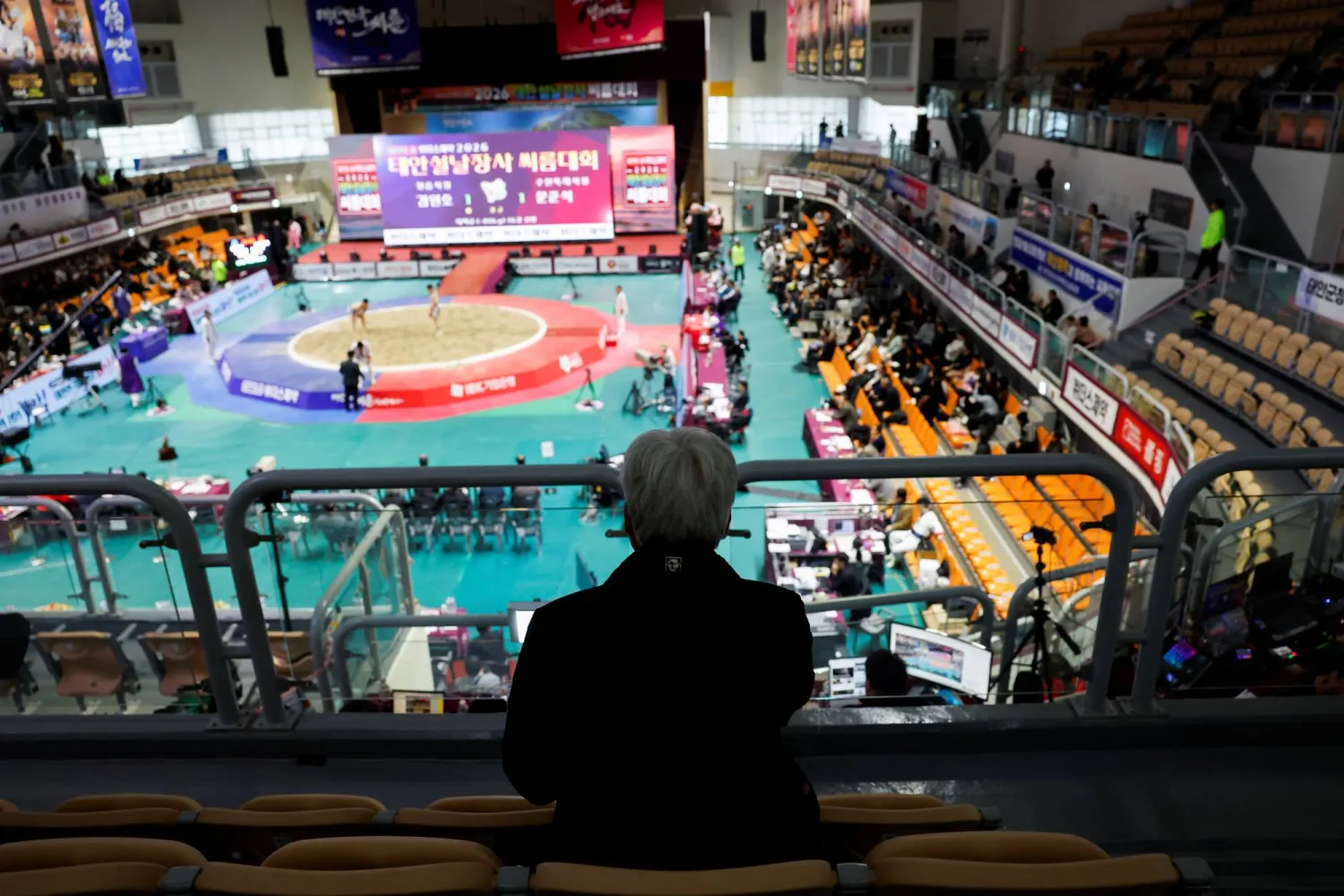
An elderly spectator watches a ssireum match during a Lunar New Year Ssireum championship at the Taean Complex Indoor Gymnasium in Taean, South Korea, February 14, 2026. (Reuters)
TT

Once a National Obsession, Traditional Korean Wrestling Fights for Survival 

An elderly spectator watches a ssireum match during a Lunar New Year Ssireum championship at the Taean Complex Indoor Gymnasium in Taean, South Korea, February 14, 2026. (Reuters)

As South Korea's global cultural influence expands in areas such as music, film and television, one form of entertainment struggling to attract attention even at home is Korea's traditional style of wrestling, known as ssireum.

Ssireum - pronounced like "see room" - had its heyday in the 1980s and early 1990s, when there were as many as eight professional teams and the top wrestlers became household names. Since then, it has been squeezed by tighter budgets and a public quick to move on to new trends.

Twenty-year-old Lee Eun-soo, who began training at the age ‌of nine, is ‌taking part in this year's Lunar New Year ‌tournament, ⁠the showcase event ⁠for the more than 1,500-year-old sport.

Lee lamented that at his former high school, the ssireum team currently has no members and there is talk of disbanding it.

"I once tried to imagine my life if I hadn’t done ssireum," Lee said. "I don’t think I could live without it."

A ssireum match involves two wrestlers facing off in an ⁠eight-meter (26.25 ft) sandpit ring, gripping each other by a ‌cloth belt called a "satba" and using ‌strength, balance, timing and stamina to force the opponent to the ground.

Ssireum ‌was inscribed on UNESCO's Representative List of the Intangible Cultural Heritage ‌of Humanity in 2018, but that international recognition has not translated into commercial success. Its relative obscurity contrasts with the high profile of Japan's sumo, another centuries-old form of wrestling.

Unlike sumo, which is supported by ‌a centralized professional ranking system and six major annual tournaments - or Olympic wrestling, with its global reach - ⁠ssireum remains ⁠largely domestic.

"Sport is something people won't come to watch if they don’t know the wrestlers or even the sport itself," said Lee Tae-hyun, a former ssireum wrestler and Professor of Martial Arts at Yong In University, who has promoted the sport overseas and believes it has commercial potential with the right backing.

Lee Hye-soo, 25, a spectator at the Lunar New Year tournament, said many Koreans are now unfamiliar with ssireum.

"My grandfather liked watching ssireum, so I watched it with him a lot when I was young," she said.

"I like it now too, but I think it would be even better if it became more famous."


Saudi Arabia Concludes Guest of Honor Role at Damascus International Book Fair 2026

The Kingdom’s pavilion, led by the commission, attracted strong attendance and active engagement through its cultural activities - SPA
TT

Saudi Arabia Concludes Guest of Honor Role at Damascus International Book Fair 2026

The Kingdom’s pavilion, led by the commission, attracted strong attendance and active engagement through its cultural activities - SPA

The Literature, Publishing and Translation Commission concluded the Kingdom’s Guest of Honor participation at the Damascus International Book Fair 2026, held in the Syrian capital from February 6 to 16, drawing strong attendance and engagement from visitors and cultural enthusiasts.

The Kingdom's pavilion was highly praised for its rich cultural content and high-quality programs, reflecting the vitality and growth of the Kingdom’s literary and cultural scene, SPA reported.

Literature, Publishing and Translation Commission CEO Dr. Abdullatif Abdulaziz Al-Wasel stated that the Kingdom’s role as Guest of Honor at the Damascus International Book Fair 2026, represented by a high-level cultural delegation led by Minister of Culture Prince Bader bin Abdullah bin Farhan, highlights the depth of Saudi-Syrian cultural relations based on partnership and mutual respect.

He noted that the participation demonstrates the Kingdom’s commitment to enhancing cultural exchange, a key objective of the National Culture Strategy under Saudi Vision 2030. Through this strategy, the commission emphasizes fostering constructive dialogue among peoples, exchanging knowledge and expertise, and consolidating the Kingdom’s active role in the Arab and international cultural landscape.

The Kingdom’s pavilion, led by the commission, attracted strong attendance and active engagement through its cultural activities. It showcased the commission’s programs and initiatives in literature, publishing, and translation, and featured a comprehensive cultural program, including literary seminars, cultural discussions, and poetry evenings with prominent Saudi writers and intellectuals.

These efforts enriched cultural dialogue with fair visitors and strengthened the presence of Saudi literature in the Arab cultural scene.

This edition of the Damascus International Book Fair marks a significant cultural milestone, reaffirming the value of books as carriers of meaning, spaces for dialogue, and starting points for a cultural journey that reflects the aspirations of the Arab cultural landscape toward a more open and aware phase.


Qiddiya City Begins Construction of Landmark Performing Arts Center

The Qiddiya Performing Arts Center supports the city’s positioning as a destination for creativity and cultural expression - SPA
TT

Qiddiya City Begins Construction of Landmark Performing Arts Center

The Qiddiya Performing Arts Center supports the city’s positioning as a destination for creativity and cultural expression - SPA

Qiddiya Investment Company has announced the commencement of construction works for the Performing Arts Center in Qiddiya City, marking an important milestone in the development of Qiddiya City as a destination for entertainment, sports and culture.

The announcement coincided with the laying of the foundation stone, signaling the start of construction works to be carried out by Nesma and Partners.

During the ceremony, held at the project site perched on the edge of the Tuwaiq Mountains, Managing Director of Qiddiya Investment Company Abdullah Aldawood delivered a speech announcing the official start of construction. He highlighted the importance of the project as a transformative addition that strengthens Qiddiya City’s cultural offering.

The Qiddiya Performing Arts Center supports the city’s positioning as a destination for creativity and cultural expression, while contributing to the development of local talent and attracting international artistic experiences.

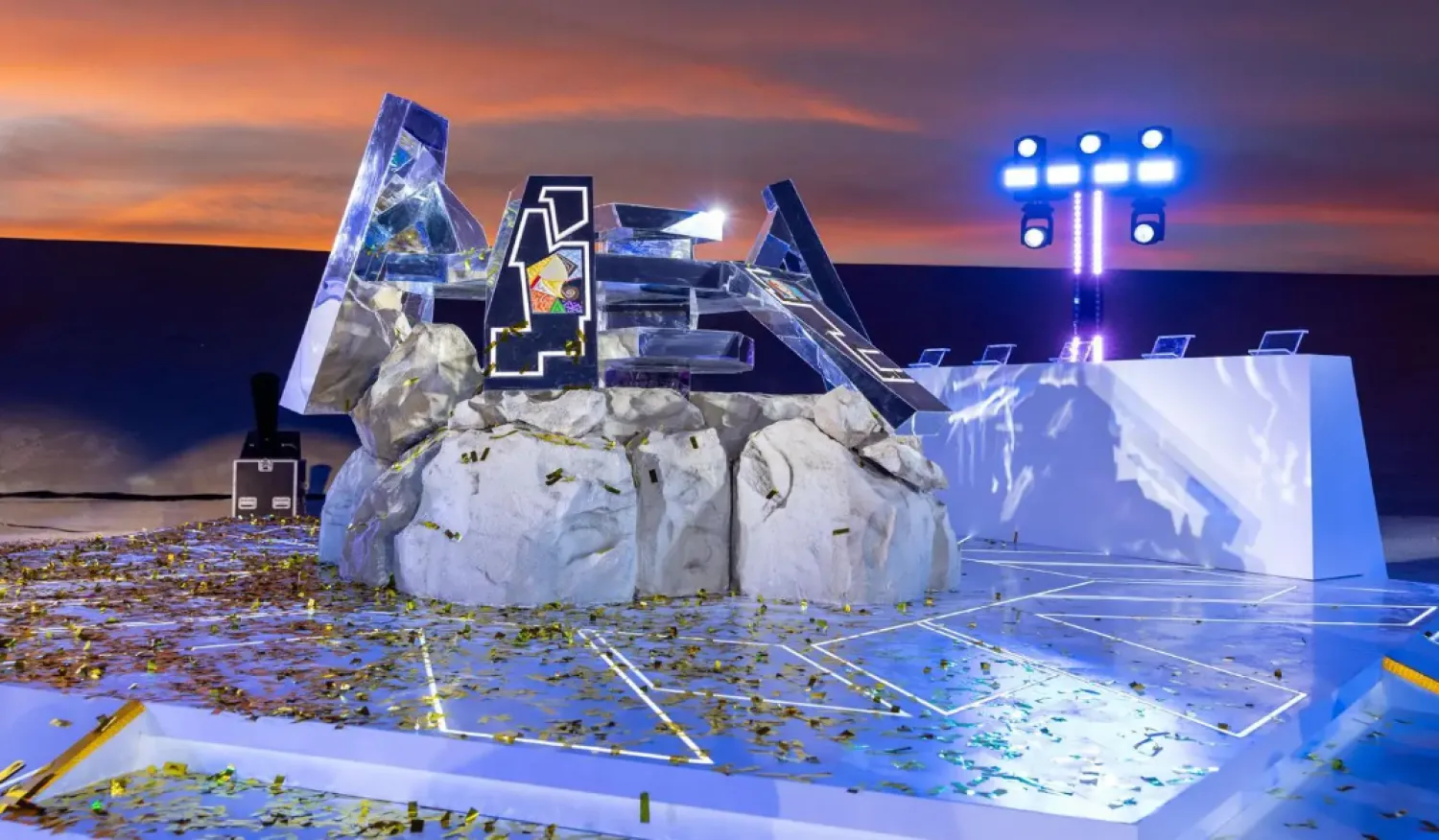
The Qiddiya Performing Arts Center has been designed by Tom Wiscombe Architecture, in collaboration with BSBG, and features a futuristic architectural style defined by monumental forms. The design comprises interlocking architectural panels and five illuminated blades that blend harmoniously with the desert landscape, forming a prominent cultural landmark within Qiddiya City.

The start of construction follows the launch of the first phase of Qiddiya City in December 2025, which included the opening of Six Flags Qiddiya City. It’s part of the company’s broader approach to developing integrated destinations that enhance quality of life and deliver distinctive experiences across entertainment, sports and culture.