


English Museum Shines Light on Mary Shelley and Her Gothic Classic ‘Frankenstein’ 

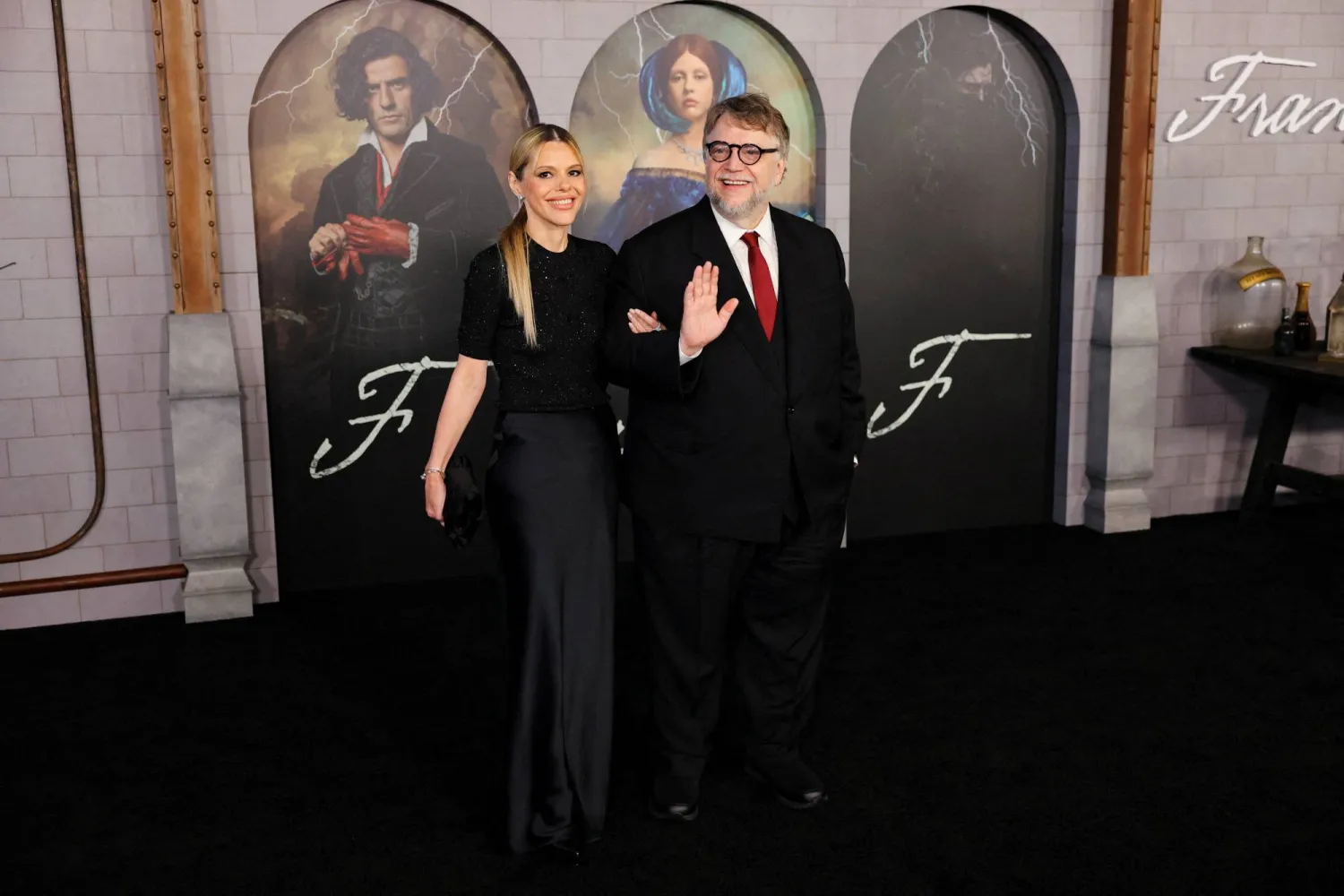
Kim Morgan and Guillermo del Toro attend a premiere for the film "Frankenstein", at the Academy Museum of Motion Pictures in Los Angeles, California, US, October 6, 2025. (Reuters)
TT

English Museum Shines Light on Mary Shelley and Her Gothic Classic ‘Frankenstein’ 

Kim Morgan and Guillermo del Toro attend a premiere for the film "Frankenstein", at the Academy Museum of Motion Pictures in Los Angeles, California, US, October 6, 2025. (Reuters)

On a window of a Bath townhouse, one of the southwestern English city’s most famous residents looks out at passersby. Inside is Mary Shelley’s House of Frankenstein, a museum dedicated to the writer and her Gothic novel, published in 1818, which has inspired numerous screen adaptations, with the latest being Mexican filmmaker Guillermo del Toro’s Oscar contender.

“‘Frankenstein' is regarded as one of the most important books in English literature ... It's the world's first science fiction novel,” said Chris Harris, co-founder and director of the immersive attraction.

“It's a very modern story ... he's trying to fit in, but he's abandoned ... and rejected and ‌has prejudice thrown ‌towards him. And you think, well, from prejudice comes violence, which is ‌happening ⁠nowadays.”

'FEAR ABOUT CHANGE'

Born ⁠Mary Wollstonecraft Godwin, Shelley came up with the idea for “Frankenstein; or, the Modern Prometheus” at 18 years old. She and her future husband, poet Percy Bysshe Shelley, were staying by Lake Geneva in 1816 with Lord Byron when the latter challenged their group to write a ghost story. She found inspiration there.

Back in England, she moved to Bath, where she penned key chapters before finishing the book - about the scientist Victor Frankenstein, who brings to life a creature ⁠assembled from body parts - in the town of Marlow.

"It plays on ‌people's fears about change," Harris said. "Now Frankenstein is a ‌metaphor for anything we're scared of."

The first "Frankenstein" adaptation was a musical, he said.

“The Creature in her ‌book is sensitive, he talks ... but in the play, he was rendered into a ‌monster. He didn't talk, he was mute. He just went around killing people,” Harris said.

"So, right from the off, he's been sort of invented in a slightly different way. And that's happened all the way through the evolution of film and theatre ... So it's interesting to see del Toro's ‌film; they're exploring a different side of him."

OSCAR AND BAFTA NOMINATIONS

That film, with nine Oscar nominations including best picture, shows actor ⁠Jacob Elordi's Creature as ⁠gentle and hungry for knowledge but facing resentment. Elordi received Best Supporting Actor nods at the Oscars and Sunday's BAFTA Film Awards, Britain's top movie honors, where "Frankenstein" has eight nominations.

While del Toro's movie differs from the book in several ways, including omitting the Creature's murders, Harris said physically it was "a similar recreation" of Shelley's description.

The museum has its own animatronic, standing in Victor Frankenstein's recreated laboratory. Elsewhere, visitors learn about Shelley’s life, tragedies she faced and her interest in science.

Nearby, by Bath Abbey, is a 2018 plaque marking where Shelley lived in 1816-1817 and worked on the book.

Bath is also associated with another female novelist, Jane Austen, who is celebrated annually with a festival. Harris, who opened his museum in 2021, says Shelley deserves more recognition.

“We just want people to understand that this is an extraordinary young woman who came up with one of the most enduring books ever written, that will never go out of fashion.”



Red Sea Fund Launches Second Round to Support Film Projects in Production Stage

File photo of the fifth day of the Red Sea International Film Festival - SPA
TT

Red Sea Fund Launches Second Round to Support Film Projects in Production Stage

File photo of the fifth day of the Red Sea International Film Festival - SPA

The Red Sea Fund, affiliated with the Red Sea Film Foundation, announced the opening of applications to support film projects in the production stage within the second round of this year’s support program, which will continue until March 21, as part of its efforts to enhance the cinema industry and empower innovators in the region, SPA reported.

The round aims to support promising cinematic voices from the Kingdom and the Arab world, as well as filmmakers from Africa and Asia, through financial grants that help complete film projects and present their creative narratives globally, with a special focus on projects ready to enter production and begin filming.


Prince Mohammed bin Salman Project Restores Historic Al-Jami' Mosque in Tabuk Region

The renovation utilized modern technologies to restore the mosque's original identity - SPA
TT

Prince Mohammed bin Salman Project Restores Historic Al-Jami' Mosque in Tabuk Region

The renovation utilized modern technologies to restore the mosque's original identity - SPA

The Prince Mohammed bin Salman Project for the Development of Historical Mosques has completed the restoration of Al-Jami' Mosque in Duba, Tabuk Region, as part of its mission to preserve the Kingdom's architectural heritage under Vision 2030.

As one of Duba’s oldest landmarks, the mosque is deeply intertwined with the city’s maritime history, traditionally serving as a central meeting point for sailors. Throughout its history, the mosque underwent several construction phases, including significant contributions by King Abdulaziz and King Fahd, before its selection for the current national development project, SPA reported.

The renovation utilized modern technologies to restore the mosque's original identity, increasing its area to 972.23 square meters and its capacity to 779 worshippers. The architectural style is inspired by traditional Red Sea heritage, incorporating natural materials like stone, mud, and wood for intricate mashrabiyas.

Executed by specialized Saudi firms, the project balances traditional standards with sustainability to rehabilitate the site for worship while highlighting its cultural significance. By restoring such landmarks, the project ensures the preservation of the Kingdom’s diverse architectural and social memory for future generations.


Leading Portraiture Competition Celebrates Saudi Heritage Through Art

Throughout its history, the award has emphasized themes rooted in Saudi heritage and national initiatives - SPA
TT

Leading Portraiture Competition Celebrates Saudi Heritage Through Art

Throughout its history, the award has emphasized themes rooted in Saudi heritage and national initiatives - SPA

The Dia Aziz Dia Award for Portrait, hosted by the Saudi Arabian Society for Culture and Arts in Jeddah, is a leading platform for portraiture and the only competition of its kind in the Middle East. It fosters national identity through contemporary art, connecting veteran and emerging artists.

Throughout its history, the award has emphasized themes rooted in Saudi heritage and national initiatives, including Saudi women, the Arabian horse, the Saudi Green Initiative, and King Abdulaziz.

These themes highlight art's role in reflecting social transformations and contributing to the cultural goals of Saudi Vision 2030, SPA reported.

The current ninth edition, with a theme focused on King Salman, invited artists to depict the leadership and humanity of the Custodian of the Two Holy Mosques. This edition attracted significant participation, with 787 submissions from 42 cities, including international entries.

Of these, 61 works were shortlisted for the final competition, with prizes totaling SAR170,000 awarded to three main winners and seven incentive recipients.