Bedwetting, Nightmares and Shaking. War in Gaza Takes a Mental Health Toll, Especially on Childrenhttps://english.aawsat.com/features/5041256-bedwetting-nightmares-and-shaking-war-gaza-takes-mental-health-toll-especially
Bedwetting, Nightmares and Shaking. War in Gaza Takes a Mental Health Toll, Especially on Children
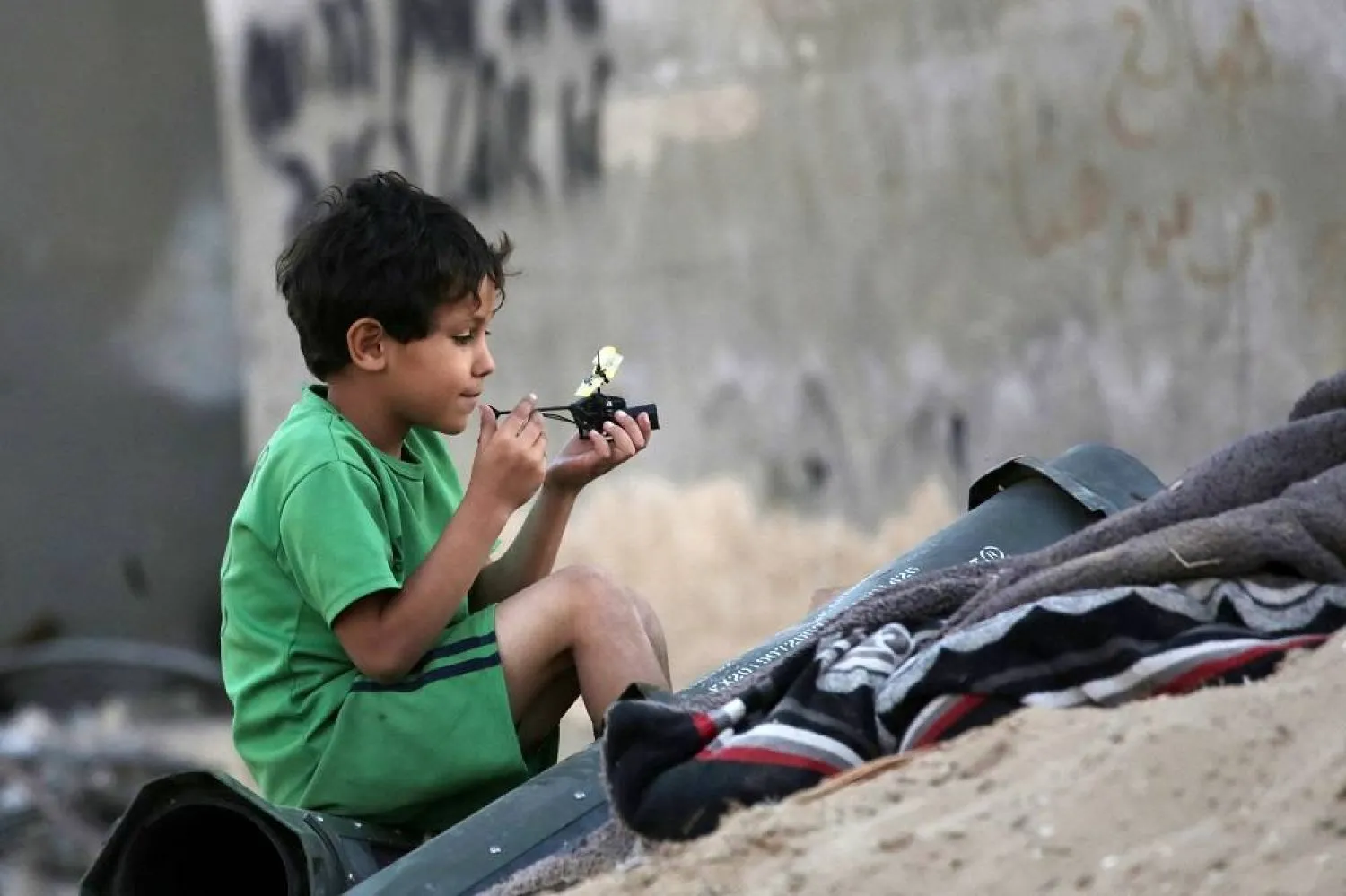
A Palestinian child plays next to empty ammunition containers in Khan Younis in the southern Gaza Strip on May 16, 2024, amid the ongoing conflict between Israel and Hamas. (AFP)
Bedwetting, Nightmares and Shaking. War in Gaza Takes a Mental Health Toll, Especially on Children
A Palestinian child plays next to empty ammunition containers in Khan Younis in the southern Gaza Strip on May 16, 2024, amid the ongoing conflict between Israel and Hamas. (AFP)
Nabila Hamada gave birth to twin boys in Gaza early in the war, in a hospital reeking of decaying bodies and full of displaced people. When Israeli forces threatened the hospital, she and her husband fled with only one of the babies, as medical staff said the other was too weak to leave. Soon after, Israeli forces raided the hospital, Gaza’s largest, and she never saw the boy again.
The trauma of losing one twin left the 40-year-old Hamada so scared of losing the other that she became frozen and ill-equipped to deal with the daily burden of survival, The Associated Press said.
“I’m unable to take care of my other, older children or give them the love they need,” she said.
She is among hundreds of thousands of Palestinians struggling with mental health after nine months of war. The trauma has been relentless. They have endured the killing of family and friends in Israeli bombardments. They have been wounded or disfigured. They have huddled in homes or tents as fighting raged and fled again and again, with no safe place to recover.
Anxiety, fear, depression, sleep deprivation, anger and aggression are prevalent, experts and practitioners told The Associated Press. Children are most vulnerable, especially because many parents can barely hold themselves together.
There are few resources to help Palestinians process what they are going through. Mental health practitioners say the turmoil and overwhelming number of traumatized people limit their ability to deliver true support. So they’re offering a form of “psychological first aid” to mitigate the worst symptoms.
“There are about 1.2 million children who are in need of mental health and psychosocial support. This basically means nearly all Gaza’s children,” said Ulrike Julia Wendt, emergency child protection coordinator with the International Rescue Committee. Wendt has been visiting Gaza since the war began.
She said simple programming, such as playtime and art classes, can make a difference: “The goal is to show them that not only bad things are happening.”
Repeated displacement compounds trauma: an estimated 1.9 million of Gaza’s 2.3 million people have been driven from their homes. Most live in squalid tent camps and struggle to find food and water.
Many survivors of the Oct. 7 attack by Hamas in southern Israel that precipitated the war in Gaza also bear the scars of trauma, and are seeking ways to heal. Hamas killed more than 1,200 Israelis and took around 250 hostage.
Sheltering near the southern city of Khan Younis, Jehad El Hams said he lost his right eye and fingers on his right hand when he picked up what he thought was a can of food. It was an unexploded ordnance that detonated. His children were almost hit.
Since then, he experiences sleeplessness and disorientation. “I cry every time I take a look at myself and see what I’ve become,” he said.
He reached out to one of the few mental health initiatives in Gaza, run by the United Nations agency for Palestinian refugees, known as UNRWA.
Fouad Hammad, an UNRWA mental health supervisor, said they typically encounter 10 to 15 adults a day at shelters in Khan Younis with eating and sleeping disorders, extreme rage and other issues.
Mahmoud Rayhan saw his family shattered. An Israeli strike killed his young son and daughter. His wife's leg was amputated. Now he isolates himself inside his tent and sleeps most of the day. He talks to almost no one.
He said he doesn’t know how to express what’s happening to him. He trembles. He sweats. “I’ve been crying and feel nothing but heaviness in my heart.”
A relative, Abdul-Rahman Rayhan, lost his father, two siblings and four cousins in a strike. Now when he hears a bombardment, he shakes and gets dizzy, his heart racing. “I feel like I’m in a nightmare, waiting for God to wake me up,” the 20-year-old said.
For children, the mental toll of war can have long-term effects on development, Wendt said. Children in Gaza are having nightmares and wetting their beds because of stress, noise, crowding and constant change, she said.
Nashwa Nabil in Deir al-Balah said her three children have lost all sense of security. Her eldest is 13 and her youngest is 10.
“They could no longer control their pee, they chew on their clothes, they scream and have become verbally and physically aggressive,” she said. “When my son Moataz hears a plane or tank, he hides in the tent.”
In the central town of Deir al-Balah, a psychosocial team with the Al Majed Association works with dozens of children, teaching them how to respond to the realities of war and giving them space to play.
“In the case of a strike, they place themselves in the fetal position and seek safety away from buildings or windows. We introduce scenarios, but anything in Gaza is possible,” said project manager Georgette Al Khateeb.
Even for those who escape Gaza, the mental toll remains high.
Mohamed Khalil, his wife and their three children were displaced seven times before they reached Egypt. His wife and children arrived in January and he joined them in March. Their 8-year-old daughter would hide in the bathroom during shelling and shooting, saying, “We are going to die.”
Their 6-year-old son could sleep only after his mother told him that dying as a martyr is an opportunity to meet God and ask for the fruits and vegetables they didn’t have in hunger-ravaged Gaza.
Khalil recalled their terror as they escaped on foot down a designated “safe corridor” with Israeli guns firing nearby.
Even after arriving in Egypt, the children are introverted and fearful, Khalil said.
They have enrolled in a new initiative in Cairo, Psychological and Academic Services for Palestinians, which offers art and play therapy sessions and math, language and physical education classes.
“We saw a need for these children who have seen more horror than any of us will ever see,” said its founder, psychologist Rima Balshe.
On a recent field trip, she recalled, 5-year-old twins from Gaza who were playing and suddenly froze when they heard helicopters.
“Is this an Israeli warplane?” they asked. She explained it was an Egyptian aircraft.
“So Egyptians like us?” they asked. “Yes,” she reassured them. They had left Gaza, but Gaza had not left them.
There is hope that children traumatized by the war can heal, but they have a long way to go, Balshe said.
“I wouldn’t say ‘recovering’ but I certainly see evidence of beginning to heal. They may not ever fully recover from the trauma they endured, but we are now working on dealing with loss and grief,” she said. “It’s a long process.”
When Hafez al-Assad Opened Lebanon’s Gate to Tehranhttps://english.aawsat.com/features/5280719-when-hafez-al-assad-opened-lebanon%E2%80%99s-gate-tehran
When Hafez al-Assad Opened Lebanon’s Gate to Tehran
Hafez al-Assad made it easier for Khamenei to consolidate control over Lebanon through Hezbollah. (AFP)
One week after the Iranian Revolution declared victory on February 11, 1979, two photographs emerged from Tehran that, in retrospect, help explain many of the storms that would later sweep the Middle East, from Iran’s expanding regional influence to what the author calls “Sinwar’s Flood."
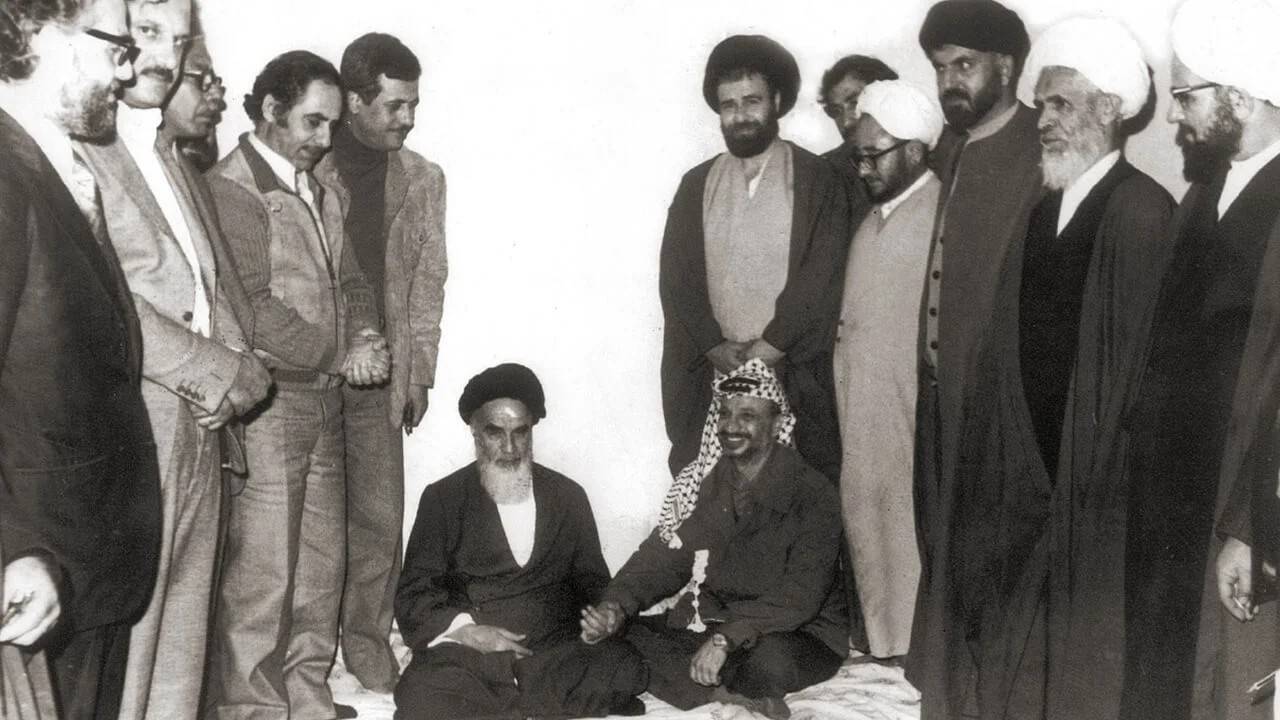
In the first image, two men sit side by side on a carpet. It is impossible to tell the story of the modern Middle East without dwelling on both of them. One is Ayatollah Khomeini, the architect of the Iranian Revolution. The other is Yasser Arafat, the founder of the modern Palestinian national movement.
Standing near Arafat are the Lebanese cleric Hani Fahs, the Iranian cleric Sadegh Khalkhali, and Ahmad Khomeini, the revolutionary leader’s son. Near Khomeini stand Mahmoud Abbas — today president of the Palestinian Authority — and Hani al-Hassan, a senior Fatah leader who would become the first Palestinian ambassador to revolutionary Iran.
In the second photograph, Arafat is shown addressing a crowd after the Palestinian flag was raised over the building that had housed the Israeli embassy in Tehran.
Arafat and Khomeini, with Mahmoud Abbas standing next to his right.
The symbolism of those scenes was profound. During his long years in exile in Najaf, Khomeini had understood that Palestine was the magic word that opened Arab and Muslim hearts. He may have believed that embracing the Palestinian cause would provide a passport for a Shiite revolution seeking entry into the vast Sunni world. It was natural that Tehran would celebrate Arafat, whose legitimacy was unrivaled after he had become the global symbol of the Palestinian struggle. It was equally natural that Arafat would welcome Iran’s dramatic shift from a state aligned with Israel to one proclaiming full support for the Palestinian revolution.
As always, Arafat lavished praise on his hosts. Yet experience had taught him not to surrender his cards to anyone. He had spent years dealing with powerful leaders who sought to use the Palestinian cause either to legitimize their own regimes or to project influence far beyond their borders.
Palestine was not Arafat’s only asset. He operated on Israel’s border through southern Lebanon, a frontier that had effectively become a Palestinian-Israeli border before eventually evolving into an Iranian-Israeli one. Although Lebanon at the time lay under the domination of Hafez al-Assad and the Syrian army — and despite Assad’s deep hostility toward Arafat — the Palestinian leader still controlled the decision of war and peace in southern Lebanon. That authority would later pass to Hassan Nasrallah, the late secretary-general of Hezbollah.
Arafat quickly grasped the sensitivities surrounding relations with Iran. Here was a Shiite revolution emerging in a predominantly Sunni world. The new regime’s commitment to “exporting the revolution” alarmed governments near and far. When the Iran-Iraq War erupted, Arafat attempted to play the role of mediator. He recalibrated his calculations, preserving room for strong relations with the Gulf Arab states, whose financial support remained indispensable to the Palestinian movement.
Any reading of 1979 must also account for another major development. That year Egypt completed its departure from the military front of the Arab-Israeli conflict. The process culminated in the signing of the Camp David Accords by Egyptian President Anwar Sadat and Israeli Prime Minister Menachem Begin under the sponsorship of US President Jimmy Carter. The agreement completed the geopolitical earthquake Sadat had triggered in 1977 when he traveled to Jerusalem and offered peace to Israel.
Egypt’s departure left a vacuum in the Arab world. That vacuum made it easier for Khomeini’s revolution to advance across the region.
Beginning in 1990, Iran would receive three major unintended gifts. The first came from Saddam Hussein when he invaded Kuwait and redirected global attention toward the “Iraqi threat.” The second came from Osama bin Laden, whose attacks of September 11, 2001, focused the world on al-Qaeda terrorism. The third arrived when the United States toppled Iraq’s Baathist regime in 2003, allowing Iranian influence to flow into Iraq’s institutions and political structure.
What many overlooked was that Iran had already received two crucial gifts during the 1980s from Syrian President Hafez al-Assad.
The first came after Israel’s 1982 invasion of Lebanon. Assad agreed to allow hundreds of members of Iran’s Revolutionary Guard Corps to enter Lebanon’s Beqaa Valley and train Lebanese Shiite Islamist groups seeking to organize resistance against Israeli occupation. From those groups, Hezbollah would eventually emerge.
The second gift arrived in the mid-1980s, when Assad decided to subordinate the Lebanese National Resistance Front — known by its Arabic acronym, Jammoul — to the Islamic resistance led by Hezbollah.
Elias Atallah, one of Jammoul’s coordinators, later recounted to Asharq Al-Awsat a dramatic meeting that preceded a series of assassinations targeting Communist Party leaders.
According to Atallah, Syrian intelligence chief in Lebanon Major General Ghazi Kanaan summoned him and Lebanese Communist Party Secretary-General George Hawi to an urgent meeting at a hotel in the Beqaa Valley.
Speaking on behalf of “Mr. President,” Kanaan bluntly informed them that Jammoul must coordinate its operations in advance with Syrian intelligence. He demanded more than that. Jammoul, he said, should coordinate with Hezbollah, or even merge with it.
The two men refused. Relations between the Communist Party and Hezbollah were already extremely tense. Kanaan abruptly ended the meeting with a warning: “You will pay a heavy price.”
A campaign of assassinations followed, targeting prominent communist figures. Kanaan scarcely concealed his satisfaction. At one funeral, he reportedly approached party members and remarked: “Is this better?”
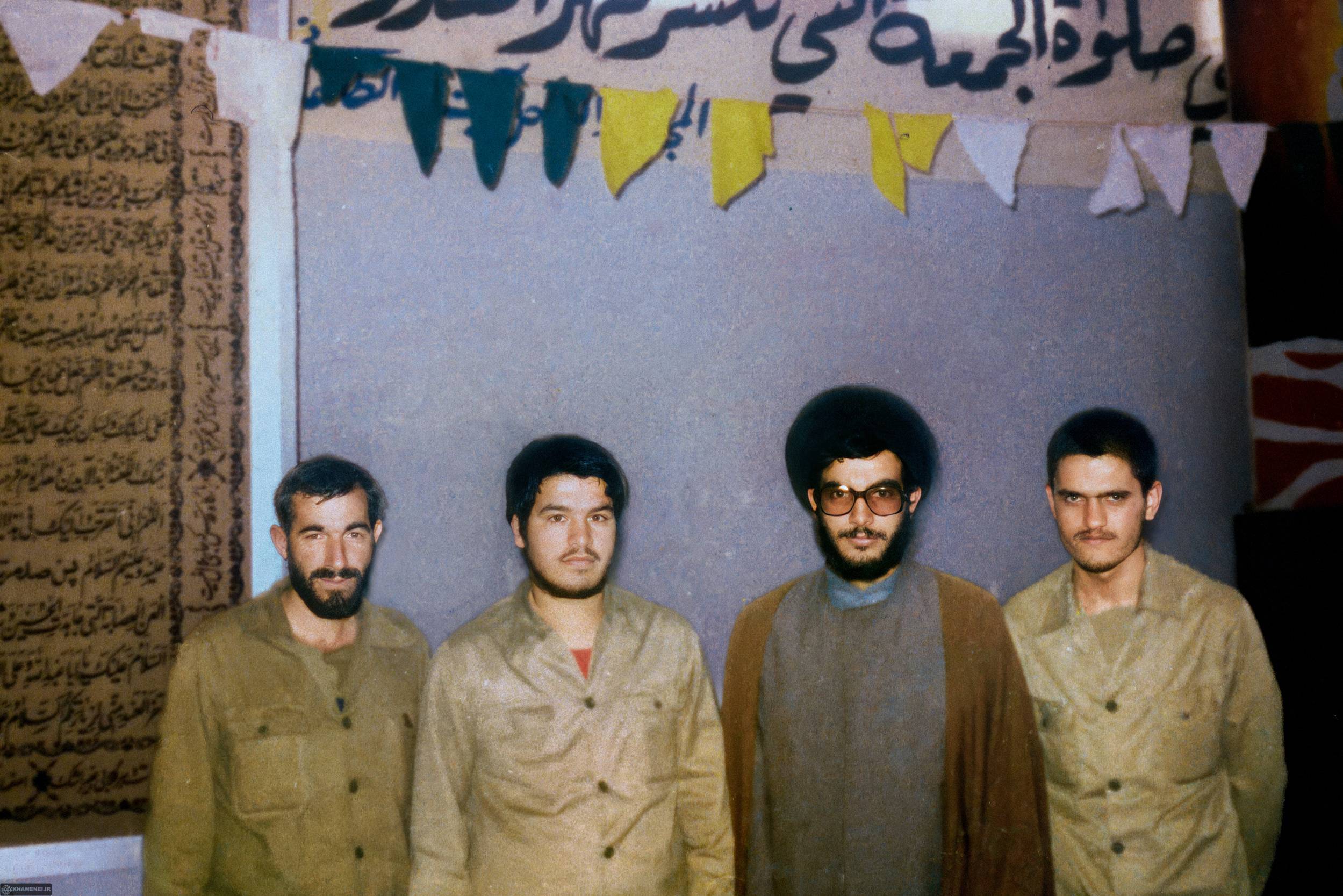
An undated photo of Nasrallah during his youth. (Iran supreme leader’s office)
The Syrian intervention dealt a devastating blow to the leftist resistance. Islamic resistance became the sole banner of armed struggle against Israel. Hezbollah reaped the benefits. In 2000, Israeli forces withdrew from southern Lebanon under fire and without extracting political concessions from Beirut. Iran now stood on Israel’s northern frontier through Hezbollah.
After the fall of Saddam Hussein, the road linking Tehran to Beirut through Baghdad and Damascus opened fully. What some called the “Axis of Resistance” and others the “Shiite Crescent” had taken shape.
At the beginning of the 1980s, many believed Saddam Hussein’s war had trapped the embers of Khomeini’s revolution within Iran’s borders. Then, in June 1982, an unexpected window opened.
Israel invaded Lebanon, besieged Beirut, and forced the Palestine Liberation Organization to leave the country. The image of Beirut bidding farewell to Yasser Arafat as he departed into another exile marked the end of an era.
Amid the invasion, George Hawi, Elias Atallah, Mohsen Ibrahim — the secretary-general of the Organization of Communist Action in Lebanon — and several comrades launched the Lebanese National Resistance Front against Israeli occupation. Their operations forced Israeli troops to withdraw quickly from Beirut.
At the same time, three Shiite Islamist groups inspired by Iran’s revolution entered discussions aimed at creating a unified resistance movement. The talks produced what became known as the “Document of the Nine,” which was taken to Tehran and received Khomeini’s blessing. He instructed the Revolutionary Guards to support the unity of these groups, which would eventually dissolve into Hezbollah.
Hezbollah’s current secretary-general, Naim Qassem, later recounted the organization’s founding in his book Hezbollah: The Method, the Experience, the Future. He identified the movement’s three pillars as Islam as a way of life, resistance to Israel as the highest priority, and allegiance to Wilayat al-Faqih as the ultimate reference point.
Hafez al-Assad often told visitors that the Iranian Revolution compensated for the strategic loss of Egypt. Those familiar with his thinking, however, suggest additional motives.
He was deeply hostile to Saddam Hussein. He also believed that Gulf Arab concerns about revolutionary Iran would make Syria indispensable to the Gulf states, bringing political and financial advantages. Allowing Hezbollah to grow in Lebanon fit neatly into that calculation.
Hezbollah was born under the mantle of the Wilayat al-Faqih and on the front line with Israel. It soon found itself on a front line with the United States as well.
In October 1983, a suicide bomber drove a truck packed with explosives into the US Marine barracks in Beirut, sending a convoy of coffins back to Ronald Reagan’s America.
Syria later played a crucial role in exempting Hezbollah from the disarmament provisions imposed on Lebanese militias after the Taif Agreement. Iran spared no effort in supporting the movement, enabling it to build a steadily expanding military and political force. Together, Tehran and Damascus also helped consolidate the Lebanese Shiite political order, bringing Hezbollah into partnership with the Amal Movement, led by Nabih Berri, who has served as speaker of parliament since 1992.
Old conflicts between Amal and Hezbollah gradually faded. Berri became a nearly permanent necessity for Hezbollah, helping shield it from political isolation, though never fundamentally altering its deeper ideological program.
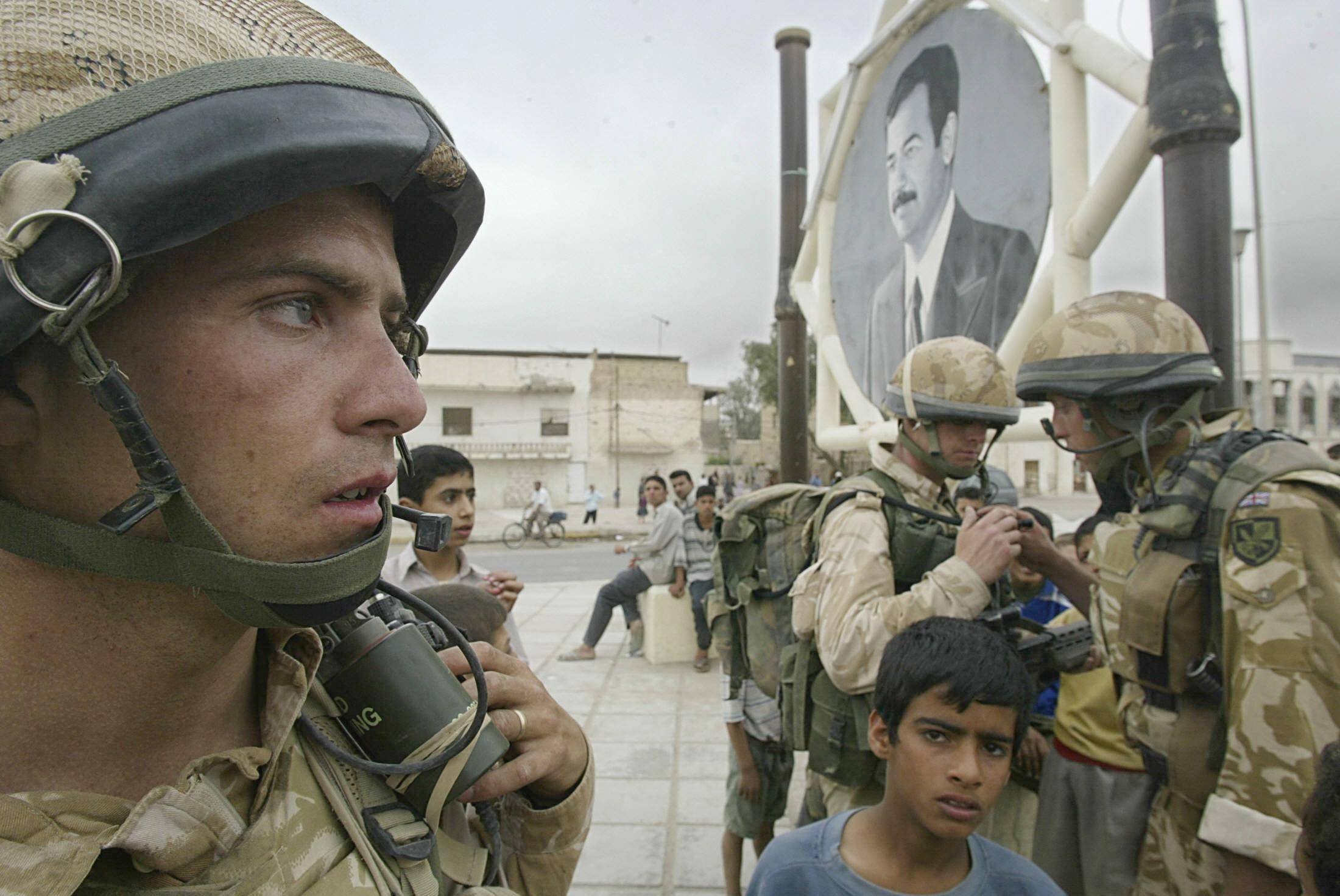
The first decade of the twenty-first century produced scenes whose consequences extended far beyond their immediate settings. On April 9, 2003, an American armored vehicle pulled down Saddam Hussein’s statue in Baghdad’s Firdos Square. The man whose statues inspired fear simply by their presence was denied the final showdown he had imagined. The army that had fought Iran for eight years evaporated before the American military machine.
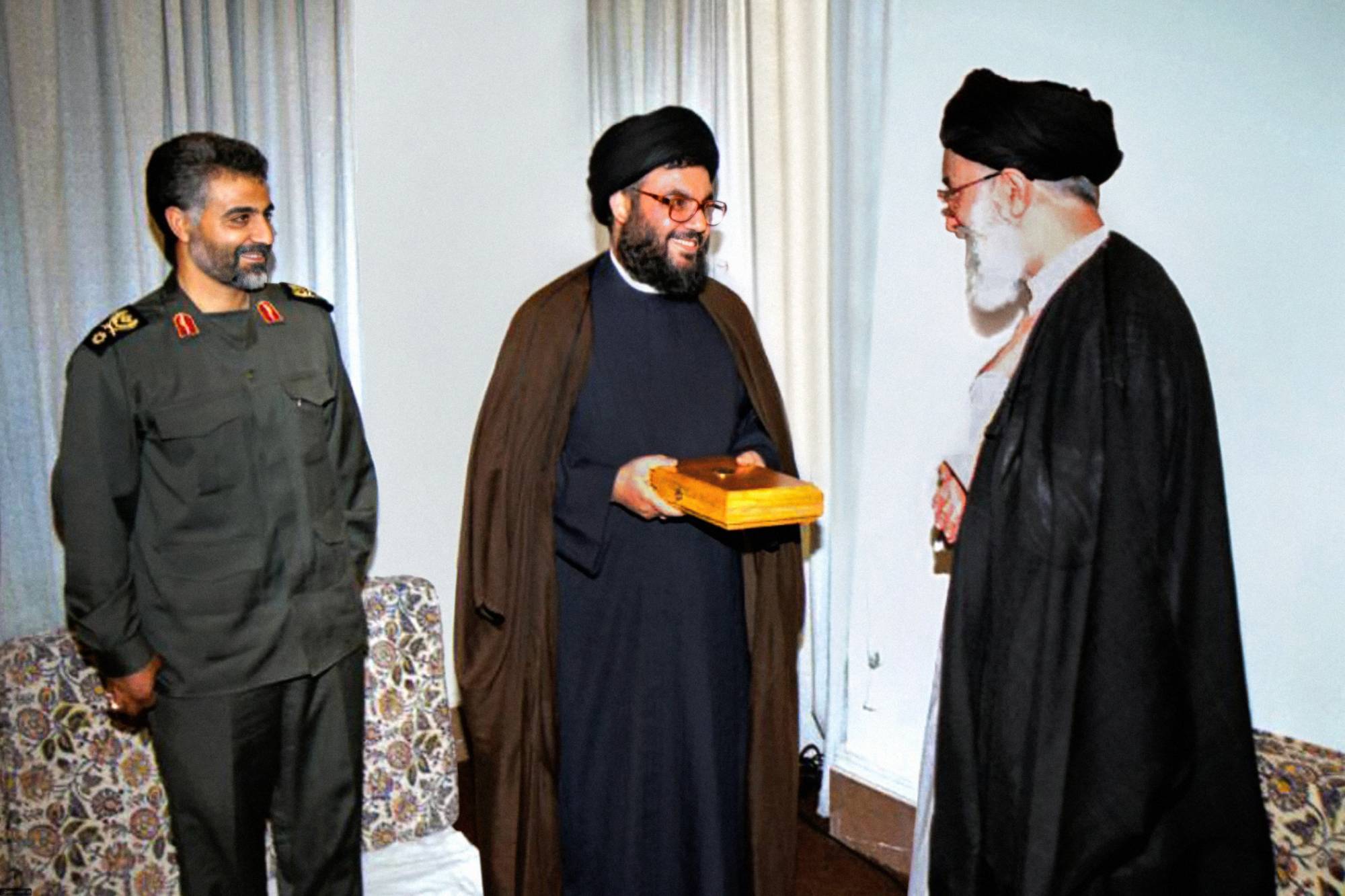
From left to right: Qasem Soleimani, Hassan Nasrallah and Ali Khamenei. (Iran supreme leader’s office)
Saddam was not far from Firdos Square when his statue fell. He chose resistance, badly misjudging both American power and the depth of Iraqi opposition to his rule.
Another defining image followed.
On December 13, 2003, Saddam was captured by US forces near Tikrit. Soldiers pulled him from a small underground hideout on a farm in al-Dawr. Television screens around the world carried the image of an American soldier inspecting the former Iraqi president’s mouth. He offered no resistance. Stories that he always carried a final bullet to avoid the humiliation of capture proved false.
Yet Saddam, obsessed with his place in history, succeeded in shaping part of his legacy. He denied the legitimacy of the court trying him and repeatedly insisted that he remained Iraq’s lawful president. Judge Raouf Rashid Abdel Rahman, who presided over the tribunal that sentenced Saddam to death, later told the author that “he was a difficult man, but he never asked for anything for himself.”
Saddam remained composed when the noose was placed around his neck.
The new Iraqi authorities made a grave mistake by scheduling the execution for December 30, 2006, the first day of Eid al-Adha. Another error followed. According to former Prime Minister Nouri al-Maliki, Saddam’s body was brought to his residence in Baghdad’s Green Zone after the execution, where Maliki briefly viewed it and reproached the dead man.
The images of Saddam’s capture, trial, and execution — combined with other factors — helped inflame Sunni-Shiite tensions inside Iraq and beyond. For many Iraqis, regardless of Saddam’s crimes, the execution appeared less like justice than revenge carried out on behalf of the United States, Iran, and Iraq’s pro-Iranian opposition.
Qassem Soleimani would soon devote himself to destabilizing the American military presence in Iraq, aided by Bashar al-Assad and Hassan Nasrallah.
Then another dramatic event emerged from Beirut.
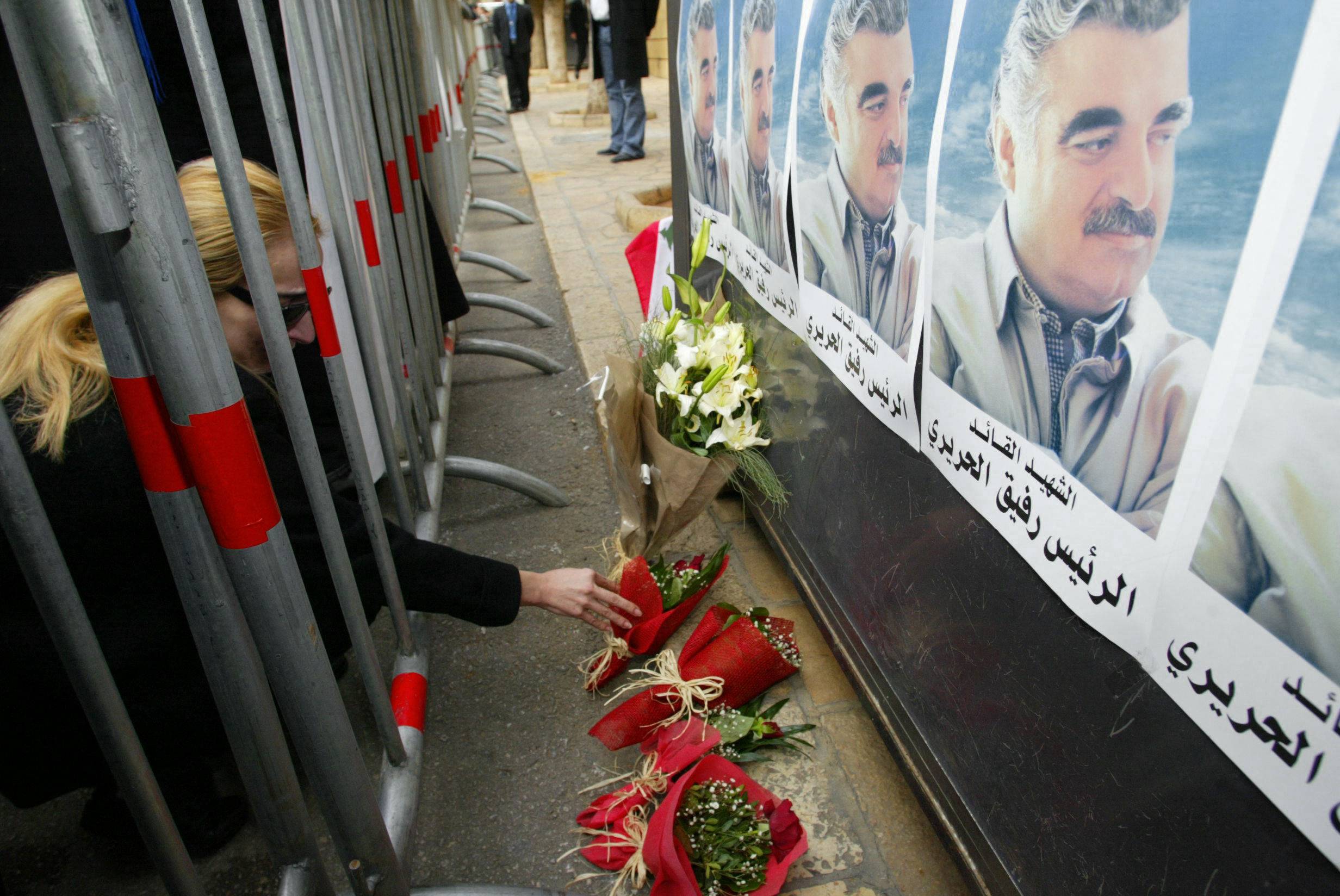
On February 14, 2005, former Lebanese Prime Minister Rafik Hariri was assassinated in a massive explosion that tore through Beirut and scattered his body across the scene. The murder shook Lebanon like an earthquake. Huge crowds poured into the streets demanding the withdrawal of Syrian troops, which had been stationed in Lebanon since 1976.
Later that month, the author met Bashar al-Assad in Damascus and repeatedly asked whether Syrian security services had been involved.
Assad categorically denied any connection.
“Not from near or far,” he insisted.
Yet questions multiplied. Had he spoken with such certainty because he knew who was responsible?
The international investigation wandered through years of political interference, misinformation, and false witnesses. Eventually, the Special Tribunal for Lebanon indicted members of Hezbollah.
British soldiers are seen in Iraq’s Basra on April 7, 2003. (AFP)
The case generated enduring questions. Was Hariri killed on the fault line between Sunnis and Shiites? Was he eliminated because of regional rivalries? Was he seen as an obstacle to a broader strategic project? Was he punished for trying to restore Lebanon as a normal state rather than leave it a missile platform in the conflict with Israel?
Hariri’s assassination transformed both Lebanon and Syria.
Bashar al-Assad was forced to swallow the bitter pill of withdrawing Syrian troops from Lebanon, a country his father had dominated for decades. Hafez al-Assad had bent much of Lebanon’s political class to his will and established the rules of the Syrian era. Governments bore the fingerprints of Syrian intelligence officers. Parliament was summoned and complied.
That era exiled General Michel Aoun and imprisoned Samir Geagea.
One major figure remained: Rafik Hariri. He had accepted operating under the Syrian umbrella but never abandoned his dream of rebuilding a functioning Lebanese state. His growing domestic, Arab, and international stature worried the narrow circle around Assad, and later worried Hezbollah as well.
Syria lost its Lebanese foothold, a platform that had amplified its influence and enriched many of its officers.
What followed was a Syria trapped within its own borders, relying on coercion and burdened by economic failure, while Lebanon became polarized between the March 14 movement and the March 8 alliance led by Hezbollah.
Many believe these developments helped set the stage for the July 2006 war between Hezbollah and Israel, a conflict in which Qasem Soleimani played an active role behind the scenes.
After the war, Bashar al-Assad openly emphasized the importance of Syria’s strategic depth for Hezbollah. He even acknowledged that Syrian soldiers in civilian clothing had transported missiles to the movement and sometimes all the way to southern Lebanon.
United Nations Security Council Resolution 1701 ended the war, deploying the Lebanese Army alongside UNIFIL forces in southern Lebanon. The conflict partially altered the political landscape created after Hariri’s assassination and gave Hezbollah another justification for retaining its arsenal.
Many Lebanese politicians fundamentally misunderstood Hezbollah and its weapons. They assumed that Israel’s withdrawal from Lebanon should have been enough for the movement to disarm, just as other militias had done after Taif. They overlooked the regional dimension of Hezbollah’s arsenal and its connection to Iran’s broader project.
In May 2008, Prime Minister Fouad Siniora’s government challenged Hezbollah’s private telecommunications network, declaring it illegal. The response was swift. Hezbollah turned its weapons inward and effectively seized control of Beirut, sending a clear message: the arsenal was here to stay.
The episode inflicted a deep wound on relations between Hezbollah’s community and many other Lebanese groups.
When the first spark of the Arab Spring erupted in Tunisia on December 17, 2010, Bashar al-Assad felt little concern. He believed Syria was different. More likely, his confidence reflected faith in a vast security apparatus whose brutality would deter dissent.
On March 15, 2011, Assad’s security services dealt with the children of Daraa according to that same doctrine of repression. Protests spread and became a nationwide uprising.
Assad showed little genuine interest in compromise. His generals viewed the revolt through the lens of minority insecurity and foreign conspiracy. The regime escalated from repression to barrel bombs and chemical weapons.
As opposition forces approached Assad’s presidential palace, two men rushed to his rescue: Qassem Soleimani and Hassan Nasrallah.
Iran had no intention of allowing Syria — the central link in its regional axis — to be torn away.
Rafik al-Hariri’s assassination was a turning point that allowed Iran to impose control over Lebanon. (AFP)
Soleimani persuaded Russian President Vladimir Putin to commit Russian air power to Assad’s defense. Hezbollah deployed fighters into Syria in 2013, while militias organized by Soleimani poured into the battlefield.
The regime survived. The cost was enormous.
The intervention deepened Sunni-Shiite wounds that remain visible today, not least in the rhetoric that dominates Syrian social media.
Years later in Paris, after defecting from Bashar al-Assad’s regime, former Syrian Vice President Abdul Halim Khaddam remarked that Hafez al-Assad could never have imagined Iranian influence in Lebanon growing to such an extent, or that his son would one day depend on pro-Iranian militias, including Hezbollah, to save his rule.
By then, Hezbollah was widely described as a regional force too large to fit within Lebanon’s political equation.
The author recalls a conversation with former Yemeni President Ali Abdullah Saleh before the end of the decade. In his characteristic style, Saleh asked: “Why is Hezbollah taking young Houthis to Damascus, sending them on to Lebanon without passport stamps, and training them in camps in the Bekaa Valley?”
The question hinted at a wider regional project already taking shape.
When Hezbollah launched its support front for “Sinwar’s Flood,” and later its support front for Iran itself, many Lebanese were reminded that their country had been living under the echo of Iranian power since the 1980s.
By the second decade of the twenty-first century, talk circulated within the so-called Resistance Axis of a coming “major blow” - a strike that many believed Yahya Sinwar dreamt of delivering through a rain of rockets and drones launched from multiple fronts across the region.
Trump’s ‘Crazy’ Rebuke Undercuts Netanyahu at a Critical Momenthttps://english.aawsat.com/features/5280695-trump%E2%80%99s-%E2%80%98crazy%E2%80%99-rebuke-undercuts-netanyahu-critical-moment
US President Donald Trump points his finger towards Israeli Prime Minister Benjamin Netanyahu as they shake hands during a press conference after meeting at Trump’s Mar-a-Lago club in Palm Beach, Florida, US, December 29, 2025. (Reuters)
TT
TT
Trump’s ‘Crazy’ Rebuke Undercuts Netanyahu at a Critical Moment
US President Donald Trump points his finger towards Israeli Prime Minister Benjamin Netanyahu as they shake hands during a press conference after meeting at Trump’s Mar-a-Lago club in Palm Beach, Florida, US, December 29, 2025. (Reuters)
Benjamin Netanyahu has long portrayed himself to the Israeli public as being uniquely adept in dealing with Donald Trump, capable of winning and sustaining the US president's backing.
But an acrimonious phone call this week where the president called the prime minister "[expletive] crazy", first leaked to the media and later publicly confirmed by Trump himself, laid bare the strains that have at times emerged between the two leaders.
Israeli officials, speaking on condition of anonymity, acknowledged the call was among the most heated the premier has had with Trump. One of the officials said the leak had damaged Netanyahu politically ahead of this year's national election.
The US website Axios broke news of the call on Monday, saying Trump had angrily confronted Netanyahu over Israeli threats to resume air strikes on Beirut's southern suburbs. "Everybody hates you now. Everybody hates Israel because of this," Trump was quoted as saying.
The US president told Netanyahu not to target Beirut after Iran had warned that Israeli strikes in Lebanon were undermining talks to end the war, which began with joint US-Israeli attacks and which is deeply unpopular among Americans.
US-ISRAEL DIFFERENCES 'NOW VERY PUBLIC', SAYS THINK-TANK HEAD
A senior Israeli official told Reuters that Netanyahu had made clear to Trump that any pause in Israeli plans to strike Beirut would only work if Hezbollah stopped hitting northern Israel. Trump was receptive to this position, the official said.
Following their call, Trump said Israel and Hezbollah had agreed to stop shooting each other, prompting accusations by Netanyahu's political opponents, and some within his own government, that he had ceded Israel's sovereignty to the US.
"A total protectorate," said opposition leader Yair Lapid, suggesting Netanyahu had put Israel in the position of an American client state.
Netanyahu, Israel's longest serving prime minister, has repeatedly clashed with Republican and Democratic administrations. Yet, Israel has remained Washington's closest Middle East ally.
Nimrod Goren, the president of Mitvim, an Israeli think tank, said "the differences are now very public", unlike in the past when they were usually quietly managed behind closed doors.
Trump told the New York Post on Wednesday that he was "a little bit perturbed" by Netanyahu constantly attacking Lebanon, but added: "We've worked very well together."
Trump's decision to join Israel in striking Iran, not once but twice in the space of a year, appeared to mark a major victory for Netanyahu, who had spent decades urging Washington to use its military power to halt Tehran's nuclear program.
But Trump has also taken a series of steps that many in Israel have viewed as cutting against the country's interests, including ending US strikes on Yemen's Iran-backed Houthis and ordering a halt to Israel's 12-day war with Iran in June 2025.
ISRAEL NOT DIRECTLY INVOLVED IN US-IRAN PEACE TALKS
And while the United States and Israel jointly launched the campaign against Iran in February, Israel has not been directly involved in the US-Iran talks to end the war. Those negotiations have been conducted through Pakistan, a rare intermediary that has no formal diplomatic ties with Israel.
The wars with Iran and Hezbollah have been widely popular in Israel, including among supporters of Netanyahu's political rivals, and much of the public wants the fighting to continue.
That stands in contrast to the US, where many voters, including members of Trump's conservative base, oppose the war.
Trump has repeatedly said that the US was close to an agreement with Iran on ending the war. Tehran insists any deal include Israel halting attacks on its ally Hezbollah in Lebanon.
"We are basically being forced to stop," said Israeli pollster Mitchell Barak. "We don't have a say in this anymore."
At the start of this year's war with Iran, Netanyahu said that the Iranian government would be toppled, and its nuclear and missile programs destroyed. He has also said that Hezbollah, which attacked Israel in March in support of Iran, must be disarmed in southern Lebanon. So far, none of these goals have been achieved.
Recent domestic polls have repeatedly shown that Netanyahu's coalition government, the most right-wing in the country's history, would fail to win a majority at the next election.
Netanyahu, Goren said, was working to accommodate Trump's demands because the Israeli premier will need the president's support closer to the elections, including a possible visit by the US leader to Israel. Before the war with Iran, Trump was widely expected in Israel to visit in April to be awarded the state's highest civilian honor. He last visited in October.
NOTION OF TRUMP-NETANYAHU RIFT OVERSTATED, EX-ADVISER SAYS
But some Israelis were not comfortable with the extent that Trump appears able to influence Israeli military decisions, Goren said. In contrast, in the US, some Trump critics say that Netanyahu has outsized influence on US foreign policy.
Itamar Ben-Gvir, Netanyahu's national security minister said on Thursday that there are times when an Israeli leader must know how to say "no" even to the US president.
Nadav Shtrauchler, a former Netanyahu adviser, said the Israeli premier was counting on Trump's support in the election.
"The way the war (with Iran and Hezbollah) will end will affect, more than anything, the result of the election."
Trump has often lavished public praise on Netanyahu and has publicly lobbied Israel's president to pardon the prime minister, who is on trial in Israel on corruption-related charges.
But Trump has also publicly emphasized how much, he says, Israel needs Washington, and has used expletives in the past when talking about Israel, including publicly saying last year that Israel and Iran "don't know what the [expletive] they are doing."
For his part, Netanyahu describes Trump as "the greatest friend Israel has ever had in the White House", offering the kind of public praise that resonates with the Republican president, who is known to prize personal loyalty and validation.
Since the US and Israel opened the war with Iran, Netanyahu has at times said that he speaks with Trump almost daily, often characterizing their relationship to the Israeli public as one between peers who make decisions together.
Asked about the call in an interview with CNBC on Wednesday, Netanyahu said that like in the "best of families" there at times had been "tactical disagreements" with the US president.
A US official told Reuters the phone call was one of several in which the president has been very direct with Netanyahu but that the two remain friends and close allies.
"Their conversations are pretty direct," the official said.
The official, and another Israeli source briefed on the US-Israel relationship, dismissed any suggestion of a material change in the relationship between Netanyahu and Trump.
However, the Israeli source acknowledged that the leak of the call - and Trump's subsequent confirmation of it - was not helpful to Netanyahu ahead of an election that he is polling to lose.
Shtrauchler, the former adviser to Netanyahu, said the perception of a rift with Trump was overstated and that the two leaders still appeared to remain aligned on most major issues.
But an abrupt end to the wars with Iran and Hezbollah, however, would pose a "huge problem": for Netanyahu, he said, as many Israelis would see it as Trump having forced his hand.
"No one wants here to feel like we are another star on the (US) flag. We want to feel independence," Shtrauchler said.
Mojtaba Khamenei: Iran’s New Supreme Leader Lurking in the Shadowshttps://english.aawsat.com/features/5280656-mojtaba-khamenei-iran%E2%80%99s-new-supreme-leader-lurking-shadows
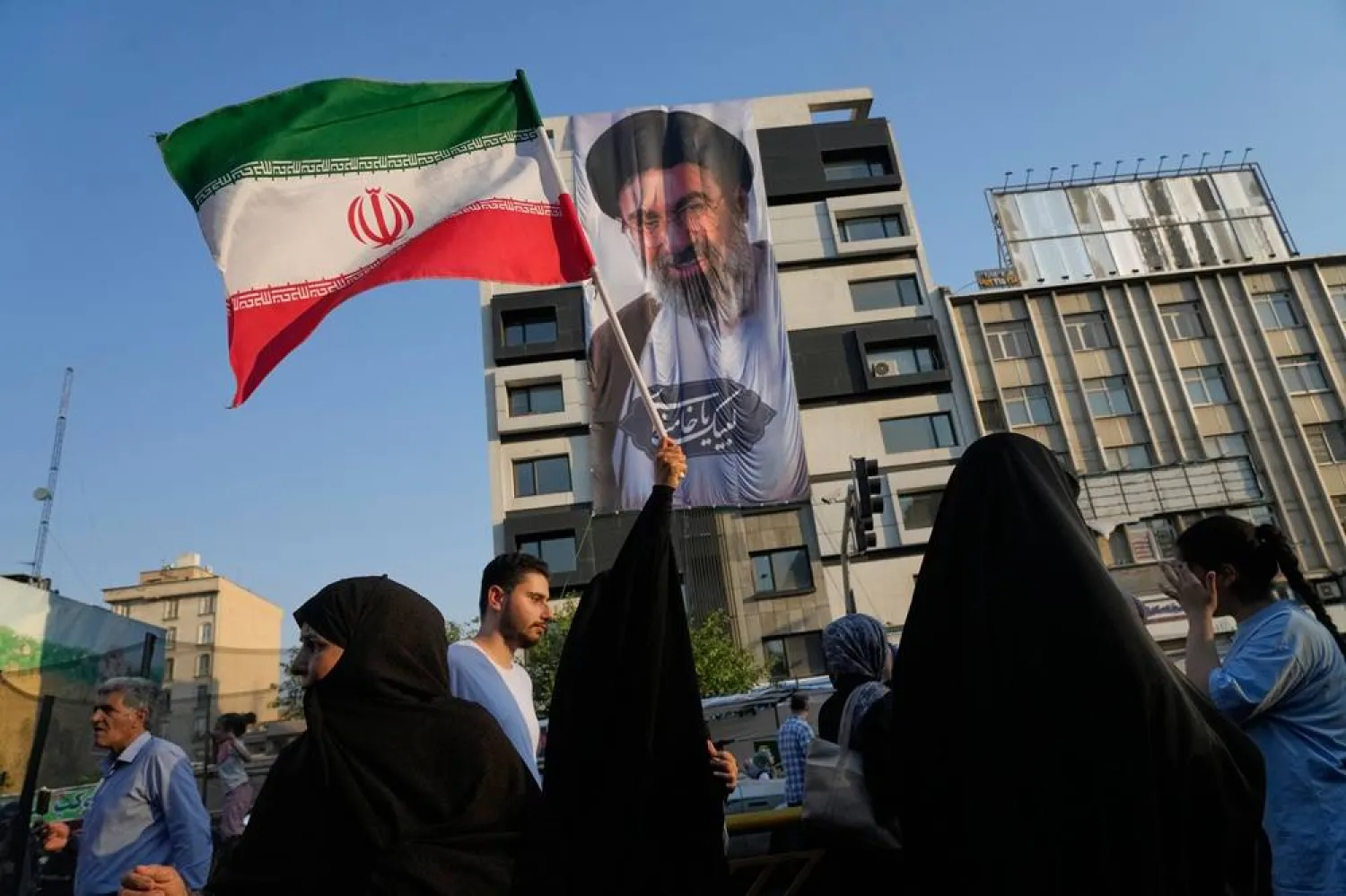
A woman holds up an Iranian flag in front of a banner showing a portrait of Supreme Leader Mojtaba Khamenei during a religious festival in Tehran, Iran, Thursday, June 4, 2026. (AP)
TT
TT
Mojtaba Khamenei: Iran’s New Supreme Leader Lurking in the Shadows
A woman holds up an Iranian flag in front of a banner showing a portrait of Supreme Leader Mojtaba Khamenei during a religious festival in Tehran, Iran, Thursday, June 4, 2026. (AP)
Iranian supreme leader Mojtaba Khamenei, appointed after a career entirely out of the spotlight as a behind-the-scenes figure, faces the challenge of occupying a role incarnated by his father for most of the regime’s existence.
Mojtaba Khamenei was barely known to Iranians when he was named shortly after the killing of his father and longstanding supreme leader, Ali Khamenei, who had been in the post-for-life since 1989, in a US-Israeli airstrike at the start of the Middle East war.
Unseen in public since being named and said to have been wounded in a US-Israeli strike, Mojtaba Khamenei has issued a dozen written messages as leader that have reprised the confrontational ideology of his father.
In a statement read out on Thursday taking aim at Israel and the United States, Mojtaba Khamenei said "the malicious enemy" was seeking to "plant the seeds of doubt, despair, fear, mistrust and division".
Unlike his father, a prominent opponent of the shah who was president in the first decade of the republic from 1981-1989 before becoming leader, Mojtaba Khamenei has until now held no government position.
But he was believed by observers to be the second-in-command at the office of the supreme leader under the longstanding chief gatekeeper Mohammad Golpayegani.
He is also seen as close to the leadership of the powerful Revolutionary Guards, a connection that may have proved crucial in his selection by the Assembly of Experts clerical body.
- Sanctioned by US -
One of the few official insights into the importance of Mojtaba Khamenei came in November 2019 when the US Treasury announced sanctions against him and other senior Iranian officials, including Golpayegani, on the grounds they were pushing Iran's "radical" agenda around the world.
It said he was designated for representing Ali Khamenei "in an official capacity despite never being elected or appointed to a government position aside from work in the office of his father".
It added: "The Supreme Leader has delegated a part of his leadership responsibilities to Mojtaba Khamenei."
It said Mojtaba Khamenei had "worked closely" with the commanders of the Quds Force -- the branch of the Revolutionary Guards ideological army responsible for operations outside Iran -- and the Basij militia "to advance his father's destabilizing regional ambitions and oppressive domestic objectives".
A sign of his potential behind-the-scenes sway came in 2005 presidential elections, when former parliament speaker Mehdi Karroubi wrote a letter to the supreme leader complaining that Mojtaba Khamenei had been intervening on behalf of his ultra-conservative rival Mahmoud Ahmadinejad.
Ahmadinejad went on to cause a sensation by defeating former president Hashemi Rafsanjani. Mojtaba was again seen by some commentators as coordinating the crackdown on protests that followed Ahmadinejad's disputed 2009 election victory.
Leaked US diplomatic cables published by Wikileaks said in 2011 that Mojtaba was "seen by many second only to Golpayegani within the office of the supreme leader".
According to an investigation by Bloomberg, which cited anonymous sources and Western intelligence agency reports, Mojtaba Khamenei has amassed wealth estimated at more than $100 million.
It reported he has earned money from oil sales channeled into investments in luxury British real estate, hotels in Europe and property in Dubai through shell companies in tax havens.
Born in his father's home city of Mashhad in northeastern Iran, Mojtaba Khamenei studied theology in the clerical hub of Qom where he also taught.
Mojtaba Khamenei's wife, Zahra Haddad Adel, the daughter of former parliament speaker Gholam Ali Haddad Adel, died in the US-Israeli strikes that killed ex-supreme leader Khamenei, according to the Iranian authorities.
لم تشترك بعد
انشئ حساباً خاصاً بك لتحصل على أخبار مخصصة لك ولتتمتع بخاصية حفظ المقالات وتتلقى نشراتنا البريدية المتنوعة