Iraq Opens Arms to Lebanese Fleeing Israeli Attacks
Displaced Lebanese people who fled Israeli bombardment in their country to find shelter shop at a market in al-Qassem town in Iraq's central Babylon province on October 20, 2024. (AFP)
TT
TT
Iraq Opens Arms to Lebanese Fleeing Israeli Attacks
Displaced Lebanese people who fled Israeli bombardment in their country to find shelter shop at a market in al-Qassem town in Iraq's central Babylon province on October 20, 2024. (AFP)
Israeli bombardment of Lebanon forced Mohammed Fawaz and his family to flee so often that they finally moved many kilometers (miles) away to find respite in central Iraq.
"Wherever we went, danger followed," the 62-year-old white-haired Lebanese man told AFP in the small town of Al-Qassem, sitting with his wife and daughter.
"That's when I thought of Iraq. It was the only way I could see to escape the danger after we saw death with our own eyes."
Opposite the small house where they now live, beyond a road busy with traffic, tall palm trees emblematic of Iraq's Babylon province stretch as far as the eye can see.
According to the United Nations refugee agency UNHCR, more than 19,200 Lebanese have arrived in Iraq since the escalation of hostilities in Lebanon.
The Baghdad government and Shiite religious authorities mobilized quickly to cope with the influx.
So did the Popular Mobilization Forces, an alliance of pro-Iran former paramilitary groups now integrated into Iraq's security forces.
Everyone turned out to welcome the refugees, helping them get to Iraq and also arranging accommodation.
The solidarity has highlighted the close ties between the Shiite communities of both countries.
Iraq had always welcomed Lebanese pilgrims visiting its famous Shiite shrines at Karbala and Najaf.
But now the Baghdad government, in which pro-Iran parties dominate, is also willing to signal it stands staunchly by Lebanon in the wake of daily Israeli attacks on Hezbollah strongholds there.
Fawaz is originally from south Lebanon, and moved to the southern suburbs of Beirut before later moving again to the outskirts of the capital.
- 'Invited guests' -
"We fled from place to place," the father of four said, bursting into tears when he spoke of relatives back in Lebanon.
"My displaced brothers now live in schools in different areas."
His journey to Iraq included a coach trip across Syria.
After a stopover in the Sayyida Zeinab area south of Damascus, home to a Shiite shrine protected by pro-Iran groups, their entry to Iraq was coordinated by the PMF.
Fawaz hailed what he called "the best welcome" and Iraqi generosity, especially from his host, one of many Al-Qassem residents who have opened their doors to Lebanese refugees.
He praised Iraq's government for "treating us like invited guests, not refugees".
The war in Lebanon has displaced at least 1.3 million people, according to the UN migration agency, and more than half a million have fled into neighboring Syria.
Those who opted to stay often find themselves in makeshift and under-equipped shelters set up in schools.
In other areas, their presence can sometimes provoke unease or mistrust.
Iraq has made things easier for the new arrivals by extending visas. Those with no passports are helped out with new travel documents, in coordination with the Lebanese embassy.
The UNHCR says that some 62 percent of the Lebanese arrivals are women and children, and that the children will be able to attend Iraqi schools.
Nearly half of the arrivals are being housed in Najaf and also Karbala.
The religious authorities have taken over hotels previously reserved for pilgrims.
- 'No alternative' -
Jalal Assi, who is in his forties, is now in Karbala.
"We had no alternative, and decided to come to Iraq," he told AFP, citing the "facilities offered to Lebanese".
"We hope the situation will get better and security will be restored so we can go home," he added.
Neemat Mussa, 44, originally from the south Lebanese village of Hariss, is now living in the Babylon provincial capital Hilla.
She and her husband, their two daughters and an aunt are staying in a house owned by an Iraqi police officer.
When she does the family shopping she is driven there accompanied by a local benefactor who also foots the bill.
"We chose Iraq because it's a safe place where we are not afraid," she said in a tired voice. It is her first time in the country, although her husband came previously on pilgrimage.
The warmth of Iraq's welcome cannot mask the bitterness of exile.
Mussa has lost her cousin and sister-in-law in the war, and she follows the news intently on her phone.
She weeps when she talks of their loss and of the country to which she longs to return.
"I'm in a comfortable home, and the Iraqis make sure we lack for nothing," she said, adding: "When I got sick, they took me to hospital."
"But I miss my house and my own country, my neighbors and my family. That's my real home."
A Grieving Father Buries His 6-Year-Old After a Land Mine Kills 3 Children in Syria’s Idlibhttps://english.aawsat.com/features/5276200-grieving-father-buries-his-6-year-old-after-land-mine-kills-3-children-syria%E2%80%99s
Idris Al-Ridah, center, weeps as he prays during the funeral of his son Mohammed, who was killed in an explosion caused by war remnants while playing with other children in the village of Abu Habbah in eastern Idlib countryside, in Abu Habbah, Syria, Thursday, May 21, 2026. (AP)
TT
TT
A Grieving Father Buries His 6-Year-Old After a Land Mine Kills 3 Children in Syria’s Idlib
Idris Al-Ridah, center, weeps as he prays during the funeral of his son Mohammed, who was killed in an explosion caused by war remnants while playing with other children in the village of Abu Habbah in eastern Idlib countryside, in Abu Habbah, Syria, Thursday, May 21, 2026. (AP)
Idris al-Ridah wept as he carried the lifeless body of his 6-year-old son Amir, wrapped in a yellow and brown blanket, in northwest Syria.
The father collapsed to the ground as he laid his son to rest, his small body lowered into a grave next to two other young children who were siblings, Aya al-Fankih, 4, and Rayan al-Fankih, 6.
The three children were killed on Thursday in the village of Abu Habbah, in the countryside in the northwestern province of Idlib, when a land mine left behind from Syria's war exploded while they were playing near a well.
The deaths are the latest reminder of the dangers posed by unexploded war remnants scattered across the country years after the conflict began.
Mines and booby traps have killed and maimed hundreds of Syrians since Syria’s conflict began in March 2011, leaving about half a million people dead.
The Syrian Civil Defense said four other children who were near the well were also wounded in the blast.
"We heard a very loud explosion next to our house,” one resident, Mahmoud al-Aleiwi. He added that “when we got to the location there were a number of children’s bodies thrown around the well.”
He said one of the children was thrown 300 meters (984 feet) away by the explosion and was found on the roof of a house.
At a nearby hospital, wounded children cried as family members tended to them. One child had shrapnel wounds across his face and body, his legs wrapped in bandages. Another lay in bed with blood visible through bandages wrapped around his head.
Ten-year-old Ibrahim al-Suwadi was injured last month in a separate explosion caused by unexploded ordnance inside a damaged school in the town of al-Habit in Idlib’s southern countryside.
Sitting beside his father inside their home, al-Suwadi described how he was playing with his friends at the school when they went inside a room and found the mine.
“Two brothers picked it up and took it to the bathroom,” the boy said. “We thought it was an exploded mine so we started throwing rocks at it. All of a sudden, an older boy grabbed my hand and we ran, the mine exploded and I lost consciousness then I don’t remember anything.”
His father said the family had fled their village in 2013 during fighting and spent years living in displacement camps before returning after the fall of Bashar Assad’s government in December 2024.
Humanitarian organizations say unexploded ordnance remains one of the deadliest legacies of Syria’s war.
“Syria has ranked among the top contaminated countries around the world over the past years,” said Jakub Valenta, head of humanitarian disarmament and peace building for the Danish Refugee Council in Syria. He added that according to the data from the United Nations, around 14.3 million people are in danger of explosive ordnance in the country.
Valenta said the explosive hazards include anti-personnel mines, anti-tank mines and other unexploded devices left behind in residential and agricultural areas.
“We’re estimating that around 1,200 people and probably more have been affected by explosive ordnance accidents directly,” he said. “Out of those 1,200 people there were around 740 fatal casualties. The vast majority of these people are men and children.”
According to the Danish Refugee Council, around 60% of contaminated areas in Syria are agricultural lands, complicating efforts by displaced families to return home and rebuild livelihoods.
In Damascus’ southern suburb of Kisweh earlier this month, Syrian trainees working with Danish Refugee Council teams carefully removed and destroyed unexploded ordnance during training exercises aimed at expanding local demining capacity.
The organization says it has recruited and trained new Syrian explosive ordnance disposal teams to help clear contaminated areas and educate communities about the risks.
“The number of the casualties is among the highest worldwide in terms of explosive accidents and victims,” Valenta said.
“These people suffer lifelong injuries, physical like losing a limb or their vision and suffer mental health problems," he said. “These people also lose their jobs and livelihoods."
Archives Interrupted: Vintage Pics Show Gaza 'We No Longer Know'https://english.aawsat.com/features/5276156-archives-interrupted-vintage-pics-show-gaza-we-no-longer-know
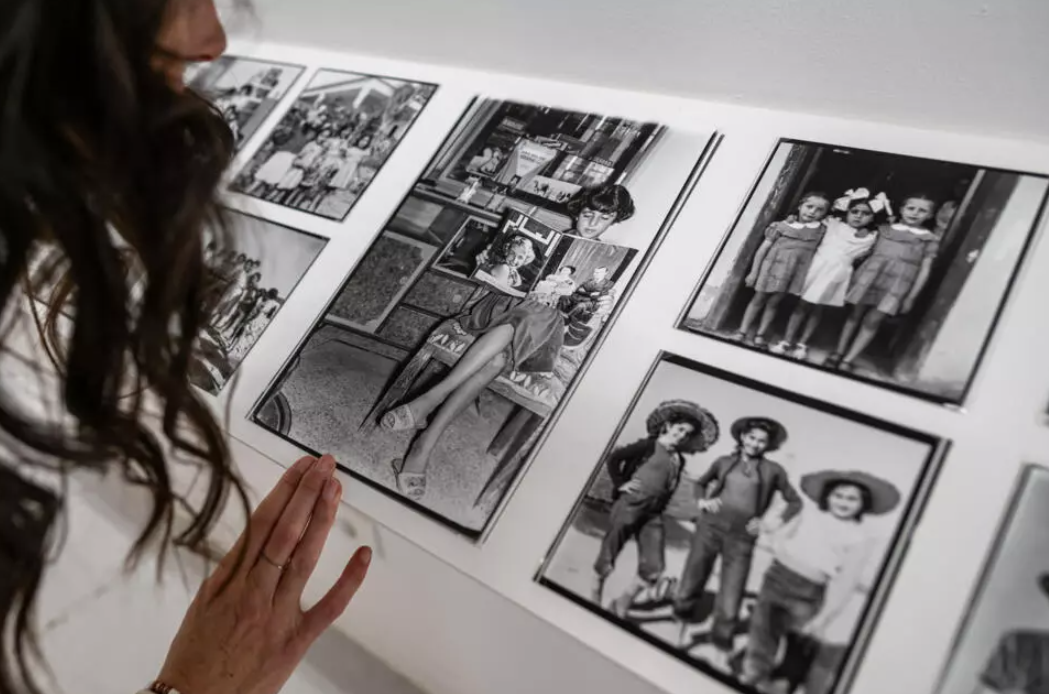
When Kegham Djeghalian photographed daily life in Gaza last century, the Palestinian territory was synonymous with Hollywood-inspired brides, fancy dress parties and excursions to smoke a hookah at the beach.
They are images from a time far removed from the rubble and tent cities of the now war-ravaged Gaza Strip.
"It's a Gaza we no longer know. A joyful Gaza, one full of hope, connected to the world, with trains and an airport," said his grandson, who has curated a show of his work in France's southern city of Marseille.
Djeghalian survived the Armenian genocide of 1915 -- a term strongly denied by Türkiye -- then settled in Gaza, opening the city's first ever photo studio in 1944.
He refused to leave, despite the recurring conflicts hitting the small territory wedged between Egypt and what became Israel in 1948, spending four decades capturing images of the Palestinian society that had adopted him, up until his death in 1981.
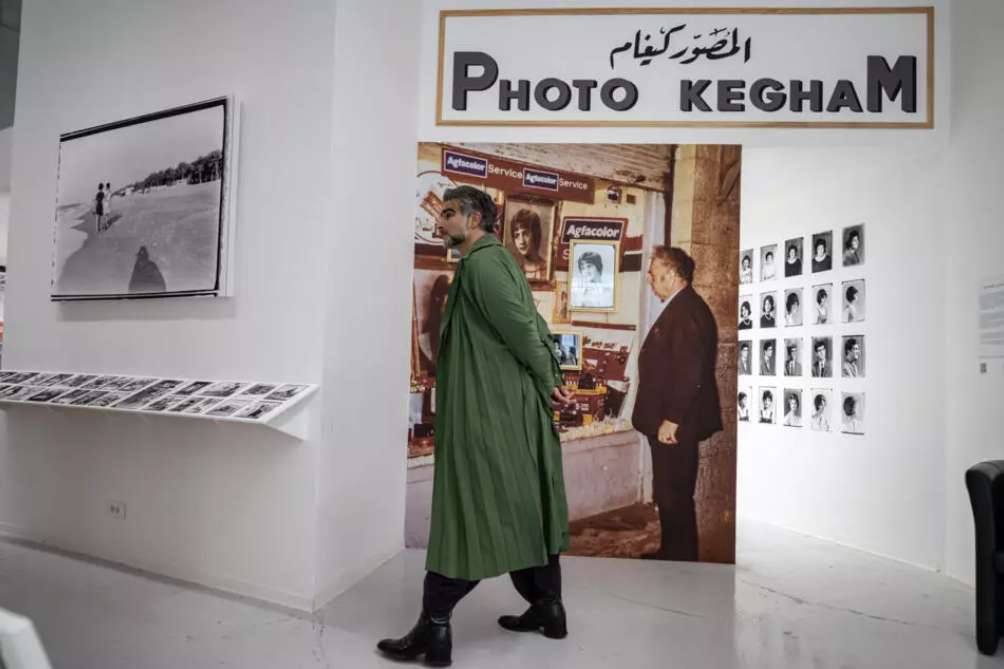
Some 300 of his surviving photographs are on show in Marseille until September.
In one image, children have clambered onto each other to form a human pyramid in the courtyard of a school for Palestinian refugees displaced after the creation of Israel.
In another, women with voluminous hair blowouts pose smiling next to a sewing machine.
In a third, French philosophers Jean-Paul Sartre and Simone de Beauvoir have just stepped off a small propeller plane.
The photograph has no caption, but the pair visited the Gaza Strip in March 1967 shortly before Israel seized the coastal territory in the Six-Day war.
"I grew up with family stories about Kegham, the Gazan photographer who survived the Armenian genocide," the curator, who inherited the same name as his grandfather and calls himself Kegham Jr, told AFP.
The 41-year-old professor of visual culture, who spent part of his childhood in Egypt, says his father discovered over 1,000 photo negatives "by chance" in 2018 in three red boxes at the back of a cupboard in the family's Cairo apartment.
They included studio portraits and family photos, images of children on balconies and at the beach, and crowds in the streets.
"We see a diverse society: Armenians, Greeks, Palestinians, Bedouins. But also those displaced in 1948," said Kegham Jr.
Today two-thirds of Gaza's population are descendants of Palestinian refugees, according to the United Nations.
Kegham Jr said he did not want any captions or context to the pictures in the exhibition titled "Photo Kegham of Gaza: Unboxing", which is to travel to Bristol in the United Kingdom in October.
The "interrupted and unfinished" archives thus illustrate "a rupture of histories, shattered by war, by genocide, by occupation", he said.
Kegham Jr was unable to visit Gaza, with the territory under blockade since Hamas seized control in 2007, and then a devastating war ravaging the territory after the Palestinian Islamist militant group attacked Israel in October 2023.
To complete his photo collections, the grandson reached out to a Palestinian called Marwan al-Tarazi who held part of the archives after his brother inherited the studio.
A part of the exhibition dubbed "Zoom call" shows screenshots of their conversation in 2021.
The collaboration was interrupted when, in October 2023, Israeli strikes killed Tarazi, his wife and grandchild, he said.
In front of the images at the Marseille Photography Centre, Houri Varjabedian, a 70-year-old Marseille resident hailing from an Armenian family in Lebanon, said it felt like looking into a family album.
Her maternal grandfather, a dentist in the Ottoman army, had himself been photographed in Gaza, she said.
She said it was heartbreaking to see "those wonderful palm trees, that beach".
"It's a bit terrible given the current events," she added.
Petraeus Hands Washington 'Executive Plan' to Disarm Iraq's Armed Factionshttps://english.aawsat.com/features/5275874-petraeus-hands-washington-executive-plan-disarm-iraqs-armed-factions
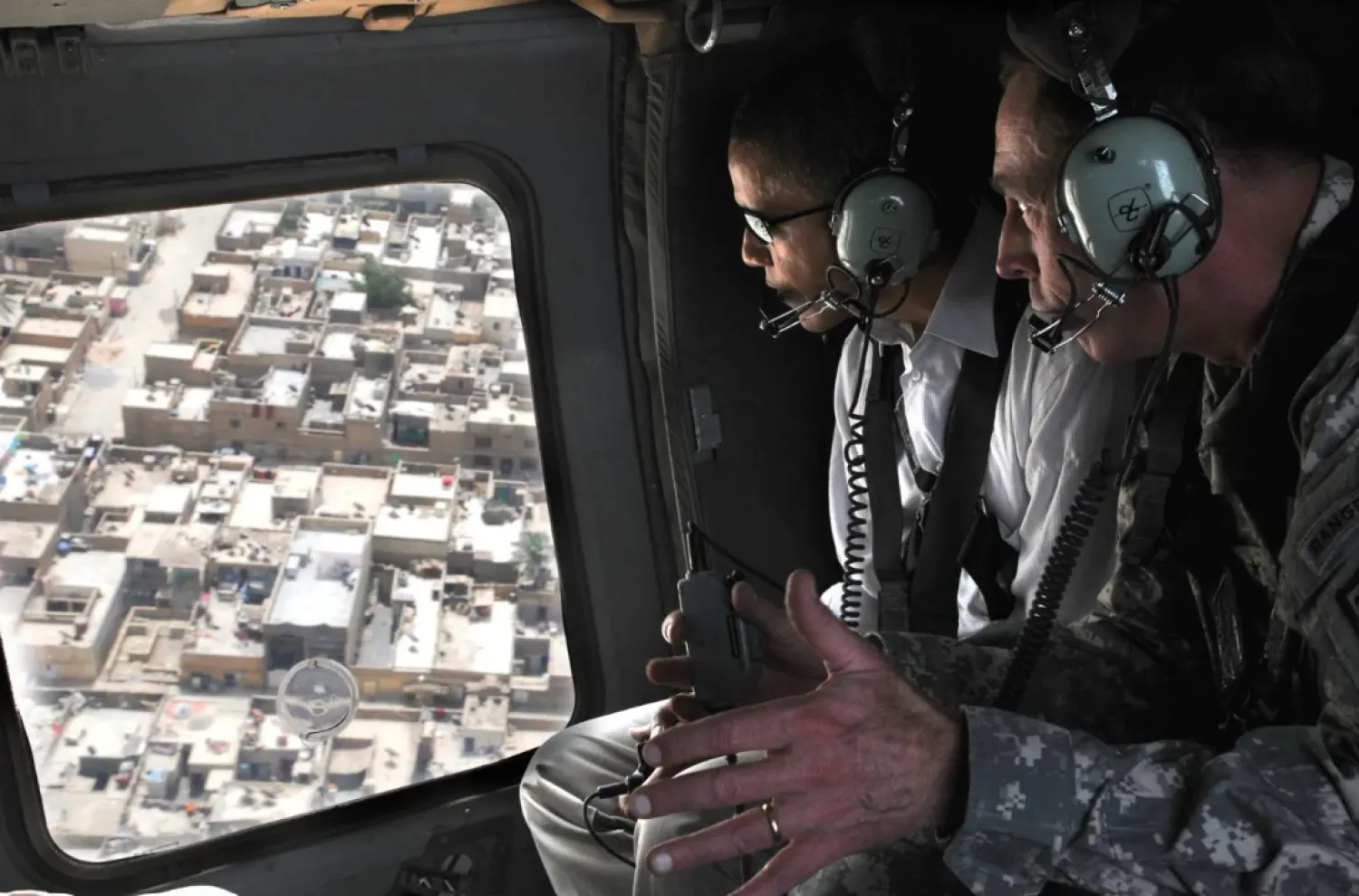
A 2008 photo released by the Pentagon shows David Petraeus briefing Barack Obama, then a US senator, on a plan to secure Sadr City in eastern Baghdad during an aerial tour over the area.
Petraeus Hands Washington 'Executive Plan' to Disarm Iraq's Armed Factions
A 2008 photo released by the Pentagon shows David Petraeus briefing Barack Obama, then a US senator, on a plan to secure Sadr City in eastern Baghdad during an aerial tour over the area.
Iraqi officials said the United States has conditioned the integration of the Popular Mobilization Forces (PMF) on disarming armed factions, sidelining their leaders, and appointing professional officers to oversee the PMF’s infrastructure, a step Washington says is necessary because the force remains a major obstacle to restoring normal relations with Baghdad.
But Shiite groups said implementing the “bold plan,” which remains under discussion, would place Prime Minister Ali al-Zaidi’s government in an unequal confrontation with Iran and the factions linked to it, amid a lack of guarantees, warning of “internal divisions and unrest.”
What did Petraeus do in Baghdad?
The information disclosed by officials involved in technical and political discussions on the future of the PMF coincided with a visit by retired US General David Petraeus to Baghdad last week in his capacity as an “independent expert” providing advisory services to the White House.
After leaving Baghdad, Petraeus wrote on LinkedIn on May 17, 2026, that Iraqi officials he met “recognized the importance of ensuring that the Iraqi Security Services have a monopoly on the use of force in Iraq.” He added that he left Iraq “encouraged by what I heard, while also realistic about the dynamics with Iran.”
Asharq Al-Awsat learned that Petraeus spent five days in Baghdad, where he met senior Iraqi officials. The fate of PMF fighters was at the center of “serious discussions,” according to sources.
A US State Department spokesperson told Asharq Al-Awsat that Petraeus visited Baghdad as “a private citizen, nothing more.”
However, the level of meetings he held there, including with Iraq’s Chief Justice Faiq Zidan, Prime Minister Ali al-Zaidi, Parliament Speaker Haibat al-Halbousi, and Counter Terrorism Service chief Staff Lieutenant General Karim al-Tamimi, went beyond the nature of a personal visit.
An informed Iraqi source told Asharq Al-Awsat that “Petraeus’s meetings revolved around a single objective: reforming the military institution and ending the current PMF structure, while discussing realistic and practical mechanisms for integrating its members into the security institutions.”
Petraeus is among the most prominent commanders associated with the Iraq war after 2003. He gained experience through a range of field and strategic roles, most notably commanding the 101st Airborne Division during the invasion that toppled Saddam Hussein’s regime.
Petraeus now serves as partner and chief operating officer at KKR, a global investment management firm. Information available on the company’s website indicates that its activities are expanding across Middle Eastern countries, with no reference to Iraq.
KKR did not respond to Asharq Al-Awsat’s requests for comment on the nature of Petraeus’s visit to Baghdad or whether the White House had assigned him an advisory mission there.
However, three government and political figures told Asharq Al-Awsat that the US general “has been tasked with drafting an actionable executive paper to be submitted to the White House at a later stage through US envoy to Syria Tom Barrack.”
People close to the new prime minister in Baghdad told Asharq Al-Awsat that “Ali al-Zaidi will discuss this sensitive issue with US President Donald Trump if a planned visit to the White House takes place.”
An Iraqi official who declined to be identified said that “the preliminary date could be set after Eid al-Adha in June,” noting that “the timing could be affected by the course of negotiations between Washington and Tehran.”
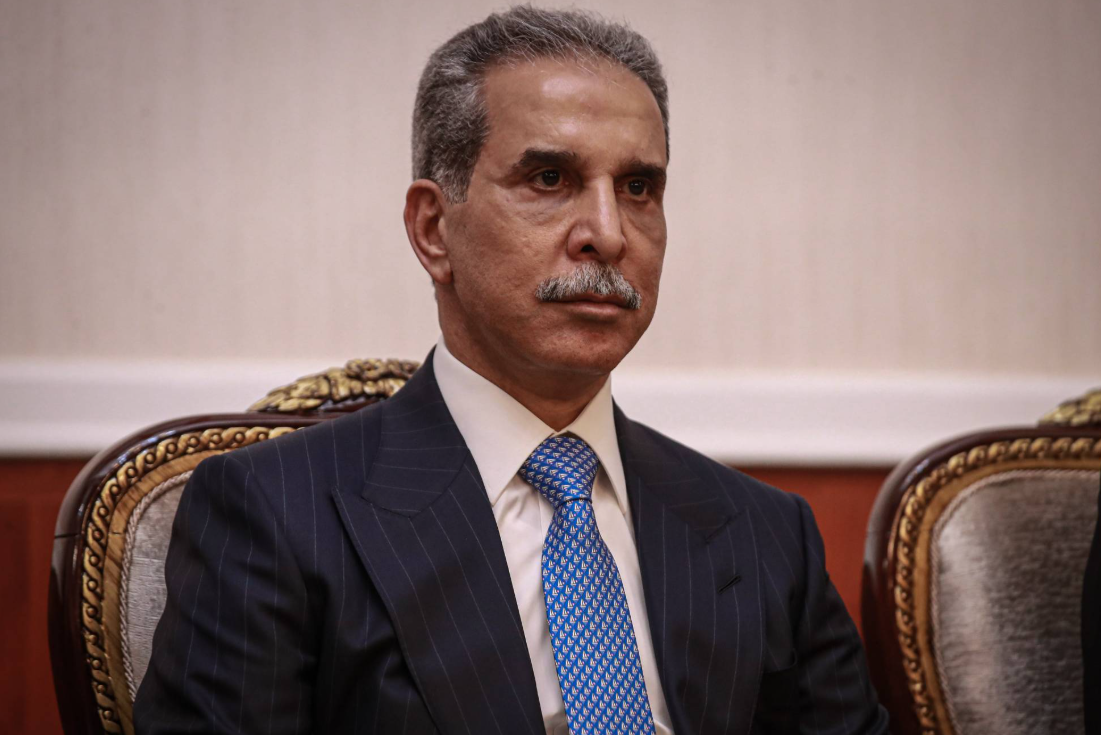
General David Petraeus began his visit to Baghdad with a meeting with Iraq’s Chief Justice, Faiq Zidan (DPA).
“A Danger That Could Blow Up in Your Face”
A person familiar with the discussions held during Petraeus’s meetings said that “some Iraqi officials spoke to the US general as though they were speaking directly to President Trump. They displayed unusual candor about their concerns over the potential consequences of plans for the Popular Mobilization Forces that remain largely theoretical at this stage.”
Another source said that “the US general listened more than he spoke during his meetings with Iraqi officials, but he was clear about what Washington wants: eliminating the source of the regional threat.” Nevertheless, “the general left Baghdad without complete confidence in Baghdad’s ability to resolve the problem in line with the US vision.”
Two Western diplomats, who spoke to Asharq Al-Awsat on condition of anonymity, said that “US confidence declined sharply during the final months of Sudani’s government because of what was viewed as leniency toward attacks by armed factions during the war. The current prime minister may now pay the price when he is asked to provide stronger security and political guarantees regarding the enforcement of state sovereignty.”
As attacks on Gulf states continued, and with the United States accusing the previous Iraqi government of providing official cover for these groups, the Popular Mobilization Forces and the armed factions associated with them have become “a knot that is difficult to untangle.” An Iraqi official said the issue is “a danger that must be dealt with, but when you get close to it, it could blow up in your face.”
Washington hopes that the new prime minister, Ali al-Zaidi, a businessman whose commercial activities are rumored to have prospered under the shadow of politics, will be able to distance his government from Iranian influence. It sees the issue of weapons outside state control as a test of whether trust can be maintained and support resumed, but the task will not be easy, according to a person close to him.
A person familiar with political consultations concerning the Popular Mobilization Forces said that “Petraeus did not answer questions raised by Iraqi officials about whether there would be sufficient backing to confront Iran if the Popular Mobilization Forces were dissolved.”
Shiite forces are pushing to refer the future of the Popular Mobilization Forces to parliament for discussion rather than addressing it under US pressure (AP).
Baghdad ‘Buys Time’
For Shiite leaders in Iraq, the Popular Mobilization Forces (PMF) are “a matter of destiny” and “a red line that cannot be crossed,” according to officials close to the factions. But the organization has become caught in intense regional polarization since the events of Oct. 7, 2023, and has been directly involved in the recent conflict between the United States and Iran.
Figures close to the armed factions have appeared on television warning of “retaliation against any government or political official who participates in a project to integrate or dissolve the PMF.”
A leader of an armed faction told Asharq Al-Awsat that “Iran recently urged them to resist the US effort aimed at dismantling the largest military force safeguarding its interests in the region.”
He added: “Generals from the Revolutionary Guards who play supervisory roles within Shiite factions, including those who run the Islamic Resistance in Iraq operations room, will put obstacles in the way if moves are made toward dissolving the PMF.”
According to an Iraqi lawmaker close to Kataib Hezbollah, the PMF is an institution operating under a law passed by the Iraqi parliament in 2016, and dissolving it would now require a parliamentary vote.
Shiite armed groups maintain influential political wings in the Iraqi parliament. Estimates suggest they hold around 80 seats, while the ruling Shiite alliance, the Coordination Framework, enjoys a comfortable majority of about 180 seats in the 329-member legislature, giving it substantial influence over the legislative process.
Two members of the Coordination Framework told Asharq Al-Awsat that “most leaders of the Shiite alliance informed the prime minister that they agree on the risks posed by the factions, but resolving the issue requires national dialogue and an incentives plan as part of a broader strategy involving the religious authority in Najaf, given the sensitivity of the political and security balances associated with it.”
A Western adviser working in Iraq told Asharq Al-Awsat that “Washington has come to view such ideas as attempts to buy time, and warnings about the risks of dissolving the PMF are being used as a form of counterpressure against the United States.”
An Iraqi official also said that “US officials who held discussions with local officials before Petraeus’s talks in Baghdad made it clear that overlooking the PMF issue carries an extremely high cost.”
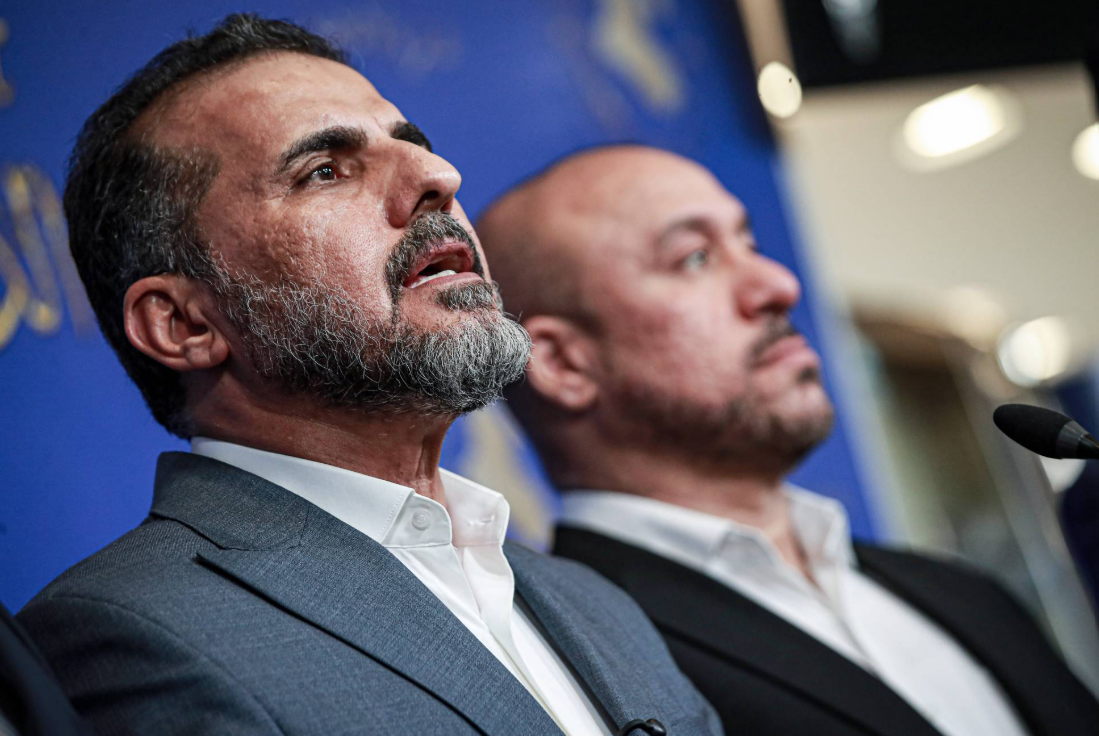
Hussein Mounes (left), head of the Huqooq Movement affiliated with Kataib Hezbollah, speaks to journalists in Baghdad on May 14, 2026, to announce his opposition to Ali al-Zaidi’s government (DPA).
“Fell on Deaf Ears”
On that basis, according to sources, the United States dismissed Iraqi proposals it viewed as cosmetic measures to integrate the Popular Mobilization Forces (PMF), restructure the organization, or change its leadership.
The Iraqi government, in its program approved by parliament, pledged to “define the responsibilities of the PMF within the military and security system.”
Al-Zaidi’s office declined to answer Asharq Al-Awsat’s questions about how the government intends to implement its program regarding the PMF and whether it has participated with the United States in any executive plans related to the issue.
According to five Iraqi and Western figures who spoke to Asharq Al-Awsat, proposals put forward by members of the Coordination Framework aimed at elevating the PMF and other factions into a new ministry or restructuring them within an administrative framework under the supervision of the prime minister “fell on deaf ears” in Washington.
Over the past week, figures close to Shiite groups appeared on local television channels promoting a proposal to establish a “Federal Security Ministry,” claiming it would serve as an umbrella for the PMF and other security formations, including the Rapid Response Forces and the Border Guards.
Informed sources told Asharq Al-Awsat that the United States is seriously focused on ensuring full Iraqi sovereignty over political and security decision-making and eliminating sources of threat that it describes as terrorist, so that Baghdad can live in peace with its neighbors.
It is widely believed in Baghdad that the recent attacks against Saudi Arabia and the United Arab Emirates are part of a dual-track campaign within the Revolutionary Guards’ regional strategy: linked to the ongoing conflict on one hand, and on the other an attempt at deterrence aimed at protecting the PMF’s position and preventing any reduction in its influence.
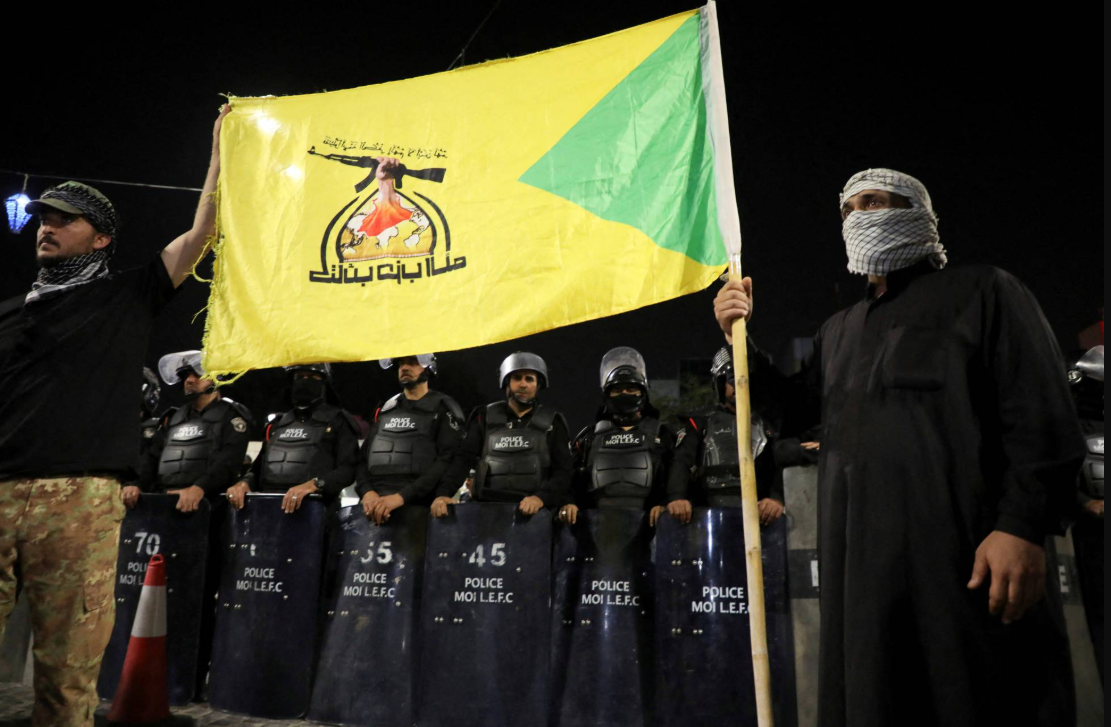
On May 18, 2026, Abu Mujahid al-Assaf, a security official in Kataib Hezbollah, said in a press statement that the faction was “prepared to respond to the United States on all fronts if leaders of the resistance and the Popular Mobilization Forces are targeted.”
Two members of the Kataib Hezbollah faction carry the group’s flag in front of a riot police checkpoint in Baghdad (Reuters).
What Comes Next in Baghdad?
Nevertheless, two Iraqi figures said they expect “an initial phase to begin in the coming period,” involving the transfer of heavy and medium weapons to a trusted Iraqi security body agreed upon by the Iraqi government and the United States.
According to one of the two figures, the first phase would also include removing figures involved in attacks against the United States and its allies in the region, and appointing Iraqi generals to oversee the infrastructure associated with the Popular Mobilization Forces.
Asharq Al-Awsat learned that armed groups with political wings represented in parliament are negotiating to regain their share of positions in the Iraqi government after surrendering their weapons, but are seeking firm guarantees that they will be removed from the list of groups barred from participating in government.
Several ministerial posts in Ali al-Zaidi’s government remain vacant because of disputes within the Coordination Framework. However, some positions have been postponed indefinitely because of a US veto on election winners who maintain armed wings and have ties to Iran.
لم تشترك بعد
انشئ حساباً خاصاً بك لتحصل على أخبار مخصصة لك ولتتمتع بخاصية حفظ المقالات وتتلقى نشراتنا البريدية المتنوعة