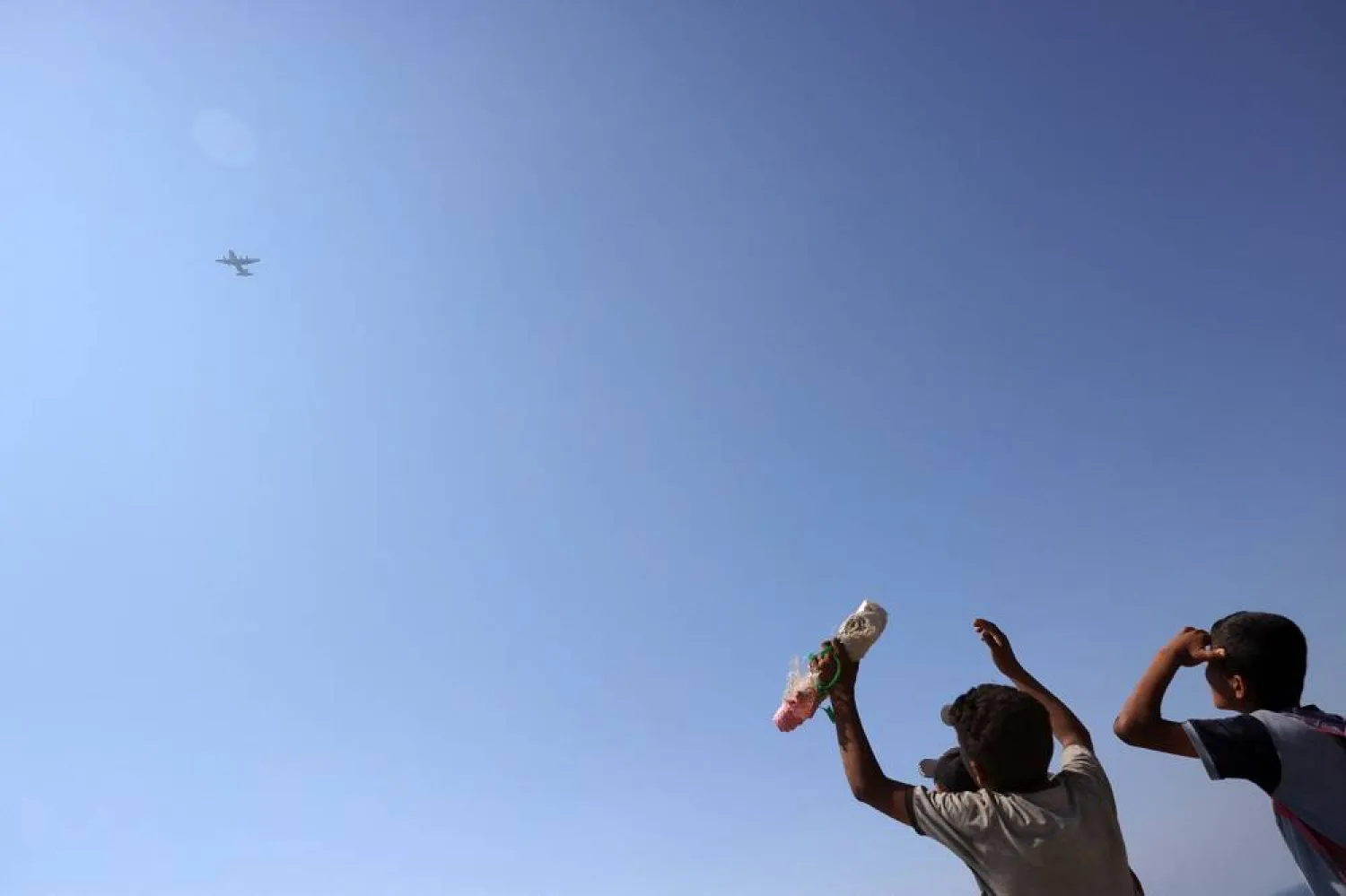

Gaza Aid Turns into Free-for-All Looting Spectacle  

Children and youths gather as a C-130 Hercules military transport aircraft flies over during an aid-drop on the northern Gaza Strip on July 27, 2025. (AFP)
TT

Gaza Aid Turns into Free-for-All Looting Spectacle  

Children and youths gather as a C-130 Hercules military transport aircraft flies over during an aid-drop on the northern Gaza Strip on July 27, 2025. (AFP)

Despite the limited and inadequate flow of humanitarian aid into Gaza, the bulk of it is being hijacked by gangs and looters amid a breakdown in law and order, residents and officials say, with little reaching the most desperate.

Efforts by Hamas authorities to restore order have faltered under relentless Israeli bombardment. Even local tribal coalitions trying to protect aid convoys have been targeted.

On Monday, five men were killed and 13 others wounded when Israeli forces bombed a group tasked with securing trucks entering from the Zikim crossing in northwestern Gaza. The strike came just as the trucks rolled in, leaving them vulnerable to immediate looting by armed groups and opportunistic thieves.

Amid widespread hunger, Gazans are left to fend for themselves.

“People are fighting for scraps,” said Jamil Hasna, a resident of Sheikh Radwan district. He walked 3 kilometers over four days to the outskirts of al-Sudaniya hoping to collect a 25-kilogram sack of flour, managing to get one just once, only to be beaten by a group of thugs who stole it.

“I waited for hours and ended up with bruises instead of bread,” he told Asharq al-Awsat.

Gaza has been descending into what aid workers call a “free-for-all.” Convoys entering from Egypt rarely reach their intended destinations, including communities such as Gaza’s Egyptian expats or its dwindling Christian population.

Most aid, whether delivered by truck or air-dropped, has been looted, according to residents and witnesses. Only a few manage to snatch small rations, often after clashing with looters armed with knives and guns.

Much of the stolen food appears almost instantly on Gaza’s black markets, sold at exorbitant prices far beyond what ordinary families can afford. With banks shuttered and liquidity scarce, many are forced to pay nearly 50% commission just to convert digital currency into cash.

“You need $100 to feed your family, but you walk away with $52,” said Ahmed al-Maghrabi, a Palestinian Authority employee from Gaza’s Sabra district.

“Thieves are running our lives, our food, our money, everything. This isn’t survival. This is slow death. Emigration is our only escape.”

According to al-Maghrabi, criminal gangs with apparent links to merchants are coordinating to intercept aid as it enters Gaza. “They get there before anyone else, as if they know where and when the shipments will land,” he said.

Air-dropped aid has provided no solution. In several cases, it has landed in Israeli-controlled zones or been seized in contested areas such as southern Khan Younis and eastern Gaza City. Even when aid falls near civilians, most of it is stolen and resold.

In some markets, a kilogram of sugar now sells for $130, down from $170 days earlier, but still unaffordable. Canned meat and ready-to-eat meals range between $44 and $60. Baby formula costs up to $69 per can, while a single diaper fetches $4.

On Monday, a Jordanian military plane dropped supplies over Gaza. The World Food Program said 55 trucks entered that day, but were seized by crowds before they reached their warehouses.

Beyond food, even baby items such as formula and diapers, critically needed by families and hospitals, are being looted and monetized.

For many in Gaza, the aid operation feels more like a performance than a lifeline.

“This is a charade,” said Nisreen al-Assi, a displaced woman from Beit Lahiya now sheltering in western Gaza. “Israel wants to appear as if it's easing the famine, but it’s managing the crisis, not solving it. It is letting gangs run wild while targeting those who try to guard the aid.”

Al-Assi said Israeli forces not only attack security escorts but also refuse to protect the convoys, instead forcing drivers to stop in open streets where the trucks are easily looted.

The government media office in Gaza said most aid trucks are systematically ransacked, and daily air-drops amount to less than half a single truckload. Some have landed in areas marked “red zones”, high-risk zones for military activity.

“This is a deliberate strategy,” the office said in a statement. “Israel is consciously engineering chaos and famine. It is preventing aid from reaching its storage points or intended recipients. What’s happening in Gaza is not random, it’s a calculated crime against a besieged civilian population.”


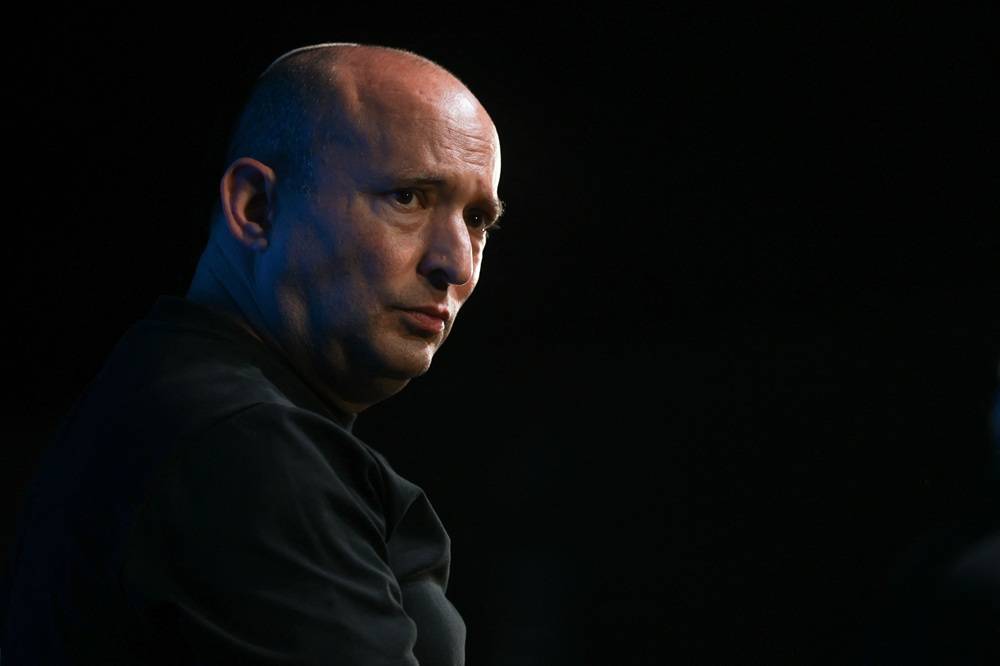
New Year Brings New Mayor for New York City

New York City mayor-elect Zohran Mamdani listens to a reporter's question during a press conference in New York City, US, December 22, 2025.  (Reuters)
New York City mayor-elect Zohran Mamdani listens to a reporter's question during a press conference in New York City, US, December 22, 2025. (Reuters)
TT

New Year Brings New Mayor for New York City

New York City mayor-elect Zohran Mamdani listens to a reporter's question during a press conference in New York City, US, December 22, 2025.  (Reuters)
New York City mayor-elect Zohran Mamdani listens to a reporter's question during a press conference in New York City, US, December 22, 2025. (Reuters)

New York mayor-elect Zohran Mamdani is set to become the US city's first Muslim mayor, and the youthful optimism of his Democratic Socialist platform will be put to the test as he takes office Thursday for a four-year term that faces high expectations.

- Festive swearing in -

Just after the stroke of midnight on New Year's Eve, New York Attorney General Letitia James -- friend to Mamdani, foe to President Donald Trump -- will swear in the new mayor. In a high-stakes tit-for-tat, James recently sued Trump, and he tried to have her indicted in return.

At midday, left-wing icon and Vermont Senator Bernie Sanders will preside over a ceremony outside City Hall.

At a neighborhood celebration, festivities will echo "one of his core messages... that this is a great city, and we like living here," said Lincoln Mitchell, a Columbia University political science professor.

- Policy agenda -

The mayor-elect, an avowed socialist, campaigned on addressing the prohibitive cost of living in the metropolis of 8.5 million.

One of his key proposals is freezing rent on more than a million apartments, but it's unclear if the city board that handles rent control -- packed with appointees of outgoing Mayor Eric Adams -- will be supportive.

Details of Mamdani's other campaign promises -- the construction of 200,000 units of affordable housing, universal access to childcare, publicly owned supermarkets and free buses -- have yet to be spelled out.

But Mamdani has one ace in his pocket: an excellent relationship with New York Governor Kathy Hochul, who approves measures like the tax hikes he seeks.

Once an election is over, "symbolism only goes so far with voters. Results begin to matter a whole lot more," New York University lecturer John Kane said.

- Opposition to Trump -

Despite expectations to the contrary, the late November Oval Office meeting between Trump and Mamdani was cordial and calm.

Mamdani "wisely sought a point of common ground with Trump: wanting to make New York City a better place to live," Kane said.

Trump can "be surprisingly gregarious toward those that he perceives to have little leverage over," Kane added.

Federal immigration officers are increasingly active in New York, which could become a flashpoint.

- Reassuring the public -

At 34, Mamdani is one of New York's youngest mayors and his political resume is short -- he's held office once previously, as a local representative in the State Assembly.

To compensate, he is surrounding himself with seasoned aides, recruited from past mayor's offices and former president Joe Biden's administration.

Mamdani has also already opened dialogue with business leaders, some of whom predicted a massive exodus of wealthy New Yorkers if he won. Real estate sector leaders debunked those claims in recent weeks.

As a defender of Palestinian rights, the mayor -- Muslim and of Indian origin -- will also have to reassure the Jewish community of his inclusive leadership style.

Recently, one of his hires resigned after it was revealed she had posted antisemitic tweets years ago.

- 'Cultural figure' -

"The mayor of New York is always a cultural figure," Mitchell said.

Mamdani has already captured some of his generation's cultural trappings with his brief forays into rap music, improv classes in Manhattan, and wearing what the New York Times called "the quintessential entry-level suit for a 30-something striving to be taken seriously."

New Yorkers have also noted his enthusiastic support of his wife, Syrian-born artist Rama Duwaji, with approval.

Her Instagram account has gained more than a million followers since November, according to Social Blade statistics.

And on the cover of The Cut, New York magazine's revered fashion and culture publication, she recently marked her own path -- the hallmark of every young generation of city dwellers striving to make it there.

"At the end of the day, I'm not a politician. I'm here to be a support system for Z and to use the role in the best way that I can as an artist," she said.


'Shivering from Cold and Fear': Winter Rains Batter Displaced Gazans

Displaced Palestinians walk past a large pool of standing water in Gaza City. Heavy winter rains have have made an already precarious life worse for displaced Gazans © Omar AL-QATTAA / AFP
TT

'Shivering from Cold and Fear': Winter Rains Batter Displaced Gazans

Displaced Palestinians walk past a large pool of standing water in Gaza City. Heavy winter rains have have made an already precarious life worse for displaced Gazans © Omar AL-QATTAA / AFP

It only took a matter of minutes after the heavy overnight rain first began to fall for Jamil al-Sharafi's tent in southern Gaza to flood, drenching his food and leaving his blankets sopping wet.

The winter rains have made an already precarious life worse for people like Sharafi, who is among the hundreds of thousands in the Palestinian territory displaced by the war, many of whom now survive on aid provided by humanitarian organizations, AFP reported.

"My children are shivering from cold and fear... The tent was completely flooded within minutes," Sharafi, 47, said on Sunday.

"We lost our blankets, and all the food is soaked," added the father of six, who lives in a makeshift shelter with his children in the coastal area of Al-Mawasi.

A fragile ceasefire between Israel and Hamas has been in place since October 10, following two years of devastating fighting.

But despite the truce, Gazans still face a severe humanitarian crisis, and most of those displaced by the war have been left with little or nothing.

Families are crowded into camps of tents hastily erected from tarpaulins, which are often surrounded by mud and standing water when it rains.

"As an elderly woman, I cannot live in tents. Living in tents means we die from the cold in the rain and from the heat in the summer," said Umm Rami Bulbul.

"We don't want reconstruction right now, just provide us and our children with mobile homes."

Nighttime temperatures in Gaza have ranged between eight and 12 degrees Celsius in recent days.

- Insufficient aid -

Nearly 80 percent of buildings in the Gaza Strip have been destroyed or damaged by the war, according to United Nations data.

And about 1.5 million of Gaza's 2.2 million residents have lost their homes, said Amjad Al-Shawa, director of the Palestinian NGO Network in Gaza.

Of more than 300,000 tents requested to shelter displaced people, "we have received only 60,000", Shawa told AFP, pointing to Israeli restrictions on the delivery of humanitarian aid into the territory.

The UN refugee agency for Palestinians, UNRWA, said the harsh weather had compounded the misery of Gazans.

"People in Gaza are surviving in flimsy, waterlogged tents & among ruins," UNRWA chief Philippe Lazzarini wrote on X.

"There is nothing inevitable about this. Aid supplies are not being allowed in at the scale required."

COGAT, the Israeli defense ministry body responsible for Palestinian civilian affairs, said in mid-December that "close to 310,000 tents and tarpaulins entered the Gaza Strip recently" as part of an increase in aid under the ceasefire.

Earlier this month, Gaza experienced a similar spell of heavy rain and cold.

The weather caused at least 18 deaths due to the collapse of war-damaged buildings or exposure to cold, according to Gaza's civil defense agency, which operates under Hamas authority.

On December 18, the UN's humanitarian office said that 17 buildings collapsed during the storm, while 42,000 tents and makeshift shelters were fully or partially damaged.

"Look at the state of my children and the tent," said Samia Abu Jabba.

"I sleep in the cold, and water floods us and my children's clothes. I have no clothes for them to wear. They are freezing," she said.

"What did the people of Gaza and their children do to deserve this?"


What Lies Ahead for Ukraine’s Contested Zaporizhzhia Nuclear Power Plant?

A Russian service member stands guard at a checkpoint near the Zaporizhzhia Nuclear Power Plant before the arrival of the International Atomic Energy Agency (IAEA) expert mission in the course of Russia-Ukraine conflict outside Enerhodar in the Zaporizhzhia region, Russian-controlled Ukraine, June 15, 2023. (Reuters)
TT

What Lies Ahead for Ukraine’s Contested Zaporizhzhia Nuclear Power Plant?

A Russian service member stands guard at a checkpoint near the Zaporizhzhia Nuclear Power Plant before the arrival of the International Atomic Energy Agency (IAEA) expert mission in the course of Russia-Ukraine conflict outside Enerhodar in the Zaporizhzhia region, Russian-controlled Ukraine, June 15, 2023. (Reuters)

The Zaporizhzhia nuclear power plant, Europe's largest, is one of the main sticking points in US President Donald Trump's peace plan to end the nearly four-year war between Russia and Ukraine. The issue is one of 20 points laid out by Ukrainian President Volodymyr Zelenskiy in a framework peace proposal.

Here are some of the issues regarding the facility:

WHAT ROLE MAY THE US PLAY?

Russia took control of the plant in March 2022 and announced plans to connect it to its power grid. Almost all countries consider that it belongs to Ukraine but Russia says it is owned by Russia and a unit of Russia's state-owned Rosatom nuclear corporation runs the plant.

Zelenskiy stated at the end of December that the US side had proposed joint trilateral operation of the nuclear power plant with an American chief manager.

Zelenskiy said the Ukrainian proposal envisages Ukrainian-American use of the plant, with the US itself determining how to use 50% of the energy produced.

Russia has considered joint Russian-US use of the plant, according to the Kommersant newspaper.

WHAT IS ITS CURRENT STATUS?

The plant is located in Enerhodar on the banks ‌of the Dnipro River and ‌the Kakhovka Reservoir, 550 km (342 miles) southeast of the capital Kyiv.

The Zaporizhzhia nuclear power plant has ‌six ⁠Soviet-designed reactors. They were ‌all built in the 1980s, although the sixth only came online in the mid-1990s after the collapse of the Soviet Union. It has a total capacity of 5.7 gigawatts, according to an International Atomic Energy Agency (IAEA) database.

Four of the six reactors no longer use Russian nuclear fuel, having switched to fuel produced by then-US nuclear equipment supplier Westinghouse.

After Russia took control of the station, it shut down five of its six reactors and the last reactor ceased to produce electricity in September 2022. Rosatom said in 2025 that it was ready to return the US fuel to the United States.

According to the Russian management of the plant, all six reactors are in "cold shutdown."

Both Russia and Ukraine have accused each other of striking the nuclear plant and of severing power lines to the plant.

The plant's equipment is powered by ⁠electricity supplied from Ukraine. Over the past four years these supplies have been interrupted at least eleven times due to breaks in power lines, forcing the plant to switch to emergency diesel generators.

Emergency generators ‌on site can supply electricity to keep the reactors cool if external power lines are cut.

IAEA ‍Director General Rafael Grossi says that fighting a war around a nuclear ‍plant has put nuclear safety and security in constant jeopardy.

WHY DOES RUSSIA WANT ZAPORIZHZHIA PLANT?

Russia has been preparing to restart the station but ‍says that doing so will depend on the situation in the area. Rosatom chief Alexei Likhachev has not ruled out the supply of electricity produced there to parts of Ukraine.

Oleksandr Kharchenko, director of the Energy Research Center in Kyiv, said Moscow intended to use the plant to cover a significant energy deficit in Russia's south.

"That's why they are fighting so hard for this station," he said.

In December 2025, Russia's Federal Service for Environmental, Technological and Nuclear Supervision issued a license for the operation of reactor No. 1, a key step towards restarting the reactor.

Ukraine's energy ministry called the move illegal and irresponsible, risking a nuclear accident.

WHY DOES UKRAINE NEED THE PLANT?

Russia has been pummeling Ukraine's energy infrastructure for months and some areas have had blackouts during winter.

In recent ⁠months, Russia has sharply increased both the scale and intensity of its attacks on Ukraine's energy sector, plunging entire regions into darkness.

Analysts say Ukraine's generation capacity deficit is about 4 gigawatts, or the equivalent of four Zaporizhzhia reactors.

Kharchenko says it would take Ukraine five to seven years to build the generating capacity to compensate for the loss of the Zaporizhzhia plant.

Kharchenko said that if Kyiv regained control of the plant, it would take at least two to three years to understand what condition it was in and another three years to restore the equipment and return it to full operations.

Both Ukrainian state nuclear operator Energoatom and Kharchenko said that Ukraine did not know the real condition of the nuclear power plant today.

WHAT ABOUT COOLING FUEL AT THE PLANT?

In the long term, there is the unresolved problem of the lack of water resources to cool the reactors after the vast Kakhovka hydro-electric dam was blown up in 2023, destroying the reservoir that supplied water to the plant.

Besides the reactors, there are also spent fuel pools at each reactor site used to cool down used nuclear fuel. Without water supply to the pools, the water evaporates and the temperatures increase, risking fire.

An emission of hydrogen from a spent fuel pool caused an explosion in Japan's Fukushima nuclear disaster in ‌2011.

Energoatom said the level of the Zaporizhzhia power plant cooling pond had dropped by more than 15%, or 3 meters, since the destruction of the dam, and continued to fall.

Ukrainian officials previously said the available water reserves may be sufficient to operate one or, at most, two nuclear reactors.