


Trump’s Anger Over Iran Thrusts NATO into Fresh Crisis

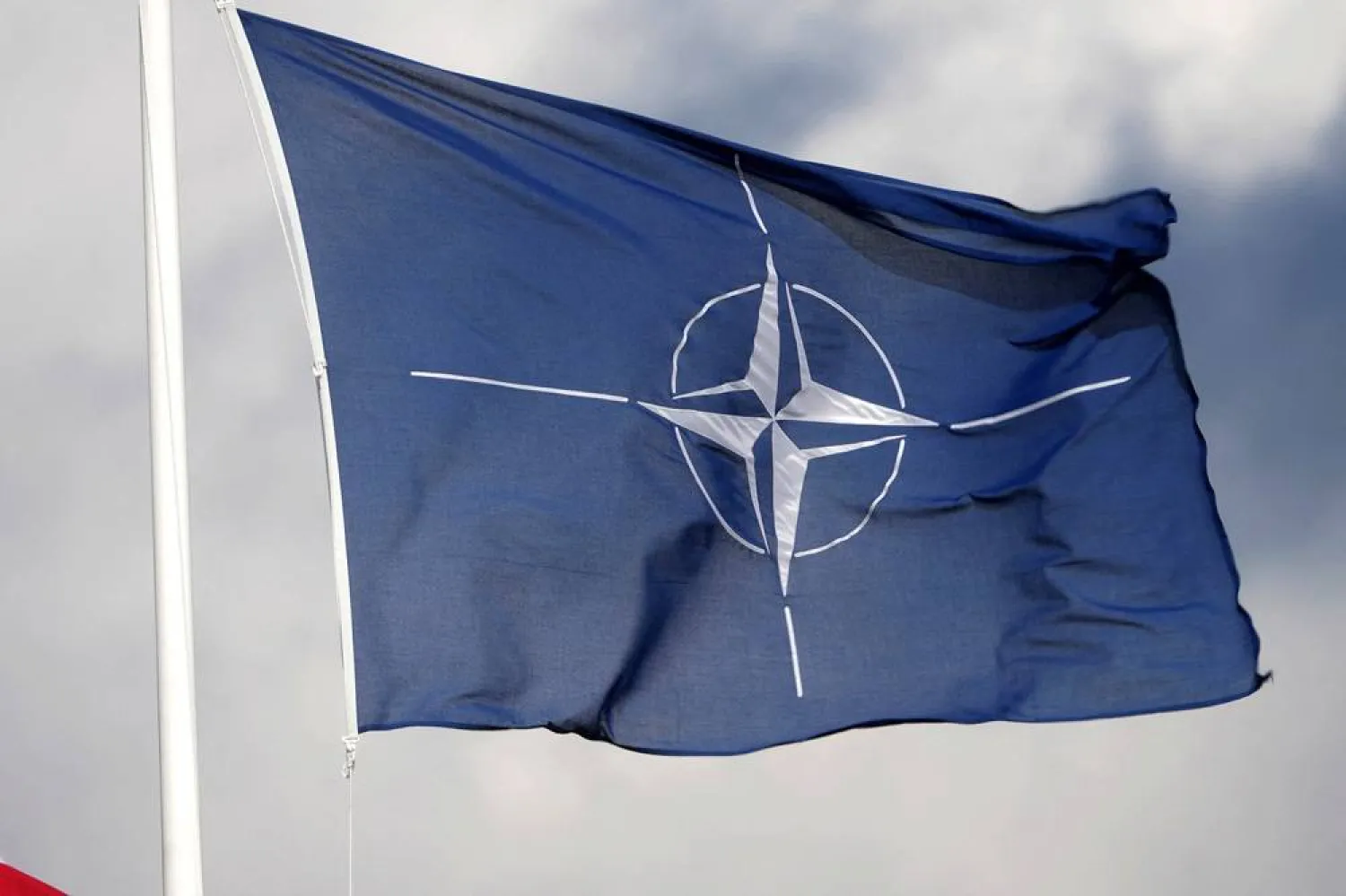
A NATO flag flutters at the Tapa military base, Estonia April 30, 2023. (Reuters)
TT

Trump’s Anger Over Iran Thrusts NATO into Fresh Crisis

A NATO flag flutters at the Tapa military base, Estonia April 30, 2023. (Reuters)

The NATO alliance has in recent years survived existential challenges - ranging from the war in Ukraine to multiple bouts of pressure and insults from US President Donald Trump, who has questioned its core mission and threatened to seize Greenland.

But it is the US-Israeli war with Iran, thousands of miles from Europe, that has nearly broken the 76-year-old bloc and threatens to leave it in its weakest state since its creation, say analysts and diplomats.

Trump, enraged that European countries have declined to send their navies to open up the Strait of Hormuz to global shipping following the start of the air war on Feb 28, has declared he is considering withdrawing from the alliance.

"Wouldn't you if you were me?" Trump asked Reuters in a Wednesday interview.

In a speech on Wednesday night, Trump criticized US allies but stopped short of condemning NATO, as many experts thought he might.

But combined with other barbs aimed at Europeans in recent weeks, Trump's comments have provoked unprecedented concern that the US will not come to the aid of European allies should they be attacked, whether or not Washington formally walks away.

The result, say analysts and diplomats, is that the alliance created in the Cold War that has long served as the basic fabric of European security is fraying and the mutual defense agreement at its core is no longer taken as a given.

"This is the worst place (NATO) has been since it was founded," said Max Bergmann, a former State Department official who now leads the Europe, Russia, and Eurasia Program at the Center for Strategic and International Studies in Washington.

"It's really hard to ‌think of anything that ‌even comes close."

That reality is sinking in for Europeans, who have counted on NATO as a bulwark against an increasingly assertive Russia.

As recently ‌as February, ⁠NATO Secretary-General Mark ⁠Rutte had dismissed the idea of Europe defending itself without the US as a "silly thought." Now, many officials and diplomats consider it the default expectation.

"NATO remains necessary, but we must be capable of thinking of NATO without the Americans," said General Francois Lecointre, who served as France's armed forces chief from 2017 to 2021.

"Whether it should even continue to be called NATO - North Atlantic Treaty Organization - is a valid question."

White House spokeswoman Anna Kelly said: “President Trump has made his disappointment with NATO and other allies clear, and as the President emphasized, ‘the United States will remember.’”

A NATO representative did not immediately respond to a request for comment.

THIS TIME IT'S DIFFERENT

NATO has been challenged before, not least during Trump's first term from 2017 to 2021, when he also considered withdrawing from the alliance.

But while many European officials until recently believed that Trump could be kept on board with pomp and flattery, fewer now hold that belief, according to conversations with dozens of former and current US and European officials.

Trump and his officials have expressed frustration over what they see as NATO's unwillingness to help the United ⁠States in a time of need, including by not directly assisting with the Strait of Hormuz and by restricting US use of some airfields and ‌airspace. US officials have declared NATO cannot be a "one-way street".

European officials counter that they have not received US requests for specific ‌assets for a mission to open the strait and complain that Washington has been inconsistent about whether such a mission would operate during or after the war.

"It's a terrible situation for NATO to be in," said ‌Jamie Shea, a former senior NATO official who is now a senior fellow at the Friends of Europe think tank.

"It is a blow to the allies who, since Trump returned to ‌the White House, have worked hard to show that they are willing and able to take more responsibility (for their own defense)."

Trump's latest comments follow other signs of an increasingly unsteady alliance.

Those include his stepped-up threats in January to wrest Greenland away from Denmark and recent moves by the US that Europeans see as particularly accommodating toward Russia, which NATO defines as its principal security threat.

The administration has remained essentially mum amid reports that Moscow has provided targeting data for Iran to attack US assets in the Middle East and has lifted sanctions on Russian oil in a bid to ease global energy prices that have spiked during the war.

At a meeting of G7 foreign ministers ‌near Paris last week, US Secretary of State Marco Rubio and Kaja Kallas, the foreign policy chief of the European Union, had a tense exchange, according to five people familiar with the matter, underlining the increasingly fraught transatlantic relationship.

Kallas asked when US patience with Russian President Vladimir ⁠Putin would run out over Ukraine peace negotiations, prompting Rubio ⁠to respond with irritation that the US was trying to end the war while also providing support to Ukraine, but the EU was welcome to mediate if it wanted to.

NO GOING BACK

Legally, Trump may lack the authority to withdraw from NATO. Under a law passed in 2023, a US president cannot exit the alliance without the consent of two-thirds of the US Senate, a nearly impossible threshold.

But analysts say that, as commander-in-chief, Trump can decide whether the US military will defend NATO members. Declining to do so could imperil the alliance without a formal withdrawal.

To be sure, not everyone sees the current crisis as existential. One French diplomat described the president's rhetoric as a passing temper tantrum.

Trump has changed his position on NATO before.

In 2024, he said on the campaign trail that he would encourage Putin to attack NATO members that do not pay their fair share on defense. By the last annual NATO summit, in June 2025, the alliance was in his good graces, with Trump delivering a speech effusively praising European leaders as people who "love their countries."

Next week, Rutte, the NATO secretary-general, who has a strong relationship with Trump, is set to visit Washington in an effort to change Trump's view once again.

Analysts say European nations have good reason to keep the US engaged in NATO despite doubts over whether Trump would come to their defense. Among other reasons, the US military provides a range of capabilities NATO can't easily replace, such as satellite intelligence.

Even if Trump and the Europeans find a way to stay together in NATO, diplomats, analysts and officials say, the transatlantic alliance that has been central to the global order since World War Two may never be the same.

"I do think we're turning the page of 80 years of working together," said Julianne Smith, the US ambassador to NATO under Democratic President Joe Biden.

"I don't think it means the end of the transatlantic relationship, but we're on the cusp of something that's going to have a different look and feel to it."



Arafat and Tehran: From Revolutionary Embrace to Open Hostility

Yasser Arafat during a visit to Tehran on February 17, 1979. He was the first official figure to visit Iran after the "Islamic Revolution" (Getty).
TT

Arafat and Tehran: From Revolutionary Embrace to Open Hostility

Yasser Arafat during a visit to Tehran on February 17, 1979. He was the first official figure to visit Iran after the "Islamic Revolution" (Getty).

Yasser Arafat was the first foreign leader to visit Iran after Khomeini’s 1979 Iranian Revolution. At the time, he believed the Palestinian cause was gaining a powerful new ally in revolutionary Iran, which immediately closed the Israeli embassy and handed it over to the Palestine Liberation Organization (PLO). But Arafat soon discovered that Tehran’s public support for Palestine was neither unconditional nor straightforward. What began as a honeymoon quickly unraveled into a lasting rupture.88888

Associates of Arafat, who was known for his wit and political sharpness, recalled his surprise when Khomeini insisted on using a Persian translator during their meeting despite speaking fluent Arabic. Arafat was even more unsettled when Khomeini urged him to declare the Palestinian revolution an Islamic one. Those moments deepened Arafat’s suspicions that Iran’s support came with ideological and political conditions attached.

Arafat’s ties with Iranian revolutionaries had predated the revolution, and he responded cautiously. He told Khomeini that the Palestinian struggle was not an Islamic revolution but a national movement representing all Palestinians, Muslims and Christians alike. Later, he would joke about the irony of the leader of the Islamic Revolution pretending not to speak Arabic—the language of the Quran—even though the two men had previously spoken in Arabic before the revolution succeeded.

Arafat–Tehran: Open Hostility

Despite his reservations, Arafat initially maintained cordial relations with Tehran. But the relationship collapsed after the outbreak of the Iran-Iraq War in 1980. Iranian leaders demanded that Arafat publicly support them against Iraqi President Saddam Hussein. Instead, Arafat leaned toward Iraq. From that point on, relations spiraled into open confrontation.


Iran increasingly sought to weaken Arafat and the PLO by cultivating rival Palestinian factions. Palestinians still remember that Tehran did little to help Arafat during Israel’s siege of Beirut in 1982, while he was simultaneously confronting Syria, then one of Iran’s closest regional allies. Damascus supported and financed a major split within Fatah led by Said Moussa Muragha, better known as Abu Musa, who later founded the breakaway movement Fatah al-Intifada and settled in Syria. Tehran also encouraged divisions within other factions operating under the PLO umbrella.

Palestinians also remember the role played by Lebanese Shiite militias affiliated with the Amal Movement, which had pledged allegiance to Khomeini and later participated in massacres inside Palestinian refugee camps in Lebanon.

From that point onward, relations between Iran and the PLO, and later the Palestinian Authority, remained deeply strained. Mutual accusations continued even after Arafat’s death, eventually evolving into something close to declared hostility.

Between periods of tension and cautious rapprochement, Iran eventually found an opening with the establishment of the Palestinian Authority through its growing ties with Hamas and Palestinian Islamic Jihad. Tehran initially offered the two groups public political support, then financial and military backing, eventually integrating them into a broader regional axis. That axis remained intact until the Hamas-led October 2023 attack on Israel, which triggered devastating consequences not only for Hamas but for Iran’s entire regional network, ultimately reverberating back to Tehran itself.

Supporting Rival Factions to Undermine Fatah

Hamas and Palestinian Islamic Jihad established relations with Iran in the late 1980s, shortly after both movements were founded. Those ties deepened throughout the 1990s and intensified during the Second Intifada, which erupted in late 2000. Iranian support expanded further after Hamas seized control of Gaza in 2007.

That takeover gave Iran unprecedented influence inside the Palestinian territories. Tehran intensified military cooperation with Hamas and Islamic Jihad through joint meetings, strategic coordination, and training programs. Fighters from Gaza were sent to Iran and to Hezbollah camps in Lebanon for military training under the supervision of Iran’s Revolutionary Guard Corps (IRGC).

Iran poured money into both groups and trained their operatives to manufacture and launch rockets and other weapons, significantly strengthening their military capabilities. At the same time, the Palestinian Authority and Fatah accused Tehran of fueling Palestinian division through its limitless support for Islamist factions.

Two Hamas sources, one inside Gaza and one abroad, told Asharq Al-Awsat that Hamas’ takeover of Gaza opened the door to an entirely new relationship with Tehran. According to the source outside Gaza, Iran provided extensive financial and military support while helping improve the movement’s combat expertise.

A source inside Gaza said Iran proposed establishing training facilities inside the enclave, but Hamas rejected the idea and instead limited cooperation to sending selected operatives abroad for training. Even so, the relationship substantially enhanced Hamas’ military capabilities.

Islamic Jihad’s relationship with Tehran was even older and stronger. A source from the movement said Iran played a decisive role in arming Palestinian factions during that period, supplying ready-made Grad rockets and Iranian-made Fajr missiles before local production capabilities were later developed using Iranian technical expertise.

Iran’s influence became so visible in Gaza that smaller armed groups also received funding, while some organizations openly embraced Shiite ideology or even called themselves “Palestinian Hezbollah.”

Although Hamas and Islamic Jihad insisted that their political decisions remained independent, Iranian influence became impossible to conceal. Neither movement directly answered questions about whether Tehran had deliberately encouraged Palestinian fragmentation. Instead, sources maintained that Iran’s primary objective was to strengthen the “resistance” against Israel and reinforce Gaza’s front line.

The Turning Point of the Syrian Revolution

The Syrian uprising against President Bashar al-Assad in 2011 exposed the fragility of the Hamas-Iran alliance. Hamas sided against Assad and left Damascus in 2012, enraging Tehran. Iran sharply reduced its financial support to the movement, a fact later acknowledged publicly by Hamas political leader Khaled Meshaal.

Meshaal admitted that Hamas’ dispute with Assad severely damaged ties with Iran and that Tehran was no longer the movement’s primary financial backer. Iran had expected Hamas to support Assad during the uprising, and Hamas’s refusal cost the group both its Syrian base and substantial Iranian funding.

Still, Tehran did not abandon its efforts. Instead, it tried to cultivate influence within Hamas itself. Sources said Iran shifted toward providing limited support directly to Hamas’ armed wing, the Izz ad-Din al-Qassam Brigades, in an apparent attempt to create tension with the movement’s political leadership.

At minimum, Iran succeeded in deepening internal debates within Hamas over regional alliances and political loyalties. The period proved difficult for both sides, and repeated attempts at reconciliation angered Hamas’s Sunni support base because of Iran’s growing regional role.

Abu Marzouk Debunks Iran’s Claims

As Hezbollah worked behind the scenes to repair relations, a leaked phone call revealed unprecedented criticism from within Hamas itself. In January 2012, Asharq Al-Awsat obtained and published a recording of Mousa Abu Marzouk, then deputy head of Hamas’s political bureau, sharply attacking Iran and denying Iranian claims that it had significantly supported Palestinian resistance since 2009.

In the recording, Abu Marzouk criticized Tehran’s regional policies, including its role in Yemen, and described Iranian diplomacy as manipulative. He also claimed Iran conditioned its support on Hamas helping improve Tehran’s relations with countries such as Sudan, describing that as part of Iran’s pressure tactics. He accused Iranian officials of exaggerating their support, saying: “Every ship they lose, they claim was heading to Gaza. A ship was seized in Nigeria and they said it was for us. I told them: apparently every intercepted ship in the world belongs to us.”

A Hamas source abroad told Asharq Al-Awsat that the leaked recording infuriated Iran and forced Hamas leaders to provide explanations to Tehran during an already dangerous turning point in the relationship. The crisis was eventually contained, but it exposed the deep mistrust underlying the alliance.

Building the Axis and the “Unity of Fronts”

Within months of that incident, efforts to restore ties resumed. Relations steadily improved as Hamas’ Gaza leadership tightened its grip over the movement’s political bureau elected in 2017, headed by Ismail Haniyeh, with Yahya Sinwar leading in Gaza and the military wing gaining unprecedented influence.

A source said Iran had strong incentives to preserve the relationship with Hamas because it remained “the largest Sunni Islamist movement in Palestine, with broader reach and capabilities than any other faction.” The relationship, he noted, never completely broke down, and once Hamas’s military leadership gained prominence, ties deepened further in ways that served both sides’ interests.

Relations continued to improve as Hezbollah and Iranian officials worked to restore Hamas’ ties even with the Syrian regime, though reconciliation was never fully completed before Bashar al-Assad’s government collapsed.

Hamas regained Iranian backing, and Tehran consolidated a regional axis in which the movement became a central pillar. Iran also promoted the idea of the “unity of fronts,” convincing its allies that all arenas confronting Israel were interconnected. That appears to have helped persuade Sinwar that Tehran would stand firmly behind Hamas after the October 7 attack, something that did not happen.

Iran, which denied prior knowledge of the attack, chose not to intervene directly, raising serious doubts about the cohesion of the so-called “axis,” the credibility of the “unity of fronts,” and the true extent of coordination among its members.

Even Palestinian Islamic Jihad, despite receiving substantial Iranian support alongside Hamas, reportedly had no prior knowledge of the attack. The movement was generally viewed as more closely aligned with Tehran, or at least more willing to accommodate Iranian political priorities.

The October 7 Turning Point

Islamic Jihad was not immune to Iranian demands that went beyond support for “the resistance.” In 2015, the two sides entered a serious but short-lived crisis over Yemen after the Palestinian movement refused to issue a statement backing the Houthis and their seizure of large parts of the country, including the capital, Sanaa.

Iran responded by cutting support to Islamic Jihad, much as it had previously done with Hamas, and redirected funding to the Sabireen Movement, a splinter faction formed by former Islamic Jihad figures with Iranian backing.

A source from Islamic Jihad told Asharq Al-Awsat that the sharp decline in Iranian support marked one of the most difficult periods the movement had ever faced.

Ultimately, Iran could not escape paying a price itself. It found itself pulled into confrontation with the United States and Israel after wars had already engulfed Hamas and Hezbollah. Those cascading conflicts were set in motion by the October 7 attack, which reshaped not only Iran’s regional axis but the broader Middle East.

The War’s Endgame

The war is still ongoing, and it remains unclear whether Iran will eventually abandon Hamas, Islamic Jihad, Hezbollah, and the Houthis to protect itself. Tehran continues to assure the Palestinian factions that support will continue, although that support has slowed in recent months because of the war, regional instability, and intensified Israeli and American efforts targeting Iranian financial and logistical networks.

Israel has assassinated several Iranian officials responsible for managing ties with Palestinian factions, while Washington has increasingly demanded that Tehran halt support for its regional proxies.

The Palestinian Authority Cuts the Final Thread

Throughout the war, Hamas and Islamic Jihad publicly sided with Iran, signaling their desire to preserve the relationship, though it remained unclear how much control they truly had over that decision, or what the alliance’s future might look like.

The Palestinian Authority, however, appears to have decisively severed what Arabs often call the “Muawiya thread,” the final strand holding a relationship together.

During the Gaza war, the Authority not only attacked Iran’s supreme leader, Ali Khamenei, for praising Hamas’s October 7 operation — accusing him of sacrificing Palestinian lives and land to serve Iran’s agenda — but also said Hamas was serving Iranian interests rather than Palestinian national ones.

At the same time, the Palestinian Authority refrained from condemning the joint American-Israeli strikes on Iran while later condemning Iranian attacks on Arab countries.

The war pushed the Authority more firmly into alignment with the so-called “moderate Arab axis” in opposition to the Iranian-led camp, abandoning much of the ambiguity that had long characterized its political posture.

A well-informed source told Asharq Al-Awsat that the Palestinian Authority had not changed its position so much as clarified it. “Its stance is not new,” the source said, “but it is now more explicit. The Authority is strengthening its place within the moderate camp against the Iranian axis.”

The Palestinian Authority believes everything changed after October 7. But it also believes the wars unleashed by the attack will ultimately vindicate its own political strategy while weakening Iran and its regional allies.


What to Know About Trump-Xi Summit with Trade, Taiwan and Iran on the Agenda

President Donald Trump, left, and Chinese President Xi Jinping, shake hands after their US-China summit talk at Gimhae International Airport Jinping in Busan, South Korea, Oct. 30, 2025. (AP)
TT

What to Know About Trump-Xi Summit with Trade, Taiwan and Iran on the Agenda

President Donald Trump, left, and Chinese President Xi Jinping, shake hands after their US-China summit talk at Gimhae International Airport Jinping in Busan, South Korea, Oct. 30, 2025. (AP)

As Presidents Xi Jinping and Donald Trump prepare for a highly anticipated summit, both China and the United States say their ties have been broadly stable in recent months and they are planning on keeping it that way.

But a long list of issues are at stake in one of the world’s most consequential relationship, with no easy end in sight.

Few expect major breakthroughs to the long-running frictions between China and the US, which range from competition in technology to the thorny question of Taiwan, whose main ally is the US. Ending the war with Iran is likely to be added to the agenda, with Beijing being one of the unofficial mediators in the conflict.

“On both sides there is a consensus that US-China stability is important,” said Henrietta Levin, senior fellow for the Freeman Chair in China Studies at the Center for Strategic and International Studies in Washington. “Once you get past the question of stability, the ‘what’s next’ in the relationship gets a little more complicated, and so for that reason, the most likely thing to come out of the meeting is very little.”

Here's what to know about the summit:

There may be a trade deal, but not a resolution

The China-US trade war started with Trump’s first term, but turned up a notch in April last year, on Trump’s so-called “Liberation Day,” when he announced 34% tariffs on all Chinese goods. China retaliated with counter tariffs and other measures, such as restrictions on rare earth exports. Tariffs reached as high as 145% in the escalating back and forth.

The two sides, realizing the sky-high tariffs weren’t sustainable, then called for a trade truce, halting many of the punitive economic measures. The two leaders met in South Korea in October and extended the truce for another year. China promised to purchase soybeans from American farmers, while the US dropped tariffs by more than half.

“China’s strategy was to promote stability by fighting back,” said Fudan University professor Zhao Minghao, an expert in international relations. “Both sides could very well issue a comprehensive trade agreement this time. But this doesn’t mean the war is over, and the agreement will have conditions.”

Last year’s trade truce did not resolve any of the bigger picture issues, and it did not mean a return to how things were. China now has a new export permit requirement for rare earth exports that it can tighten at any time.

Further, this time around, “there’s been a lack of the intensive type of engagement that has characterized past summits,” said Wendy Cutler, vice president of the Asia Society, and a former trade negotiator for the US.

China in April issued new regulations that built out a framework for identifying and countering foreign measures targeted at Chinese companies. Under the new rules, for example, China’s Ministry of Commerce told impacted companies, such as one petroleum refinery that bought Iranian crude oil, to ignore US sanctions.

Although some say the sides could announce a continuation of the trade truce, they note they have continued to take targeted actions. “It’s a fragile truce,” said Cutler.

The White House said Sunday they are also planning to discuss creating a new “Board of Trade” to keep their countries talking on economic issues.

China's ability to buy high-tech chips is still a thorny issue

The US imposed restrictions on exports to China of advanced computer chips and related tech, such as the machines to make the chips, as early as Trump’s first term in office.

Nvidia, a California company and the leading designer of advanced chips, has pressed Trump to allow it to export them to China. Nvidia founder Jensen Huang has argued that selling the chips will build reliance on American tech for Chinese AI firms.

But the increasing list of restrictions on chip exports may only push China deeper in its drive for self-reliance. “China’s attitude has changed subtly, it seems more focused on advancing its domestic chip industry rather than continuing to rely on advanced chips from the United States,” Zhao said in written comments.

China sees Taiwan as the ‘biggest risk’ in ties with the US

Two weeks before the meeting, Chinese Foreign Minister Wang Yi said in a call with US Secretary of State Marco Rubio that the bilateral relationship has remained generally stable, but Taiwan remains the “biggest risk” to their ties. China signaled again on Thursday that Taiwan would be a top priority for discussion.

Few expect a resolution to the Taiwan issue, lingering since China and Taiwan split in a civil war in 1949. While Beijing claims Taiwan, the island is a self-ruled democracy.

Tensions have only risen since Taiwan first elected Tsai Ing-wen as president in 2016. Her Democratic Progressive Party says Taiwan is functionally independent and its own sovereign state. Beijing has broken off communication with Taiwan’s government, and in recent years, started sending warplanes and warships closer to the island in almost daily drills.

The island’s current President Lai Ching-te is also from the DPP. Beijing has criticized Lai repeatedly, even depicting him as a “parasite” in propaganda imagery for its military exercises.

The US is required by law to ensure Taiwan can defend itself but officially maintains a position of what has been called strategic ambiguity, leaving it a question of whether the US would get involved militarily if China decided to reclaim Taiwan by force. Trump has also said recently that he discussed arms sales to Taiwan with Xi, which led to further questions of whether the US would support Taiwan.

“One possibility is that China and the US can take the strategy of a sort of ‘reciprocal restraint’, such as reducing the number of American arms sales to Taiwan, in exchange for fewer military exercises from the mainland aimed at Taiwan,” said Zhao.

The US wants China to put pressure on Iran

As the world awaits an end to the war in Iran that has shaken the global economy, the conflict is likely to surface in the talks.

China has openly criticized the United States and Israel over the war. In addition, given its close political and economic ties with Iran, it is seen by some as an unofficial mediator that could influence Tehran. So far, Beijing has remained cautious, preferring to not get deeply involved.

“I don’t think China has any interest in solving the problems the US has created for itself in the Middle East,” Levin, of the Center for Strategic and International Studies, said.

A few days before the trip, US Treasury Secretary Scott Bessent called on China to pressure Iran to open the Strait of Hormuz, and said that by buying Iranian oil, Beijing is funding terrorism.

“Let’s see if China — let’s see them step up with some diplomacy and get the Iranians to open the strait,” Bessent said on Fox News. “Iran is the largest state sponsor of terrorism, and China has been buying 90% of their energy, so they are funding the largest state sponsor of terrorism.”


Why Hantavirus Is Not the New Covid, According to Experts

 The hantavirus-stricken cruise ship MV Hondius is seen at anchor at the port of Granadilla in Tenerife, Canary Islands, Spain, Monday, May 11, 2026. (AP)
The hantavirus-stricken cruise ship MV Hondius is seen at anchor at the port of Granadilla in Tenerife, Canary Islands, Spain, Monday, May 11, 2026. (AP)
TT

Why Hantavirus Is Not the New Covid, According to Experts

 The hantavirus-stricken cruise ship MV Hondius is seen at anchor at the port of Granadilla in Tenerife, Canary Islands, Spain, Monday, May 11, 2026. (AP)
The hantavirus-stricken cruise ship MV Hondius is seen at anchor at the port of Granadilla in Tenerife, Canary Islands, Spain, Monday, May 11, 2026. (AP)

A deadly hantavirus outbreak on a cruise ship has revived bitter memories of when Covid-19 first emerged, but health experts have emphasized the two viruses are very different -- and have sought to assuage fears of another pandemic.

Here is what you need to know.

- New or old? -

After the first cases of Covid in late 2019, it was referred to as the "novel coronavirus" because it was a brand new pathogen.

The virus rapidly engulfed the world, sending countries into punishing lockdowns and crippling the global economy.

The exact number of people killed by Covid is difficult to determine, but the World Health Organization estimates it was at least 20 million.

Unlike Covid, hantavirus is not a new pathogen.

It was first described among soldiers fighting in the Korean War in the early 1950s.

Cases of hantavirus are regularly recorded across the world, particularly in Asia and Europe. It has long been monitored in areas where the virus is endemic.

- Transmission and symptoms -

Humans almost always catch hantavirus by being exposed to the saliva, urine or droppings of wild rodents. The most common way is to inhale dust from droppings.

The Andes hantavirus strain, which caused the recent outbreak on the MV Hondius cruise ship, is the only one out of more than 30 species known to be able to transmit between humans.

But even this is rare, with only a handful of previously documented cases.

After being infected with Andes, it takes between one and six weeks for symptoms to appear. This is vastly shorter than for Covid, which has an incubation period of seven to 10 days.

Human-to-human transmission of Andes "requires very specific conditions of close proximity, overcrowding, or an underlying health condition -- far beyond what is known for other respiratory viruses," including Covid, Virginie Sauvage, the head of France's National Reference Center for Hantaviruses, told AFP.

The last major outbreak in 2018 killed at least 11 people in Argentina, where the Andes species is endemic. Two of the three people who died in the latest outbreak travelled to Argentina before boarding the cruise ship.

Research into the 2018 outbreak found that the majority of transmission occurred on the first day the infected person showed symptoms.

Hantaviruses in the Americas such as Andes can cause severe respiratory and cardiac distress, as well as hemorrhagic fever.

In comparison, Covid is solely a respiratory illness, and can cause fever, shortness of breath, body aches, fatigue and loss of smell.

- Too lethal for a pandemic? -

The Andes hantavirus may be too rapidly fatal to spark a pandemic, explained biologist Raul Gonzalez Ittig of Argentina's scientific research agency Conicet.

"For a pandemic to occur, the virus cannot be so lethal that it kills 50 percent of the population, because it quickly kills everyone and runs out of opportunities to spread," Ittig told AFP.

The Andes hantavirus is thought to have a mortality rate of around 40 percent.

"So deaths start appearing quickly, isolation measures are put in place quickly, and the chain of transmission is rapidly stopped," Ittig said.

Covid, on the other hand, "infects thousands of people and only later do deaths start to accumulate," he said.

"Everything happens much faster: One person transmits it, 10 people become infected, and they die if they do not receive proper treatment," he said.

"That is why there is not as much chance of a hantavirus pandemic."

- Treatment and vaccines? -

There are currently no treatments or vaccines specifically targeting hantavirus, so doctors treat the symptoms it causes, such as breathing problems.

"The faster people receive treatment, the better their prognosis," Sauvage said.

Patients with severe lung damage may need a machine to help them breathe. Kidney failure may lead them to require dialysis.

There have been trials for vaccines targeting some hantavirus strains, "but their effectiveness has not yet been proven against all hantaviruses," French infectious disease specialist Vincent Ronin told AFP.

During the pandemic, new Covid treatments and vaccines were developed in record time.

With billions of vaccines administered worldwide, the effectiveness of these jabs has been thoroughly demonstrated -- though vaccination rates have fallen steeply in recent years.