
Timeline of Recent US-Cuba Relations amid Heightened Tensions in Trump's Second Term

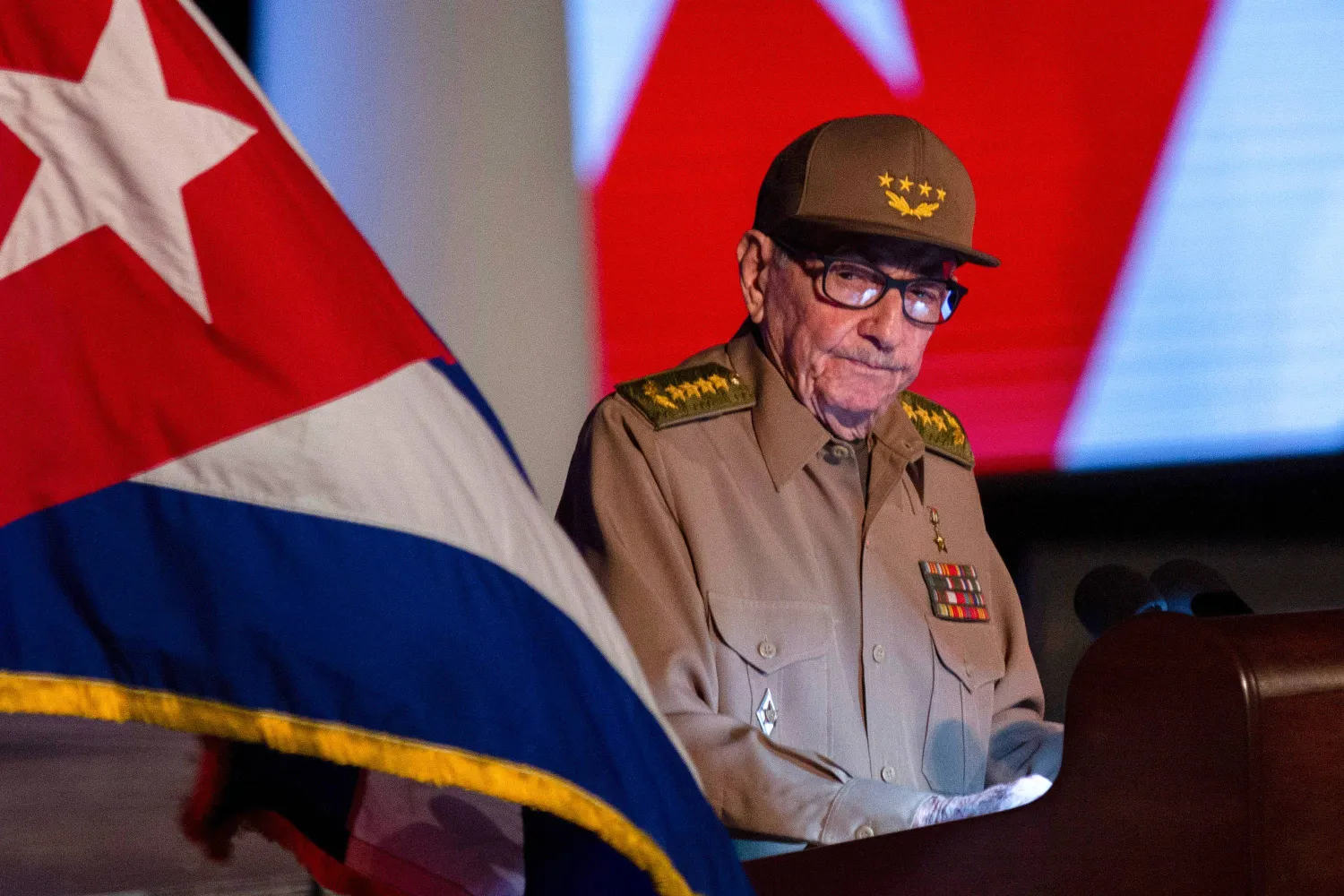
FILE - Former Cuban President Raul Castro looks at the Cuban flag during his speech at the event celebrating the 65th anniversary of the triumph of the revolution in Santiago, Cuba, Jan. 1, 2024. (AP Photo/Ismael Francisco, File)
TT

Timeline of Recent US-Cuba Relations amid Heightened Tensions in Trump's Second Term

FILE - Former Cuban President Raul Castro looks at the Cuban flag during his speech at the event celebrating the 65th anniversary of the triumph of the revolution in Santiago, Cuba, Jan. 1, 2024. (AP Photo/Ismael Francisco, File)

Wednesday's US indictment of former Cuban President Raúl Castro is the latest salvo in the Trump administration’s months-long pressure campaign against the Caribbean island's socialist-controlled government.

Castro was charged for his alleged role in the 1996 shootdown of two planes operated by the Miami-based exile group Brothers to the Rescue. Castro was defense minister at the time.

President Donald Trump has been escalating talk on regime change in Cuba after the military action in Venezuela early this year resulted in the capture of President Nicolás Maduro. In addition, a White House-ordered economic blockade has led to blackouts, food shortages and a collapse in economic activity across Cuba.

The indictment comes amid rising tensions between Trump's administration and Cuba’s government. Meanwhile, the US is in the midst of an uneasy ceasefire in the US war against Iran.

Here’s a closer look at developments over the year between Cuba and the US.

Jan. 4 A day after the operation in Venezuela that captured Maduro, Secretary of State Marco Rubio declared Cuba's government was “in a lot of trouble," as the president renewed calls for an American takeover of the Danish territory of Greenland.

Jan. 11 Trump fired off a warning to the government of Cuba as the close ally of Venezuela braced for potential unrest after Maduro was deposed. Trump called for the Cuban government “to make a deal BEFORE IT IS TOO LATE."

Cuba’s president, Miguel Díaz-Canel, responded, “Those who turn everything into a business, even human lives, have no moral authority to point the finger at Cuba in any way, absolutely in any way.”

Jan. 30 Trump signed an executive order to impose a tariff on any goods from countries that sell or provide oil to Cuba, a move that could further cripple the island.

Feb. 27 A day before the war in Iran began, Trump said the US was in talks with Havana and raised the possibility of a “friendly takeover of Cuba,” though he didn't offer any details.

Trump said Rubio was in discussions with Cuban leaders “at a very high level.”

Trump didn’t clarify his comments but seemed to indicate that the situation with Cuba, among Washington’s bitterest adversaries for decades, was coming to a critical point.

Sometime in February Raúl Guillermo Rodríguez Castro, the grandson of Castro known as "Raúlito," secretly met with Rubio on the sidelines of a Caribbean Community summit in St. Kitts in February.

March 13 Díaz-Canel said Cuba and the US held talks, marking the first time the Caribbean country confirmed widespread speculation about discussions with the Trump administration amid an energy crisis.

He said the talks “were aimed at finding solutions through dialogue to the bilateral differences between our two nations. International factors facilitated these exchanges.”

March 31 A sanctioned Russian oil tanker arrived in Cuba, the first time in three months fuel reached the island.

April 9 Diaz-Canel said he would not resign.

April 10 Two senior State Department officials — Jeremy Lewin, who is in charge of all US foreign assistance, and Michael Kozak, the top US diplomat for Latin America — led a delegation to Havana and met with Rodríguez Castro, according to one US official familiar with the meetings.

April 12 Díaz-Canel said in an interview he would not step down and that the US has no valid reason to carry out a military attack against the island or to attempt to depose him.

Speaking in the interview on NBC's “Meet the Press,” the president said an invasion of Cuba would be costly and affect regional security.

April 16 Díaz-Canel spoke during a rally that drew hundreds of people to commemorate the 65th anniversary of the declaration of the Cuban Revolution’s socialist essence.

“The moment is extremely challenging and calls upon us once again, as on April 16, 1961, to be ready to confront serious threats, including military aggression. We do not want it, but it is our duty to prepare to avoid it and, if it becomes inevitable, to defeat it,” Díaz-Canel said.

April 17 News emerged that an American delegation recently met with Cuban government officials, marking a renewed diplomatic push. This was at least the third meeting with Rodríguez Castro.

A senior State Department official met with Rodríguez Castro earlier in the month, according to a department official, who was not authorized to comment publicly and spoke on condition of anonymity to discuss the sensitive matter.

The official did not say who from the US met with Rodríguez Castro, whose grandfather is believed to play an influential role in the Cuban government despite not holding an official post. A second US official said Rubio was not part of the delegation that visited Havana.

April 23 A Cuban diplomat speaking at the United Nations said Havana will not abide by any American “ultimatums” to release political prisoners as part of new talks.

In an interview with The Associated Press, Cuban Ambassador to the UN Ernesto Soberón Guzmán said internal issues regarding detainees “are not on the negotiating table.” The release of political prisoners was a key US demand as the longtime adversaries held discussions in Cuba for the first time in a decade.

April 28 Senate Republicans rejected legislation from Democrats that would have required Trump to end the US energy blockade on Cuba unless he receives approval from Congress.

The vote on the war powers resolution showed how Republicans continue to stand behind Trump as he acts unilaterally to exert American force in a range of global conflicts, including Venezuela, Iran and Cuba — one of the US’s closest neighbors.

May 7 US officials said the United States was not looking at imminent military action against Havana despite Trump’s repeated threats that “Cuba is next” and that American warships deployed in the Middle East for the Iran conflict could return by way of the island.

The officials involved in preliminary discussions with Cuban authorities also told the AP that they are not optimistic the communist government will accept an offer for tens of millions of dollars in humanitarian aid, two years of free Starlink internet access for all Cubans, agricultural assistance and infrastructure support.

But they said Cuba had not yet outright refused the offer, which came with conditions that the government has long resisted, even after the Trump administration imposed new sanctions on Havana.

May 14 US and Cuban officials said CIA Director John Ratcliffe met with Cuban officials including Raúl Castro’s grandson during a high-level visit to the island.

Ratcliffe met with Rodríguez Castro, Interior Minister Lázaro Álvarez Casas and the head of Cuban intelligence services, and discussed intelligence cooperation, economic stability and security issues. A CIA official confirmed the meetings to the AP.

May 15 The Justice Department was preparing to seek an indictment against Castro, three people familiar with the matter told the AP.

One of the people said the potential indictment was connected to Castro’s alleged role in the 1996 shootdown of two planes operated by the Miami-based exile group Brothers to the Rescue. Castro was defense minister at the time.

All three people spoke on the condition of anonymity because they weren’t authorized to discuss an ongoing investigation. The Cuban government did not respond to a request for comment on the potential indictment, which was reported earlier by CBS.

May 18 The State Department imposed a new layer of sanctions on several Cuban government agencies, including the Interior Ministry and National Police and Intelligence Directorate, as the Trump administration continued to ratchet up pressure against the island.

May 20 Federal prosecutors announced a grand jury indictment against Castro in connection with the shootdown of the two Brothers to the Rescue planes in 1996.


What Options Does Hezbollah Have in Dealing with Israeli Escalation?

Portraits of current and former Iranian and Hezbollah leaders displayed at a rally, in the southern suburbs of Beirut, Lebanon, September 2, 2026. (Reuters)
TT

What Options Does Hezbollah Have in Dealing with Israeli Escalation?

Portraits of current and former Iranian and Hezbollah leaders displayed at a rally, in the southern suburbs of Beirut, Lebanon, September 2, 2026. (Reuters)

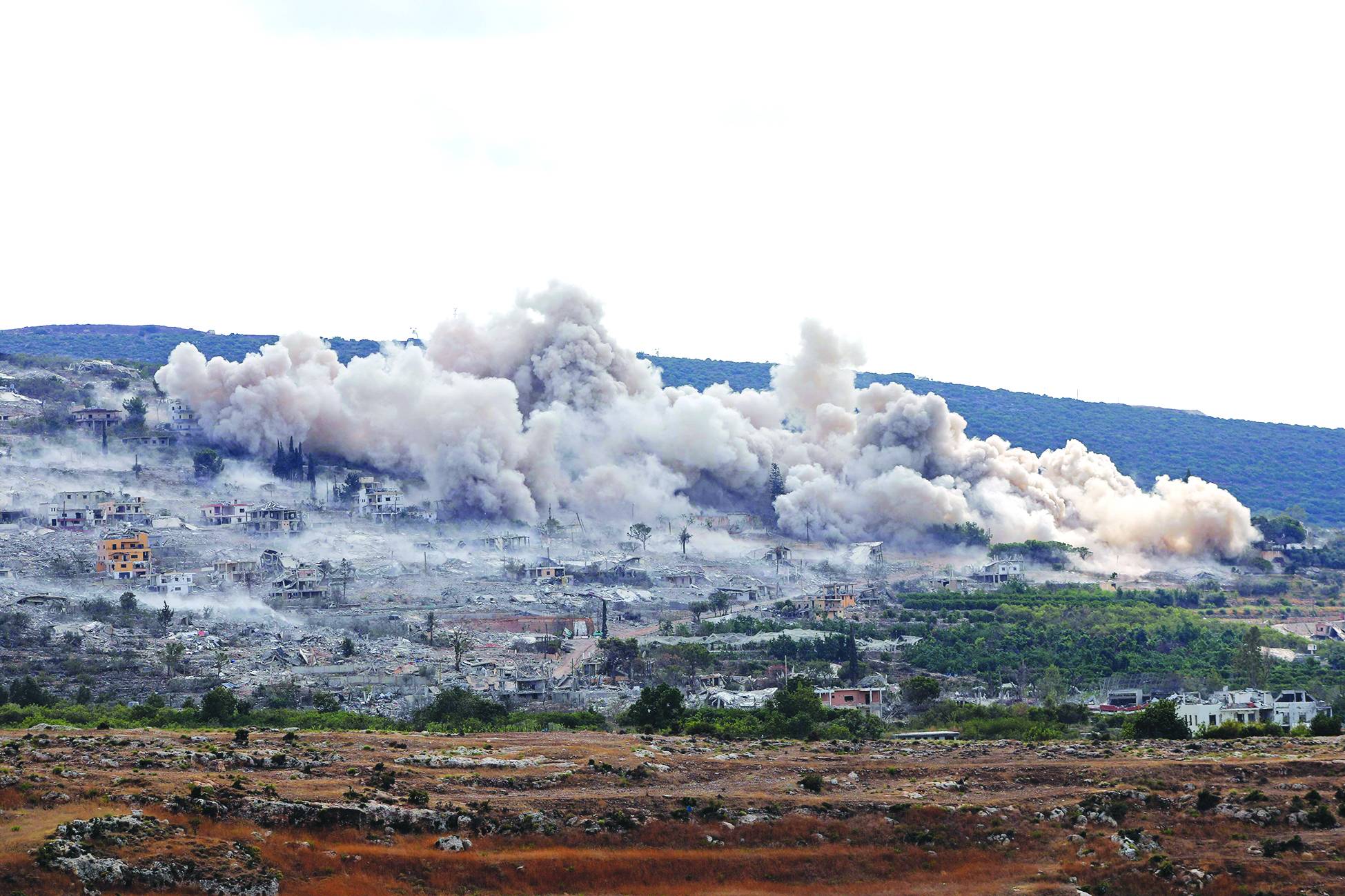
Hezbollah finds itself facing an increasingly difficult equation as Israeli escalation in South Lebanon has widened in recent days. How will the party respond to mounting Israeli strikes without being drawn into a broader confrontation that Israeli Prime Minister Benjamin Netanyahu may be seeking either to postpone Israel’s elections or improve his prospects in them.

At the same time, Hezbollah is facing growing pressure from its support base, which is bearing the brunt of the strikes and demanding a response capable of deterring Tel Aviv. Yet the group’s options appear largely constrained by regional developments, particularly the course of US-Iran negotiations, as well as domestic political calculations in Lebanon.

A response could benefit Netanyahu

Sources familiar with Hezbollah’s position said the Iran-backed party has largely avoided signaling whether it intends to retaliate or continue exercising restraint and adhering unilaterally to the ceasefire agreement.

They told Asharq Al-Awsat that Hezbollah is currently focusing on holding the Lebanese authorities responsible for addressing the situation, noting that the group had previously called on the government to engage in dialogue over the expanding Israeli offensive and the failure of negotiations.

The sources see no indication so far that Hezbollah may make a military response. They argue that one objective of Israel’s widening offensive is to provoke Hezbollah and Iran into retaliating and trigger a broader war, which could benefit Netanyahu electorally or help him postpone the polls.

Limited ability to confront Israel

Hilal Khashan, a professor of political science at the American University of Beirut, took a different view, saying Hezbollah has no options left because its military power has collapsed, particularly after its decision to hand over Ali al-Taher — “a symbol of its pride” — to Israel rather than surrender it to the Lebanese army.

“Hezbollah lacks the ability not only to fight Israel, but even to provoke it,” Khashan told Asharq Al-Awsat. “It sent two drones, and we saw the results.”

The academic believes the party’s current priority is to retain its weapons domestically after its military role in confronting Israel has effectively ended, although Hezbollah “insists on living in denial.”

He expects Israeli escalation to continue ahead of the heated elections, saying it will not be confined to Lebanon but could extend to the West Bank, Gaza and southern Syria, amid continued threats of strikes against Iran.

“As for America’s ability to pressure Israel, it appears limited,” Khashan noted, saying this means an expansion of Israeli operations into Lebanon's Bekaa Valley cannot be ruled out.

Three options for Hezbollah

Retired Lebanese army Brig. Gen. Mounir Shehadeh offered a different assessment, identifying three options available to Hezbollah.

“The first is a broad, direct military response,” he told Asharq Al-Awsat. “This is the option that could give Israel the pretext it is seeking to expand its target list, take the escalation deeper into Lebanon and perhaps strike Lebanese infrastructure. It is therefore a high-cost option.”

The second is to refrain entirely from responding. That also carries a price because Israel could interpret it as evidence that it can impose new realities without paying a cost, particularly following the escalation over Ali al-Taher and the continuing strikes, he explained.

The third option is a calibrated, limited response. “In my view, this is the most logical option if the group decides to respond,” Shehadeh said.

Such action would seek to establish the principle that “aggression carries a cost” without triggering an all-out confrontation, he went on to say. Hezbollah could simultaneously maintain a policy of ambiguity by declining to claim every operation, particularly if it wanted to preserve room for political maneuver.

Shehadeh said Hezbollah may be facing a more complicated calculation: whether to respond to Israel now or wait until the direction of US-Iran negotiations becomes clearer.

Waiting for the outcome of those talks would not necessarily mean surrendering or remaining passive, he noted. Instead, Hezbollah could defer a major response while keeping the option of limited retaliation open, since a broad confrontation at this stage could benefit Israel more than the party and give it an opportunity to widen the war before the regional picture becomes clearer.

Shehadeh expects Hezbollah to avoid, in the near term, initiating a major response that could trigger an all-out war. At the same time, the group cannot indefinitely tolerate continued Israeli escalation without responding.

He stressed that the most realistic scenario is to contain the escalation, monitor developments on the ground, take into account the US-Iran diplomatic track and keep open the option of a limited, carefully calibrated response if Israel crosses certain lines.


Iran's Hormuz Leverage Wanes as US Economic Squeeze Bites

Vessels in the Strait of Hormuz near the beach of Bandar Abbas, Iran, September 5, 2026. (Reuters)
TT

Iran's Hormuz Leverage Wanes as US Economic Squeeze Bites

Vessels in the Strait of Hormuz near the beach of Bandar Abbas, Iran, September 5, 2026. (Reuters)

Six months after a conflict that rattled markets and pushed the region to the brink of a wider war, the tide may be turning against Iran as Washington unleashes an unprecedented economic offensive to achieve what military force could not.

After years of surviving sanctions, Tehran is now confronting one of the harshest squeezes in the regime's history, according to Iranian insiders and regional sources cited by Reuters.

A US naval blockade and tougher sanctions are curbing oil exports, ‌restricting access to foreign currency and exposing growing strains in the economy.

The campaign has led US and regional officials to wager that mounting economic pressure can force Tehran to allow free passage through the Strait of Hormuz, which carries about a fifth of global oil and LNG supplies.

Their bet rests on a simple calculation: Iran is suffering more economic damage than it is inflicting. Efforts to choke off oil exports have cut state revenues, while attempts to disrupt shipping through Hormuz have not triggered the global economic shock Tehran hoped would force Washington to compromise. Energy markets have adjusted and alternative supplies have continued to flow.

Whether the pressure will force concessions remains unclear, the regional sources said. Tehran has failed to impose the costs it hoped would break Washington's resolve but has shown little sign of abandoning demands for sanctions relief, access to frozen assets and recognition of its security role in Hormuz.

Still, a new formula for resolving the standoff is now under discussion between mediators and Iran, the sources said.

Can Tehran outlast the squeeze?

Three senior Iranian sources acknowledged that Washington's campaign is becoming increasingly difficult to withstand. The latest measures have sharply restricted Tehran's ability to access foreign currency, import goods and tap global financing networks that have helped keep the economy afloat.

Iranian leaders fear a worsening economy, marked by surging prices, weaker trade and pressure on household incomes, could reignite nationwide unrest that has repeatedly challenged Tehran.

Shortages of key imports, including fuel and wheat, are becoming an increasing concern, officials said.

US Treasury Secretary Scott Bessent described the strategy as a “one-two punch” combining the blockade with “the toughest sanctions in history.”

“It is going to work in Iran and we are going to collapse this regime,” he told CNBC.

For some US, Israeli and regional officials, such ‌strains strengthen ⁠hopes that economic pressure could eventually carry political consequences inside Iran by triggering unrest, widening rifts within the leadership and weakening its grip on power.

Others remain skeptical that economic and military coercion will produce a political rupture, pointing to decades of failed efforts to destabilize the regime and Tehran's willingness to suppress dissent. They argue Iran's rulers may again prove more resilient than their adversaries expect.

Resilience test

Dennis Ross, a former US negotiator, said Washington may be interpreting Iran's economic distress as evidence of strategic success when the reality is more complicated. Tehran remains determined to demonstrate it can control Hormuz, but appears to be calibrating its use of force while keeping further escalation in reserve.

The Revolutionary Guards may believe Iran can absorb the economic pain and outlast the pressure rather than compromise, ⁠Ross said.

“The Iranians have consistently surprised us in terms of their resiliency,” he added, saying he doubted economic and military pressure alone would force a retreat. Hardliners, he said, may believe they can endure and ultimately secure what they want.

Resilience may depend as much on public tolerance as Tehran's ability to absorb economic hardship, said Burcu Ozcelik, a senior research fellow at the Royal United Services Institute.

“Of course, the economic squeeze raises the risk of public unrest, but for now, a wartime mentality appears to have a significant hold ⁠over the population,” said Ozcelik. “Foreign military intervention, civilian casualties and the perception of a wider civilization confrontation with a US-led order are sustaining a degree of 'Iran-first' patriotic support, tolerance or simply patience with the regime.”

The result is a more stubborn impasse than Washington may have anticipated. Economic pressure is deepening the pain, but Tehran's powerful Revolutionary Guards may see endurance, backed by the threat of escalation, as leverage rather than a reason to concede.

The key question is not whether Iran is ⁠hurting, but whether it is hurting enough to compromise before either side slips toward another confrontation, the regional sources said.

Ross said the clearest path to a deal may lie in the dispute over shipping fees through the Strait of Hormuz. Iran could abandon any demand for a toll while retaining the right to charge for legitimate navigational, security or environmental services, he said.

Such an arrangement could give both sides a claim to victory, allowing Tehran to step back without appearing to capitulate.

“If you could announce that the Strait were reopened,” Ross said, “I think Trump would do a deal.”


China's Memories of Mao Fade to Nostalgia 50 Years after His Death

The Great Helmsman, who died September 9 1976, is still very much a fixture in central Henan province's Nanjie -- often dubbed "China's last Maoist village". Pedro PARDO / AFP
TT

China's Memories of Mao Fade to Nostalgia 50 Years after His Death

The Great Helmsman, who died September 9 1976, is still very much a fixture in central Henan province's Nanjie -- often dubbed "China's last Maoist village". Pedro PARDO / AFP

The crimson flags on Nanjie village's "East is Red" Square hang limp in the sweltering summer heat as a trickle of tourists take photos with a towering statue of Chairman Mao Zedong, still gleaming white almost 50 years after he died.

The Great Helmsman, who died September 9 1976, is still very much a fixture in central Henan province's Nanjie -- often dubbed "China's last Maoist village", said AFP.

Nostalgia for Mao's egalitarian ideals is growing in China as memories of his turbulent rule fade and the country grapples with a slowing economy and inequality.

Mao, who led the 1949 communist revolution against the ruling nationalists, ushered in an era of collectivized ownership he argued would drive industry and unite the country, but his drastic policies are also blamed by historians for mass starvation and millions of deaths.

While the ruling Chinese Communist Party maintains Mao was a revolutionary hero, it publicly acknowledged after his death that his devastating Cultural Revolution was a "grave mistake" -- a verdict upheld by subsequent leaders.

In Nanjie, countless murals of the former Chinese leader are plastered around the village.

Residents still live under Maoist principles of shared ownership, while the rest of the country moved on from that economic model.

"I still revere him very much," Xie Kaiyue, a 22-year-old local university student, said of Mao, who died almost three decades before she was born.

"I think young people in the village and, actually, myself, aren't as strong-spirited as in the past... People were purer," she said.

Nearby, electric carts whisked visitors past uniform apartment blocks plastered with socialist slogans as guides explained how cooperative ownership in local enterprises funds free housing for residents.

- Party line -

Around 500 kilometers (310 miles) north, in the mountain village of Dazhai in Shanxi province, once promoted by Mao as a national model after locals terraformed its arid hills into irrigated fields, tourists reminisce about an era when the Great Helmsman dominated political and social life.

"(People) didn't have enough to eat or to wear," Li, a 64-year-old tourist from Xi'an, said of his childhood.

"But... the whole country was full of vigor, and there was a spirit of struggling with heaven, earth, and people to change every aspect of China," the retiree said.

"Of course I miss it."

Now, Dazhai is overflowing with shops selling items that support Mao's personality cult -- posters, playing cards, and crockery emblazoned with his image, and the "Little Red Book" of his quotations.

Still, references to dark chapters of his decades in absolute power are tightly censored in public discourse.

The decade-long episode instigated by Mao in 1966 saw intellectuals brutally targeted as "class enemies" and schools shuttered, setting China back for years in education and development.

Private property and land were collectivized, while economic management pushed the country to the Great Famine, which the government says killed around 15 million people, while historians estimate around 20-43 million.

In one museum, text mentioning the Cultural Revolution had been crudely scraped off signage.

"Everything you see in the public domain... is the party line. No one is allowed to deviate from this," said scholar Xu Chenggang, who was targeted as a child in Beijing during the Cultural Revolution because his father was labelled a "rightist".

Mao's face is printed on banknotes, his portrait overlooks Tiananmen Square, and his body is preserved in a mausoleum.

Every year new movies and TV shows dramatizing Mao's life beam the message of his great deeds to public.

Public discussion has been squeezed further under current leader Xi Jinping, who warns against "historical nihilism", or narratives contradicting the party's own.

"The Communist Party told people there were mistakes, but what's the meaning of 'mistake'? No one knows," Xu said.

- 'Great figure' -

The sanitized history has left space for romanticized interpretations among youths frustrated by long working hours and intense competition in education and the job market.

In December, a viral video series on Bilibili -- a platform popular with those under 30 -- argued that the 2017 movie 'Youth', which follows young performers in a military dance troupe during the 1970s, was a subtle ode to the Cultural Revolution.

The videos, which praised Mao and blamed capitalist elites for crushing the movement, were removed after gaining over 35 million views in less than a week.

"Today, there is more of a sense that the Cultural Revolution was a period of idealism, where society was fired by ideals and not by the relentless pursuit of money and material goods," said to Kerry Brown, head of the Lau China Institute in London and author of a recent book on Mao.

"This is, of course, a total fabrication," he said.

Many also credit Mao with laying the foundation for China to become a modern, technologically advanced nation, said Mobo Gao, professor of Chinese studies at Adelaide University.

"They ask, where did (today's China) come from? It came from the establishment of the PRC," said Gao, who lived through the Mao era in rural Jiangxi province.

"Who was the one who really established the PRC? It must be Mao."

In Shijiazhuang, an industrial city of seven million northeast of Dazhai, 20-year-old Wang Zhihao and his classmates posed with a giant Mao statue opposite the municipal government.

"We admire and revere Chairman Mao very much. He is a great figure," Wang said, as the sound of elderly residents singing songs praising the Communist Party drifted over from the nearby square.

"He led the founding of New China."