


2017 Social Media Failures Put Platforms under Scrutiny

Social media has become an integral part of daily life. (Reuters)
TT

2017 Social Media Failures Put Platforms under Scrutiny

Social media has become an integral part of daily life. (Reuters)

As 2017 draws to a close, the role of social media as an integral part of our daily lives is becoming more evident.

Today, Facebook has more than two billion active users, with 83.6 percent of them are out of the US and Canada, followed by YouTube with 1.5 billion users watching 3.25 billion hours of videos monthly.

Instagram also has over 800 million users who upload around 80 million pictures a day.

Twitter, the company said the platform’s users reached over 330 million, including more than 82 percent of the world’s leaders who have personal accounts to communicate with their people, and the world.

The growing use of social media and their engagement in politics, and even their recruitment by extremists aiming at spreading their terrorist ideologies, prompted decision-makers to review these platforms, and seek to implement new laws to regulate them.

In this context, an article published in early November by “The Economist” wondered whether social media threatens democracy or supports it. The article said: “Instead of being a mean of enlightenment, social media outlets have become a poison incubator.”

This article came after Facebook and Twitter were accused of turning into platforms for misleading media and violating democracy worldwide. The US presidential campaign was the biggest example.

Since Facebook announced that Russian parties funded promotional messages on its network during the campaign that preceded the US elections in 2016, the company and its rival Twitter - which also disclosed similar information in October - faced many blows, even though both companies stressed their eagerness to protect democracy.

Both groups have yielded to the pressure and accepted to cooperate with the US Congress and the court to investigate the likelihood of Russian intervention in the elections won by Donald Trump. The Kremlin has repeatedly denied these allegations.

In October, Facebook admitted that suspicious Russian companies and enterprises deceived it, and published thousands of ads including content that interferes in the US elections on its pages. By the end of the same month, Twitter made the same step.

Following the investigations conducted by Facebook to respond to these accusations, the company announced earlier this month that the Russian influence on the political developments was not as significant as expected.

It revealed that Russian parties spent less than 1$ on ads that targeted voters during the Brexit referendum. As for the US elections, it revealed that over 3,000 accounts sought to influence Americans in favor of Trump.

Investigations concerning other platforms are still ongoing, but the responses given by the companies were not enough to convince officials.

The election-related conflict between the social media companies and governments was not the only one. Cyber-terrorism was another case that strained ties between them. While extremist groups, mainly ISIS, relied on social media to spread their ideologies, recruit cross-borders armies and plan lone-wolf attacks, governments also recognized the threats behind encrypted apps that spread extremism and facilitated attack planning.

British PM Theresa May has urged these platforms to cooperate with governments to maintain national security and to foil any possible attacks or recruiting attempts. Companies owning these apps have indeed started deleting extremist materials and blocking suspicious users.

They have however refused to share user data with governments, fearing a loss of their audience after violating their privacy. This refusal has maximized the conflict between social media giants and governments.
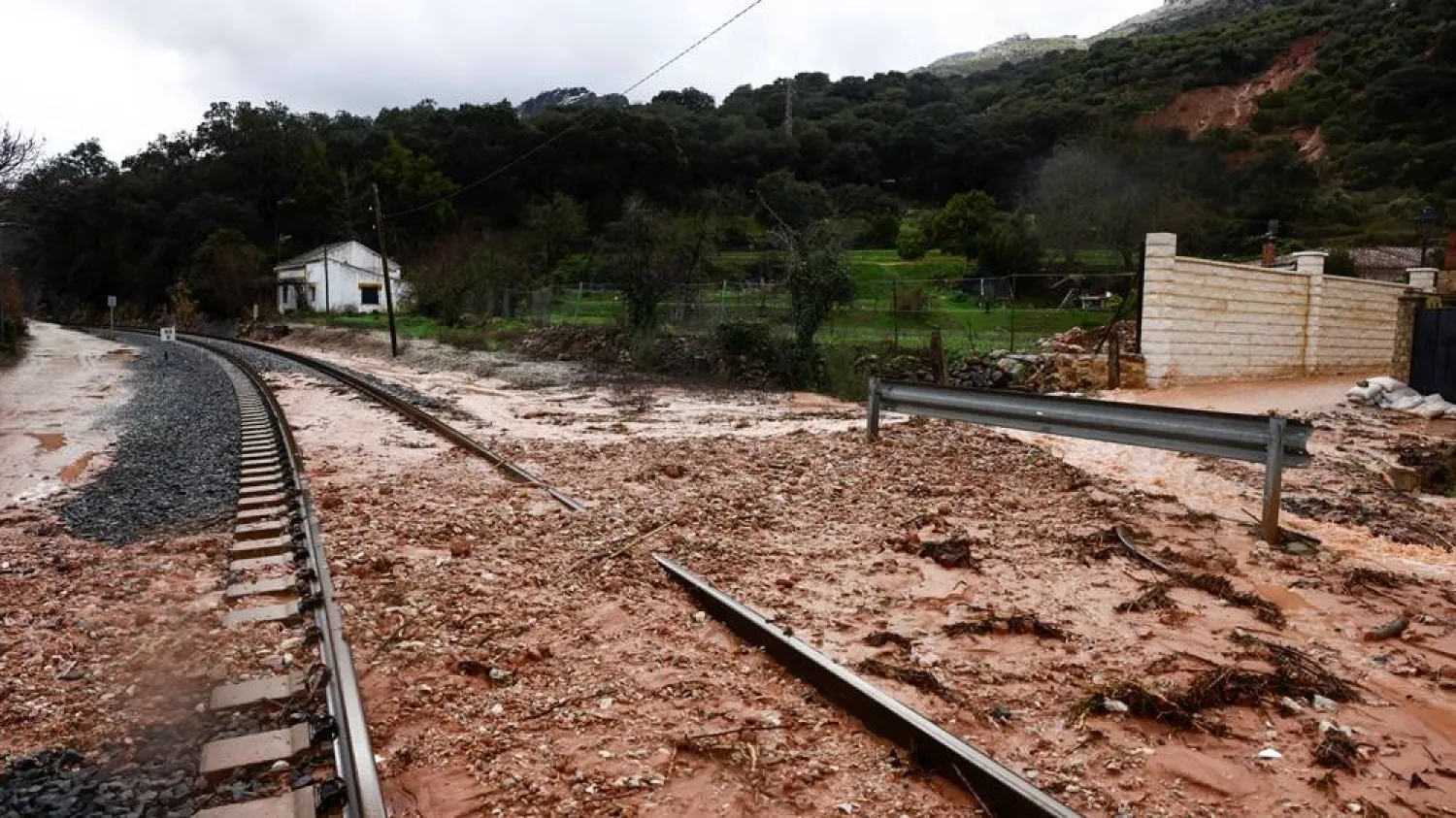



Spain and Portugal Continue to Battle Storm Leonardo as New Storm Approaches

 A mountain landslide blocks railway tracks during heavy rains, as storm Leonardo hits parts of Spain, in Benaojan, Spain, February 6, 2026. (Reuters)
A mountain landslide blocks railway tracks during heavy rains, as storm Leonardo hits parts of Spain, in Benaojan, Spain, February 6, 2026. (Reuters)
TT

Spain and Portugal Continue to Battle Storm Leonardo as New Storm Approaches

 A mountain landslide blocks railway tracks during heavy rains, as storm Leonardo hits parts of Spain, in Benaojan, Spain, February 6, 2026. (Reuters)
A mountain landslide blocks railway tracks during heavy rains, as storm Leonardo hits parts of Spain, in Benaojan, Spain, February 6, 2026. (Reuters)

Storm Leonardo continued to batter the Iberian Peninsula on Friday, bringing floods and putting rivers at risk of bursting their banks while thousands of people were evacuated from their homes in Spain and Portugal.

In southern Spain's Andalusia region, some 7,000 people have had to leave their homes due to successive storms.

Among them were around 1,500 people ordered to evacuate the mountain village of Grazalema, where Andalusia's regional leader Juan Manuel Moreno warned that aquifers were "full to the brim with water,” and at risk of collapsing.

“It's raining on already saturated ground. The land is unable to drain," Moreno said. “We urge extreme caution. This is not over.”

Spanish police said Friday they had found a body located 1,000 meters (about 0.6 miles) away from where a woman had disappeared Wednesday after she fell into a river in Malaga province while trying to rescue her dog. Police said they had not yet identified the body, but believed it belonged to the 45-year-old woman.

Another storm front, Marta, was expected to arrive Saturday, with Spain's weather agency AEMET saying it would bring even more rain and heavy winds, including to areas already drenched by Storm Leonardo.

Marta is expected to affect Portugal, too.

Of particular concern was southern Spain's Guadalquivir River, which flows through Córdoba and Seville and eventually into the Atlantic Ocean, and whose water levels have dramatically risen in recent days.

Additional rain Saturday could leave many more homes at risk in Córdoba, local authorities warned.

In Portugal, parts of Alcacer do Sal were submerged after the Sado River overflowed, forcing residents to leave the city located 90 kilometers (about 56 miles) south of Lisbon.

Alerts were issued also for regions near the Tagus River due to rising water levels.

A separate storm in late January left a trail of destruction in Portugal, killing several people, according to Portuguese authorities.


AROYA Cruises Debuts Arabian Gulf Voyages for 2026

AROYA offers a curated experience featuring culturally inspired entertainment and diverse dining options - SPA
TT

AROYA Cruises Debuts Arabian Gulf Voyages for 2026

AROYA offers a curated experience featuring culturally inspired entertainment and diverse dining options - SPA

AROYA Cruises, a subsidiary of the PIF-owned Cruise Saudi, has officially launched its inaugural season in the Arabian Gulf.

Running from February 21 to May 8, the season marks a milestone in regional tourism by blending authentic Saudi hospitality with international maritime standards, SPA reported.

AROYA offers a curated experience featuring culturally inspired entertainment and diverse dining options.

The season is designed to provide guests with a dynamic way to explore the Gulf, setting a new benchmark for luxury travel that reflects the Kingdom's heritage on a global stage.


Snowstorm Brings Much of Denmark to a Halt

A car drives in heavy snow at Store Heddinge in South Zealand, Denmark, 05 February 2026.  EPA/Mads Claus Rasmussen
A car drives in heavy snow at Store Heddinge in South Zealand, Denmark, 05 February 2026. EPA/Mads Claus Rasmussen
TT

Snowstorm Brings Much of Denmark to a Halt

A car drives in heavy snow at Store Heddinge in South Zealand, Denmark, 05 February 2026.  EPA/Mads Claus Rasmussen
A car drives in heavy snow at Store Heddinge in South Zealand, Denmark, 05 February 2026. EPA/Mads Claus Rasmussen

Denmark authorities halted public transport, closed schools and cancelled flights on Friday as heavy snowfall blanketed much of the country.

The Nordic country's meteorological institute DMI warned that heavy snow would likely continue until Friday evening in the east, where the capital Copenhagen is located.

Police said people should avoid going outdoors unless necessary and stay indoors in the capital and the surrounding region.

Copenhagen's airport cancelled flights to Paris and Berlin and warned of "delay and cancellation risks because of snowy conditions." Many schools were closed.

In the second-largest city of Aarhus, bus services were cancelled.