Griffiths to Asharq Al-Awsat: Saudi Arabia Has Legitimate Right to Secure its Borders

UN special envoy to Yemen Martin Griffiths. (Reuters)
TT

Griffiths to Asharq Al-Awsat: Saudi Arabia Has Legitimate Right to Secure its Borders

UN special envoy to Yemen Martin Griffiths. (Reuters)

United Nations special envoy to Yemen Martin Griffiths realizes that several doubts cloud the Iran-backed Houthis’ political pledges. Any Yemeni opponent of the group agrees with these doubts and believes that the Houthis do not even know the meaning of peace, citing the nearly 15 years of wars waged in their country.

Griffiths, however, said that he received pledges from the militias and will leave it up to the September 6 consultations in Geneva to reveal exactly what these pledges mean to them.

The third UN envoy to Yemen in seven years told Asharq Al-Awsat that his ultimate goal from the consultations was to reach a signed agreement on forming a national unity government and making security arrangements.

In a series of emails to Asharq Al-Awsat, he explained that the General People’s Congress (GPC) and southerners must be part of the political process in Yemen.

Griffiths, who assumed his position in March, is hoping to reach a swift settlement to the conflict based on previous negotiations rounds. He explained that a settlement will not lead to peace, but stop the war in Yemen.

Disappointment

Griffiths expressed his disappointment over how some people use the media to make polarizing statements. His duty, he explained, was to find a middle ground between the rival parties. This is the role of a mediator, not a negotiator, he clarified. The solution will come from the Yemenis themselves, not the mediator or anyone else. He said that he, along with the UN, were there to help the parties reach this solution.

The envoy reiterated statements he had made at the UN Security Council in which he said that the Yemenis have to live with people they do not like, meaning that condemnations against them should stop. Building peace means that each side needed to respect the other and their different views, instead of denouncing and condemning them.

It is important to reach an agreement on using the media to build alliances instead of condemning enemies, Griffiths said, while adding that he seeks to build hope and goodwill among the Yemenis.

He also explained that he tries not to speak ill of any of the warring sides because they are all needed for the solution to the conflict. He revealed that some sides urge him to condemn this side or that, but he always refuses. He instead highlighted what he called one of his best assets: His ability to listen. By listening, he elaborated, he will be able to find common ground, not causes for division, among the parties.

Peace process

The September 6 consultations in Geneva will kick off from many good and bad lessons learned from previous rounds of talks held in Biel, Geneva and Kuwait, Griffiths told Asharq Al-Awsat. He added that he also took many lessons from his meetings with several Yemenis, diplomats and leaders in the past few months.

The main goal, he remarked, was to reach an agreement between the Yemeni government and the Houthis on several central issues that would stop the war and lead to a national unity government that brings together all sides. This will demand a signed agreement by all concerned parties. The deal must include the establishment of a political transition period and a unity government based on Security Council resolution 2216. It will also demand security arrangements whereby all armed groups would withdraw from their locations and lay down their weapons.

The woman, South and GPC

Resolution 2216 calls for comprehensive political dialogue, stressed Griffiths. This includes bringing in the Yemeni woman to take part in the consultations because of the important role she can play in finding middle ground and prioritizing peace.

The people of the South should also be part of this process, he added, noting that the situation there had changed. They should be part of the future of Yemen and not be ignored.

The political parties, specifically the GPC, should also be part of this process. Most of the parties are represented in the Yemeni government or among the Houthis, but not all of them. Options must be available to find a way to include them in the peace process, said Griffiths.

He hoped that a swift settlement based on all previous rounds of negotiations can be reached. The end of the war will first and foremost allow Yemeni families and children to end their reliance on humanitarian aid. It will also include a transition process that will lead to peace. The settlement, he stated, will not build peace, but end the war. Peacebuilding, he continued, will take some time and will include other parties besides the ones concerned with ending the war.

Difference between consultations and talks

At the moment, continued Griffiths, consultations are being held to set the stage for negotiations. Consultations are an official process. Consultations do not necessarily need to be held face-to-face between parties, but they are still possible. Talks are the official process between parties and are held one-on-one in order to reach a settlement, the UN envoy added. Talks will be held once consultations are complete. He stated that Geneva was chosen for the September consultations because it is a neutral location.

Doubts over Houthi commitments

Griffiths told Asharq Al-Awsat that the Houthis, including their leader Abdulmalek al-Houthi, had expressed to him their willingness to return to the negotiations table. In fact, he revealed that they had criticized him for being slow in calling parties to the table. The UN envoy said that he was very pleased to hear that the Houthis were committed to holding negotiations to reach a solution. He revealed that they even told him that they are aware of what was needed to reach this settlement.

He acknowledged the doubts that surround these claims, saying that the Geneva consultations will reveal what the Houthis truly mean by “commitment.”

As for the Yemeni government, Griffiths said that President Abdrabbuh Mansur Hadi was a good interlocutor, as were the prime minister and foreign minister. They asserted to the envoy their complete understanding of what was required during this process.

The settlement demands that the exclusive right to carry arms be limited to one side and that is the new Yemeni government that will be formed from this process. All armed groups must, therefore, be disbanded. This will take time and it is no secret that this is what is being demanded, Griffiths said. Both sides are aware of this.

Saudi Arabia, the Gulf and Red Sea

Addressing Saudi Arabia, he remarked that the Kingdom has a legitimate right to see its borders secured and stable. It territory should not be targeted and the UN is based on such principles.

No country must play a role in determining Yemen’s future. This is up for the Yemenis to decide, he stressed. He also revealed that everyone he had met, including officials in Saudi Arabia, had underlined this principle to him.

Furthermore, Saudi Arabia is not the only side that has an interest in seeing a stable Yemen. Europe has a major interest in ensuring safe trade through the Red Sea. This is very important, noted Griffiths. Stability in Yemen does not concern the Yemenis alone, but a solution there is very strategic.

Should the situation in the country deteriorate, Griffiths warned that that would lead to a greater threat from terrorism and extremism given that al-Qaeda and ISIS are already present there. This will pose a greater risk to trade. On this note, he highlighted the recent rapprochement between Ethiopia and Eritrea, which he said presents a major opportunity for the Red Sea to play a greater role on the trade and environmental levels. Yemen should play a primary role in this issue.

Moreover, Griffiths remarked that stability in Yemen, regardless of the outcome of the negotiations, would not be possible without economic relations with the Arab Gulf. Yemen’s economy, income, stability and living conditions will be based on reconstruction and trade with its neighbors. This is how real peace is established: By making sure that neighbors need each other. They should not fear or fight each other, he stressed.

No guarantees without a will

Observers on Yemen always wonder about the future. What will happen if an agreement were reached on everything? What guarantees that the Houthi militias will not betray their partners like they did in December when they turned against Ali Abdullah Saleh, the former president who went against them.

Griffiths said that everyone should know that the only real guarantee for any agreement is the will of all sides. The Security Council could offer guarantees, or even sanctions, but if the sides do not want the operation to succeed, then it will not. Many people say that solutions must be imposed, but Griffiths stressed that efforts are being made to reach an agreement. Agreements are voluntary, not imposed.

Southern issue

The UN envoy said that it was necessary for the residents of the South to be aware of what will take place at the consultations, and later the negotiations, because it will affect them. The future of the South will not be addressed at Geneva in September. It will be discussed during the transition period. This was explained to the southerners, he revealed, and they were in agreement over it.

As a UN envoy, said Griffiths, he believes in the sovereignty, unity and security of any country. These are the values of the UN. It does not support separatism unless it was part of a consensual agreement. He stressed that he believes in the importance of the unity of Yemen, saying its separation will be a disaster.

Obeidat to Asharq Al-Awsat: Mystery Sniper Killed Wasfi Tal

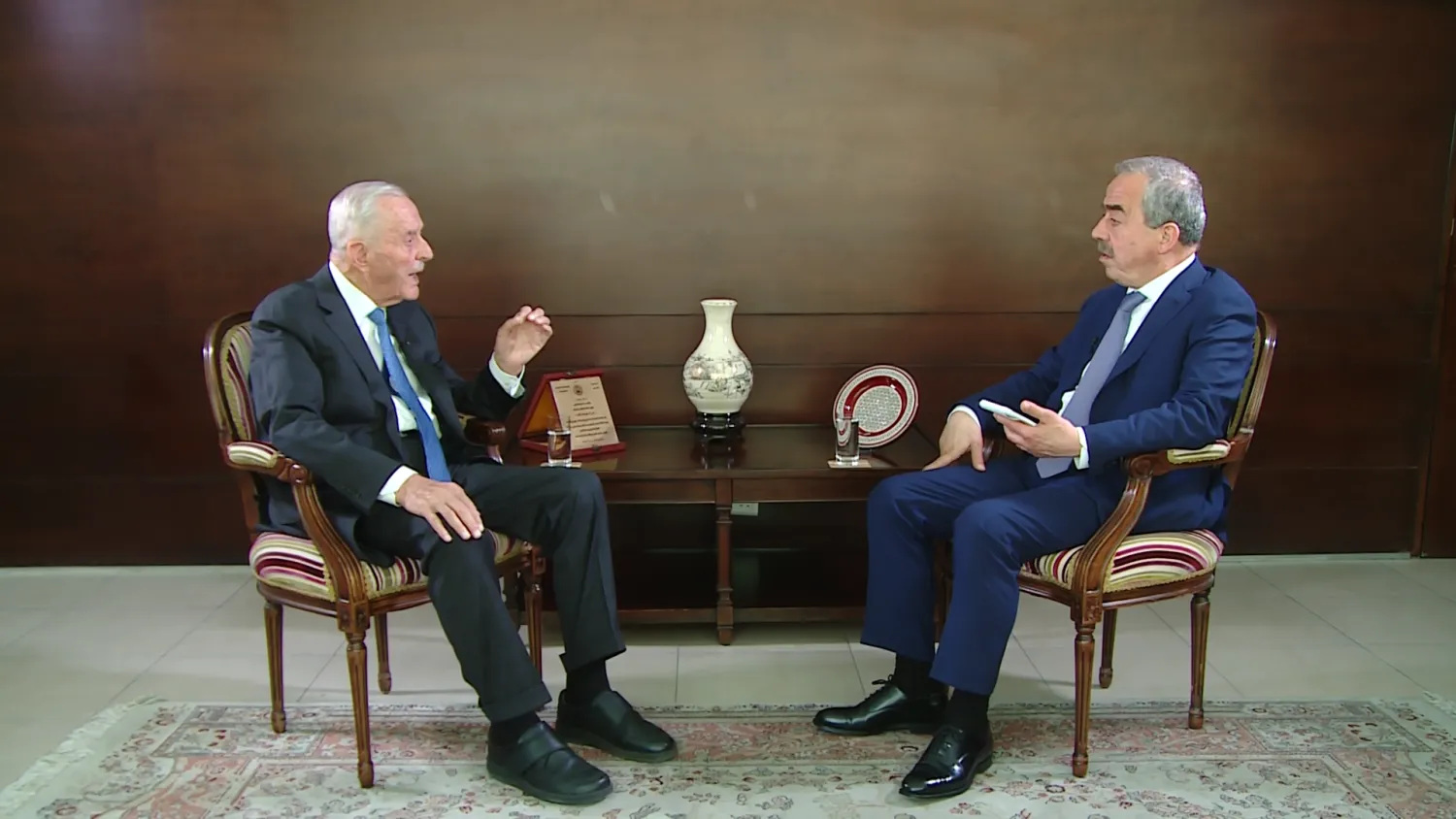
Ahmad Obeidat during the interview with Asharq Al-Awsat's Editor-in-Chief Ghassan Charbel in Amman. (Asharq Al-Awsat)
TT

Obeidat to Asharq Al-Awsat: Mystery Sniper Killed Wasfi Tal

Ahmad Obeidat during the interview with Asharq Al-Awsat's Editor-in-Chief Ghassan Charbel in Amman. (Asharq Al-Awsat)

Former Jordanian Prime Minister Ahmad Obeidat, who died earlier this month, was both a key player and a witness to sensitive chapters in his country’s history.

Obeidat began his career in the 1970s as an assistant director of intelligence, later serving as head of the General Intelligence Department until 1982. At the height of the Palestinian-Jordanian confrontation, he was abducted by the Popular Front for the Liberation of Palestine before the events of September 1970.

He also served for two years as interior minister before King Hussein appointed him prime minister in early 1984, a post he held until April 1985, concurrently serving as defense minister.

For more than 15 years, Obeidat remained at the center of decision-making. He later took on roles drawing on his legal background, from chairing the Royal Commission that drafted the National Charter in the early 1990s to serving in human rights and judicial positions, most recently as head of the board of trustees of the National Center for Human Rights until 2008.

Weeks before Oct. 7, 2023, the day of the Al-Aqsa Flood Operation, Asharq Al-Awsat met Obeidat in Amman. The interview had been scheduled for publication in October 2023, but the major developments that followed led to its postponement, particularly as Obeidat addressed contentious issues, notably Jordanian-Palestinian relations.

In the first part of the interview, Obeidat revisits his formative years, when his political and professional journey began as a law student in Baghdad on the eve of the July 14, 1958 revolution, before returning to Iraq after the fall of the monarchy amid sweeping regional transformations.

The account moves to his early professional life in Jordan, from a brief stint in legal practice to joining the Public Security Directorate, then serving in the Political Investigations Office, which formed the nucleus of organized intelligence work. It concludes with a detailed narrative of the establishment of the General Intelligence Department in 1964, its early structure and founding members, at a time when the Jordanian state was rebuilding its institutions in an intensely turbulent region.

Asked where he was when the 1958 revolution broke out in Iraq, Obeidat said he had completed his first year in law studies and returned to Jordan for the summer break.

“While I was in Irbid, news arrived of the July 14 revolution in Iraq that overthrew the monarchy. After the summer break ended, I went back to Baghdad, where a republican government under Abdul Karim Qassem had taken power,” he recalled.

The return was not easy. “We faced difficulties on the road. The border between Jordan and Iraq was nearly closed, so we had to return via Damascus and then through desert routes to Baghdad. It was an exhausting journey,” he added.

Obeidat left Baghdad in 1961 after completing his final exams. “On the last day of exams in the fourth year, I went home, packed and returned to Jordan the same day. The border between Baghdad and Amman had reopened.”

Among his contemporaries at law school was Saddam Hussein, who studied in the evening section. Obeidat said he saw him only once by chance. “He was with others, one of whom later became a governor,” he revealed.

He returned to Baghdad again in 1983 as Jordan’s interior minister to attend a conference of Arab interior ministers, more than two decades after graduating. There, he met his Iraqi counterpart, Saadoun Shaker. “It was an ordinary relationship,” Obeidat said, describing the ties as largely ceremonial.

From customs to intelligence

After returning to Jordan in 1961, Obeidat initially considered practicing law. But limited opportunities in Irbid and his family’s financial constraints led him to seek public employment.

He was appointed to the Customs Department in Amman, where he worked for several months before joining the Public Security Directorate in April 1962 as a first lieutenant following three months of training at the police academy.

At the time, there was no separate intelligence agency. Public Security included a branch handling general investigations. Soon after, the Political Investigations Office was formed, staffed by legal officers from the army and Public Security, including Mudar Badran and Adeeb Tahaoub from military justice, alongside Obeidat and Tariq Alaaeddin from Public Security.

The office handled cases referred by security and official bodies, including military intelligence and the Royal Court. After reviewing its work, the late King Hussein ordered the establishment of a legally grounded intelligence body. The General Intelligence Law was issued in 1964, formally creating the department, explained Obeidat.

Mohammad Rasoul Al-Kilani became its first director, followed by Mudar Badran, then Nadhir Rashid. Al-Kilani briefly returned before Obeidat assumed the post, succeeded later by Tariq Alaaeddin.

The shock of 1967

Recalling the 1967 war, Obeidat described it as “a defeat, not a setback. A military, political, psychological, and social defeat in every sense.”

He said there was no institutional intelligence view on Jordan’s participation. “The political opinion of a figure of Wasfi Tal’s stature was that entering the 1967 war was a mistake. He was not in office, but he remained close to the king and influential,” said Obeidat.

According to Obeidat, King Hussein believed Israel would occupy the West Bank whether Jordan participated or not.

“Participation was a gamble that might succeed or fail. The catastrophe was discovering that the Egyptian air force had been destroyed within half an hour,” he added.

Despite the bitterness, he said: “We did not fear for the regime, but we sought to contain public anger and absorb the shock.”

September and the assassination of Wasfi Tal

Obeidat first met Yasser Arafat after the events of September 1970. He confirmed that Arafat left Amman with an official Arab delegation to attend the Cairo summit and returned immediately afterward.

He recalled being informed mid-flight of the death of Egyptian President Gamal Abdel Nasser. “King Hussein was deeply affected.”

On the assassination of Prime Minister Wasfi Tal in Cairo, Obeidat said the gunmen who confronted Tal at the hotel entrance were not responsible for the fatal shot. “The fatal bullet came from behind, from a sniper in another unseen location. To this day, the sniper has not been identified,” he added.

He rejected the notion that Tal had been reckless. “Wasfi was not a gambler. He had a distinct political project,” he stressed.

Obeidat said the Black September Organization accused Tal of ordering the expulsion of fedayeen from forested areas in Jerash and Ajloun. He denied that Tal was directly responsible, saying the clashes began after fedayeen attacked a police station and killed officers, prompting a spontaneous army response.

Abduction without interrogation

Before September 1970, Obeidat was abducted by the Popular Front for the Liberation of Palestine while serving as assistant intelligence director.

Armed vehicles stopped his car as he was leaving his home in Jabal Al-Taj with his family. He and his brother-in-law were taken to the Wehdat camp. “We were treated politely. We drank tea. No one asked me a single question,” he recalled.

After several hours, he was driven to another house in Amman and later returned home. The next morning, members of Fatah took him briefly to one of their offices, only to release him on foot without explanation.

“Not a single question was asked,” Obeidat said. “It was bewildering.”

He resumed his duties after ensuring his family’s safety. “At the time, intelligence, like any official institution, was threatened and targeted,” he said, reflecting on one of the most volatile periods in Jordan’s modern history.


Microsoft Saudi Head Affirms Kingdom Entering AI Execution Phase

Saudi Arabia shifts from AI pilots to live deployment in key sectors (Shutterstock)
TT

Microsoft Saudi Head Affirms Kingdom Entering AI Execution Phase

Saudi Arabia shifts from AI pilots to live deployment in key sectors (Shutterstock)

Riyadh’s hosting of the Microsoft AI Tour this week delivered a headline with concrete weight: customers will be able to run cloud workloads from a local Azure data center region starting in the fourth quarter of 2026.

The announcement was more than a technical update. It marked a shift in posture. Saudi Arabia is no longer testing artificial intelligence at the margins. It is moving decisively into execution, where infrastructure, governance, skills development, and enterprise adoption align in a single direction.

For Turki Badhris, president of Microsoft Saudi Arabia, the timing reflects years of groundwork rather than a sudden push.

“Confirming that customers will be able to run cloud workloads from the Azure data center region in the fourth quarter of 2026 gives organizations clarity and confidence as they plan their digital and AI journeys,” Badhris told Asharq Al-Awsat on the sidelines of the event.

“Clarity and confidence” may sound procedural, but they are strategic variables. Government entities and large corporations do not scale AI based solely on pilot projects.

They move when they are assured that local infrastructure is available, regulatory requirements are aligned, and long-term operational continuity is secured. The announcement of the new Azure region signals that the infrastructure layer is no longer a plan, but a scheduled commitment nearing implementation.

From pilots to production

Saudi Arabia’s AI story has unfolded in phases. The first focused on expanding digital infrastructure, developing regulatory frameworks, and strengthening cloud readiness. That phase built capacity. The current phase centers on activation and use.

Badhris said the conversation has already shifted. “We are working closely across the Kingdom with government entities, enterprises, and partners to support readiness, from data modernization and governance to skills development so that customers can move from experimentation to production with confidence.”

The distinction is fundamental. Pilots test potential. Production environments reshape workflows.

Companies such as Qiddiya Investment Company and ACWA Power illustrate that transition. Rather than treating AI as isolated pilot initiatives, these organizations are embedding it into daily operations.

ACWA Power is using Azure AI services and the Intelligent Data Platform to optimize energy and water operations globally, with a strong focus on sustainability and resource efficiency through predictive maintenance and AI-driven optimization.

Qiddiya has expanded its use of Microsoft 365 Copilot to enable employees to summarize communications, analyze data, and interact with dashboards across hundreds of assets and contractors.

AI is no longer operating at the margins of the enterprise. It is becoming part of the operating core, a sign of institutional maturity. The technology is shifting from showcase tool to productivity engine.

Infrastructure as strategic signal

The Azure data center region in eastern Saudi Arabia offers advantages that go beyond lower latency. It strengthens data residency, supports compliance requirements, and reinforces digital sovereignty frameworks.

In highly regulated sectors such as finance, health care, energy, and government services, alignment with regulatory requirements is not optional; it is essential.

Badhris described the milestone as part of a long-term commitment. “This achievement represents an important milestone in our long-term commitment to enable real and scalable impact for the public and private sectors in the Kingdom,” he said.

The emphasis on scalable impact reflects a more profound understanding: infrastructure does not create value on its own, but enables the conditions for value creation. Saudi Arabia is treating AI as core economic infrastructure, comparable to energy or transport networks, and is using it to form the foundation for productivity gains.

Governance as accelerator

Globally, AI regulation is often seen as a constraint. In the Saudi case, governance appears embedded in the acceleration strategy. Adoption in sensitive sectors requires clear trust frameworks. Compliance cannot be an afterthought; it must be built into design.

Aligning cloud services with national digital sovereignty requirements reduces friction at scale. When organizations trust that compliance is integrated into the platform itself, expansion decisions move faster. In that sense, governance becomes an enabler.

The invisible constraint

While generative AI dominates headlines, the larger institutional challenge often lies in data architecture. Fragmented systems, organizational silos, and the absence of unified governance can hinder scaling.

Saudi Arabia's strategy focuses on data modernization as a foundation. A structured and integrated data environment is a prerequisite for effective AI use. Without it, AI remains superficial.

Another global challenge is the skills gap. Saudi Arabia has committed to training three million people by 2030. The focus extends beyond awareness to practical application. Transformation cannot succeed without human capital capable of integrating AI into workflows.

Badhris underscored that skills development is part of a broader readiness ecosystem. Competitiveness in the AI era, he said, is measured not only by model capability but by the workforce’s ability to deploy it.

Sector transformation as economic strategy

The Riyadh AI Tour highlighted sector use cases in energy, giga projects, and government services. These are not peripheral applications but pillars of Vision 2030. AI’s role in optimizing energy management supports sustainability. In major projects, it enhances execution efficiency. In government services, it improves the citizen experience.

AI here is not a standalone industry but a horizontal productivity driver.

Positioning in the global landscape

Global AI leadership is typically measured across four pillars: compute capacity, governance, ecosystem integration, and skills readiness. Saudi Arabia is moving to align these elements simultaneously.

The new Azure region provides computing. Regulatory frameworks strengthen trust. Partnerships support ecosystem integration. Training programs raise skills readiness.

Saudi Arabia is entering a decisive stage in its AI trajectory. Infrastructure is confirmed. Enterprise use cases are expanding. Governance is embedded. Skills are advancing.

Badhris said the announcement gives institutions “clarity and confidence” to plan their journey. That clarity may mark the difference between ambition and execution. In that sense, the Microsoft tour in Riyadh signaled that infrastructure is no longer the objective, but the platform on which transformation is built.


Italian Defense Minister to Asharq Al-Awsat: Relations with Saudi Arabia at an Unprecedented Strategic Strength

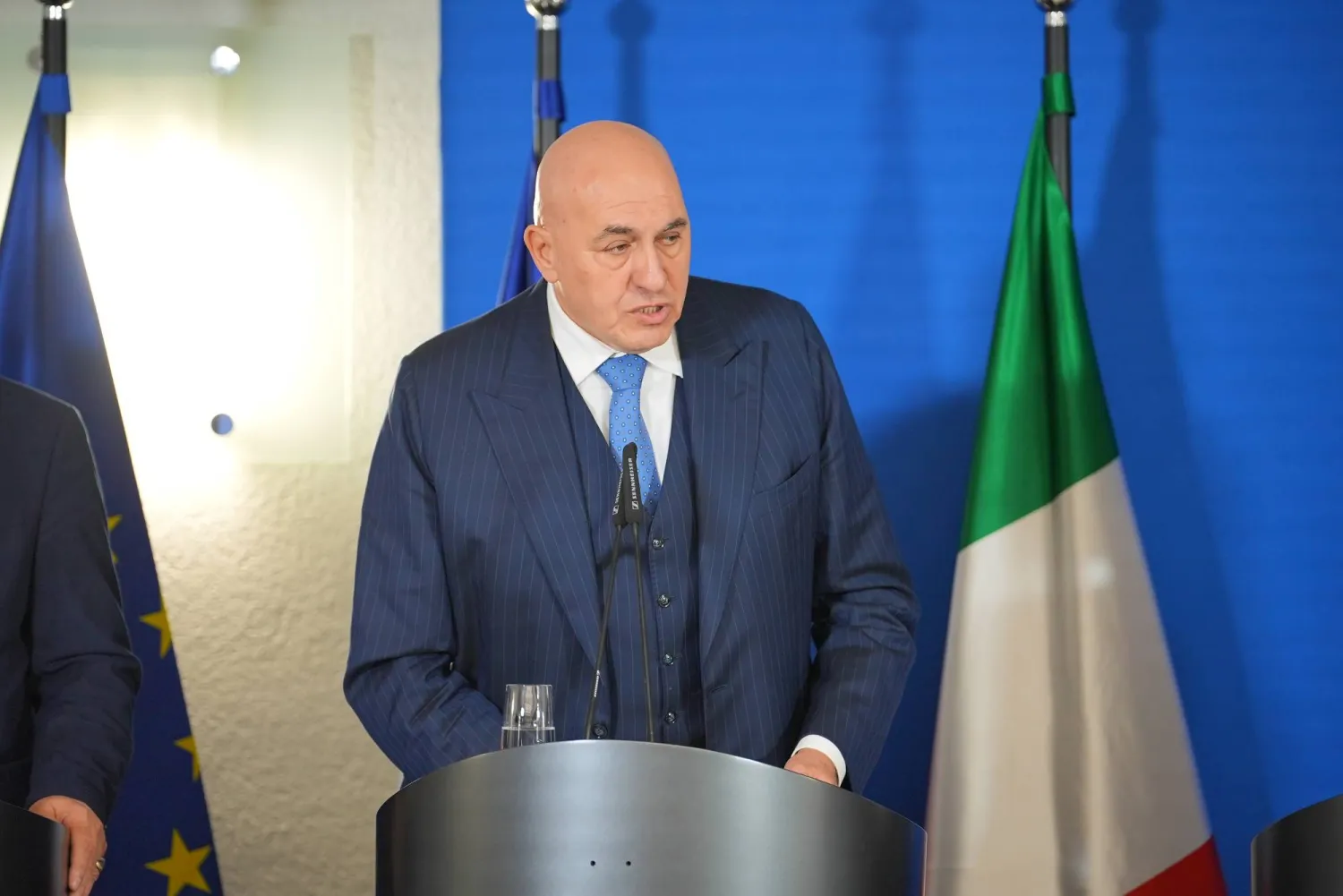
Guido Crosetto said Rome and Riyadh are working to support the success of the ongoing negotiations between Washington and Tehran (Italian Ministry of Defense).
TT

Italian Defense Minister to Asharq Al-Awsat: Relations with Saudi Arabia at an Unprecedented Strategic Strength

Guido Crosetto said Rome and Riyadh are working to support the success of the ongoing negotiations between Washington and Tehran (Italian Ministry of Defense).

Italian Defense Minister Guido Crosetto said relations between Rome and Riyadh have reached an unprecedented level of strategic strength, noting that the two countries are working to build genuine partnerships based on joint development, integrated supply chains, skills transfer, and the development of local capabilities.

In an interview with Asharq Al-Awsat, Crosetto stressed that cooperation between Italy and Saudi Arabia has become essential for strengthening peace and stability in the Middle East, adding that both countries are working together to support the ongoing negotiations between the United States and Iran in order to prevent regional escalation.

Speaking on the sidelines of the World Defense Show in Riyadh, the minister described the Saudi economic environment as highly attractive, noting that the event reflects the Kingdom’s growing pivotal role in technological and industrial innovation and provides a platform for discussing future scenarios and emerging technologies.

Strategic Strength

Crosetto said relations between Saudi Arabia and Italy are “excellent” and “at an unprecedented stage of strategic strength.”

He noted: “Political understanding between our leaders has established a framework of trust that translates into tangible and structured cooperation in the defense sector, both militarily and industrially. Our countries share fundamental principles: reliable partnerships, honoring commitments, the importance of diplomacy, and adherence to international law. This makes our cooperation stable, predictable, and oriented toward the long term.”

The Italian minister said the Saudi economic environment is highly attractive (Asharq Al-Awsat)

Dialogue Between the Armed Forces

Crosetto noted that dialogue between the armed forces of the two countries is ongoing and includes the exchange of operational expertise, doctrines, strategic analyses, and regional scenario assessments, adding that this “enhances interoperability and mutual understanding.”

He stressed that the Red Sea and the Arabian Gulf are two closely interconnected strategic regions, and their security represents a shared interest for Italy and Saudi Arabia.

"In this context, cooperation between Rome and Riyadh is essential to strengthening peace and stability in the Middle East, with particular attention to supporting political solutions in Lebanon, Gaza, and Syria, as well as advancing the ongoing negotiations between the United States and Iran, which are a critical element in preventing regional escalation.”

According to the minister, “this political commitment is complemented by a practical commitment,” noting that Italy is among the most active Western countries in providing healthcare to Palestinian civilians through medical evacuations, the transport of humanitarian aid, and the deployment of naval medical capabilities. He described this as “a concrete example of how military tools can serve humanitarian and stabilization objectives.”

Meeting Between the Crown Prince and Meloni

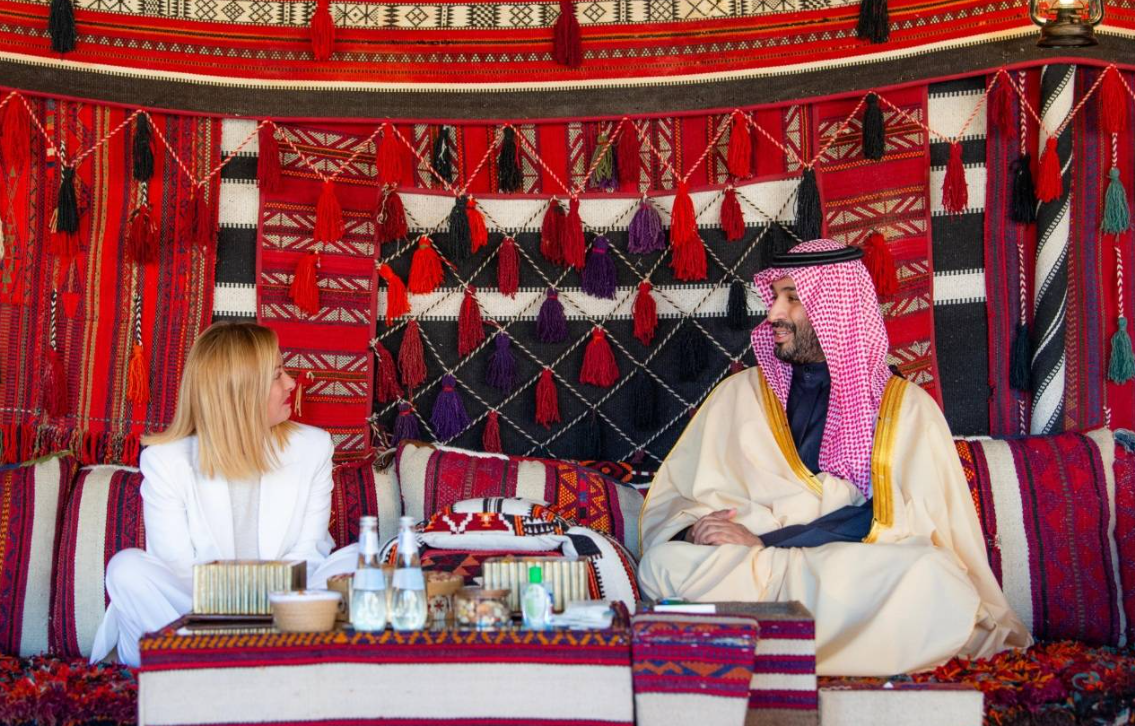
The Italian defense minister said the meeting between Prime Minister Giorgia Meloni and Saudi Crown Prince and Prime Minister Mohammed bin Salman gave strong momentum to bilateral relations.

“At the military level, cooperation is expanding in training, logistics, military doctrine, technological innovation, maritime security, and the protection of critical infrastructure. There is also growing interest in emerging domains, including cyberspace, outer space, and advanced systems.”

Saudi Crown Prince Mohammed bin Salman meets with Italian Prime Minister Giorgia Meloni in AlUla, January 2025 (SPA).

He continued: “At the industrial level, we are moving beyond the traditional client-supplier relationship and seeking to build real partnerships based on joint development, integrated supply chains, skills transfer, and the development of local capabilities.”

Saudi Arabia a Key Partner for Italy’s Energy Security

Crosetto emphasized that cooperation between Italian companies and their Saudi counterparts in defense capabilities, technology transfer, aviation projects, and shipbuilding is fully aligned with Saudi Vision 2030, which aims to strengthen the Kingdom’s industrial, technological, and human capital base.

“Italian companies’ contributions are not limited to providing platforms; they also include expertise, training, and engineering support. This approach extends beyond the defense sector to infrastructure, technology, tourism, and major projects such as NEOM, highlighting the complementarity between our economies.”

He continued: “Cooperation also includes the energy sector and the energy transition, as Saudi Arabia is a key partner for Italy’s energy security, with growing collaboration in hydrogen and renewable energy. In addition, there is an emerging strategic focus on critical and strategic raw materials, a sector in which the Kingdom is investing heavily and which could see significant growth in both industrial and technological cooperation.”

Saudi Economic Environment Highly Attractive

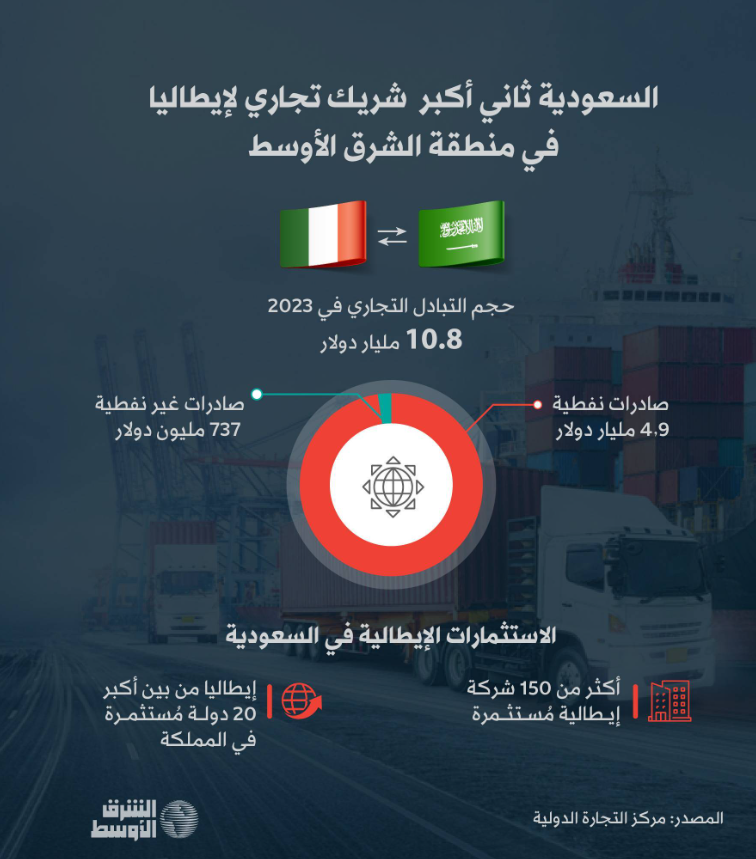
Crosetto said the recent Italian 'Industry Days' forum held in Riyadh, organized in cooperation between the two countries’ defense ministries, sent a very strong signal of expanding bilateral cooperation, attracting both small and medium-sized enterprises and major industrial groups and leading to the creation of tangible operational links.

“The Saudi economic environment is highly attractive, featuring major public investments, a streamlined tax system, incentives for materials and equipment, and double-taxation avoidance agreements, making the Kingdom a strategic industrial partner.”

He added: “Trade exchange is not limited to the defense sector. Italian products are in strong demand in other sectors such as machinery, fashion, design, and pharmaceuticals. Bilateral agreements exceeding €10 billion include major companies such as 'Leonardo' and 'Fincantieri'.”

Visit of Prince Khalid bin Salman

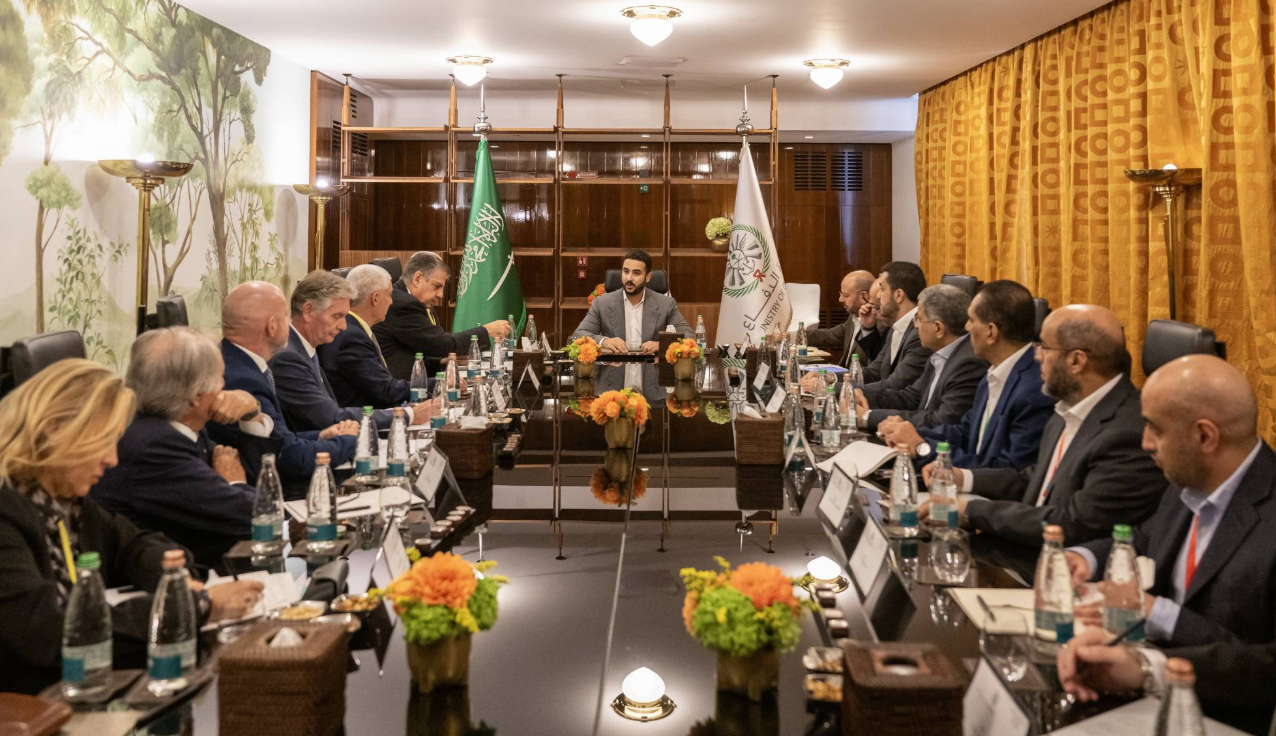
The Italian defense minister said the visit of his Saudi counterpart Prince Khalid bin Salman, to Rome, strengthened dialogue between the two countries, noting that discussions “covered diverse sectors, from space to naval domains, and from aviation to helicopters, with a primary focus on military cooperation, training, and the exchange of joint strategic analyses.”

Prince Khalid bin Salman during his meeting with Italian industrial companies in Rome, October 2024 (SPA).

World Defense Show in Riyadh

Crosetto said Saudi Arabia’s hosting of the third edition of the World Defense Show reflects the Kingdom’s growing central role in technological and industrial innovation and provides a platform for discussing future scenarios, emerging technologies, and cooperation models.

“I believe it is important for a country with promising investment prospects such as Saudi Arabia to host an international event that enables direct dialogue with the world’s leading companies in a continuously expanding sector.”

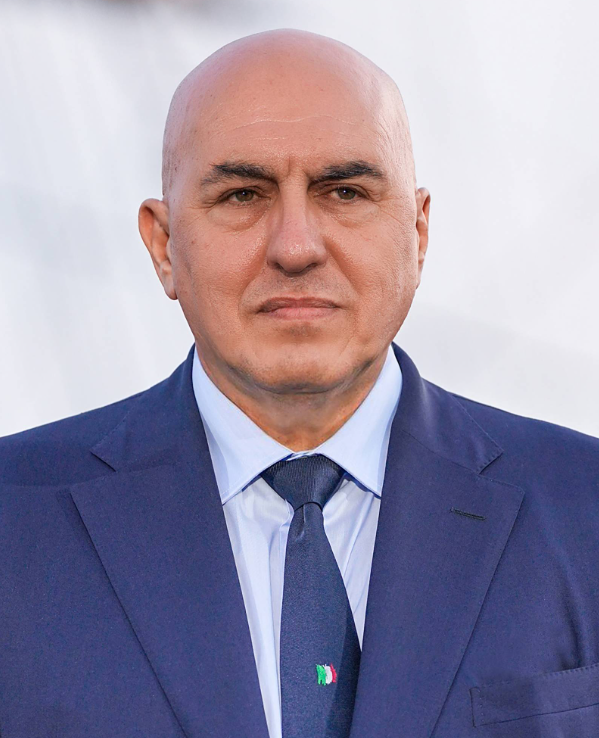
Italian Defense Minister Guido Crosetto (Italian Ministry of Defense).

He concluded: “In this context, I am confident that the model of cooperation between Italy and the Kingdom - based on dialogue, mutual trust, and a long-term vision - represents an example of how to combine strategic interests, innovation, and responsibility.

"On this basis, we will continue working side by side to strengthen a partnership that goes beyond the present, contributes to regional stability, and creates tangible opportunities for our two countries and for the international community as a whole.”