
Exclusive: Russia, Iran Race for Syria Reconstruction Deals

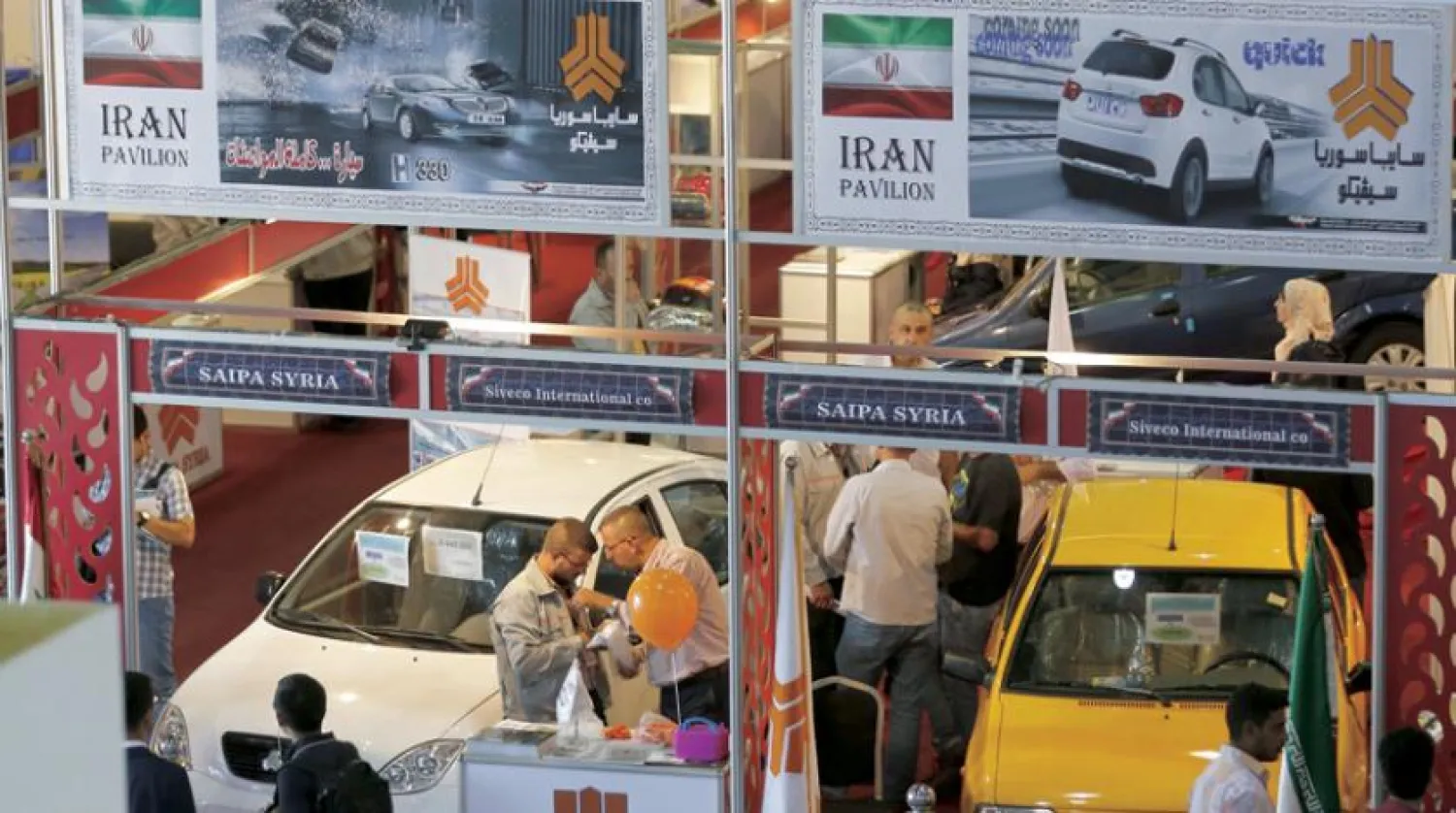
Visitors at Russian companies' pavilions at the Damascus International Fair (AFP)
TT

Exclusive: Russia, Iran Race for Syria Reconstruction Deals

Visitors at Russian companies' pavilions at the Damascus International Fair (AFP)

Russia is working relentlessly to push against Iran tapping into Syria’s reconstruction projects, as the two compete for securing the largest share of investment contracts in the war-torn country.

Iran is hoping to make up in reconstruction deals what it had lost in the energy field after Russia having monopolized memorandums of understanding signed for repairing a power grid and extracting from one of Syria’s lucrative phosphate mines.

Reconstruction deals multiplied in numbers after Syrian regime head Bashar Al-Assad issued an order to establish two new administrative zones within the capital’s vicinity.

In an effort to clear Damascus from any rebel presence, Assad issued in 2012 Presidential Decree No. 66, which stipulates erecting full infrastructure for two new zones within Damascus.

Codenamed district 101 and 102, the two areas are located in Al-Mezzeh neighborhood west of the capital and extend to reach beyond Kafr Sousa neighborhoods.

District 101 is connected to 102 on the south-east side, extending from the south-eastern parts of Kafr Sousa to neighborhoods south of Damascus.

Damascus presented the blueprints for district 101 under the name Marota City, which is Syriac for heaven. It covers an area of 2 million square meters and set up to include 12 thousand apartments spread over 168 towers and multi-story buildings.

It will also be home to 17 academic institutions, four gas stations, three mosques and a church.

Annexed to district 101’s southeastern side, district 102—named Basilia City, Syriac for "homeland" or "sovereignty"-- covers areas located between Al-Qadam and Yarmouk refugee camps.

Interestingly, all neighborhoods covered by Assad’s reconstruction decree were home for popular anti-regime movements and were reduced to rubble in the aftermath of the civil war.

The Damascus Governorate established “Damascus Cham Holding Company” for managing real-estate and reconstruction, primarily the project's land plots and singing construction contractors for establishing 101 and 102.

“Iran rushed to invest heavily in Area 101, which is nestled behind its old embassy and very close to its new embassy pegged on the Mezzeh highway," traders and real estate agents signed up with Damascus Cham Holding told Asharq Al Awsat.

Sources explained that “any company can partner with Damascus Cham Holding Company to establish a new construction company.”

“Damascus Cham Holding Company provides the land plot and while the consigned partner provides construction funds, under a partnership agreement the former decides on the split of project ownership, whether at 55 percent - 45 percent, 51 percent or 49 percent, depending on location and volume of construction.”

Sources confirmed that Iranians and Iran-linked Lebanese nationals moved swiftly to establish companies in Syria.

After an under-the-table agreement struck between Iran and Qatar, which swept and cleared neighborhoods and cities from opposition factions’ presence, namely Darayya, Iranian officials landed a contract with authorities to build some 30,000 housing units within area 102.

Darayya lies 5 km south of the Iranian embassy and has the Mezzeh airbase under a kilometer away, but Tehran denies the above strategic value of the location, swapping it with religious motives of the area being home to a shrine of a prominent Shiite figure.

The city has substantial geopolitical and logistics value, given that it borders Lebanon and is an outpost for top regime command and intelligence centers.

Despite the Iranian out-of-breath rush into singing reconstruction deals in Syria, another regime ally, Russia, is actively blocking Tehran’s attempts to land deals inside or about Damascus, senior Syrian real estate agents, speaking under the condition of anonymity, told Asharq Al-Awsat.

Sources added that leaks strongly indicate that Russians enjoy the upper-hand when it comes to landing reconstructions contracts in area 102.

In some areas pending reconstruction, the Russia-Iran business battle delayed the return of displaced locals to their homes, such as Al-Malihah town.

According to the Rif Dimashq local reconstruction committee, 1.2 million homes, more than 5,500 schools were destroyed, 60 percent of health facilities sustained damage and are in need of some level of rebuilding. Public property suffered a loss of some $6 billion in assets.

A government-linked Iranian newspaper cited a report previously published by a Revolutionary Guard website on Iranian-Russian differences over reconstruction in Syria to uncover new dimensions of the differences between Moscow and Tehran over the post-war share-sharing of Syria.

Whereas the regular military defends Iran's borders and maintains internal order, according to the Iranian constitution, the Revolutionary Guard is intended to protect the country's theocratic system. Armed to its teeth, Revolutionary Guard forces answer to orders issued by the Iranian Supreme Leader solely.

The newspaper said that “nothing” is the share Iran has secured from the post-war Syria market, pointing out that most reconstruction contracts are signed up to President Vladimir Putin’s Russia.

Despite the high costs paid by Iran to support Assad, Iran is not getting any leverage in emerging post-ISIS reconstruction markets in Syria.

Afghans Come Home But Risk Exclusion Without any ID

Most of the 6.1 million Afghan returnees who have arrived from Pakistan and Iran since September 2023 are listed as undocumented. Aimal ZAHIR / AFP
TT

Afghans Come Home But Risk Exclusion Without any ID

Most of the 6.1 million Afghan returnees who have arrived from Pakistan and Iran since September 2023 are listed as undocumented. Aimal ZAHIR / AFP

Lugging suitcases across the border after packing up in Pakistan, Afghans are returning home with their worldly possessions but often lack one key item to restart their lives: an identity card.

On the Afghan side of the Torkham border crossing, children and adults wheeled their luggage or carried belongings atop their heads, as they moved from desk to desk to log their arrival, reported AFP.

"I don't know how and where to get the ID card; now I'll go and check," said 17-year-old Abdulrehman Sudais, standing beside a crate of chickens he had carried across the border for his mother.

The Pakistan-born teenager had been to Afghanistan just once before, but his cousin had already told him he would need ID to access work or education.

Out of 6.1 million Afghan returnees who have arrived from Pakistan and Iran since September 2023, more than 86 percent are listed as undocumented by the International Organization for Migration (IOM).

At the crossing point, which still bears the shrapnel marks of this year's war between the neighboring countries, officials and aid workers were taking down everyone's details.

While border officials contact authorities nationwide to verify the identity of those who don't have any form of ID, the process for newly arrived Afghans can be bewildering.

Sardar Khan, 41, was sitting in a large tent at Omari camp near the crossing, where people get a return certificate and are fingerprinted.

"We are blind; we don't know what to do," he told AFP, as his son fell asleep at his side.

"We've never been to Afghanistan before; we'll get to know the importance of ID cards," he said.

As well as a requirement for getting a job or school place, an ID card is essential for Afghans trying to prove they own land or a home, claiming inheritance, accessing state benefits, and travelling through the myriad of checkpoints across the country.

Outside the tent, as the temperature hit 40C, people waiting to be processed huddled in the limited shade available.

Ziad Salih, regional coordinator at IOM, described the ID card as "one of the essential pieces of the puzzle" for Afghans.

"Many returnees are arriving without a valid ID document and this is placing them at risk of administrative and social exclusion," he told AFP at the agency's Torkham transit center.

Afghanistan's Ministry of Refugees and Repatriation Affairs did not respond to AFP's request to comment on the documentation issue.

'Difficult decisions'

Near the Torkham crossing, colorful trucks were piled high with families' furniture and other possessions from Pakistan.

Once Afghans reach their destination -- often the places their relatives fled years ago -- organizations have helplines and projects to support them with their paperwork.

Murat Khan Safi, an octogenarian who returned a few months ago, found rooms to rent on the outskirts of Jalalabad, the closest city to the border crossing.

"We were given a number at Torkham, then we contacted WADAN, and we made the ID cards," he told AFP, referring to the Welfare Association for the Development of Afghanistan that works with the UN refugee agency (UNHCR).

Surrounded by sons and grandsons under a clattering ceiling fan, Safi showed the tattered identity document he has kept since fleeing the Soviet occupation more than four decades ago.

Processing the new ID cards only took a couple of days, he said, but paying a fee of 500 Afghanis ($7.80) for each relative was hard.

"I made some difficult decisions... I had to sell household belongings," said Safi, his white beard matching the color of his clothes.

The family has been reimbursed for the ID card fees by the Welfare Association, and is due to receive additional support.

In June, the United Nations launched an initiative that aims to help Afghans get 1.5 million identity documents over the next three years.

Arafat Jamal, UNHCR's representative for Afghanistan, described the lack of documentation as an "almost invisible" phenomenon.

"The absence of documentation is a serious impediment to continuing your lives," he told AFP in the capital Kabul.

The UN appeal comes as global aid cuts hit hard in Afghanistan, with those crossing the border entering a country where jobs are scarce and support has been shrinking.

At Omari camp, Nazamin Baloch didn't know how to get an ID card but knew from other Afghans that it was "important for everything".

"This is the first time I am coming to Afghanistan," said Baloch, in her sixties.

"No one in the family has an ID card... We have not even seen our country before."


What Are the Key Challenges Facing NATO?

National flags of NATO members flutter at the alliance's headquarters in Brussels, Belgium April 2, 2025. (Reuters)
TT

What Are the Key Challenges Facing NATO?

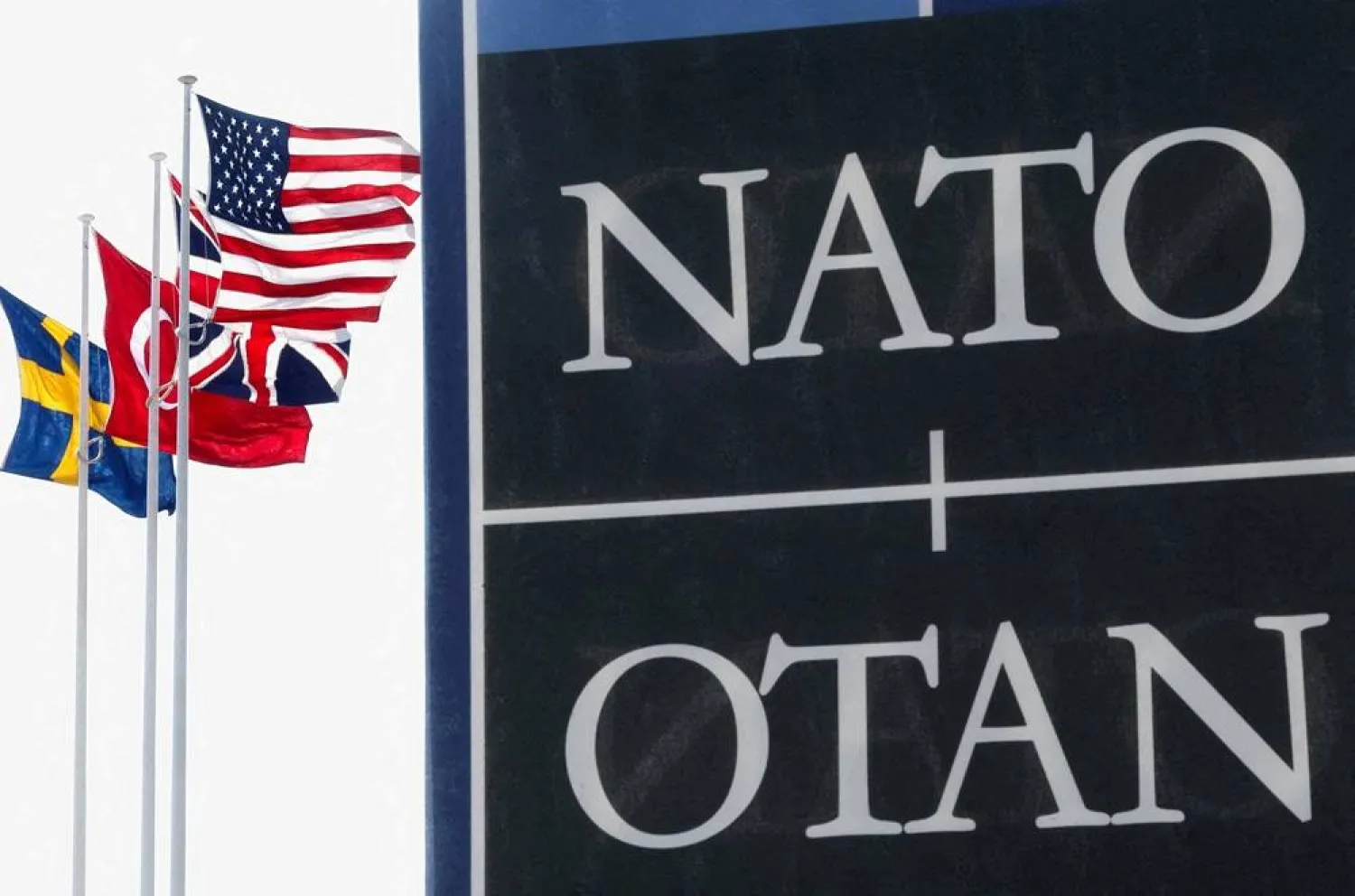
National flags of NATO members flutter at the alliance's headquarters in Brussels, Belgium April 2, 2025. (Reuters)

NATO leaders gathering for a summit in Ankara on July ‌7-8 will discuss a host of challenges facing the alliance, from Europe taking on more responsibility for the continent’s security to boosting defense industrial production.

Some officials worry the Iran war could overshadow the gathering, but hope leaders will remain focused on the alliance’s core business: defense and deterrence.

Here is a look at the main challenges facing NATO in the months and years to come:

KEEPING TRUMP IN

NATO officials say one of their primary goals is to maintain unity and keep the US committed to the alliance’s Article 5 clause, which specifies that an attack on one of its members is an attack on all.

The alliance faced two crises this year which have fueled tension in the transatlantic relationship: US President Donald Trump’s demands for ownership of Greenland, an autonomous territory of NATO-member Denmark, and his anger at NATO allies over their response to the Iran war.

The US president branded the alliance a "paper tiger" and said he was considering withdrawing from NATO. The alliance's Secretary-General, Mark Rutte, has sought to smooth over tensions, using a ‌mix of flattery ‌and data to persuade Trump that European NATO members are fulfilling their promises.

BURDEN-SHIFTING

The Trump ‌administration ⁠has pushed European ⁠governments to take on primary responsibility for the conventional defense of Europe as Washington seeks to dedicate more resources to the Indo-Pacific.

Some changes are already under way: Washington has decided to shrink the pool of US military capabilities available to NATO in a crisis, and European NATO members have filled almost all the gaps.

US Defense Secretary Pete Hegseth has also announced a new review of America's troop deployments in Europe and threatened to withhold some US dues to NATO if "free-riding" allies did not meet their defense spending commitments.

European officials say they are working to step up on defense. But some have also questioned the US approach, arguing that a transition ⁠requires time and raising concern about the unpredictability of policy coming from Washington.

SPENDING MORE

European ‌NATO members and Canada are under significant pressure to boost defense investment both ‌to improve deterrence and defense against Russia and to demonstrate to Trump that they are taking his demands for burden-shifting seriously.

At a ‌summit in the Hague last year, NATO leaders backed the big increase in defense spending that Trump demanded, pledging to ‌spend 5% of GDP on defense and defense-related measures within a decade. Countries pledged to spend 3.5% of GDP on core defense — such as troops and weapons — and 1.5% on broader defense-related measures.

NATO's European allies and Canada increased defense spending by 20% in 2025 compared with the previous year in real terms, according to alliance data. But not everyone is on a trajectory to meet the new goals, and ‌a number of governments are starting to run into political difficulties with defense spending.

INDUSTRY

With European NATO countries boosting defense investment, a major challenge for the alliance is how to ⁠turn money into new military ⁠capabilities in a short timeframe.

In Ankara, NATO members are expected to announce tens of billions of dollars in new contracts. But some officials have expressed frustration that production has not increased at the pace they had hoped and that it still takes years to get some orders.

NATO's leadership has called on industry to work together, open new production lines and deliver more quickly.

DETERRING RUSSIA

NATO leaders meeting in Ankara are expected to reiterate that Russia poses a long-term threat to Euro-Atlantic security.

While alliance officials say Russia is grappling with significant economic problems and Ukraine has strengthened its position, Rutte has cautioned that nearly half of Russia’s state budget is now dedicated to defense and that the alliance cannot be naive about Moscow.

UKRAINE

European NATO members are continuing to finance aid for Kyiv, more than four years since Russia’s full-scale invasion.

Money is channeled in various ways, including bilateral assistance, a European Union loan and the Prioritised Ukraine Requirements List initiative where European countries pay to supply Ukraine with US weapons.

While most European leaders say they are committed to continuing to support Kyiv, sustaining a high level of funding remains a challenge amid other demands on national budgets and concern in some capitals that some European governments are contributing disproportionately more than others.


Inside ‘Operation Dawn Strike’: The Covert Mission to Separate Iraq from Iran's Influence

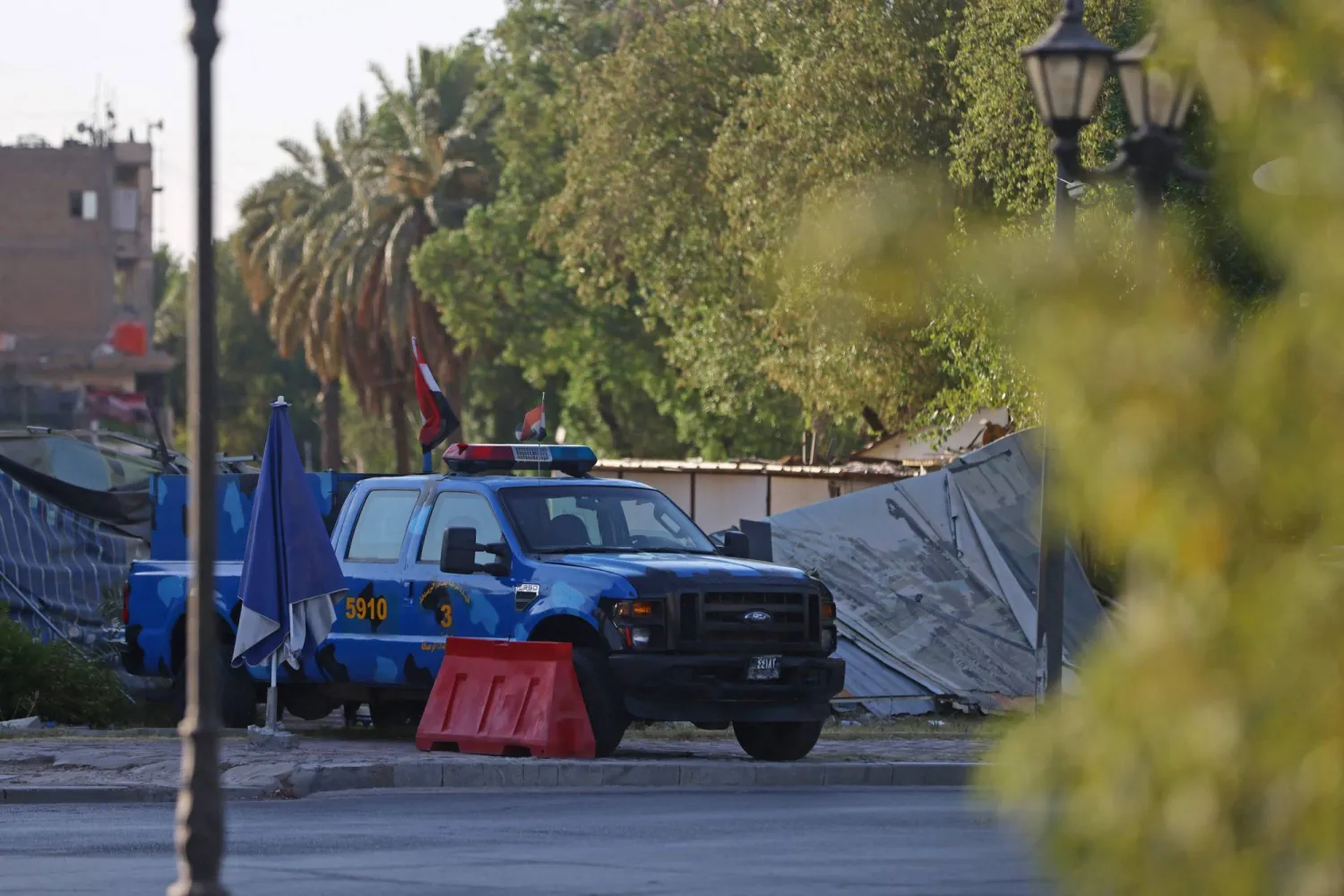
Iraqi security personnel in their vehicle guard the street in Baghdad on June 28, 2026. (AFP)
TT

Inside ‘Operation Dawn Strike’: The Covert Mission to Separate Iraq from Iran's Influence

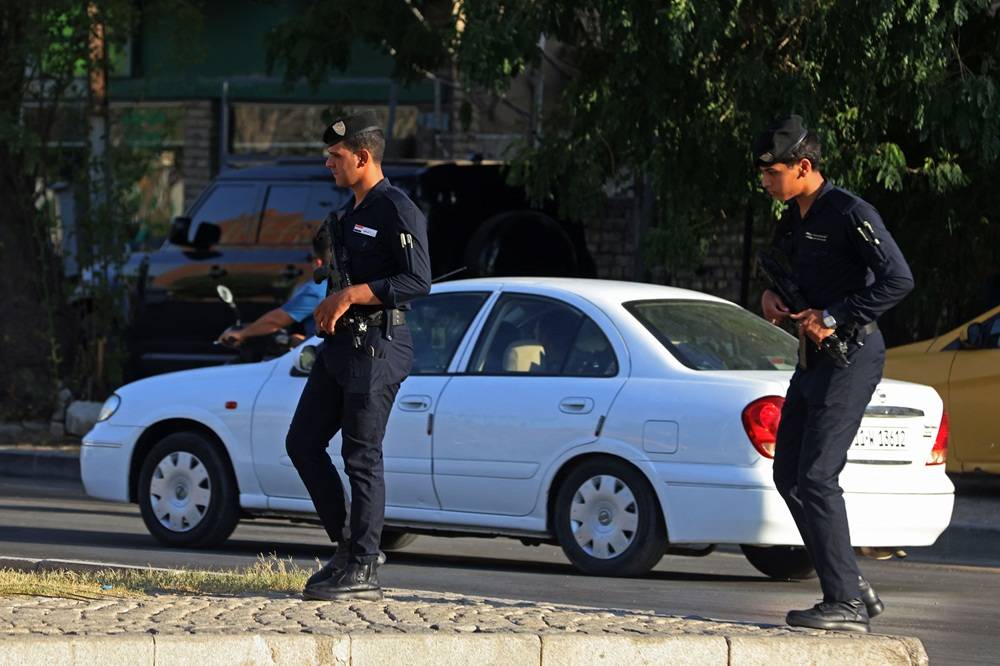
Iraqi security personnel in their vehicle guard the street in Baghdad on June 28, 2026. (AFP)

Government and security sources have revealed that the wave of arrests carried out by Iraqi authorities last Sunday unfolded along two parallel tracks. One targeted suspects accused of embezzling public funds, while the other — a highly classified operation — aimed at what sources described as “separating the twins”: severing the links between figures tied to Tehran within armed factions and oil-smuggling networks and Iraqi state institutions.

According to the sources, Prime Minister Ali Al-Zaidi discussed the plan in strict secrecy with a small circle of senior military officers two weeks before its launch, deliberately excluding leaders of the ruling Coordination Framework alliance. The decision reportedly triggered tensions during the coalition’s latest meeting in Baghdad and reignited questions over the balance of power within Iraq’s governing bloc.

A former US official described the covert operation as “major surgery whose success is too early to judge,” calling it “a bold move by a young prime minister who emerged from relative obscurity.” He cautioned, however, that “Iran’s response has yet to come.”

While the public phase of the operation focused on targets inside Baghdad’s heavily fortified Green Zone, special forces simultaneously moved against homes and headquarters elsewhere in the capital and southern Iraq belonging to figures with direct ties to Iran.

Sources said pro-Iran factions initially suggested that a military coup was underway. One source revealed that members of the armed factions heard the word “coup” repeated over their communications networks for a short period before the true nature of the operation became clear.

The government has publicly disclosed the outcome of the campaign, officially dubbed Operation Dawn Strike, announcing the arrest of dozens of suspects accused of embezzling public funds.

Iraq’s Integrity Commission has pledged to continue making arrests while investigations into those detained proceed.

The operation was carried out by elite units from the Iraqi army, the Counter Terrorism Service, and the Special Division. According to sources, the release of images showing large sums of cash hidden inside suspects’ homes and farms, along with footage of a tank conducting a conspicuous maneuver inside the Green Zone, was intended to generate momentum for the covert phase of the operation while discouraging any immediate response from pro-Iran armed groups.

A senior figure in a Shiite faction told Asharq Al-Awsat that Operation Dawn Strike could ultimately serve as cover for dismantling Iraq’s armed “resistance” factions, describing such a strategy — if true — as “smart.”

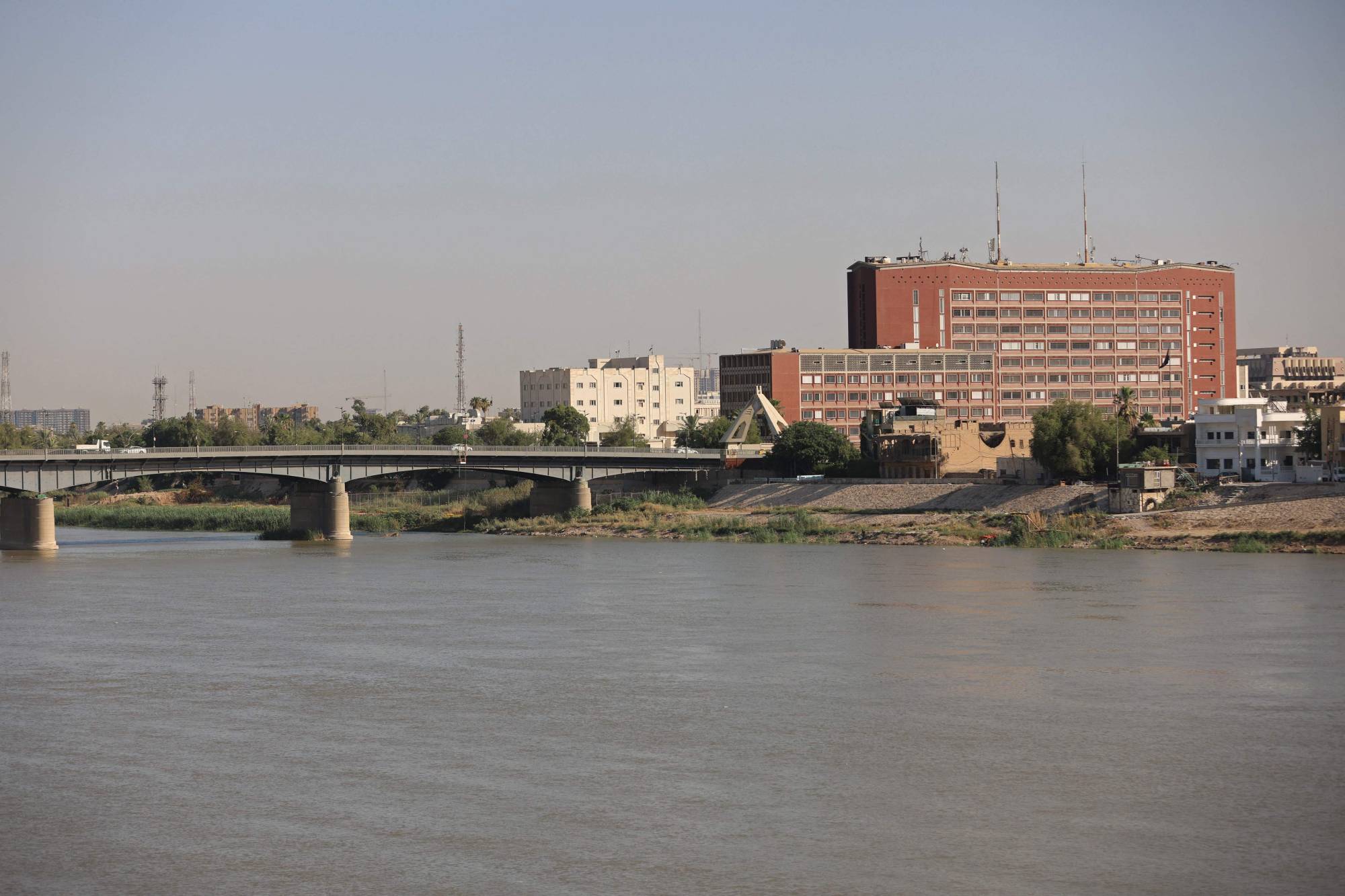
The building of the Ministry of Planning is pictured in the Green Zone, in Baghdad on June 28, 2026. (AFP)

Zero hour

People familiar with the arrest plan said the operation’s execution was conducted under extraordinary secrecy across both tracks.

They told Asharq Al-Awsat that planning had begun two weeks earlier and that Al-Zaidi restricted discussions to four senior security commanders, excluding party leaders within the Coordination Framework — the ruling coalition that nominated him for office in April.

Authorities set 2 a.m. on June 28 as “zero hour.”

According to informed sources, the operation began with the closure of the Green Zone, the sealing of Baghdad’s entry and exit points, and the deployment of forces around Baghdad International Airport. Simultaneously, however, the covert phase was already underway elsewhere in Baghdad and in southern Iraq.

Two security sources said special forces raided locations in eastern Baghdad, where Iran-aligned armed factions maintain headquarters.

Elite units searched homes and offices for high-value suspects, weapons, and documents, but several wanted individuals escaped shortly before security forces arrived, according to two informed sources.

Last-minute leak

Sources said Iraqi security forces deployed armored vehicles, troop carriers, tanks, and hundreds of personnel to give the operation overwhelming force and deter any armed resistance from faction-linked gunmen.

They added that one wanted individual was protected by an elite security detail from the Popular Mobilization Forces (PMF).

Officials said authorities maintained strict secrecy over both the planning and execution of the operation. Nevertheless, some suspects reportedly received last-minute warnings from executive and political figures.

“Yes, some managed to flee because personal connections alerted them that they had become targets, even less than an hour before security forces were due to arrive,” one source revealed.

For years, groups aligned with Iran have built extensive influence inside Iraqi state institutions by placing figures regarded as absolutely loyal to Tehran in key positions.

If confirmed, these accounts would suggest that Iranian-linked networks have penetrated Iraq’s law enforcement institutions, posing perhaps the greatest challenge yet to government efforts to curb Iranian influence and dismantle the corruption networks associated with it.

Iraqi politician Hamed Al-Sayyed said the campaign’s success depended on preventing information leaks that allow suspects to escape.

Law enforcement officers involved in Operation Dawn Strike reportedly received their deployment orders only hours before the operation and were sent to targets without being told exactly who or what they were pursuing.

“There were only very brief phone calls,” one security source told Asharq Al-Awsat.

According to two sources, the operation’s public track was designed to arrest an initial group of politicians long suspected of corruption and widely resented by the public. The covert track, meanwhile, focused on figures accused of facilitating the expansion of Iran’s Revolutionary Guard Corps (IRGC) inside Iraq’s security and oil institutions.

One political official described that second track as “the real prize.”

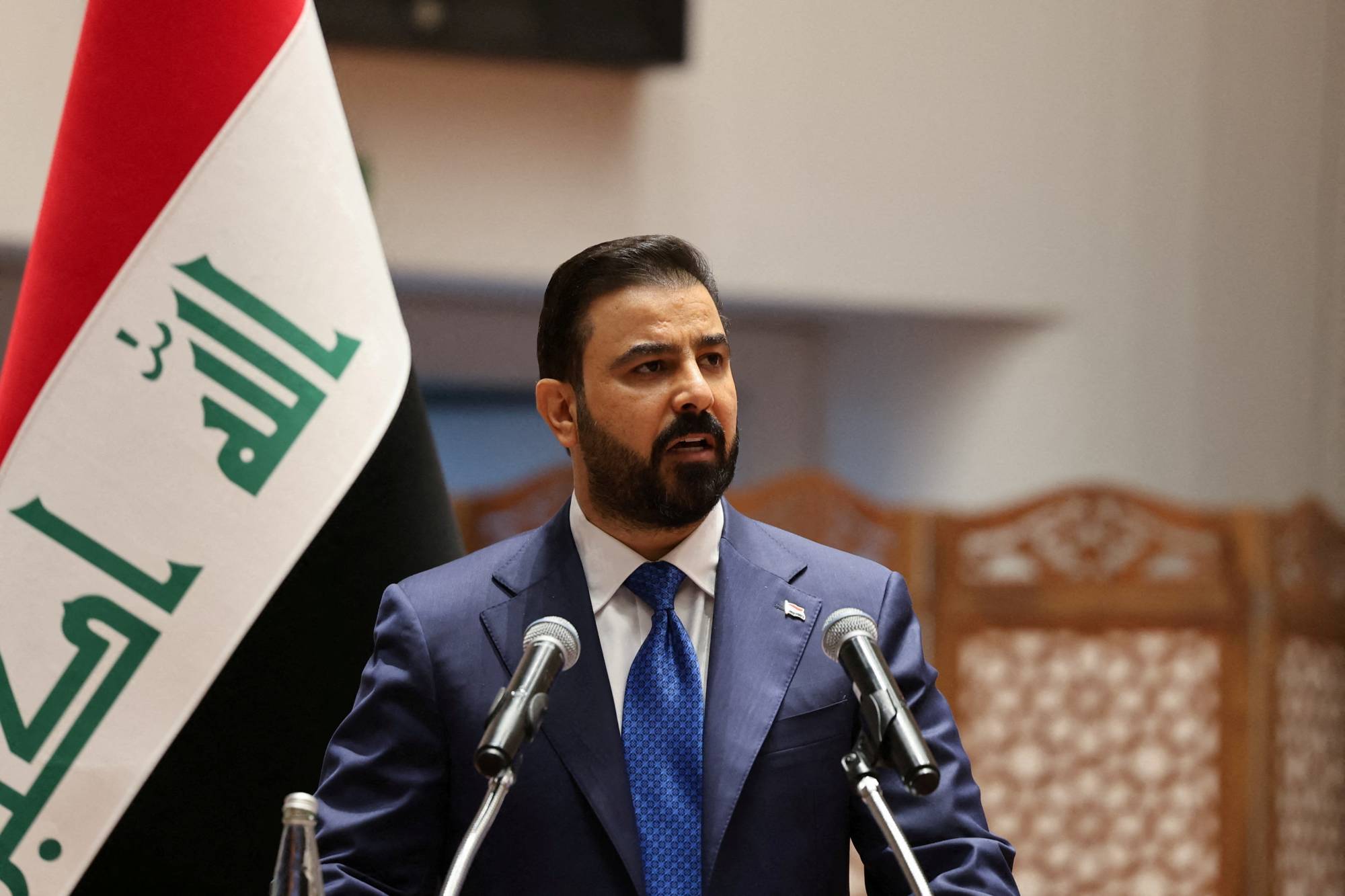
Iraqi Prime Minister-designate Ali Al-Zaidi speaks during a parliamentary session at the parliament headquarters in Baghdad, Iraq, May 14, 2026. (Reuters)

‘Big catch’

Authorities have so far arrested dozens of executive officials, but Deputy Oil Ministers Ali Maarij and Adnan Al-Jumaili may prove to be the “big catch” capable of exposing a deeply entrenched network in Baghdad accused of facilitating the smuggling of Iranian oil under Iraqi cover.

According to officials, the smuggling networks use forged documents to move Iranian oil through Iraq. Their methods reportedly include blending Iraqi fuel oil with Iranian petroleum products before exporting the mixture as Iraqi oil, allowing Tehran to circumvent US sanctions while generating revenue for Iran-aligned Iraqi armed factions and affiliated networks.

On May 7, the US Department of the Treasury sanctioned Maarij, accusing him of exploiting his official position to facilitate oil shipments benefiting Iran and Iraqi factions loyal to Tehran. Baghdad denied the allegations.

Political circles in Baghdad widely believe the sanctions ended Maarij’s hopes of becoming oil minister. His nomination had been viewed by many as “a valuable gift” symbolizing the growing influence of the IRGC in Baghdad.

A former US diplomat, speaking anonymously, described the operation as “major surgery to separate the twins — the representatives of Iran in Iraq from the country’s official institutions.”

“It is too early to judge whether it will succeed,” he said. “But the boldness of the operation is impressive and suggests a different mood is emerging in Baghdad.”

A political official told Asharq Al-Awsat that authorities are assessing both the limits of their power and the risk of confrontation before deciding whether to resume the operation.

Al-Sayyed argued that retreating now would come at a high price.

“Al-Zaidi has left himself with only one option,” he said. “He must pursue political leaders accused of corruption.”

Another political official suggested, however, that “the second phase may already be underway, even as we speak, but in secret.”

Iraqi security personnel patrol along a street in Baghdad on June 28, 2026. (AFP)

A stormy meeting

On Monday, one day after Operation Dawn Strike, the ruling coalition held its regular meeting with Al-Zaidi in attendance.

Political officials said coalition leaders told the prime minister they supported anti-corruption efforts but argued that they had long agreed to coordinate such operations.

According to sources, the meeting quickly turned contentious, with many coalition leaders believing Al-Zaidi had acted behind their backs.

One senior coalition figure reportedly told him: “It would have been better to involve us in the plan to preserve the stability of the political process.”

Al-Zaidi replied: “What guarantee did I have that the information would not leak if I had informed you?”

The exchanges grew more heated after one coalition member accused the campaign of targeting his bloc’s influence in parliament.

According to sources, he objected to security forces surrounding the home of a senior figure in his political alliance, calling it “an intimidating measure.”

The debate reflected shifting dynamics within Iraq’s ruling coalition.

A senior member of an influential Shiite party said the latest meeting “felt unusual, as though the coalition was losing its monopoly over the political dynamics and decision-making process.”

Two members of the ruling alliance said Al-Zaidi remained composed throughout the meeting.

Even so, the prime minister appears intent on restoring political equilibrium to ensure the campaign can continue.

Sources described the operation as having entered “halftime.”

According to a Kurdish political leader, Al-Zaidi — who is said to enjoy unprecedented backing from US envoy Tom Barrack — hopes to strengthen his political standing ahead of an expected visit to Washington later this month.

The former US diplomat said Al-Zaidi may hope to become “the star of the evening” when he meets President Donald Trump at the White House.

He cautioned, however, that wielding this degree of authority in Iraq’s fragmented political system could prove a double-edged sword if not exercised with caution.