


Exclusive – Left Behind: ISIS Children in Syria, Iraq Await Int’l Solution

A displaced Iraqi man who fled from clashes, carries children in western Mosul, Iraq, June 3, 2017. (Reuters)
TT

Exclusive – Left Behind: ISIS Children in Syria, Iraq Await Int’l Solution

A displaced Iraqi man who fled from clashes, carries children in western Mosul, Iraq, June 3, 2017. (Reuters)

France’s announcement that it plans to repatriate 150 children of ISIS fighters represents only part of a growing humanitarian dilemma in Syria and Iraq. As of yet, the international community has not come up with a unified way to handle this issue. Fears are meanwhile, mounting over the emergence of a generation of stateless people and another generation of extremists should they remain in former ISIS strongholds.

Syrian estimates said that some 2,000 children of ISIS fighters do not have proper identification papers. Most of them live in refugee camps in Raqqa that are under the control of the Syrian Democratic Forces (SDF). Some of them do not have a father and only carry ISIS-recognized documents.

Sources from Raqqa told Asharq Al-Awsat that ISIS members used to marry Syrian women from regions under their control. Their wedding was officiated by an ISIS-approved cleric, while the real name of the husband is often omitted from the vows. The husband usually went by an alias. After the death or escape of these fighters, the children are left behind without a family name or identification card to face an unknown future with their mothers.

A similar problem is emerging in Iraq among women who were forced to marry ISIS fighters.

The source told Asharq Al-Awsat that warning signs linked to this problem first emerged in 2015. As ISIS began to lose its safe havens in Syria, fighters fled, leaving their children and wives to their fate. The children were registered at ISIS institutions under the fathers’ aliases.

Director of the Syrian Observatory for Human Rights Rami Abdulrahman underlined this problem, saying that “large numbers” of ISIS children are currently in Syria.

These figures could be as much as 2,500 children and mothers, he told Asharq Al-Awsat.

“The dangers are not just linked to them growing up as stateless, but there are concerns that they may be raised in an extremist environment because they do not have civil status and official documents,” he warned.

The Britain-based Observatory said that children born to foreign ISIS fighters in Syria live in Kurdish-controlled northern regions, regime-controlled areas or with their families in ISIS pockets in the western, southern and eastern Syrian desert.

Abdulrahman said that the majority of the ISIS wives are either Syrian or Iraqi, while the fathers are non-Syrian. The fathers often had aliases reflecting the countries they come from. The majority of Syrian ISIS fighters are known to authorities.

The dilemma facing some countries revolves around the children whose fathers are known, he stressed.

Some European countries sought to resolve this problem by suggesting that only the children be repatriated. This has led to humanitarian concerns over the mothers, who would be forced to part ways with their children.

In October, France announced that it was working on repatriating children held by Kurdish-Syrian forces. They are suspected to be the children of French extremists and their mothers will be left behind to stand trial before local authorities.

"Those who have committed crimes in Iraq and Syria must be tried in Iraq and Syria," said a statement from the French foreign ministry at the time.

"The exception is minors, whose situation will be examined on a case-by-case basis, and there is a particular duty to safeguard the best interests of the child,” the statement added.

Their return hinges on their mother’s approval to be separated from them.

With the help of Kurdish authorities and the International Committee of the Red Cross, Paris was able to determine some of their locations in Kurdish-held northeastern Syria.

During the summer, German security officials had announced that they were prepared to repatriate over 100 infants born to Germans who had traveled to Iraq and Syria to fight for ISIS. Some 1,000 people are believed to have departed Germany to fight for the terrorist group.

Berlin said that up until November 2017, it had evidence that more than 960 Germans had left their home country for Syria and Iraq. A third of them are believed to have returned, while some 150 likely died in battles.

Back in Raqqa, children live in three refugee camps in Kurdish-held regions.

Nawaf Khalil, head of Germany-based Kurdish Center for Studies, said that Kurdish authorities provide the children with psychological support. They hail from 46 countries, while three children are orphans. This prompted the authorities to bring in three women to care for them.

Some children have been repatriated to their countries, such as Kazakhstan, Indonesia and Chechnya.


Sept. 11’s Legacy Endures a Quarter-Century Later

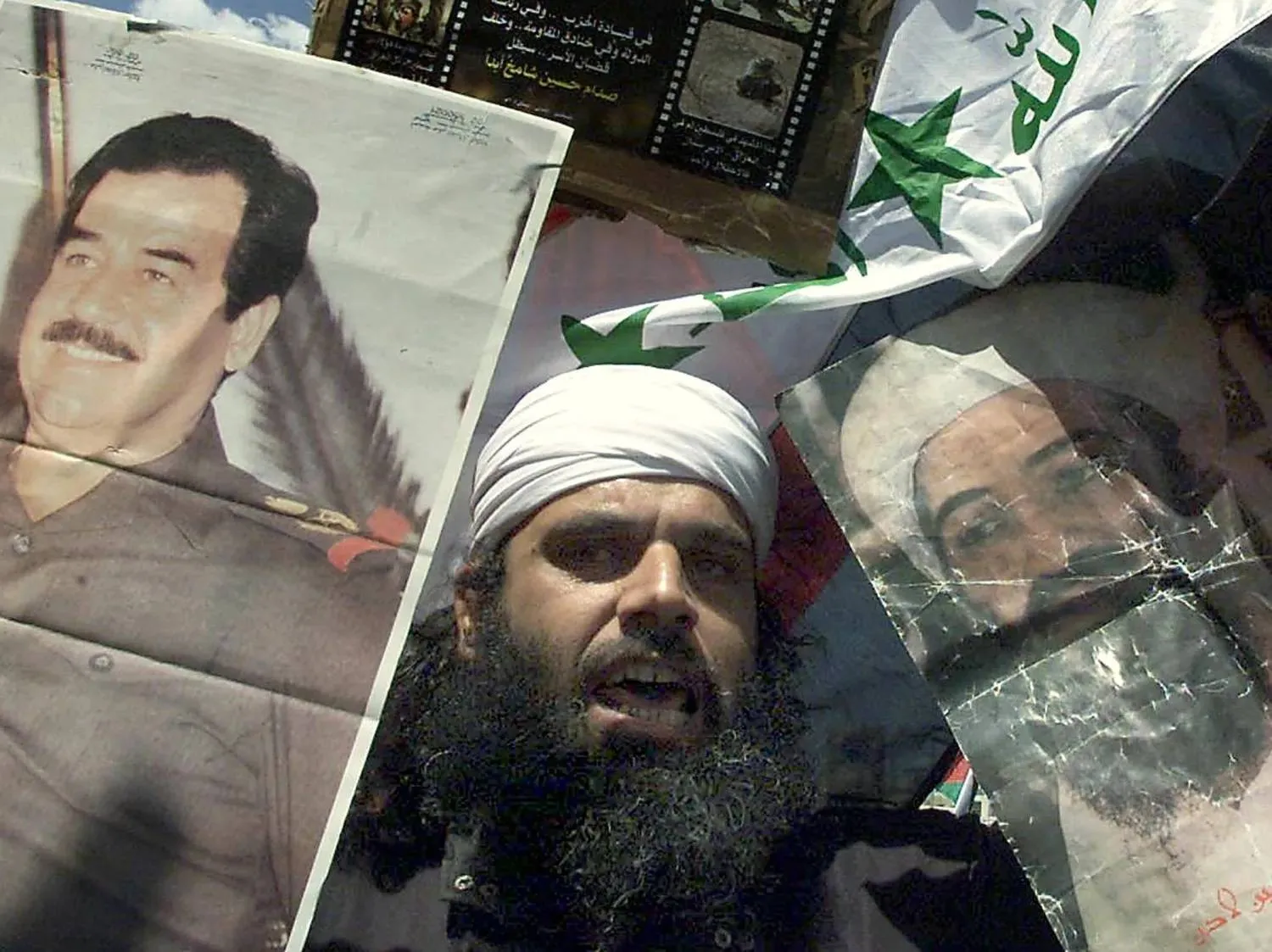
A Palestinian man holds up a poster of ousted Iraqi leader Saddam Hussein (L) and wanted al-Qaeda leader Osama bin Laden during a demonstration by some 1,000 people in the West Bank town of Hebron 10 April 2004, in support of the Iraqi resistance against the US-led coalition. (AFP via Getty Images)
TT

Sept. 11’s Legacy Endures a Quarter-Century Later

A Palestinian man holds up a poster of ousted Iraqi leader Saddam Hussein (L) and wanted al-Qaeda leader Osama bin Laden during a demonstration by some 1,000 people in the West Bank town of Hebron 10 April 2004, in support of the Iraqi resistance against the US-led coalition. (AFP via Getty Images)

Rarely does a day deserve to be called “the day that shook the world.” September 11, 2001, claimed that distinction the moment it happened. At first, many could scarcely believe what they were seeing on their screens. The sight of civilian aircraft exploding into symbols of American power and success in New York and Washington was shocking and deadly. A quarter-century later, there is no denying the mark that day left on the US, the Middle East and the world.

The day set in motion by al-Qaeda leader Osama bin Laden brought down two governments: the Taliban in Afghanistan and Saddam Hussein’s government in Iraq. Afghanistan may have returned to life under a diluted form of Taliban rule, but the Middle East is still paying the price for the regional imbalances created when the US military uprooted Iraq’s Baathist government.

The fall of both governments was an enormous, unintended gift to Iran, now engaged in a military conflict with the United States.

The world was not accustomed to seeing the US attacked at home. On December 7, 1941, Japan attacked the US base at Pearl Harbor in Hawaii. Washington declared war on Japan the next day, and the rest is history.

On September 11, bin Laden brought the war onto American soil itself, prompting George W. Bush to launch a war against what he regarded as strongholds of terrorism.

It was no surprise that a wounded America, led by Bush, decided to topple the government of Mullah Mohammed Omar, who insisted on sheltering bin Laden and ignored calls to distance himself from the al-Qaeda leader or hand him over.

But the greater response came in the Middle East. In 2003, the region watched a US armored vehicle pull Saddam Hussein’s statue from its pedestal in Baghdad’s Firdos Square. It would later watch the hangman’s noose tighten around Saddam’s neck, alarming two men: Libya’s Moammar al-Gaddafi and Yemen’s Ali Abdullah Saleh.

Bin Laden deliberately chose mostly Saudis for the team that attacked New York and Washington, hoping to provoke a crisis and rupture relations between Washington and Riyadh. He did not get what he wanted, but the attacks posed a test across the Muslim world.

Many voices in the US called for terrorism to be uprooted at its source. The attacks unsettled the US and the West’s relations with many countries. They also strained relations between Western governments and Arab and Muslim communities, particularly as waves of migration increased. Today, the far-right is on the rise in several parts of Europe.

Yasser Arafat was living in Gaza that day. He was troubled by the attention focused on a few Palestinians in the West Bank and Gaza who handed out sweets to celebrate the attacks and express their anger at American bias toward Israel.

Despite his advanced age, Arafat insisted on donating blood for those wounded in New York and Washington and went to a Gaza hospital. Some say that, in the first hours, he feared Palestinians might have been involved in carrying out the attacks.

Al-Gaddafi was also alarmed, although both he and Saddam initially imagined that the attacks would weaken the US. Al-Gaddafi asked Foreign Minister Abdulrahman Shalgham to arrange for Algerian President Abdelaziz Bouteflika to tell Bush that Libya was ready to normalize relations and open a new chapter with the US.

Bouteflika conveyed the Libyan position, but the US president told his visitor: “Tell al-Gaddafi that he must immediately surrender his nuclear program’s arsenal, or we will go and destroy it ourselves.”

Shalgham, having gauged the tense mood in America, told a meeting in Tripoli that the United States would occupy Afghanistan, Iraq and Libya. The Libyan leader did not hesitate to bow to Bush’s demands.

The US used Iraq’s alleged possession of weapons of mass destruction as a pretext for attacking the country. It also claimed that the Iraqi government had ties to al-Qaeda. Many did not believe the claim, particularly given the stark differences between Saddam and bin Laden and the vastly different ideologies that guided them.

The prevailing impression was that the allegation had been fabricated. In fact, no relationship existed. But Saddam made a serious error in the 1990s, while bin Laden was in Sudan, when he sent a member of Syria’s Muslim Brotherhood to meet him there. The al-Qaeda leader showed no interest in cooperating with what he called the “infidel Baathist regime.”

The Iraqi government tried again, sending an intelligence official named Farouk Hijazi. A meeting with bin Laden was arranged through Sudanese Islamist leader Hassan al-Turabi. After the meeting, which lasted more than three hours, Hijazi returned to Iraq and advised Saddam to abandon the idea of working with bin Laden, who reportedly demanded permission to establish independent camps on Iraqi soil.

The Iraqi government dropped the idea of cooperating with bin Laden. But US intelligence agencies exploited murky threads of contact between the two sides and used them to justify the invasion of Iraq.

The US toppled the Taliban and Saddam’s government and launched a prolonged hunt for al-Qaeda leaders.

On May 2, 2011, bin Laden, hiding in Abbottabad, Pakistan, was taken by surprise when US troops stormed his compound. America exacted revenge on the architect of the attacks on New York and Washington and disposed of his body at sea.

Osama bin Laden was gone, but al-Qaeda’s imprint exacted an enormous price from the countries of the Middle East.


What Options Does Hezbollah Have in Dealing with Israeli Escalation?

Portraits of current and former Iranian and Hezbollah leaders displayed at a rally, in the southern suburbs of Beirut, Lebanon, September 2, 2026. (Reuters)
TT

What Options Does Hezbollah Have in Dealing with Israeli Escalation?

Portraits of current and former Iranian and Hezbollah leaders displayed at a rally, in the southern suburbs of Beirut, Lebanon, September 2, 2026. (Reuters)

Hezbollah finds itself facing an increasingly difficult equation as Israeli escalation in South Lebanon has widened in recent days. How will the party respond to mounting Israeli strikes without being drawn into a broader confrontation that Israeli Prime Minister Benjamin Netanyahu may be seeking either to postpone Israel’s elections or improve his prospects in them.

At the same time, Hezbollah is facing growing pressure from its support base, which is bearing the brunt of the strikes and demanding a response capable of deterring Tel Aviv. Yet the group’s options appear largely constrained by regional developments, particularly the course of US-Iran negotiations, as well as domestic political calculations in Lebanon.

A response could benefit Netanyahu

Sources familiar with Hezbollah’s position said the Iran-backed party has largely avoided signaling whether it intends to retaliate or continue exercising restraint and adhering unilaterally to the ceasefire agreement.

They told Asharq Al-Awsat that Hezbollah is currently focusing on holding the Lebanese authorities responsible for addressing the situation, noting that the group had previously called on the government to engage in dialogue over the expanding Israeli offensive and the failure of negotiations.

The sources see no indication so far that Hezbollah may make a military response. They argue that one objective of Israel’s widening offensive is to provoke Hezbollah and Iran into retaliating and trigger a broader war, which could benefit Netanyahu electorally or help him postpone the polls.

Limited ability to confront Israel

Hilal Khashan, a professor of political science at the American University of Beirut, took a different view, saying Hezbollah has no options left because its military power has collapsed, particularly after its decision to hand over Ali al-Taher — “a symbol of its pride” — to Israel rather than surrender it to the Lebanese army.

“Hezbollah lacks the ability not only to fight Israel, but even to provoke it,” Khashan told Asharq Al-Awsat. “It sent two drones, and we saw the results.”

The academic believes the party’s current priority is to retain its weapons domestically after its military role in confronting Israel has effectively ended, although Hezbollah “insists on living in denial.”

He expects Israeli escalation to continue ahead of the heated elections, saying it will not be confined to Lebanon but could extend to the West Bank, Gaza and southern Syria, amid continued threats of strikes against Iran.

“As for America’s ability to pressure Israel, it appears limited,” Khashan noted, saying this means an expansion of Israeli operations into Lebanon's Bekaa Valley cannot be ruled out.

Three options for Hezbollah

Retired Lebanese army Brig. Gen. Mounir Shehadeh offered a different assessment, identifying three options available to Hezbollah.

“The first is a broad, direct military response,” he told Asharq Al-Awsat. “This is the option that could give Israel the pretext it is seeking to expand its target list, take the escalation deeper into Lebanon and perhaps strike Lebanese infrastructure. It is therefore a high-cost option.”

The second is to refrain entirely from responding. That also carries a price because Israel could interpret it as evidence that it can impose new realities without paying a cost, particularly following the escalation over Ali al-Taher and the continuing strikes, he explained.

The third option is a calibrated, limited response. “In my view, this is the most logical option if the group decides to respond,” Shehadeh said.

Such action would seek to establish the principle that “aggression carries a cost” without triggering an all-out confrontation, he went on to say. Hezbollah could simultaneously maintain a policy of ambiguity by declining to claim every operation, particularly if it wanted to preserve room for political maneuver.

Shehadeh said Hezbollah may be facing a more complicated calculation: whether to respond to Israel now or wait until the direction of US-Iran negotiations becomes clearer.

Waiting for the outcome of those talks would not necessarily mean surrendering or remaining passive, he noted. Instead, Hezbollah could defer a major response while keeping the option of limited retaliation open, since a broad confrontation at this stage could benefit Israel more than the party and give it an opportunity to widen the war before the regional picture becomes clearer.

Shehadeh expects Hezbollah to avoid, in the near term, initiating a major response that could trigger an all-out war. At the same time, the group cannot indefinitely tolerate continued Israeli escalation without responding.

He stressed that the most realistic scenario is to contain the escalation, monitor developments on the ground, take into account the US-Iran diplomatic track and keep open the option of a limited, carefully calibrated response if Israel crosses certain lines.


Iran's Hormuz Leverage Wanes as US Economic Squeeze Bites

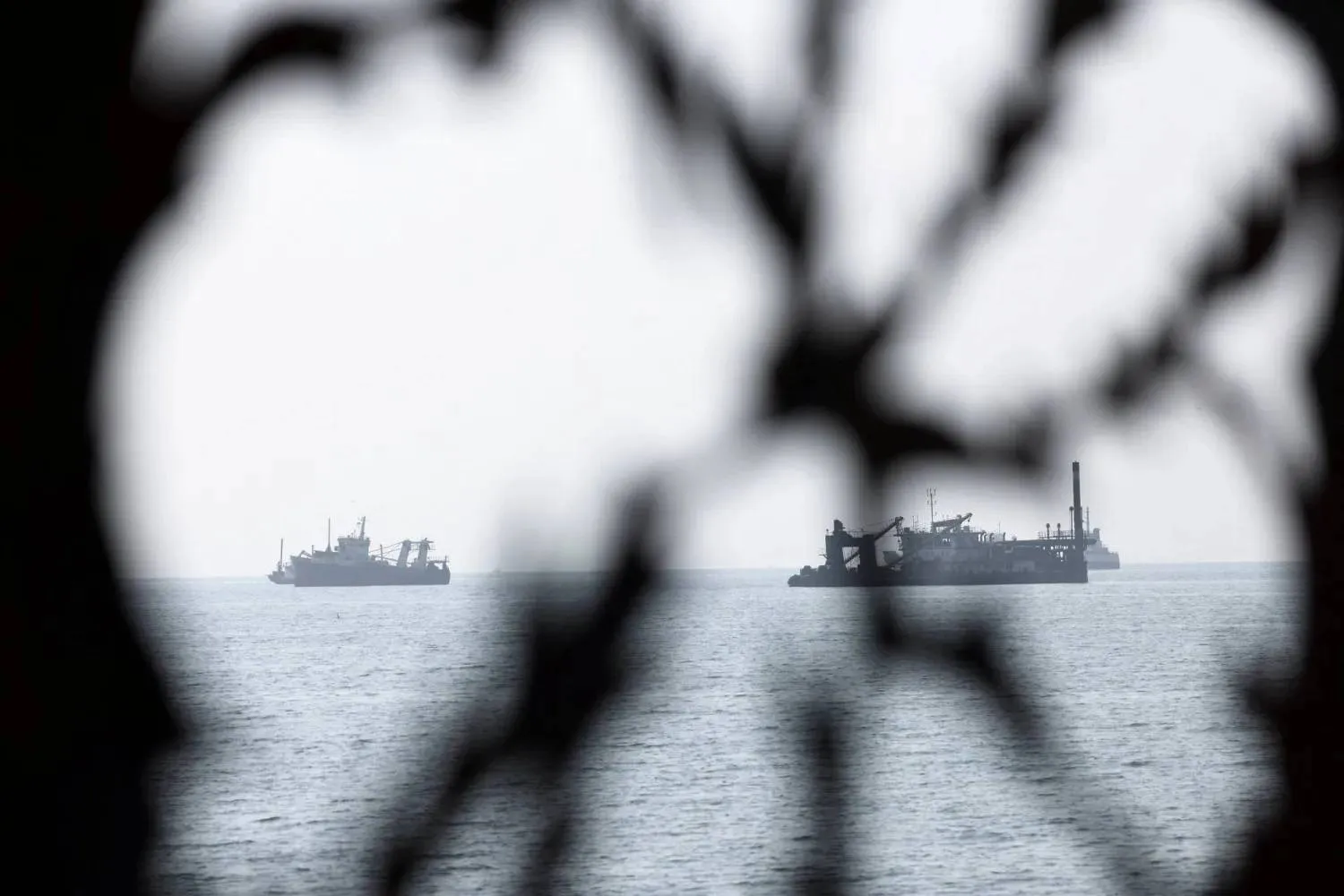
Vessels in the Strait of Hormuz near the beach of Bandar Abbas, Iran, September 5, 2026. (Reuters)
TT

Iran's Hormuz Leverage Wanes as US Economic Squeeze Bites

Vessels in the Strait of Hormuz near the beach of Bandar Abbas, Iran, September 5, 2026. (Reuters)

Six months after a conflict that rattled markets and pushed the region to the brink of a wider war, the tide may be turning against Iran as Washington unleashes an unprecedented economic offensive to achieve what military force could not.

After years of surviving sanctions, Tehran is now confronting one of the harshest squeezes in the regime's history, according to Iranian insiders and regional sources cited by Reuters.

A US naval blockade and tougher sanctions are curbing oil exports, ‌restricting access to foreign currency and exposing growing strains in the economy.

The campaign has led US and regional officials to wager that mounting economic pressure can force Tehran to allow free passage through the Strait of Hormuz, which carries about a fifth of global oil and LNG supplies.

Their bet rests on a simple calculation: Iran is suffering more economic damage than it is inflicting. Efforts to choke off oil exports have cut state revenues, while attempts to disrupt shipping through Hormuz have not triggered the global economic shock Tehran hoped would force Washington to compromise. Energy markets have adjusted and alternative supplies have continued to flow.

Whether the pressure will force concessions remains unclear, the regional sources said. Tehran has failed to impose the costs it hoped would break Washington's resolve but has shown little sign of abandoning demands for sanctions relief, access to frozen assets and recognition of its security role in Hormuz.

Still, a new formula for resolving the standoff is now under discussion between mediators and Iran, the sources said.

Can Tehran outlast the squeeze?

Three senior Iranian sources acknowledged that Washington's campaign is becoming increasingly difficult to withstand. The latest measures have sharply restricted Tehran's ability to access foreign currency, import goods and tap global financing networks that have helped keep the economy afloat.

Iranian leaders fear a worsening economy, marked by surging prices, weaker trade and pressure on household incomes, could reignite nationwide unrest that has repeatedly challenged Tehran.

Shortages of key imports, including fuel and wheat, are becoming an increasing concern, officials said.

US Treasury Secretary Scott Bessent described the strategy as a “one-two punch” combining the blockade with “the toughest sanctions in history.”

“It is going to work in Iran and we are going to collapse this regime,” he told CNBC.

For some US, Israeli and regional officials, such ‌strains strengthen ⁠hopes that economic pressure could eventually carry political consequences inside Iran by triggering unrest, widening rifts within the leadership and weakening its grip on power.

Others remain skeptical that economic and military coercion will produce a political rupture, pointing to decades of failed efforts to destabilize the regime and Tehran's willingness to suppress dissent. They argue Iran's rulers may again prove more resilient than their adversaries expect.

Resilience test

Dennis Ross, a former US negotiator, said Washington may be interpreting Iran's economic distress as evidence of strategic success when the reality is more complicated. Tehran remains determined to demonstrate it can control Hormuz, but appears to be calibrating its use of force while keeping further escalation in reserve.

The Revolutionary Guards may believe Iran can absorb the economic pain and outlast the pressure rather than compromise, ⁠Ross said.

“The Iranians have consistently surprised us in terms of their resiliency,” he added, saying he doubted economic and military pressure alone would force a retreat. Hardliners, he said, may believe they can endure and ultimately secure what they want.

Resilience may depend as much on public tolerance as Tehran's ability to absorb economic hardship, said Burcu Ozcelik, a senior research fellow at the Royal United Services Institute.

“Of course, the economic squeeze raises the risk of public unrest, but for now, a wartime mentality appears to have a significant hold ⁠over the population,” said Ozcelik. “Foreign military intervention, civilian casualties and the perception of a wider civilization confrontation with a US-led order are sustaining a degree of 'Iran-first' patriotic support, tolerance or simply patience with the regime.”

The result is a more stubborn impasse than Washington may have anticipated. Economic pressure is deepening the pain, but Tehran's powerful Revolutionary Guards may see endurance, backed by the threat of escalation, as leverage rather than a reason to concede.

The key question is not whether Iran is ⁠hurting, but whether it is hurting enough to compromise before either side slips toward another confrontation, the regional sources said.

Ross said the clearest path to a deal may lie in the dispute over shipping fees through the Strait of Hormuz. Iran could abandon any demand for a toll while retaining the right to charge for legitimate navigational, security or environmental services, he said.

Such an arrangement could give both sides a claim to victory, allowing Tehran to step back without appearing to capitulate.

“If you could announce that the Strait were reopened,” Ross said, “I think Trump would do a deal.”