


ENOC Plans to Open 45 Fuel Stations in Saudi Arabia in 5 Years

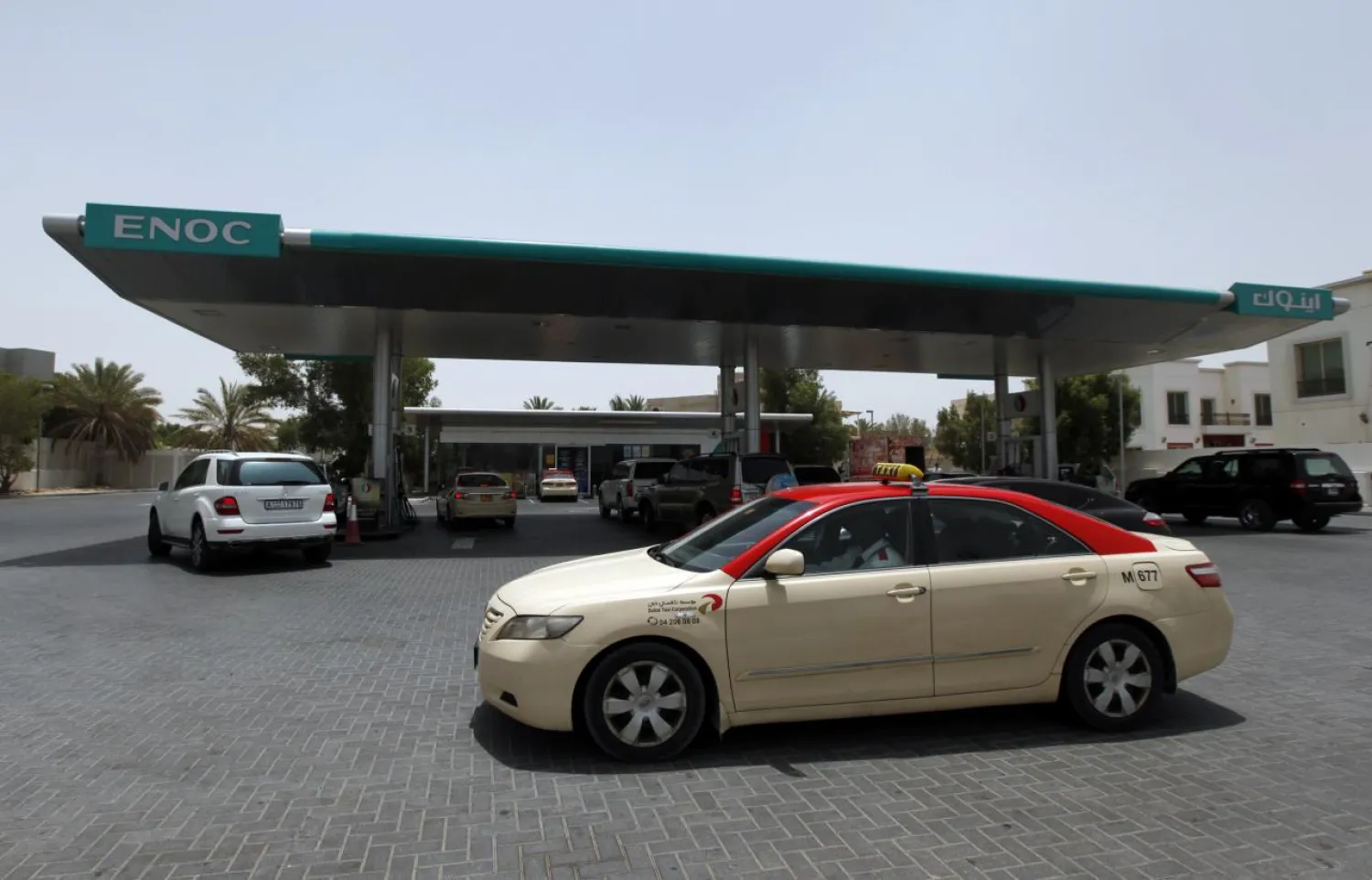
A Dubai Transport taxi drives past as cars queue for petrol at an ENOC fuel station in Dubai, May 12, 2012. (Reuters)
TT

ENOC Plans to Open 45 Fuel Stations in Saudi Arabia in 5 Years

A Dubai Transport taxi drives past as cars queue for petrol at an ENOC fuel station in Dubai, May 12, 2012. (Reuters)

Dubai-based Emirates National Oil Company (ENOC) announced a major expansion strategy in Saudi Arabia as it plans to build 45 new service stations in the Kingdom over the next five years.

This step comes in line with the Ministry of Municipalities and Rural Affairs’ plan, which aims to establish more than 1,200 fuel supply stations in the country.

All 45 ENOC service stations will be strategically built on the Kingdom’s vast network of highways that inter-connect 13 provinces and serve as a major logistics and trade land-corridor, connecting the Kingdom to the rest of the Gulf Cooperation Council and the Middle East region, it said on Monday.

Over the next two years, its plan will focus on building stations in the Central Region, mainly Riyadh and the Eastern Province.

“With Saudi Arabia’s long-term vision to diversify its economy, boost tourism and infrastructure and enhance business and trade, our plan to expand our retail network by over 220 percent in the next five years is aligned with the Saudi Vision 2030,” said ENOC Chief Executive Saif al-Falasi.

Vision 2030 aims to reduce oil dependency, increase privatization and implement the Saudi nationalization project.

“Our 40-year heritage in building and operating best-in-class service stations across the UAE and Saudi Arabia are testament to our ability to build the infrastructure required for a robust network of service stations that will cater to the increased demand for fuel in the Kingdom,” added Falasi.

ENOC will not only ensure extending its retail network to cater to rural parts of the Kingdom but will also provide employment opportunities to Saudi nationals, he further noted.

The group currently operates 14 stations across the Kingdom, and its future service stations will also include ZOOM convenience stores.

Saudi Arabia is considered the largest market in the GCC region, with an area of 2.15 million square kilometers, and its population of over 33 million.

The Kingdom recently announced more than $50 billion worth of deals in the oil, gas and infrastructure sectors.

It made the declaration during the Future of Investment Initiative, which was held in Riyadh in October to boost economic, social and national development in the country.



Barclays Says Brent Crude Oil Could Reach $100 a Barrel

FILE PHOTO: A map showing the Strait of Hormuz and Iran is seen behind a 3D printed oil pipeline in this illustration taken June 22, 2025. REUTERS/Dado Ruvic/Illustration/File Photo
TT

Barclays Says Brent Crude Oil Could Reach $100 a Barrel

FILE PHOTO: A map showing the Strait of Hormuz and Iran is seen behind a 3D printed oil pipeline in this illustration taken June 22, 2025. REUTERS/Dado Ruvic/Illustration/File Photo

Barclays boosted its Brent crude oil futures price forecast to around $100 per barrel on Saturday, up from $80 on Friday, after the United States and Israel bombed several sites in Iran.

"Oil markets might have to face their worst fears on Monday. As things stand right now, we think Brent could hit $100 (per barrel), as the market grapples with the threat of a ⁠potential supply disruption amid ⁠a spiraling security situation in the Middle East," the bank said in a report.

The United States and Israel attacked Iran on Saturday, targeting its top leaders and calling for the overthrow ⁠of its government, while Iran responded with missiles fired at Israel and neighboring Gulf countries.

Oil prices rose about 2% on Friday, with traders bracing for supply disruptions as nuclear talks between the US and Iran had yet to reach an agreement.

Brent settled at $72.48 a barrel.

About a fifth of the oil consumed globally passes through the Strait of ⁠Hormuz between ⁠Oman and Iran, making any disruptions in the area a major risk to global oil supplies.


Oil Prices Set for Swings Next Week as US-Israel Strikes Raise Supply Uncertainty

Markets are anticipating movements in oil prices after the American-Israeli attack on Iran (Reuters)
TT

Oil Prices Set for Swings Next Week as US-Israel Strikes Raise Supply Uncertainty

Markets are anticipating movements in oil prices after the American-Israeli attack on Iran (Reuters)

Oil markets currently closed for the weekend are set to see price swings next week as the impact from the US and Israeli strikes on oil supplies from the Middle East remains unclear.

Scenarios before the latest conflict with Iran foresaw a quick price spike that fades if the attacks didn't affect oil shipping and infrastructure such as Iranian pipelines and its Kharg island terminal. However, there would be a bigger price spike and longer-lasting impact if oil infrastructure or supplies were interrupted, for instance because of disruption of tanker traffic through the Strait of Hormuz.

Oil prices have already risen on war fears. International benchmark Brent crude closed at a seven-month high of $72.87 on Friday, Reuters reported.

Iran exports some 1.6 million barrels of oil a day, most of it going to China, where privately owned refineries are less concerned about the US sanctions that prevent Iran from selling its oil elsewhere. If that supply is disrupted, Chinese customers would look elsewhere for oil on the global market, potentially driving up prices.

Another question is around the Strait of Hormuz, through which 20% of global oil supply pass through each day. Middle East exporters Saudi Arabia, Iraq and the United Arab Emirates send most of their exports through the strait. However analysts say Iran has no incentive to try to close the strait because it would cut off its own exports and hurt its only big customer, China.

Limited strikes on Iran’s nuclear program and the Revolutionary Guard that avoid regime change or all-out war could see prices jump $5-$10 based on fear alone, according to Rystad Energy in a prewar scenario.

A wider war involving Iranian disruption of tanker traffic could see crude push past $90 per barrel and US gas prices “well above” $3 per gallon, according to another prewar scenario from Clayton Seigle at the Center for Strategic & International Studies. US gas prices averaged $2.98 per gallon last week according to US motoring club AAA.


Israel Shuts Down Gas Fields After US-Israel Strikes on Iran

The gas platform for Leviathan, Israel's largest gas field is seen from a helicopter near Haifa bay, northern Israel, August 1, 2023. REUTERS/Ari Rabinovitch
TT

Israel Shuts Down Gas Fields After US-Israel Strikes on Iran

The gas platform for Leviathan, Israel's largest gas field is seen from a helicopter near Haifa bay, northern Israel, August 1, 2023. REUTERS/Ari Rabinovitch

The Israeli Energy Ministry has ordered the temporary shutdown of parts of the country's natural gas reservoirs after Israel and the United States launched strikes on Iran on Saturday.

The Leviathan gas field offshore Israel, operated by Chevron has been shut down, three sources told Reuters. Energean’s production vessel that serves several Israeli fields has also been shut down, the company said in a statement.

Israel’s ministry said the decision was based on “the current situation and in accordance with security assessments”, Reuters reported.

It said country’s energy needs would be met through alternative sources and that the electricity sector was prepared to operate power stations using alternative fuels if necessary.