Ethiopia, Eritrea Reopen Another Border Crossing

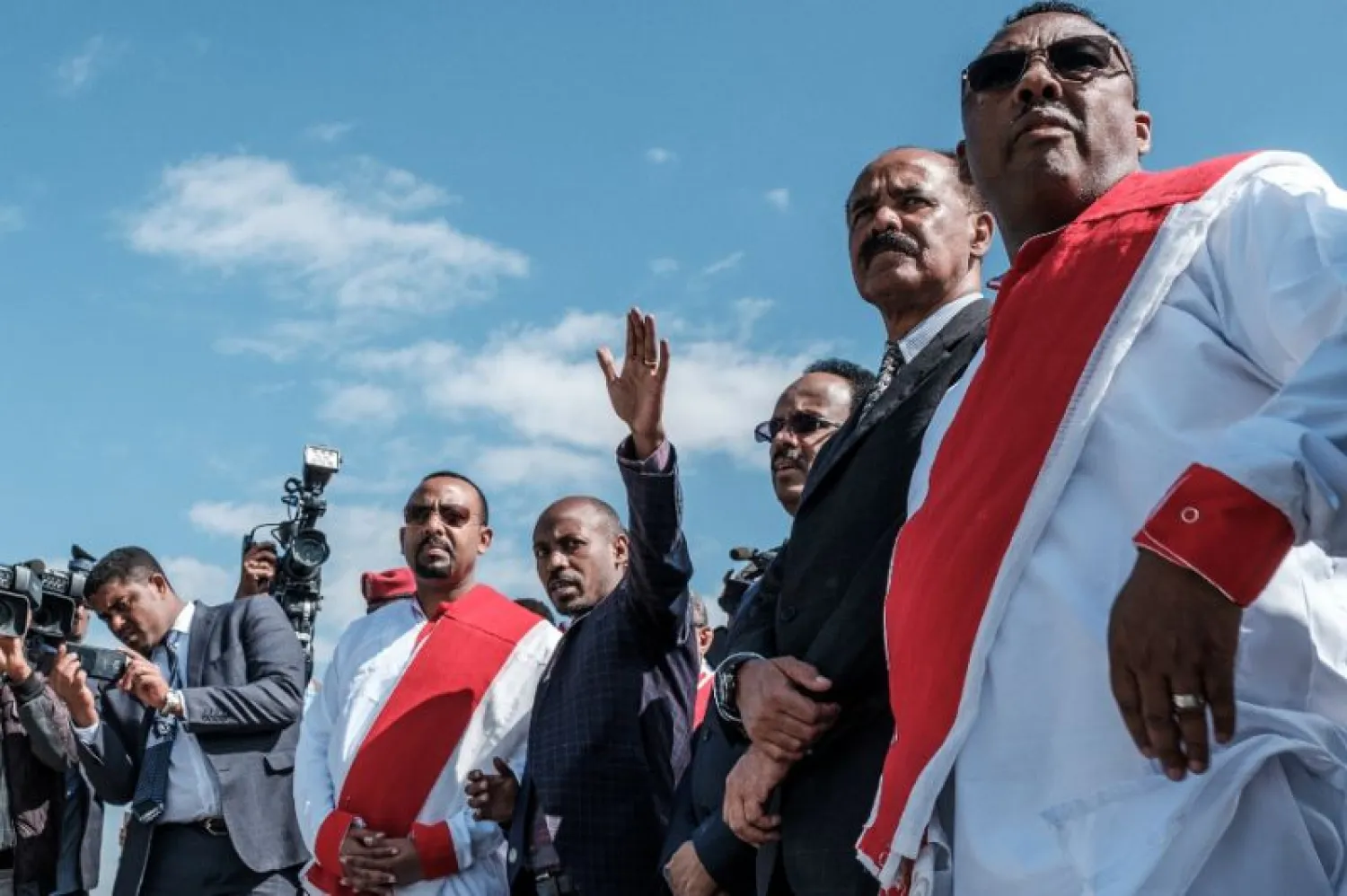
Ethiopian Prime Minister Abiy Ahmed and Eritrean President Isaias Afwerki reopen a border crossing between their countries. (AFP)
TT

Ethiopia, Eritrea Reopen Another Border Crossing

Ethiopian Prime Minister Abiy Ahmed and Eritrean President Isaias Afwerki reopen a border crossing between their countries. (AFP)

Ethiopian Prime Minister Abiy Ahmed and Eritrean President Isaias Afwerki on Monday reopened a border crossing between their countries as part of an ongoing reconciliation between the former foes, reported AFP.

The two leaders re-opened the border crossing between Humera in Ethiopia and Oum Hajer in Eritrea on the western edge of both nations, according to the state-owned Ethiopia Broadcasting Corporation.

In September, an initial two land crossings between the countries were ceremonially reopened for the first time in 20 years, after Abiy settled a long-standing border dispute by agreeing to adhere to a United Nations ruling.

However, the major crossings between Bure-Debay Sima in the east and Zalambessa-Serha in the west were closed again last month without explanation, according to local media reports.

Nevertheless, relations between the neighbors have continued to improve rapidly with Monday's reopening of the Humera-Oum Hajer border post the latest sign of normalization allowing the free movement of people and goods.

Borders were sealed in 1998 as the neighboring Horn of Africa nations cut diplomatic ties at the outbreak of a short but bloody two-year frontier battle.

An ensuing cold war stymied development and trade, and undermined regional security, but in a surprise move last year, Abiy began peace overtures, which were welcomed by Eritrea.


Iran Foreign Ministry Says US Not Serious About Pursuing Diplomacy

An Iranian woman walks next to a wall painting of Iran’s national flag on a street in Tehran, Iran, 20 April 2026. (EPA)
TT

Iran Foreign Ministry Says US Not Serious About Pursuing Diplomacy

An Iranian woman walks next to a wall painting of Iran’s national flag on a street in Tehran, Iran, 20 April 2026. (EPA)

Iran's foreign ministry said Monday that the United States was not serious about pursuing diplomacy, citing what it called "violations" of their two-week ceasefire.

"While claiming diplomacy and readiness for negotiations, the US is carrying out behaviors that do not in any way indicate seriousness in pursuing a diplomatic process," said ministry spokesman Esmaeil Baqaei in a weekly press briefing.

He said a US attack on an Iranian cargo ship early Monday, the US naval blockade on Iranian ports, and delays in implementing a ceasefire in Lebanon were all "clear violations of the ceasefire".

Iran has been at war with Israel and the United States since February 28 when strikes killed supreme leader Ali Khamenei, triggering a conflict that has engulfed the region.

Tehran and Washington have since held a round of negotiations which failed to culminate in a deal to end the war. It took place against the backdrop of a fragile two-week ceasefire which began on April 8.

US President Donald Trump said Sunday he had ordered US negotiators to travel to Pakistan on Monday to hold another round of talks, but Iran has yet to confirm its attendance.

"As of now, while I am at your service, we have no plans for the next round of negotiation, and no decision has been made in this regard," said Baqaei.

Key sticking points include Iran's stockpile of highly enriched uranium and the status of the strategic Strait of Hormuz, which has been largely closed since the outbreak of the war.

"Regarding the issue of transferring enriched uranium, neither during this period of negotiations nor before has transferring it to the United States been discussed," Baqaei said.

"It was never raised as an option for us," he added.


Tsunami Warning as 7.4-Magnitude Quake Hits Northern Japan

A television screen shows a news report on Japan Meteorological Agency's tsunami warning, saying it expected tsunami waves of up to 3 meters (9.84 feet) to reach large coastal areas in northern Japan after an earthquake with a preliminary magnitude of 7.4 struck off the northeastern coast of Japan, in Tokyo, Japan April 20, 2026.(Reuters)
TT

Tsunami Warning as 7.4-Magnitude Quake Hits Northern Japan

A television screen shows a news report on Japan Meteorological Agency's tsunami warning, saying it expected tsunami waves of up to 3 meters (9.84 feet) to reach large coastal areas in northern Japan after an earthquake with a preliminary magnitude of 7.4 struck off the northeastern coast of Japan, in Tokyo, Japan April 20, 2026.(Reuters)

A 7.4-magnitude earthquake struck northern Japan Monday, Japan's Meteorological Agency (JMA) said, issuing a tsunami warning for waves up to three meters (10 feet).

The quake, which hit at 4:53 pm (0753 GMT) in Pacific waters off northern Iwate prefecture, was strong enough to shake large buildings as far as Tokyo, hundreds of kilometers away.

Around 40 minutes later, an 80-centimeter (31-inch) tsunami wave hit a port in Kuji in Iwate, according to the JMA.

"Evacuate immediately from coastal regions and riverside areas to a safer place such as high ground or an evacuation building," it said, warning that damage due to tsunami waves was expected.

"Tsunami waves are expected to hit repeatedly. Do not leave safe ground until the warning is lifted," it said.

Footage from national broadcaster NHK did not show any immediate visible damage around several ports in Iwate.

A JMA official warned in a televised press briefing that more quakes could strike the area.

The prime minister's office said it had set up a crisis management team.

"For those of you who live in areas for which the warnings have been issued, please evacuate to higher, safer places such as higher ground," Prime Minister Sanae Takaichi told reporters, adding that the government was trying to confirm whether there were any casualties or property damage.

Japan is one of the world's most seismically active countries, sitting on top of four major tectonic plates along the western edge of the Pacific "Ring of Fire".

The archipelago, home to around 125 million people, typically experiences around 1,500 jolts every year and accounts for about 18 percent of the world's earthquakes.

The vast majority are mild, although the damage they cause varies according to their location and the depth below the Earth's surface at which they strike.

Japan is haunted by the memory of a massive 9.0-magnitude undersea quake in 2011, which triggered a tsunami that killed around 18,500 people and caused a devastating meltdown at the Fukushima nuclear plant.

In 2024, the JMA issued its first special advisory of a possible "megaquake" along the Nankai Trough.

This 800-kilometer undersea trench is where the Philippine Sea oceanic tectonic plate is "subducting" -- or slowly slipping -- underneath the continental plate that Japan sits atop.

The government has said a quake in the Nankai Trough and subsequent tsunami could kill as many as 298,000 people and cause up to $2 trillion in damage.

The JMA lifted the 2024 advisory after a week but it led to panic-buying of staples like rice and prompted holidaymakers to cancel hotel reservations.

It issued a week-long second "megaquake" advisory in December 2025 after a magnitude-7.5 tremor struck off the northern coast.

The December 8 quake triggered tsunami waves of up to 70 centimeters (28 inches) and injured more than 40 people, but no major damage was reported.


Italy Discussing Expanding EU Aspides Mission to Include Strait of Hormuz, Defense Minister Says

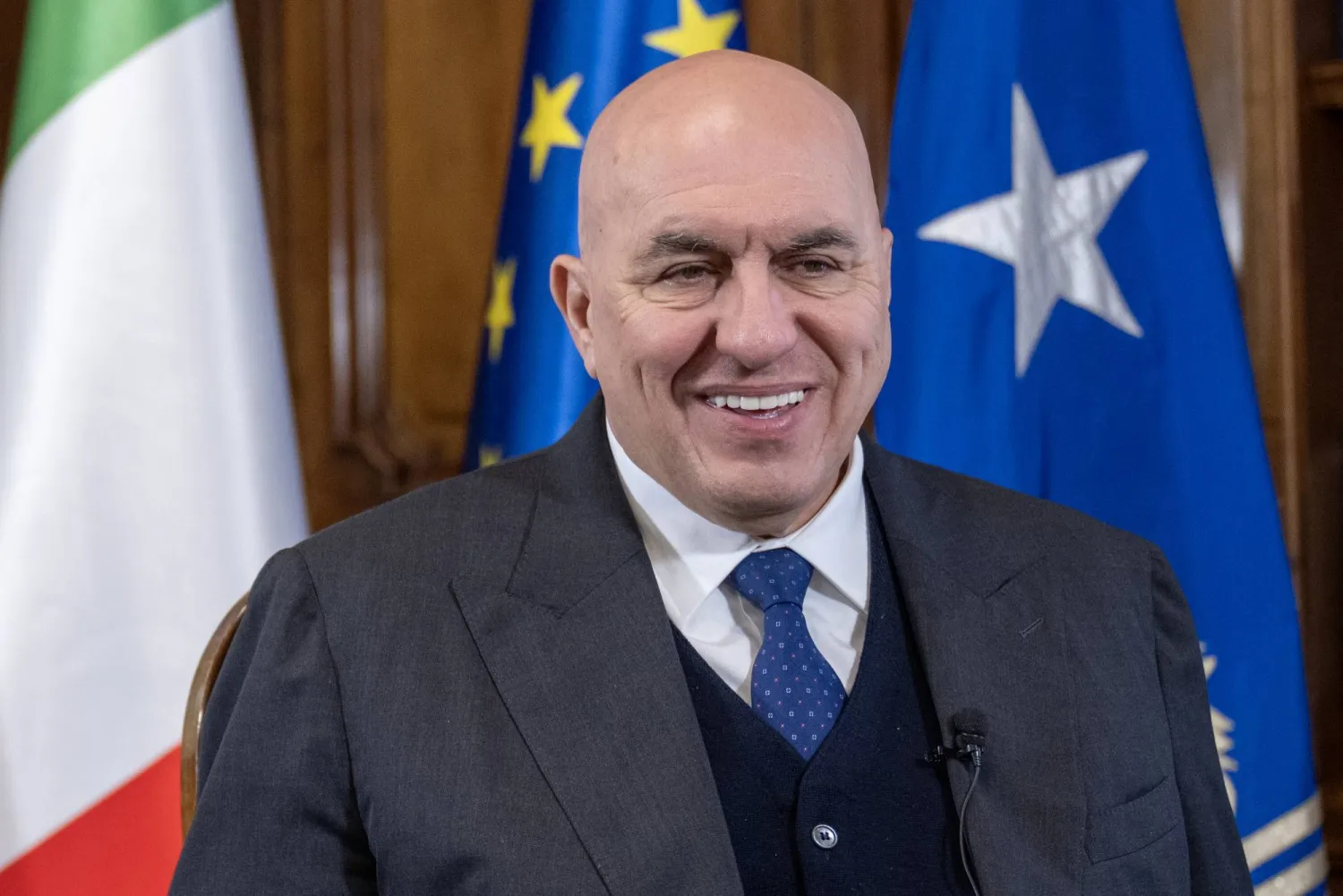
Italian Defense Minister Guido Crosetto. (Asharq Al-Awsat)
TT

Italy Discussing Expanding EU Aspides Mission to Include Strait of Hormuz, Defense Minister Says

Italian Defense Minister Guido Crosetto. (Asharq Al-Awsat)

Italy’s defense minister said discussions are underway to expand the European Union’s Red Sea naval mission, Aspides, to include the Strait of Hormuz, warning that Iran’s missile and nuclear ambitions pose a global threat.

In an interview with Asharq Al-Awsat, Defense Minister Guido Crosetto said the EU is considering widening the mandate of its “Aspides” mission to protect maritime navigation beyond its current area of operations.

“The discussions aim to allow the European Union to extend maritime security operations, including the protection of the Strait of Hormuz,” he underlined.

However, Crosetto stressed that any such effort would require a broader international coalition, noting that Asian economies depend more heavily on the strategic waterway.

“This alliance goes far beyond Europe,” he noted. “Given the strait’s vital importance to Asia, it is only fair that Asian countries assume greater responsibility.”

Saudi and Gulf role

Crosetto praised Saudi Arabia’s handling of Iranian attacks, which he described as “provocative,” calling Riyadh’s response “extremely serious and important.”

“From the beginning, Saudi Arabia worked to prevent escalation,” he said. “It defended itself without being drawn into retaliation and helped create the conditions that now allow us to believe the war may be over.”

He continued that the conflict underscored a key lesson for Gulf states: that peace depends on credible defense and deterrence.

“They were attacked despite not taking hostile action,” he noted. “Even if calm returns, there is no guarantee Iran’s behavior will not change again.”

The minister added that the strikes, including on energy infrastructure and desalination plants, showed that civilian sites must be protected alongside military assets.

Growing defense ties

Crosetto said defense cooperation between Italy and Saudi Arabia has accelerated in recent years, particularly in industrial partnerships.

He said: “Italy does not simply sell. We aim to build joint development partnerships fully aligned with Vision 2030.”

He pointed to a recent satellite agreement and ongoing talks covering air defense, naval systems, aviation and helicopters.

“Our cooperation goes beyond transferring production to include technology transfer and exchange,” he remarked.

Italy also offered support during the conflict, deploying defensive systems against missiles and drones.

“We assisted friendly countries facing unjustified aggression,” he said, stressing that the support was not commercial.

Hormuz must remain open

Crosetto firmly rejected any suggestion that Iran could impose transit fees or restrictions in the Strait of Hormuz, saying: “It is absolutely unacceptable for Iran to impose any fees or constraints. The strait must remain a free passage.”

He warned that allowing countries to weaponize strategic waterways would set a dangerous precedent.

“Otherwise, others could follow — from the Houthis to states controlling the Strait of Malacca, the Panama Canal or Gibraltar. That would be sheer madness,” he stressed.

Iran and regional security

Crosetto said Italy maintains communication channels with Tehran but acknowledged ties are limited. “Our relations with Iran are not particularly strong. The issue today is identifying who our real counterpart is.”

He argued that power in Iran is increasingly concentrated in the hands of the Revolutionary Guard Corps, making diplomacy more difficult.

“They represent one of the main obstacles to peace,” he said.

The minister also warned that Iran’s military capabilities extend beyond the region, saying: “As Iran has targeted Riyadh, Doha or Dubai, it could target Rome, Paris or Berlin tomorrow. This is unacceptable.”

He added that Iran obtaining nuclear weapons would be a threat “not only to Israel, but to the entire world.”

NATO and European defense

Asked about concerns over NATO’s future following remarks by US President Donald Trump, Crosetto expressed confidence in the alliance.

“NATO will endure for a very long time,” he said. “It is an added value for both Europe and the United States.”

He stressed that recent conflicts have reshaped Europe’s understanding of deterrence, highlighting the importance of coordination among allies.

“The broader and more interconnected defense becomes, the stronger it is,” the minister emphasized, calling for a greater European role alongside NATO, including non-EU countries such as Türkiye, Ukraine and Norway.

Drones

Crosetto said Italy is studying recent conflicts — from Ukraine to the Gulf — to reassess national security risks.

He argued that while the war in Ukraine appears conventional, fought in trenches reminiscent of World War I, it is fundamentally modern due to the widespread use of drones.

“Drones are now the most used weapons and account for a large share of losses,” he stated.

By contrast, the Gulf conflict has been largely aerial and missile-based, with drones — increasingly enhanced by artificial intelligence — transforming defense strategies.

The minister remarked that future defense systems must be multilayered to counter evolving threats.