Turkish Lira Slips to One-Month Low over Syria Concerns, Trump Warning

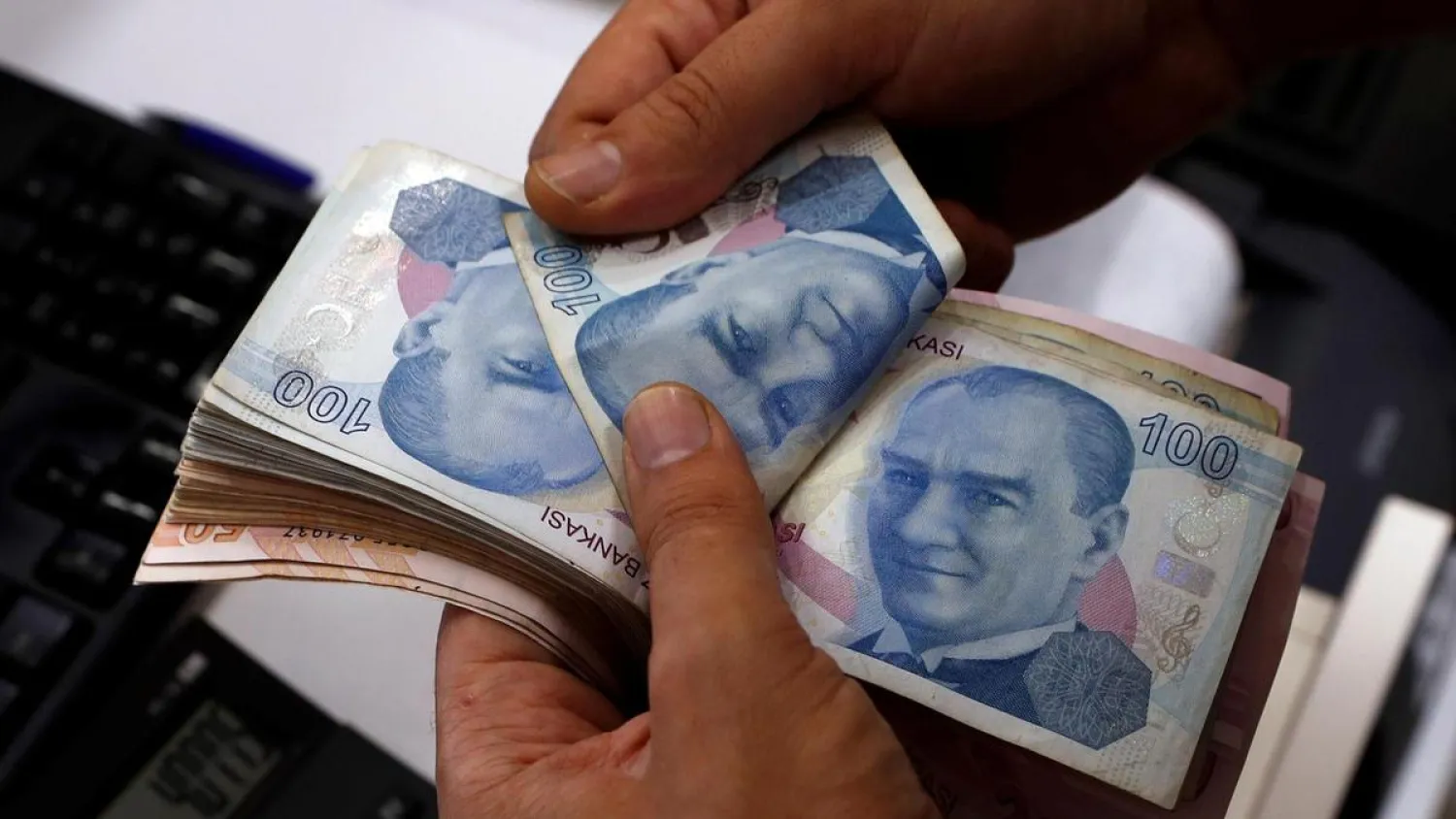
Turkey’s lira slid against the dollar after the White House said Ankara will soon be moving forward with its operation into northern Syria. (Reuters)
TT

Turkish Lira Slips to One-Month Low over Syria Concerns, Trump Warning

Turkey’s lira slid against the dollar after the White House said Ankara will soon be moving forward with its operation into northern Syria. (Reuters)

Turkey’s lira slid to its lowest level in more than a month against the dollar on Monday over concerns about Ankara’s planned incursion in north Syria and a warning from President Donald Trump that he could “obliterate” the Turkish economy.

Investors have been closely watching tense ties between Ankara and Washington in recent months, with the NATO allies at odds over a range of issues, including policy differences in Syria and Turkey’s purchase of Russian missile defense systems.

Turkey has repeatedly threatened to carry out an incursion against the US-backed Kurdish People’s Protection Units (YPG) in northeast Syria, accusing the United States of stalling efforts to establish a “safe zone” there along the Turkish border.

Following a phone call between Trump and Turkish President Recep Tayyip Erdogan, the White House said on Sunday US forces would not support Turkey’s incursion and would leave the area.

On Monday, Trump threatened to “totally destroy and obliterate” the Turkish economy if Turkey took any action he considered “off-limits”.

The lira declined more than 1.6%, trading at 5.795 at 1600 GMT, after closing at 5.7000 on Friday. Earlier, it slipped as far as 5.8195, its weakest level since September 3.

“While the statement from the United States gives a green light to the military operation in Syria that Turkey has mentioned for a long time, it leaves many question marks regarding how the process will develop,” said a forex trader, who did not want to be named.

Turkey’s dollar bonds also fell, with the 2038 issue US900123CB40=TE down 1.3 cents.

Turkey’s lira lost nearly 30% against the dollar last year, over concerns about political interference with monetary policy, as well as a deterioration in ties between Washington and Ankara. It is down about 8% this year.

Turkey's BIST100 main share index .XU100 was down 0.45%, while the banking index .XBANK declined 1.72%.


Oil Prices Rise again and Asian Stocks Retreat on the Fragile Iran Ceasefire

A currency trader works near a screen showing international oil prices at the foreign exchange dealing room of the Hana Bank headquarters in Seoul, South Korea, Thursday, April 9, 2026. (AP Photo/Ahn Young-joon)
TT

Oil Prices Rise again and Asian Stocks Retreat on the Fragile Iran Ceasefire

A currency trader works near a screen showing international oil prices at the foreign exchange dealing room of the Hana Bank headquarters in Seoul, South Korea, Thursday, April 9, 2026. (AP Photo/Ahn Young-joon)

Oil rose again to above $97 a barrel and Asian stocks were trading lower Thursday on skepticism over a fragile ceasefire between the US and Iran.

Investors were closely watching whether a two-week ceasefire between the United States and Iran was already slipping after a round of deadly Israeli strikes on Lebanon that killed and injured hundreds. Iran again closed the Strait of Hormuz, in response to the attacks in Lebanon, said Reuters.

Tokyo’s Nikkei 225 dropped 0.9% to 55,824.30, while South Korea’s Kospi lost 1.6% to 5,776.03.

Hong Kong’s Hang Seng fell 0.4% to 25,801.87. The Shanghai Composite index was down 0.7% to 3,965.70.

Australia’s S&P/ASX 200 edged down 0.1%, while Taiwan’s Taiex was also 0.1% lower.

US futures were down more than 0.1%.

Oil prices were up Thursday, reversing an earlier plunge on optimism over the temporary ceasefire agreement. Brent crude, the international standard, was up 2.4% to $97.02 per barrel. It previously fell briefly to below $92 a barrel following the temporary ceasefire announcement.

Benchmark US crude was 3.3% higher on Thursday at $97.50 a barrel.

Uncertainties over global energy supply remained. The Strait of Hormuz, a chokepoint for energy transport where a fifth of the world’s oil typically passes, was largely closed even though the US repeatedly demanded that the strait must be reopened.

Talks to pursue a permanent end to the war could be taking place as soon as Friday in Pakistan, and US Vice President JD Vance is expected to be leading the negotiating team for the United States.

Wall Street closed higher Wednesday following US President Donald Trump’s announcement of a two-week ceasefire with Iran late Tuesday.

The S&P 500 jumped 2.5% to 6,782.81. The Dow Jones Industrial Average rose 2.9% to 47,909.92. The Nasdaq composite was up 2.8% to 22,635.00.

Following renewed hopes over deescalation of the war, shares of United Airlines surged 7.9% on Wednesday, American Airlines was up 5.6%, while cruise ship operator Carnival jumped 11.2%, trimming losses since the Iran war began on concerns over rising fuel costs.

In other dealings, gold and silver prices fell. Gold’s price dropped 0.7% to $4,743.20 an ounce. The price of silver fell 1.6% to $74.18 per ounce.

The US dollar rose to 158.66 Japanese yen from 158.57 yen. The euro was trading at $1.1668, up from $1.1663.


World Bank Slashes 2026 Middle East Growth Forecast, Saudi Arabia Absorbs Shock

A cargo ship in the Arabian Gulf near the Strait of Hormuz (Reuters)
TT

World Bank Slashes 2026 Middle East Growth Forecast, Saudi Arabia Absorbs Shock

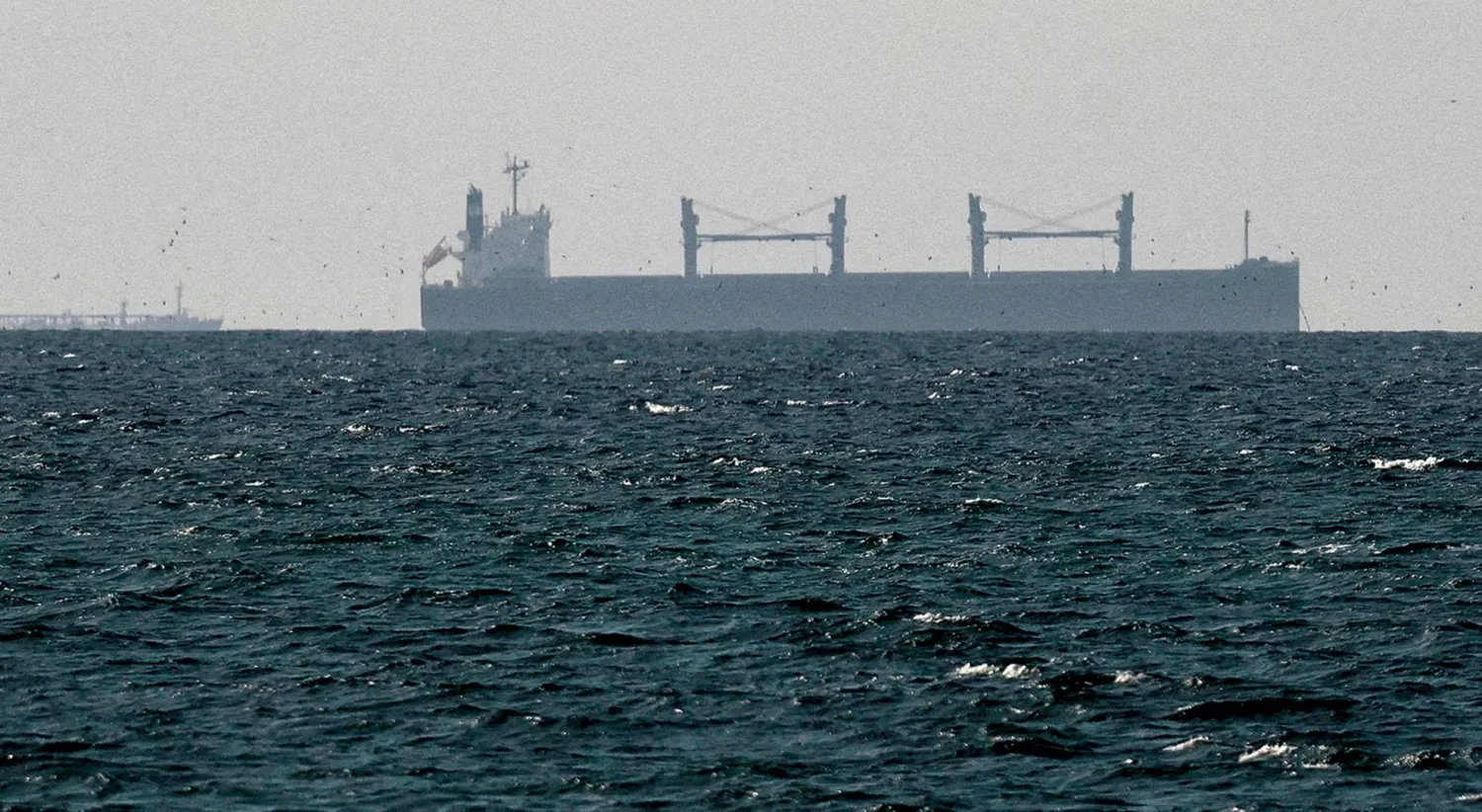
A cargo ship in the Arabian Gulf near the Strait of Hormuz (Reuters)

The World Bank has slashed its 2026 growth forecast for Middle East economies, saying overall GDP growth in ⁠the region is expected to slow from an estimated 3.6% in January to 1.8% for 2026.

The closure of the strategic ⁠Strait of Hormuz, and destruction ⁠of energy and public infrastructure, had disrupted markets, increased financial volatility, and weakened the 2026 growth outlook, the World Bank Group said in its Economic Update for the Middle East, North Africa, Afghanistan and Pakistan.

The report was published as US President Donald Trump late on Tuesday announced a two-week ceasefire in the conflict with Iran after he had threatened to wipe out “a whole civilization.”

According to the World Bank, the conflict comes as an additional shock to a region already suffering from low productivity growth, limited private sector dynamism and persistent labor market challenges – underscoring the urgent need to strengthen governance and macroeconomic fundamentals and take action to boost long-term job creation and resilience.

The April 2026 World Bank’s Macro Poverty Outlook forecasts that the region’s aggregate (excluding the Iran) GDP growth will decelerate to 1.8 percent in 2026, down from 4.0 percent estimated for 2025. The 2026 forecast has been downgraded by 2.4 percentage points since the January projections, reflecting the adverse effects of the ongoing conflict.

GCC states

Growth in the Gulf Cooperation Council and Iraq, among the most heavily affected by the impact of the conflict, is expected to slow to 1.3% for 2026, down 3.1 percentage points from its January projection, and driven mainly by lower projected hydrocarbon revenues due to disruptions caused ⁠by the ⁠conflict.

Saudi Arabia: Forecast was downgraded by 1.2 percentage points since January. Growth is now expected to slow from 4.3% in 2025 to 3.1% in 2026, noting that Saudi Arabia’s outlook remains the strongest among Gulf economies.

United Arab Emirates: Growth forecast for the UAE has fallen by 2.7 percentage points since January. Growth is now expected to slow from 5% in 2025 to 2.4% in 2026.

Qatar: Notably, growth forecast for the Qatari economy has seen a sharp decline of 11.0 percentage points since January. The economy is now expected to record a contraction of 5.7%, down from an estimated growth of 5.3%, due to severe obstruction to liquefied gas supplies. Qatar is a key player in the global energy market, with a global market share of liquefied natural gas (LNG) supplies ranging between 20% and 21%.

Kuwait: Likewise, Kuwait’s economy is expected to register a significant contraction of 6.4%, compared to growth of 2.6% expected in January. Kuwait relies entirely (100%) on the Strait of Hormuz to export its crude oil and derivatives. Consequently, closing the strait would mean a complete shutdown of the country’s financial lifeline, immediately halting revenue inflows to the state budget.

Bahrain: Growth forecast for Bahrain’s economy has declined by 1.8 percentage points since January. Growth is now expected to slow from 3.1% in 2025 to 1.3% in 2026.

Sultanate of Oman: Growth forecast for Oman’s economy has decreased by 1.2 percentage points since January. Growth is now expected to slow from 3.6% in 2025 to 2.4% in 2026.
Iraq

The greatest shock in the World Bank report lies in the free fall of the Iraqi economy, as its growth forecast dropped from 6.5 percent to a staggering contraction of 8.6 percent.

This alarming figure reflects the situation faced by Iraq following the closure of the Strait of Hormuz.

Iraq — the second-largest producer within the Organization of the Petroleum Exporting Countries (OPEC) — experienced the largest drop in production, estimated at nearly 70 percent, dropping to about 800,000 barrels per day from 4.3 million barrels prior to the Strait of Hormuz crisis.

Egypt

Egypt’s situation in the World Bank report differs from that of some countries in the region that saw sharp contractions; the bank maintained its forecast for Egypt’s economic growth at 4.3%.

The World Bank said that “risks are tilted to the downside.”

It added that “in the event of a prolonged conflict, the current impacts on the region will be compounded–through elevated energy and food prices, declining trade, tourism and remittances, increased fiscal pressures, and displacement.”

Peace is a precondition for the region’s durable development

“The current crisis is a stark reminder of the work ahead for the region: not only to weather shocks, but to rebuild more resilient economies with stronger macroeconomic fundamentals, innovate and improve governance, invest in infrastructure, and boost employment-creating sectors,” Ousmane Dione, the World Bank's Vice President for the region said in a statement.

"Peace and stability are preconditions for the region’s durable development. With peace and the right action, countries can build the institutions, capabilities and competitive sectors that create opportunities for people,” he added.

As for Roberta Gatti, World Bank Group Chief Economist for the Middle East, North Africa, Afghanistan and Pakistan, she said: "As countries face the heavy toll of the present conflict, it is important to also not lose sight of the work needed for long-lasting peace and prosperity.”



IMF: Wars Impose Deep and Prolonged Economic Costs on Countries

The letters IMF (for International Monetary Fund) stand next to a stage for events in the conference building of the International Monetary Fund (IMF). Soeren Stache/dpa 
TT

IMF: Wars Impose Deep and Prolonged Economic Costs on Countries

The letters IMF (for International Monetary Fund) stand next to a stage for events in the conference building of the International Monetary Fund (IMF). Soeren Stache/dpa 

Wars cause large and persistent economic losses in countries where fighting takes place, with output declining by roughly 7% over five years on average, and economic scars lasting for more than a decade, the International Monetary Fund (IMF) said in research released on Wednesday.

The IMF examined ‌the cost of active conflicts - now at the highest levels since the end of World War Two - and the macroeconomic consequences of sharp increases in military spending in two chapters of its forthcoming World Economic Outlook. The full report will be released next Tuesday.

The chapters do not address the Middle East war or the two-week ceasefire announced by US President Donald Trump late on Tuesday but offer a comprehensive look at wartime economies back to 1946, and weapons spending data from 164 countries.

In 2024, the latest year for which data is available, more than 35 countries experienced conflict in their territory and about 45% of the world's population lived in countries affected by ⁠conflict.

“Beyond their devastating human toll, wars impose large and lasting economic costs, and pose difficult macroeconomic trade-offs, especially for those countries where the fighting is taking place,” the IMF said in a blog released at the same time.

Countries engaged in foreign conflicts can avert physical destruction on their own soil and avoid large economic losses, but neighboring countries or key trading partners will feel the shock, the IMF said.

“Output losses from conflicts persist even after a decade and typically exceed those associated with financial crises or severe natural disasters,” the IMF chapter said.

It said conflicts contributed to sustained exchange rate depreciation, reserve losses and rising inflation, as widening external imbalances amplified macroeconomic stress, according to Reuters.

Military Spending Surges Globally

Rising geopolitical tensions and more frequent conflicts have sparked big jumps in military ‌spending, with ⁠about half of the world's countries increasing their military budgets over the past five years, and more increases coming as NATO countries boost weapons spending to 5% of GDP by 2035.

Arms sales by the world's largest weapons makers - many of whom are based in the US - have doubled in real terms over two decades, the IMF found.

The IMF authors found that large defense spending booms had become more frequent, especially in emerging-market and developing economies, with typical booms lasting 2-1/2 years and military spending surging by about 2.7% of GDP.

About two-thirds of these military buildups were financed by higher deficits, ⁠which could boost economic activity in the medium term, but also increased inflation and created medium-term challenges, the IMF said. That meant buildups needed to be closely coordinated with monetary policy, the IMF said.

Military Buildups Strain Budgets

On average, fiscal deficits worsened by about 2.6 percentage points of GDP and public debt increased by about 7 percentage points within three years of the start of a buildup.

About one-quarter ⁠of those buildups were financed by reprioritizing spending, often leading to a sharp decline in government spending on social programs, said Andresa Lagerborg, an IMF economist, in a taped discussion about the chapter.

Output gains were also smaller when the arms were purchased from foreign suppliers, the IMF said. Focusing on public investment in equipment and infrastructure would expand market size, ⁠support economies of scale and strengthen industrial capacity while limiting the loss of orders to overseas suppliers, it said.

IMF economist Hippolyte Balima, one of the key authors of the chapters, said the data also showed that peace was fragile, with about 40% of countries relapsing into conflict within five years.