


Camel Herding in Western Sahara a Passion With Pedigree

At dawn and dusk in the Western Saharan desert, Habiboullah Dlimi milks his camels by hand in the same way his ancestors used to | AFP
TT

Camel Herding in Western Sahara a Passion With Pedigree

At dawn and dusk in the Western Saharan desert, Habiboullah Dlimi milks his camels by hand in the same way his ancestors used to | AFP

In the Oued Eddahab desert in Western Sahara, Habiboullah Dlimi raises dairy and racing camels just like his ancestors used to -- but with a little help from modern technology.

His animals roam free in the desert and are milked as camels always have been, by hand, at dawn and dusk.

When camels "feed on wild plants and walk all day, the milk is much better," said the 59-year-old herder, rhapsodizing about the benefits of the nutrient-rich drink, known as the "source of life" for nomads.

But Dlimi no longer lives with his flock.

He lives in town with his family. His camels are watched over by hired herders and Dlimi follows GPS coordinates across the desert in a 4X4 vehicle to reach them.

He is reticent when asked about the size of his herd. "That would bring bad luck," he said.

He prefers to speak of the gentleness and friendliness of the animals he knows like his own children.

"Camels can endure everything: sun, wind, sand and lack of water, and if they could talk, you'd easily hear how intelligent they are," he said.

- 'Tribes are tribes' -

Dlimi comes from a long line of desert dwellers from the Ouled Dlimi tribe.

As tradition dictates, he lists his ancestors going back five generations when introducing himself.

"I know the desert and the desert knows me," he said.

Like elsewhere, the nomads of Western Sahara are settling, following a shift from rural to urban living.

"Young people prefer to stay in town," Dlimi said, and herders now mostly come from neighboring Mauritania, whose desert north is traversed by caravans of up to a thousand camels.

Even they "often demand to work in areas covered by (mobile phone) network signal," he added.

The population of the nearby town of Dakhla has tripled to 100,000 in 20 years, with growth driven by fishing, tourism and greenhouse farming encouraged by Morocco.

In this part of Western Sahara, development projects depend entirely on Rabat.

Morocco has controlled 80 percent of the former Spanish colony since the 1970s and wants to maintain it as an autonomous territory under its sovereignty.

The Polisario Front movement fought a war for independence from 1975 to 1991 and wants a referendum in which the people of Western Sahara choose between independence and integration with Morocco.

The United Nations has been trying to negotiate a political compromise for decades.

Like many in his tribe, Dlimi has family members on the other side of the Western Sahara Wall separating the Moroccan controlled areas from the Polisario controlled areas.

He favors loyalty to Morocco while others back independence, he said.

Tribal affiliation trumps politics, though.

"Tribes are tribes, it's a social organization," he said. "There are very strong links between us."

To "preserve the past for the future," Dlimi started a cultural association to conserve traditions from a time when there were no borders and "families followed the herds and the clouds".

- 'Eight-time champion' -

While Dlimi loves the desert, he does have one complaint: "The camel dairy industry is valued everywhere in the world except here."

Camel milk is trendy with health-conscious consumers and the lean meat is excellent, Dlimi claims.

Today though, it is small livestock farming that is the main agricultural focus, in response to what non-nomadic Moroccans tend to eat.

The 266,000 square kilometres (106,400 square miles) of Western Sahara under Moroccan control hosts some 6,000 herders, 105,000 camels, and 560,000 sheep and goats, according to figures from Rabat.

In other arid countries, including Saudi Arabia, intensive farming of camels has taken off.

But, while Moroccan authorities have undertaken several studies into developing Western Sahara's camel industry, these have not so far been acted upon.

Regardless, a local adage holds that he who has no camel, has nothing.

"Some say that Saharans are crazy because when they have money they spend it on four feet," Dlimi jokes.

For him, 20,000 dirhams ($2,000) spent on a camel is a safe investment.

But it is also a consuming passion.

His Facebook page and WhatsApp messages are filled with talk of camel husbandry techniques, research and racing.

Racing "is a pleasure and it pays", Dlimi said.

Since the United Arab Emirates funded construction of a camel racing track at Tantan, 900 kilometres (560 miles) to the north, racing animals have appreciated in value and can sell for up to 120,000 dirhams, according to Dlimi.

To train his racing camels, Dlimi chases the young animals across the desert in his 4X4.

The technique has made him an eight-time champion in national competitions, he said.

But camels can be stubborn, Dlimi stressed, telling of how he once sold his best champion for a "very good price", but the animal refused to race once it had changed hands.


‘If Ebola Comes, We’ll Be Wiped Out’: Fear Grips Camps in DR Congo

A staff member hangs up protective equipment to dry after washing them at the Ebola Treatment Center (ETC) in Munigi on June 2, 2026. (AFP)
TT

‘If Ebola Comes, We’ll Be Wiped Out’: Fear Grips Camps in DR Congo

A staff member hangs up protective equipment to dry after washing them at the Ebola Treatment Center (ETC) in Munigi on June 2, 2026. (AFP)

Dorcas Mapenzi fears the worst if Ebola comes to the Kingonze camp, where she lives alongside more than 25,000 other displaced people in the conflict-hit eastern Democratic Republic of Congo.

"If Ebola comes, we'll be wiped out as we're packed like sardines," the displaced woman told AFP at the sprawl of tarpaulin and tents on the outskirts of Bunia, the capital of the northeastern Ituri province, the epicenter of the latest outbreak.

Spread by close contact, the deadly viral disease has spread like wildfire in the vast central African country's east, where decades of armed conflicts have forced millions of people from their homes and into camps where they live cheek-by-jowl.

Nearly a million of those displaced are in Ituri -- among the provinces of the desperately impoverished DRC most prey to the east's litany of armed groups -- where the prospect of the epidemic spreading throughout the refugee camps has sparked alarm.

The World Health Organization's director general, Tedros Adhanom Ghebreyesus has warned that the eastern DRC "faces a catastrophic collision of disease and conflict", with the fighting hampering efforts to tackle the epidemic.

Visiting Bunia on Saturday, Tedros called for more international help and financial aid to combat the spread of Ebola.

He also said it was essential to assuage fears among affected communities who are deeply distrustful of authorities and halt the spread of false information about the virus.

The current outbreak was officially declared in the DRC and neighboring Uganda on May 15.

As of May 31, the WHO said 321 cases had been confirmed in the DR Congo, including 48 deaths. Thjere are nine confirmed cases in Uganda, including one fatality.

- 'Everyone will die' -

No infection has yet been recorded at the Kingonze displaced persons' camp, where Mapenzi now lives.

But conditions in the camp are ripe for a disease passed on through close physical contact and bodily fluids.

"I've already heard of Ebola and it's a disease that scares me a lot," Mapenzi said as she washed her laundry in a basin on the ground.

"We displaced people here have no hygiene.

"Our children play next to filthy toilets and even relieve themselves on the ground, in the middle of the tarpaulins that serve as our homes," the young woman said.

Deborah Nzale, a widow and head of her family, lives with nine people in a small tarpaulin shelter of barely three square meters (32 square feet).

"Given these conditions, how are we going to protect ourselves against this disease, when everyone tells us we need to distance ourselves to fight Ebola?" she asked.

No vaccine or treatment exists for the Bundibugyo strain of Ebola responsible for the latest outbreak.

So attempts to contain the virus's spread have had to rely mainly on protective measures and rapid contact tracing.

"We sleep piled on top of each other, with everyone's sweat," Nzale said.

"If a single person gets infected here in this camp, everyone will die."

- 'Ebola really kills' -

So far, Kingonze's displaced residents have not received any protective gear.

"Ebola really kills," a poster at the entrance warns.

"People looking to raise awareness come through here with messages but, surprisingly, we don't have the kit we need to protect ourselves," Budjo Amos complained.

"I don't even have soap to wash my hands," said Amos, who fled the province's common communal violence.

"The most urgent thing is to give us clean water," he insisted.

There is just a single borehole in Kigonze. Empty jerrycans pile up in front. Water flows from the tap for just a few hours a day.

"The state has to intervene urgently," Amos pleaded.

Already long absent from swathes of Ituri, the Congolese state has been criticized for its delayed response to the outbreak, which was declared several weeks after the first cases emerged.

Many hospitals in the region still lack essential equipment, especially isolation tents for patients.

According to Ituri's military governor, the province counts around 61 displaced persons camps housing nearly 970,000 people.

"We need to deploy equipment and qualified, specialist medical staff as quickly as possible," Lieutenant General Johnny Luboya Nkashama told AFP on Friday, "to spare this province from disaster".


Beirut Southern Suburbs Residents Live Between Displacement, Return

Vehicles drive on the highway as people leave Beirut's southern suburbs after Israel ordered strikes on Dahiyeh, in Beirut, Lebanon, 01 June 2026. EPA/WAEL HAMZEH
TT

Beirut Southern Suburbs Residents Live Between Displacement, Return

Vehicles drive on the highway as people leave Beirut's southern suburbs after Israel ordered strikes on Dahiyeh, in Beirut, Lebanon, 01 June 2026. EPA/WAEL HAMZEH

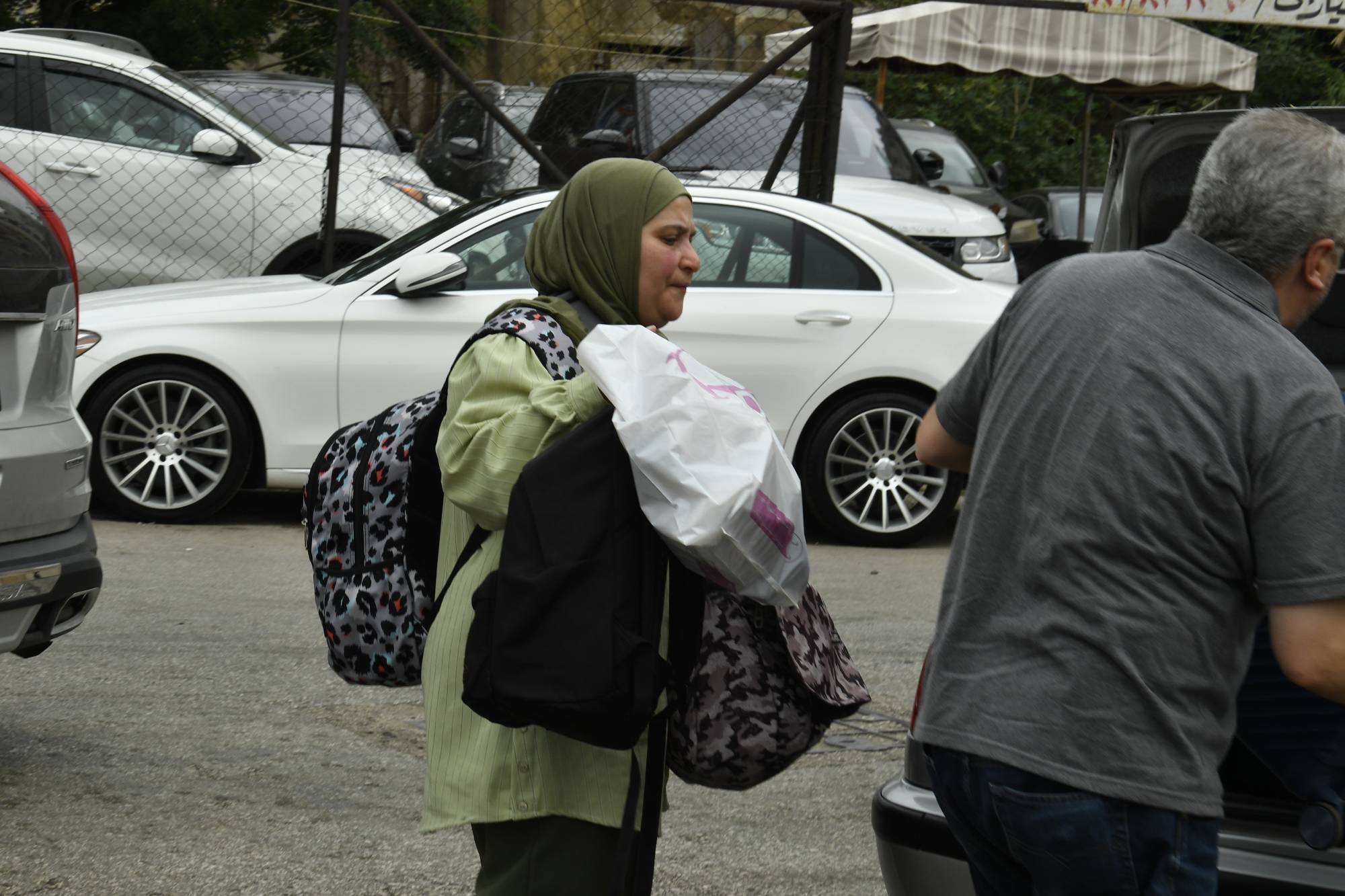
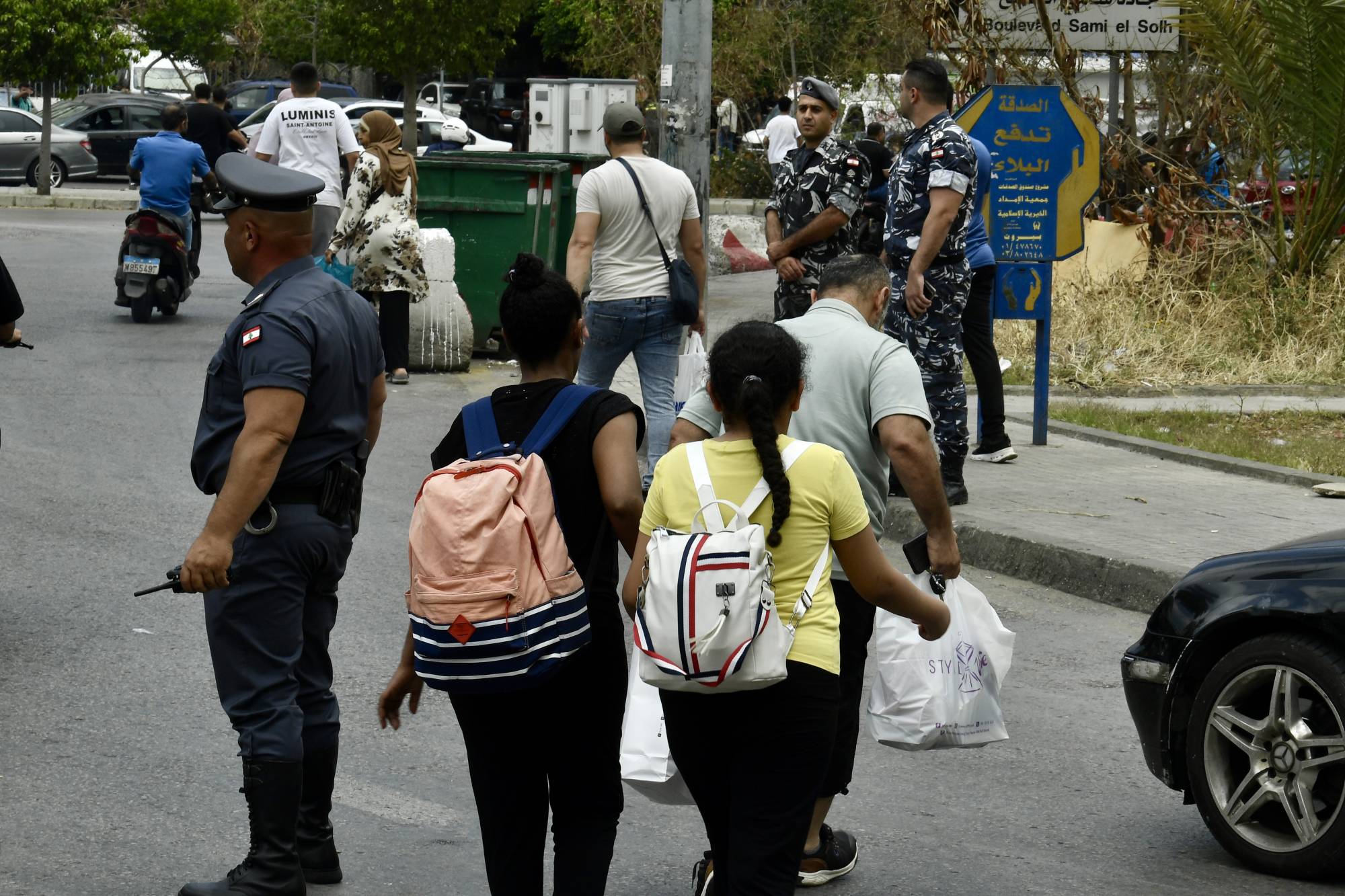
The latest Israeli threat threw Beirut’s southern suburbs into turmoil within hours. Schools were evacuated, parents rushed to pull their children out of classrooms, and many residents fled their homes in haste. Roads filled with a new wave of displacement, reviving scenes the Lebanese have endured repeatedly in recent months.

But the threat did not end when the warning did. The alert was lifted, but the anxiety stayed. Some people returned to work, but not to a sense of safety. For many, the question is no longer when the strike will come, but how to live under the constant expectation of the next warning.

The home that is no longer safe

Layla Hassan told Asharq Al-Awsat that the latest threat to the southern suburbs did not end for her when the warning expired. The feeling it left behind still follows her. The problem, as she sees it, is no longer tied to a single security incident, but to a permanent state of uncertainty.

She said the natural bond between people and their homes has changed radically. “The home, which once represented the safe space people turned to in fear or danger, has now become one of the sources of anxiety.”

The warning, she said, made returning more complicated than leaving, especially for those responsible for children or other family members.

Life in displacement, despite its hardship and lack of services, can sometimes feel less cruel than the anxiety of returning, she said. Electricity, water, cramped spaces and the strain of daily life become secondary details beside one overriding concern, keeping the family safe.

She added that repeated displacement gradually pushes people to adapt to abnormal conditions, until the mere feeling of safety becomes a goal in itself, even at the cost of the life they once knew.

People leave Beirut's southern suburbs after Israel ordered strikes on Dahiyeh, in Beirut, Lebanon, 01 June 2026. EPA/WAEL HAMZEH

Every day begins with fear

Fatima Shams has not returned to the southern suburbs since Monday’s threat. She told Asharq Al-Awsat that “the Lebanese are living today in a state of constant anticipation that has made fear part of the daily routine. Every morning begins with a different question, but the meaning is the same, will this day pass safely?”

She described how the latest threat disrupted the daily lives of families. Her sister was at school when exams were halted and students were urgently evacuated. Within minutes, parents had to leave work and head to schools, caught between traffic-clogged roads and fear of a sudden security development.

“The hardest thing people are living through is not only the fear of strikes, but the constant feeling of instability,” she said. “Families are no longer able to plan their day or their week, because any new warning can overturn everything.”

She said the danger no longer feels confined to one area after warnings and tensions spread to different parts of Lebanon, making insecurity more widespread than ever.

Anticipation is wearing people down

Ali Noureddine, from the southern town of Toul and a resident of Beirut’s southern suburbs, described life for residents as “deadly anticipation.”

He told Asharq Al-Awsat that “the crisis is no longer linked to the warning itself, but to the psychological state that follows it. After every threat, people remain trapped between the possibility of returning to normal life and the possibility of a new escalation.”

He said this constant anxiety drains residents more than direct security incidents, because it turns life into an open-ended wait that no one knows when it will end.

The anxiety, he added, is not limited to the southern suburbs. It reaches the south as well, where families follow news of their towns, homes and areas with no clarity over what comes next.

People leave Beirut's southern suburbs after Israel ordered strikes on Dahiyeh, in Beirut, Lebanon, 01 June 2026. EPA/WAEL HAMZEH

We carry our memories in a bag

Layan Abdullah has not returned to the southern suburbs since the latest threat. For the university student, campus life is no longer about lectures, exams and ambitions. It is about displacement and the search for safety.

She told Asharq Al-Awsat that “her life has become a matter of packing belongings into a bag, moving to a new place, then preparing for the possibility of doing it again.”

Her generation, she said, can no longer think about future projects or career plans. The priority has narrowed to getting through the day safely.

She spoke of the harsh feeling that accompanies each displacement, reducing an entire life to a single bag. “A person does not leave behind only walls and furniture, but memories, details and relationships tied to a place.”

She also pointed to the added suffering of families with patients who need continuous medical care. Every move brings new questions about safe roads, access to hospitals and securing treatment, adding another layer of pressure to the psychological burden everyone is carrying.

Displacement from the southern suburbs and fear of losing Bint Jbeil forever

Hassan Bazzi does not describe the latest threat to Beirut’s southern suburbs as a passing security incident. For him, it was a moment that revived deeper fears about his future and the future of his hometown, Bint Jbeil.

He told Asharq Al-Awsat that “he found himself, like thousands of others, facing the prospect of another displacement from the southern suburbs, while carrying the feeling that the distance between him and his southern town, where he had spent years planning to return and settle, is growing day by day.”

“After the latest threat to the southern suburbs, the same feeling returned, that our entire lives have become suspended,” he said. “It is no longer only about where we live today or tomorrow, but about an entire future that we do not know whether we will be able to reclaim.”

He said he owns land and property in Bint Jbeil that he had seen as his life project and source of stability after more than three decades of work. But with the war continuing and the political and military scene growing more complicated, he now feels those plans slipping farther away.

“I imagined I would return to live on my land and take care of what I had built over the years. I thought the hardship of 30 years would give me a chance to rest and settle down. Today, I feel all of that has been postponed indefinitely,” he said.

He said repeated threats and continued displacement from the southern suburbs and the south have left people in a state of accumulated psychological exhaustion, making it hard to think about the future or make any long-term plans.

“I fear our children will grow up not knowing these villages as we knew them, and I fear that waiting to return will become a permanent state,” he said. “That is why displacement from the southern suburbs alone is not what worries me. What worries me more is that a day may come when I feel Bint Jbeil has become just a memory.”


‘Life and Hope’: Lebanon Hospital Resilient After Israeli Attack

02 June 2026, Lebanon, Tyre: Debris and extensive damage are pictured inside the Jabal Amel Hospital in Tyre after Monday's Israeli strike. (dpa)
TT

‘Life and Hope’: Lebanon Hospital Resilient After Israeli Attack

02 June 2026, Lebanon, Tyre: Debris and extensive damage are pictured inside the Jabal Amel Hospital in Tyre after Monday's Israeli strike. (dpa)

In a south Lebanon hospital heavily damaged by deadly Israeli strikes nearby, Dr. Nasser al-Masri held a new-born baby, calling him "a message of life and hope" despite the war.

Israeli strikes near the Jabal Amel hospital in Tyre on Monday killed four people and wounded 127, including four doctors, 27 nurses, and eight administrative employees, Lebanon's health ministry said.

They also caused "severe and extensive damage" to the facility, it added.

"Despite everything that happened yesterday, there was a scheduled delivery today... (and) the mother insisted on delivering at the hospital," Masri said.

"This baby was born today, he's just a few minutes old... He brought us a message of life and a message of hope for the future."

Glass was scattered across some hospital rooms on Tuesday, while dust and debris covered beds and tables.

Medication was strewn on corridor floors, and staff tried to work as others cleaned up around them.

"We're taking in any patient that comes to us," Masri said, adding that "even two hours after the raids, we were able to work normally, and the administration is determined to stay and work".

Around the hospital, the devastation was stark: a nearby building had been levelled, others were severely damaged and debris was scattered round near parked ambulances.

The roof of the hospital's parking collapsed, crushing several vehicles. Bulldozers worked to clear away the rubble.

- 'Steadfast' -

Inspecting the damage, Mohammad Derbaj, head of the hospital's maintenance department, said that "the civilian buildings were not the intended target, but rather Jabal Amel was targeted in order to put it out of service, but we are steadfast".

"What happened has increased our determination and strength," he added, as the hospital administration "made a decision yesterday that the hospital will return... We will work day and night to restore the hospital to what it was".

Israeli strikes have not spared Lebanese hospitals since the start of the latest Israel-Hezbollah war on March 2.

The health ministry says 17 hospitals have been damaged, with three forced to close, and 128 rescuers and medical personnel have been killed.

The Lebanese Italian hospital in Tyre was also damaged by an Israeli attack in April.

A strike last month near the city's Hiram hospital wounded 13 staff and damaged it, according to the ministry.

At Jabal Amel hospital on Tuesday, Hussein Qassir, head of the intensive care unit, told AFP they transferred patients from one ICU ward after it sustained significant damage in the airstrikes.

"We were expecting a strike near or adjacent to the hospital... but I didn't expect that the intensive care unit would be this damaged (but) the situation could have been so much worse.

"Despite this, we continue... it is our duty."

- 'Criminality' -

Abdinasir Abubakar, World Health Organization Representative to Lebanon, said on Tuesday that "two out of three hospitals" in the Tyre district, Jabal Amel and Hiram, "are damaged although continuing to function, and the third hospital is overwhelmed as it deals with an influx of injured patients".

The historic city in southern Lebanon, which still hosts thousands of displaced people from nearby areas, has been subject to repeated Israeli strikes that have continued despite an April 17 ceasefire agreement that has not been respected by either Israel or Hezbollah.

Israel's military has repeatedly warned residents of Tyre and its surroundings to evacuate in preparation for what it said are operations against Hezbollah.

Staffer Khalil Mustapha, displaced from the border town of Aitaroun, took shelter in the hospital after losing his home.

"I no longer have a home. Israel destroyed it and I came to the hospital. I never expected their level of criminality would reach this point," he said.

Zainab Fakih, who works in the laboratory, was sitting with her colleagues when the attack came.

"We were terrified... We opened the doors and rubble rained down on us, but luckily no one was hurt," she said.

"We didn't think they would bomb the area around the hospital. But we come here because this is our job, even though our families object", fearing for their safety.
