


Egypt's Farmers Tap New Technology to Save Water and Boost Crops

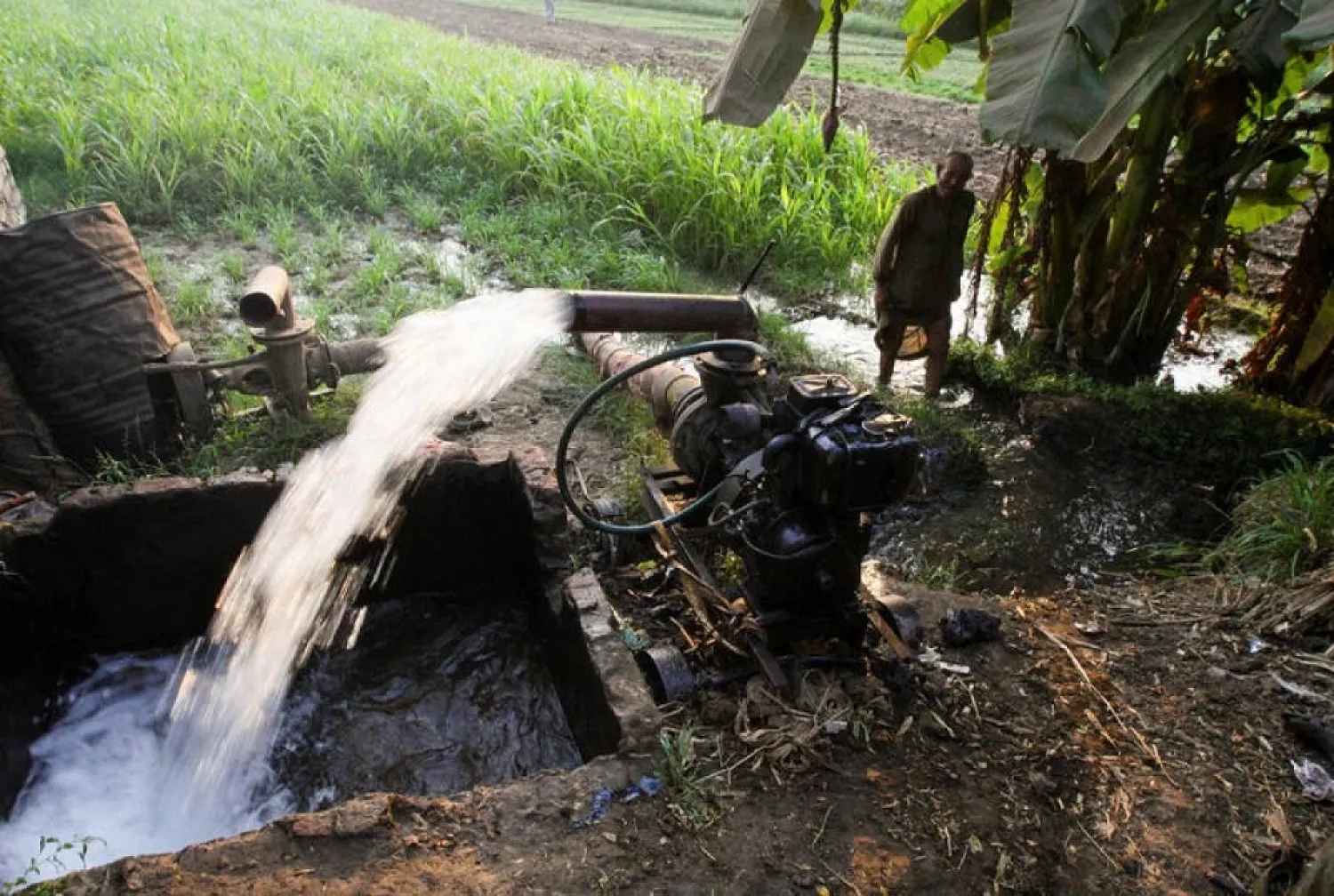
Salah Mohamed, a 65-year old farmer, waters his field in Al Quratiyyin island, in Giza, Egypt, September 20, 2020. (Reuters)
TT

Egypt's Farmers Tap New Technology to Save Water and Boost Crops

Salah Mohamed, a 65-year old farmer, waters his field in Al Quratiyyin island, in Giza, Egypt, September 20, 2020. (Reuters)

When Eman Essa’s husband died and she took over running his farm in southern Egypt, she found herself guessing when the wheat crop needed watering.

Essa, 36, would often end up either using too much water on her 2-feddan (2-acre) plot outside Samalout city or hiring another farmer to take over the irrigation duties, she told the Thomson Reuters Foundation.

Then, in December last year, the mother of four joined a new government project that uses sensors to allow her to see exactly when the soil is dry and just how much water she needs - all from an app on her phone.

“When I first heard about the new system, I did not know exactly how it would benefit me. But when people showed me how it works, I found it really helpful and (it) would save me a lot of effort and money,” she said in a phone interview.

In the few weeks since she adopted the system, Essa has been using 20% less water and her labor costs have dropped by nearly a third.

The system, developed by the Ministry of Water Resources and Irrigation and Cairo’s MSA University, uses a sensor buried in the soil to measure moisture levels and a transmitter to send the data to the user, who accesses it through a mobile app.

Even if they are away from their fields, farmers can tell whether their crops need more water or have had enough.

Essa is one of dozens of farmers who have started using the new system, launched in December, in Upper Egypt’s Minya governorate and in New Valley governorate in the southwest.

The project, in its pilot phase, is part of a nationwide strategy to encourage the use of modern irrigation methods, said Mohamed Ghanem, spokesman for the water ministry, according to Reuters.

The aim is to reduce water use, increase crop productivity and lower production costs as Egypt faces increasing water pressures, he said.

“The preliminary results indicate success in saving large quantities of water and reducing production costs,” he said by phone, adding that the government is still in the process of collecting data on the project’s impact.

The ministry has so far provided 200 free devices to farmers, but after the trial period ends, it will start selling them countrywide, Ghanem added, without specifying the price.

Water ‘poor’
At another farm near Essa’s in Minya governorate, Gerges Shoukri said combining the new mobile system with the drip irrigation he and his wife installed early last year had been a big boost.

Shoukri, 32, said he now uses 15% less water, while the quality of his vegetable crops has improved and production has jumped by about 30%.

“We have to be prepared in case of any water shortages by adopting new irrigation and agricultural methods,” he said.

A 2019 report by the Egyptian Center for Strategic Studies noted that every year agriculture consumes more than 85% of the country’s share of the Nile, which provides the bulk of Egypt’s water supply.

Officials say Egypt currently has about 570 cubic meters (150,000 gallons) of water per person per year. Experts consider a country “water poor” if its annual supply is less than 1,000 cubic meters per person.

In 2017, Egypt embarked on a 20-year strategy to tackle its water challenges, which experts say are becoming increasingly urgent in the face of a growing population, climate change-related drought and fears of losing much of its access to the Nile River’s waters.

According to Egypt’s statistical agency, about 70% of the country’s water comes from the Nile, which amounts to 55.5 billion cubic meters a year based on a 1959 deal with upstream Sudan.

But the deal is not recognized by Ethiopia, which has now started filling the reservoir behind its new Grand Renaissance mega-dam upstream from Egypt.

Too high-tech?
Some agricultural experts are skeptical about the effectiveness of the new mobile irrigation system, pointing to the cost and the fact that many farmers will not be familiar or comfortable with the technology.

Abbas Sharaky, an associate professor of economic geology at Cairo University, said the system could benefit large commercial farmers, but would not be useful to many small-scale farmers.

“Some companies in Egypt are already starting to apply (mobile irrigation technology) in agriculture for better quality and management,” he told the Thomson Reuters Foundation.

“But applying it to individuals would be difficult because they would need training and adequate resources.”

Youssef El Bahwashi, an agricultural engineer who has a farm in Giza city and has not installed the new system, said many farmers do not even use mobile phones.

“With their long experience in irrigation and agriculture, they cannot be easily convinced to use a new device which will cost them money and which most probably they will not be able to deal with,” he said.

Safaa Abdel Hakim, supervisor of the project in Minya city, said the farmers who receive the devices get training on how to use them.

Essa said that, as someone who is not tech-savvy, it was quite difficult to keep up with all the changes.

But, she believes that embracing new irrigation trends and evolving attitudes about water consumption will help Egypt’s farmers deal with whatever comes down the line.

“Getting educated about the new technologies will not only help me better manage my land but also ... adapt to any changes in the future,” she said.



Intel Says Competition from Nvidia PC Chip a ‘Good Thing’

A sign is posted in front of Intel headquarters in Santa Clara, California, US, Aug. 1, 2024. (AFP)
TT

Intel Says Competition from Nvidia PC Chip a ‘Good Thing’

A sign is posted in front of Intel headquarters in Santa Clara, California, US, Aug. 1, 2024. (AFP)

Intel said Tuesday that competition in personal computer chips from hardware giant Nvidia as a "good thing" as artificial intelligence presents new business opportunities.

The comments come a day after Nvidia, the world's most valuable company, unveiled a powerful chip for Windows machines designed to run AI agents, tools that can carry out tasks for users.

The announcement from Nvidia is a challenge to legacy PC chipmakers including Intel and AMD, as well as Apple's laptop business.

"If you take a look at what they brought to market (Monday), I think it's a good thing," Alex Katouzian, general manager of Intel's client computing and physical AI group, told a news conference in Taipei.

"It shows the importance of how critical the PC is," he added.

"We welcome the competition, but I think we're going to do really well," he said, touting Intel's scale -- with "every segment covered" -- and the trust of its customer base.

"They want us to grow with them, there's new opportunities on the AI side," Katouzian said, calling the company's roadmap "super strong".

Shares in Intel took off late last year after Nvidia announced it would invest $5 billion in the firm.

And in April, the company smashed quarterly earnings expectations, in what could be a sign it is on a path to recovery.

Intel largely missed the smartphone boom and failed to develop competitive hardware for the AI era, allowing Asian manufacturers TSMC and Samsung to dominate the custom semiconductor market.

Most notably, Intel was blindsided by Nvidia's rise as the world's leading AI chip provider.

Nvidia's graphics processing units (GPUs), originally designed for gaming consoles, have become the essential building blocks of AI systems, with tech giants scrambling to secure them for their data servers and AI projects.

The heads of both companies are in Taipei this week for the major industry show Computex.

On Tuesday, Intel announced upgrades to its AI data center hardware offerings as well as new collaborations with supply chain partners such as Taiwan's Foxconn.

While several experts told AFP that Nvidia's competitors should be worried about its new PC chip for the AI era, the RTX Spark, others were more cautious.

"This move may create incremental pressure for Intel and Qualcomm; however, given the complexity and likely premium pricing, we don't expect significant competition with mainstream AI PCs," Bloomberg Intelligence analysts wrote.


Global Smartphone Market Faces Record Annual Decline as Chip Crunch Worsens

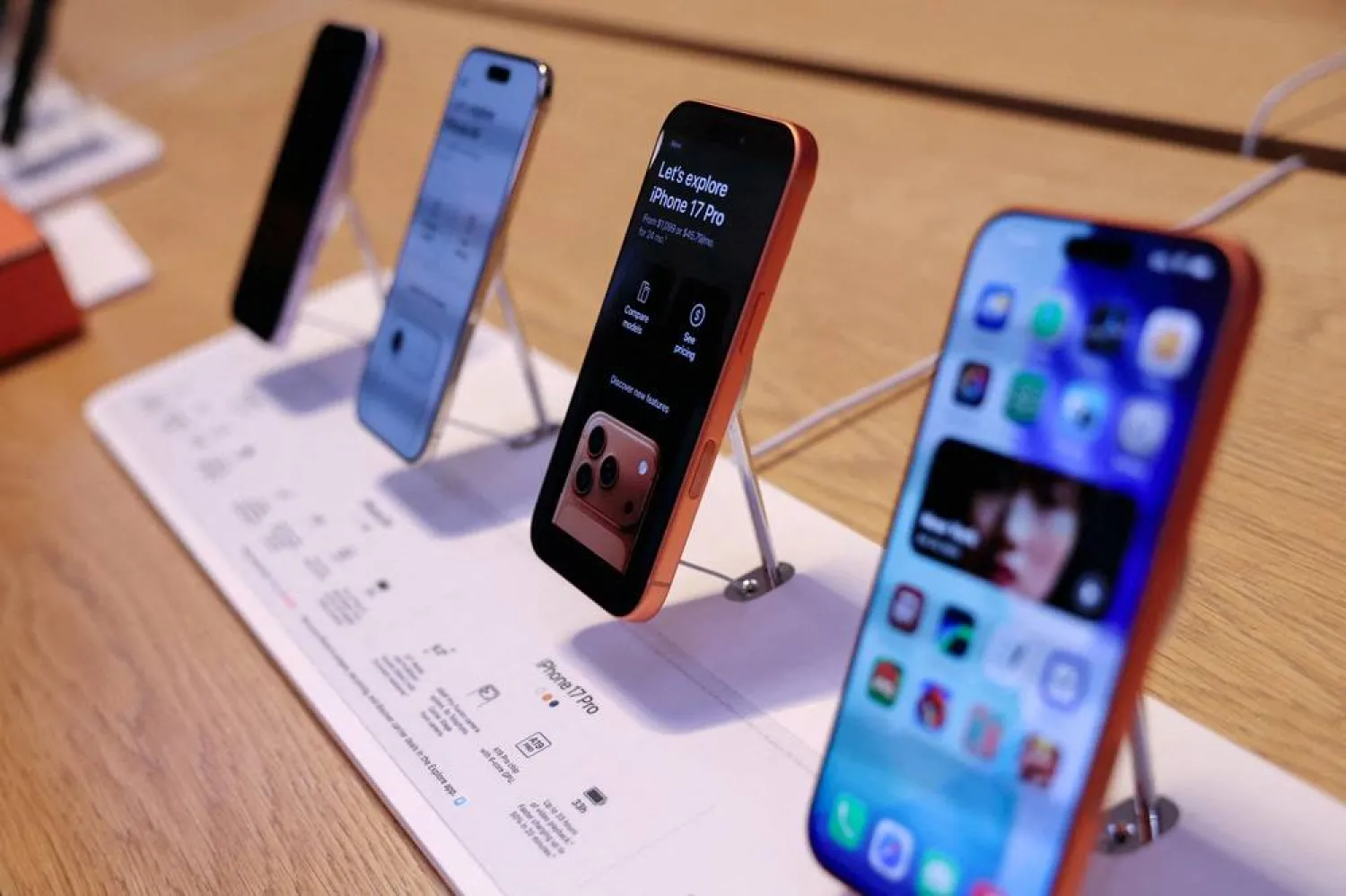
The iPhone 17 series on display at the Apple Store in New York City, US, September 19, 2025. (Reuters)
TT

Global Smartphone Market Faces Record Annual Decline as Chip Crunch Worsens

The iPhone 17 series on display at the Apple Store in New York City, US, September 19, 2025. (Reuters)

The global smartphone market is heading for its steepest annual contraction on record, with shipments projected to slump by 13.9% this year to 1.08 billion units, Counterpoint Research said on Monday, citing a worsening shortage of memory chips.

The forecast is a downgrade from the 12.4% decline projected in February, with the squeeze in global chip supply exacerbated by the Iran war.

IMPACT MOST ACUTE AT BUDGET END OF MARKET

The impact is being felt most acutely in lower-end smartphones as ‌chipmakers shift ‌production capacity to AI-related chips, making entry-level devices less ‌economical ⁠to produce.

Global smartphone wholesale ⁠prices rose 14% in the first quarter while shipments fell 3.1% year on year. That trend is expected to continue as inventory built before the supply shock becomes depleted, with some models priced below $150 likely to disappear from the market.

"Smartphone makers in the low and mid-tier are caught between cost increases they cannot absorb and consumers with limited spending power," said Wang ⁠Yang, a principal analyst at Counterpoint, an independent research ‌company that publishes quarterly smartphone shipment data.

"The ‌question is no longer how to grow shipments or market share, but whether ‌to remain in the market at all."

The memory chip shortage ‌is the most severe supply-side disruption the smartphone industry has faced, Wang said, adding that manufacturers are unable to offset the impact through pricing or product changes.

PREMIUM END OF THE MARKET MORE RESILIENT

The premium segment has proven more resilient. Apple posted ‌record revenue for the first three months of the year, helped by customers upgrading to its iPhone ⁠17 series. ⁠Apple's 2026 shipments are expected to remain flat before rising 5% next year, Counterpoint projections show.

With more stable chip supply and stronger margins than many rivals, Apple is well placed to gain market share and could face less pressure to raise prices.

Samsung Electronics kept volumes steady in the first quarter and is expected by Counterpoint to register only a 4% decline in shipments over the full year, outperforming the wider market thanks to stable supply and a consistent product line-up.

Transsion, which is heavily exposed to the market for smartphones priced below $150, is forecast to suffer a 32% drop in shipments this year. Rivals Xiaomi and Honor, meanwhile, are projected to post full-year declines of 28% and 20% respectively, Counterpoint said.


Nvidia to Work with US, European Humanoid Robot Makers in Addition to China’s Unitree

A man shakes the hand of a Chinese G1 humanoid robot made by Unitree Robotics at a conference in Mumbai, India, May 22, 2026. (Reuters)
TT

Nvidia to Work with US, European Humanoid Robot Makers in Addition to China’s Unitree

A man shakes the hand of a Chinese G1 humanoid robot made by Unitree Robotics at a conference in Mumbai, India, May 22, 2026. (Reuters)

Nvidia ‌plans to work with humanoid robot makers in the US, Europe and South Korea in addition to China's Unitree to build robots for researchers, according to the AI chip company's executives.

After CEO Jensen Huang's keynote address in Taiwan on Monday ahead of the Computex trade show, Nvidia announced that the company is working with China's Unitree, a leading maker of humanoid robots, to provide a standardized version of Unitree's H2 robot that can be used by academic researchers.

The robot's body will come from ‌Unitree, its ‌hands will come from Singapore-headquartered Sharpa, and the ‌computing ⁠brains of the device ⁠will come from Nvidia. Nvidia said that researchers at Stanford University and the University of California San Diego, among others, plan to use the machines.

Unitree, whose dancing robots were the centerpiece of China's Spring Festival gala earlier this year, is pursuing a public listing in China.

But US lawmakers have alleged that ⁠Unitree has extensive ties to the Chinese government ‌and military and have introduced a ‌bill that would ban use of the firm's robots by ‌researchers who receive US government funding.

Nvidia executives told Reuters that ‌the company plans to pursue more efforts like the Unitree one with robotics firms outside China. They did not name the partners in the US, South Korea and Europe and spoke on condition of ‌anonymity as the plans are not public.

The Nvidia executives said the work with Unitree is ⁠aimed at improving ⁠the cybersecurity of the Unitree robots for researchers. For example, any software updates meant for the robot's subsystems will have to flow through Nvidia's chip, where the code can be checked for authenticity.

By directly integrating Nvidia's "Blackwell" chips with Unitree's robot bodies, Nvidia, which plans to use the machines in its own research, will bring the same security features that it uses to protect data center servers, the executives said.

Those security technologies, known as secure boot and confidential computing, are aimed at ensuring the robots cannot run malicious code and that sensitive data cannot be moved off the robots without permission.