


Lebanon Crisis Escalates after Failure to Agree Government

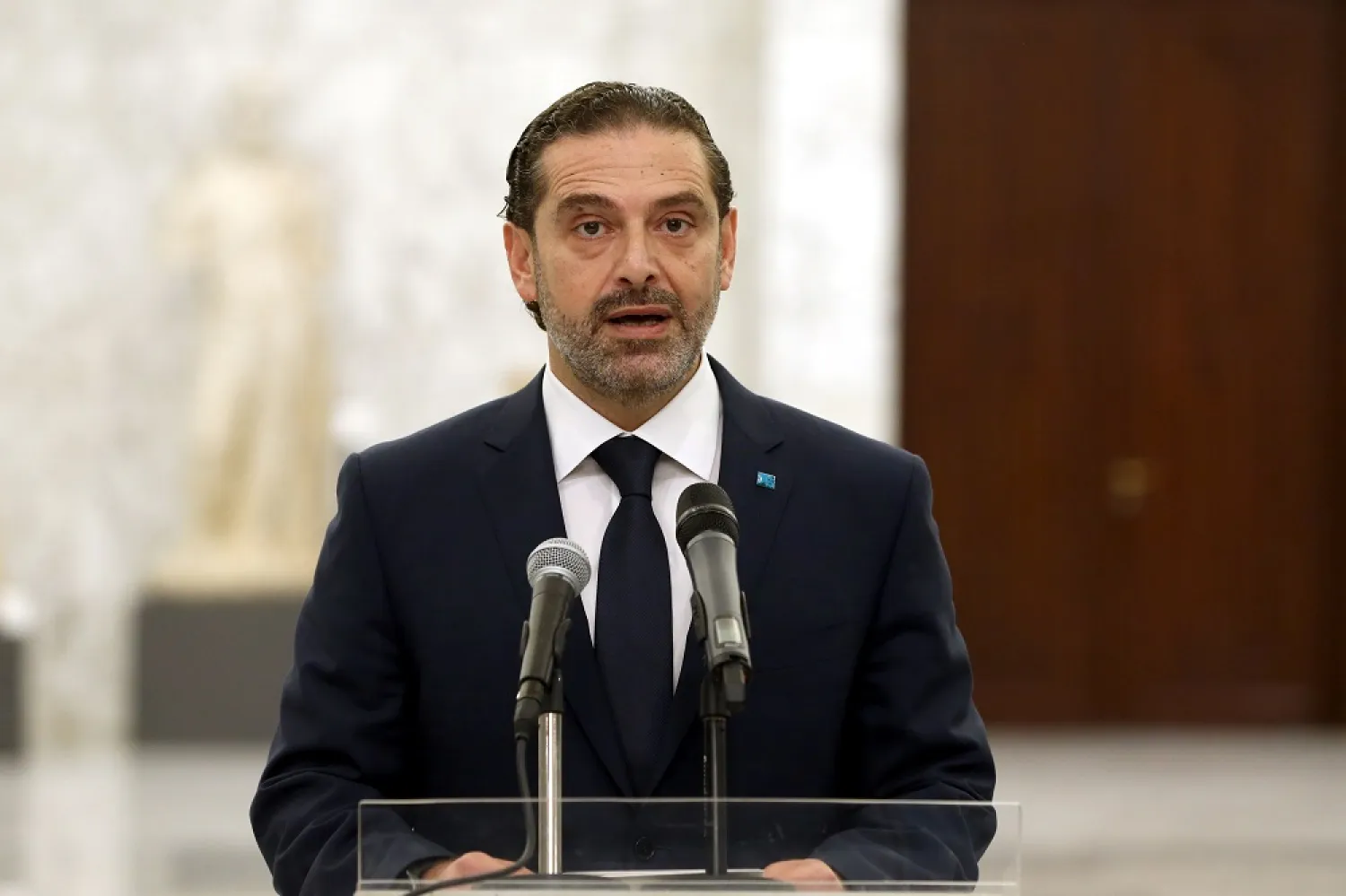
PM-designate Hariri speaks to the media after meeting Aoun at the presidential palace. (Dalati & Nohra)
TT

Lebanon Crisis Escalates after Failure to Agree Government

PM-designate Hariri speaks to the media after meeting Aoun at the presidential palace. (Dalati & Nohra)

Lebanon's financial crisis intensified on Monday after Prime Minister-designate Saad al-Hariri publicly repudiated President Michel Aoun, saying the latter wanted to dictate cabinet membership and grant veto powers on policy to his political allies.

After the latest of more than a dozen meetings with the president to form a new cabinet, Hariri called Aoun's demands "unacceptable". Hariri's televised announcement dashed hopes for an end to five months of political deadlock between the two and a reversal of the country's financial meltdown.

"This is a catastrophe for the country, we were holding on by a thread but now we're heading towards a total crash," one official source told Reuters, asking to remain anonymous due to the sensitivity of the issue.

Lebanon has been without a government since shortly after the Aug. 4 chemical explosion that destroyed the port of Beirut and devastated downtown areas of the capital, killing hundreds of people, injuring thousands and making 300,000 homeless.

The giant blast accelerated the downward spiral of an economy trapped in debt, banking, financial and fiscal crises, while foreign donors refuse to bail out Lebanon until it forms a government of capable technocrats committed to reform.

Aoun sent a list suggesting different scenarios for a cabinet of either 18,20 or 22 ministers, with names to be filled in, Hariri said after the 20-minute meeting.

"This is unacceptable because it is not the job of the prime minister-designate to fill forms from someone else or of the president to form a government."

Hariri then presented to the media the lineup of his cabinet, which he had proposed to the president a hundred days ago.

In a statement read by the presidency spokesperson, Aoun said he was "surprised" by Hariri's comments and that his proposal to Hariri had not included a blocking minority.

The lack of agreement came after a hint of a breakthrough on Thursday when the two last met and Hariri had said he saw an opportunity to be seized.

"The current deadlock and dim outlook will certainly have a toll on the exchange rate, making it more difficult for the average worker to get by without food aid," said Mohanad Hage Ali of the Carnegie Middle East Center.

The Lebanese pound dropped to over 13,000 to the dollar on the informal market after news of the outcome of the meeting, having traded earlier in the day at around 11,000.

Lebanon's economic crisis, which is posing the biggest threat to its stability since the 1975-1990 civil war, has seen the Lebanese pound sink by almost 90%, plunging many into poverty.

As businesses shut down, joblessness and hunger are rising. Lebanon's banks, having lent 70% of their assets to an insolvent state and central bank, have locked most depositors out of their savings.

Hassan Diab's cabinet, which resigned after the Beirut port blast, remains in a caretaker capacity until a successor is formed but fractious politicians have been unable to agree a government since Hariri's nomination in October.

There is no budget and there will soon be no hard currency to pay for imports of subsidized wheat, medicine and fuel.

Hariri was nominated to form a cabinet of specialists that could enact reforms and unlock foreign aid.

The Amal movement, headed by parliament Speaker Nabih Berri who backs Hariri, called for it to be formed urgently on Monday.

But Hezbollah leader Hassan Nasrallah said on Thursday that even though he would approve a government of technocrats if formed, a cabinet with no politicians would not last long.



Fidan, Barrack Discuss Merging of SDF in Syrian Army, Erdogan Warns of Israeli Violations

Turkish Foreign Minister Hakan Fidan and US special envoy to Syria Tom Barrack meet on Tuesday. (Turkish Foreign Ministry)
TT

Fidan, Barrack Discuss Merging of SDF in Syrian Army, Erdogan Warns of Israeli Violations

Turkish Foreign Minister Hakan Fidan and US special envoy to Syria Tom Barrack meet on Tuesday. (Turkish Foreign Ministry)

Turkish Foreign Minister Hakan Fidan and US special envoy to Syria Tom Barrack held talks on Tuesday on the latest developments in Syria a year after the ouster of Bashar al-Assad's regime.

They discussed the measures needed to establish stability in Syria and maintain its territorial integrity.

Turkish sources said the meeting focus primarily on the implementation of the agreement between Syrian interim President Ahmed al-Sharaa and Syrian Democratic Forces (SDF) leader Abdi Mazloum on the merger of the Kurdish forces in the Syrian army.

The agreement was signed in Damascus in March and should have been completed by December.

Fidan and Barrack also tackled the Israeli violations and attacks against Syria and their “negative impact on its stability and unity.” They discussed sanctions on Syria and the support for political steps during the country’s transition, added the sources.

Fidan had on Saturday accused Israel of “encouraging” the SDF to renege on the March agreement.

In a televised interview, he warned that the developments in southern Syria were the “greatest danger.” He explained that the problem isn’t in the extent of the developments, but in how Israel has intervened in them.

The danger in Syria could impact Türkiye, he added.

He stressed the need for the SDF to fulfill its commitments to the March agreement and to dissolve itself and for its foreign fighters to leave Syria.

Turkish President Recep Tayyip Erdogan condemned on Tuesday the Israeli violations in Syria, saying they were the “greatest obstacle” to the country’s security and stability at the time and for the long-term.

Speaking before ambassadors to Türkiye, he vowed that Ankara will continue to support Damascus “as it has always done”.

He echoed Fidan’s demand on the SDF to commit to the March agreement, saying any delay will lead to a new crisis in Syria.

He also slammed the international silence over the “massacres that were committed in Syria” during its 13 years of civil war.

Throughout those years, “except for a few with a real conscience, we didn’t hear anything from the supporters of democracy and defenders of human rights,” he added.


Sudanese Powers Sign Declaration of Principles to End the War 

The gatherers in Nairobi held the warring parties and their allies fully responsible for any violations and war crimes. (Asharq Al-Awsat)
TT

Sudanese Powers Sign Declaration of Principles to End the War 

The gatherers in Nairobi held the warring parties and their allies fully responsible for any violations and war crimes. (Asharq Al-Awsat)

The political and civilian parties of Sudan’s Somoud alliance signed in Nairobi on Tuesday a joint declaration of principles with the Sudan Liberation Movement/Army, led by Abdul Wahid al-Nur, and the Arab Socialist Baath Party to end the war in Sudan and completely eliminate the Islamic movement from politics.

The declaration is the first act of rapprochement between Sudanese parties that are opposed to the ongoing war between the army and Rapid Support Forces (RSF). Former Prime Minister and Somoud leader Abdalla Hamdok was among the signatories.

The declaration said that “there can be no military solution to the crisis”, urging the immediate end to the war.

It called for greater pressure to be applied on the military and RSF to end the conflict and commit to the roadmap drafted by the international Quad that includes Saudi Arabia, the US, United Arab Emirates and Egypt in August.

The declaration called for the swift implementation of a proposed three-month humanitarian truce and for an unconditional ceasefire.

Sudan Liberation Movement/Army deputy leader Abdullah Harran said the signatories of the declaration agreed on the need to expand it further and to bring in more parties to sign it, excluding the ousted National Congress.

Harran told a press conference that the declaration aims to establish a wide popular civilian base that will embark on a transitional phase, leading up to holding free and transparent elections.

The Sudan Liberation Movement/Army holds some regions in central Darfur and has extended its influence in northern parts of the province. It has received tens of thousands of refugees from el-Fasher in areas under its control.

Leading member of the Arab Socialist Baath Party Wajdi Saleh said the gatherers in Nairobi agreed on a “unified vision” to end the war.

They signed three documents, he revealed. The first is the declaration of principles to build a new nation, the second is a roadmap to stop the war and the third aims to designate the National Congress and Islamic movement as terrorist.

Moreover, he declared that the warring parties would be barred from taking part in the democratic transition.

The gatherers held the warring parties and their allies fully responsible for any violations and war crimes, calling on regional and international powers, led by the Quad, to intervene decisively to implement a humanitarian truce.


Israeli Settler Kills 16-Year-Old Palestinian in West Bank, Mayor Says

Friends and family gather around the body of Ammar Yasser Sabbah, 16, ahead of his funeral at a morgue in Bethlehem on December 16, 2025, after he was killed by Israeli forces in the town of Tuqu’, east of Bethlehem during a military raid the day before. (AFP)
TT

Israeli Settler Kills 16-Year-Old Palestinian in West Bank, Mayor Says

Friends and family gather around the body of Ammar Yasser Sabbah, 16, ahead of his funeral at a morgue in Bethlehem on December 16, 2025, after he was killed by Israeli forces in the town of Tuqu’, east of Bethlehem during a military raid the day before. (AFP)

An Israeli settler shot dead a 16-year-old Palestinian in Tuqu' on Tuesday after the funeral of another teenager, the town's mayor said.

Violence has escalated in the West Bank since the beginning of the war in Gaza in October 2023. Attacks by Israeli settlers against Palestinians in the West Bank have increased sharply, with the UN reporting the highest number of attacks on record in October.

The Israeli military did not immediately respond to a request for comment on Muheeb Jibril's death on Tuesday.

"Today, after the funeral of 16-year-old Ammar Sabah, who was killed yesterday by the Israeli army in the town center, a number of youths were gathered by the main street when a settler shot 16-year-old Muheeb Jibril in the head," Tuqu' Mayor Mohammed al-Badan told Reuters by telephone.

Israeli forces killed Sabah on Monday during a military raid on the town, the Palestinian health ministry said. The military said the incident was under review. It said rocks were thrown at soldiers who used riot dispersal means and later responded with fire.

The West Bank is home to 2.7 million Palestinians who have limited self-rule under Israeli military occupation. Hundreds of thousands of Israelis have settled there.

Most world powers deem Israel's settlements, on land it captured in a 1967 war, illegal, and numerous UN Security Council resolutions have called on Israel to halt all settlement activity.

Israel denies the illegality of the settlements, citing biblical and historical connections to the land.
