


Taiwan Chip Maker TSMC to Invest $100B to Grow Capacity

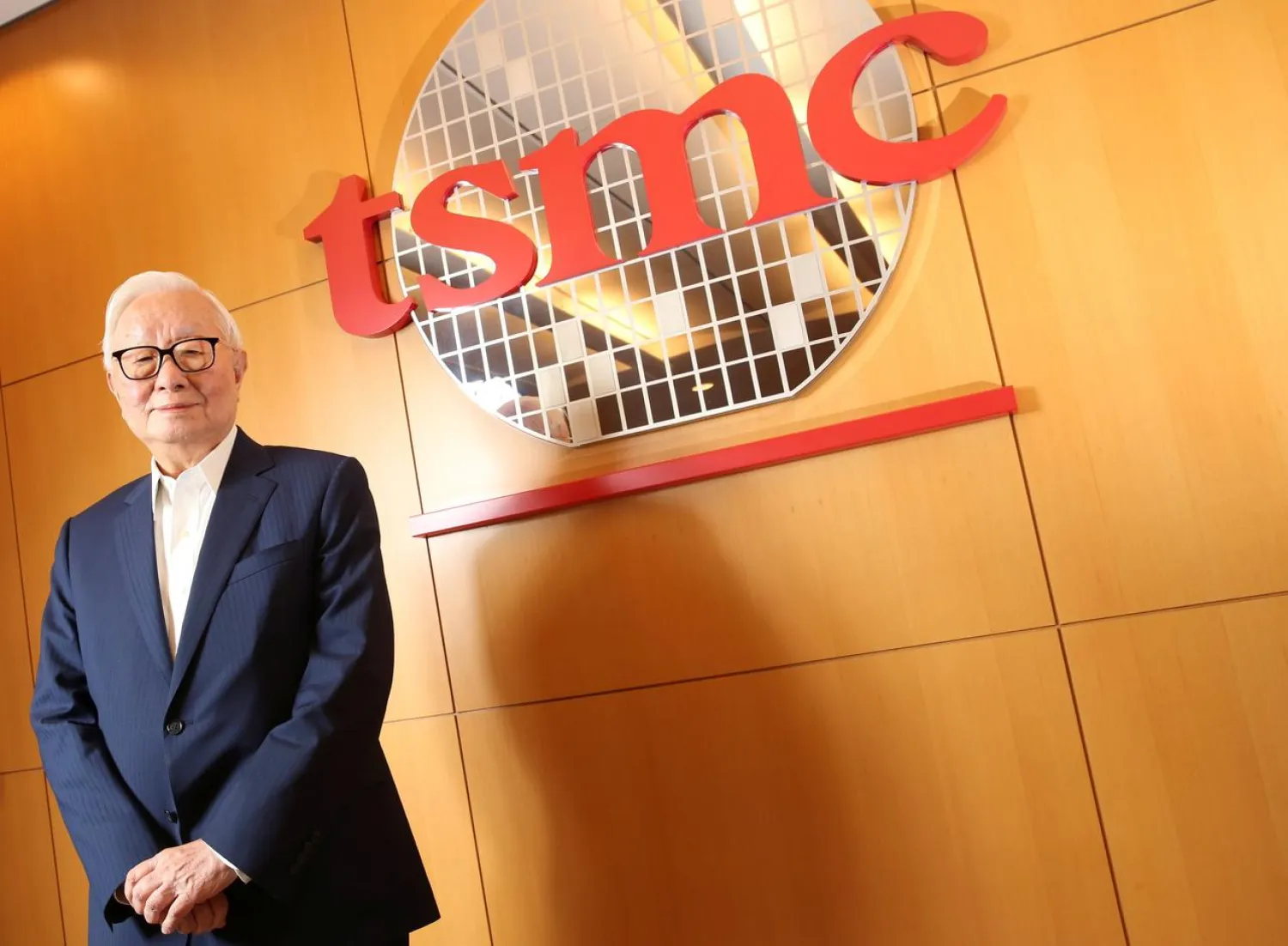
Taiwan Semiconductor Manufacturing Co (TSMC) chairman Morris Chang poses during an interview with Reuters in Hsinchu, Taiwan October 5, 2017. REUTERS/Eason Lam
TT

Taiwan Chip Maker TSMC to Invest $100B to Grow Capacity

Taiwan Semiconductor Manufacturing Co (TSMC) chairman Morris Chang poses during an interview with Reuters in Hsinchu, Taiwan October 5, 2017. REUTERS/Eason Lam

Major Taiwan computer chip maker Taiwan Semiconductor Manufacturing Co. plans to invest $100 billion in the next three years in expanding its manufacturing capacity and supporting research and development, the company said Thursday.

TSMC, the world’s biggest contract producer of semiconductors, said it anticipates faster growth thanks to long-term trends like the introduction of next-generation telecommunications and high-performance computing. The coronavirus pandemic, meanwhile is revving up demand for electronic devices as the world relies increasingly on digitalization.

“TSMC is working closely with our customers to address their needs in a sustainable manner," the company said in an emailed statement.

It did not give further details.

Intel, Samsung and other chip makers also have been boosting investments to meet rising demand and joust for market share.

TSMC makes processor chips for major brands like Apple Inc. It earlier announced plans to invest $3.5 billion in a second US manufacturing site, in North Phoenix, Arizona, as concern grows over heavy American reliance on sources in Asia for high-tech components.

The company operates a semiconductor wafer fabrication facility in Camas, Washington, and design centers in San Jose, California, and Austin, Texas.

Most semiconductors used in smartphones, medical equipment, computers and other products are made in Taiwan, South Korea and China.


Meta Reportedly Delays Release of Phoenix Mixed-reality Glasses to 2027

FILE PHOTO: The logo of Meta is seen at Porte de Versailles exhibition center in Paris, France, June 11, 2025. REUTERS/Gonzalo Fuentes/File Photo
TT

Meta Reportedly Delays Release of Phoenix Mixed-reality Glasses to 2027

FILE PHOTO: The logo of Meta is seen at Porte de Versailles exhibition center in Paris, France, June 11, 2025. REUTERS/Gonzalo Fuentes/File Photo

Meta is delaying the release of its Phoenix mixed-reality glasses until 2027, aiming to get the details right, Business Insider reported on Friday, citing an internal memo.

The delay from an initially planned release in the second half of 2026 is because the company wants a fully polished device, the report said.

Meta did not immediately respond to a Reuters request for comment on the report.

Meta executives Gabriel Aul and Ryan Cairns said moving the release date back is "going to give us a lot more breathing room to get the details right," the report added.

The goggles, previously code-named Puffin, weigh around 100 grams (3.5 ounces) and have lower-resolution displays and weaker computing performance than high-end headsets like Apple’s Vision Pro, the Information reported in July.

Mixed reality merges augmented and virtual reality and allows real-world and digital objects to interact.

Meta is expected to make budget cuts of up to 30% for its metaverse initiative, Bloomberg News reported on Thursday.

The metaverse group sits within Reality Labs, which produces the company's Quest mixed-reality headsets, smart glasses made with EssilorLuxottica's Ray-Ban and upcoming augmented-reality glasses.


Apple, Google Send New Round of Cyber Threat Notifications to Users Around World

The Apple logo is seen in this illustration taken September 24, 2025. (Reuters)
TT

Apple, Google Send New Round of Cyber Threat Notifications to Users Around World

The Apple logo is seen in this illustration taken September 24, 2025. (Reuters)

Apple and Google have sent a new round of cyber threat notifications to users around the world, the companies said this week, announcing their latest effort to insulate customers against surveillance threats.

Apple and the Alphabet-owned Google are two of several tech companies that regularly issue warnings to users when they determine they may have been targeted by state-backed hackers.

Apple said the warnings were issued on Dec. 2 but gave few further details about the alleged hacking activity and did not address questions about the number of users targeted or say who was thought to be conducting the surveillance.

Apple said that "to date we have notified users in over 150 countries in total."

Apple's statement follows Google's Dec. 3 announcement that it was warning all known users targeted using Intellexa spyware, which it said spanned "several hundred accounts across various countries, including Pakistan, Kazakhstan, Angola, Egypt, Uzbekistan, Saudi Arabia, and Tajikistan."

Google said in its announcement that Intellexa, a cyber intelligence company that is sanctioned by the US government, was "evading restrictions and thriving."

Executives tied to Intellexa did not immediately return messages.

Previous waves of warnings have triggered headlines and prompted investigations by government bodies, including the European Union, whose senior officials have previously been targeted using spyware.

Threat notifications impose costs on cyber spies by alerting victims, said John Scott-Railton, a researcher with the Canadian digital watchdog group Citizen Lab.

He said they were "also often the first step in a string of investigations and discoveries that can lead to real accountability around spyware abuses."


AI Bubble to Be Short-lived, Rebound Stronger, NTT DATA Chief Says

FILE PHOTO: Figurines with computers and smartphones are seen in front of the words "Artificial Intelligence AI" in this illustration taken, February 19, 2024. REUTERS/Dado Ruvic/Illustration/File Photo
TT

AI Bubble to Be Short-lived, Rebound Stronger, NTT DATA Chief Says

FILE PHOTO: Figurines with computers and smartphones are seen in front of the words "Artificial Intelligence AI" in this illustration taken, February 19, 2024. REUTERS/Dado Ruvic/Illustration/File Photo

A potential artificial intelligence bubble will deflate faster than past tech cycles but give way to an even stronger rebound as corporate adoption catches up with infrastructure spending, the head of Japanese IT company NTT DATA Inc. said.

Despite worries around supply chains, the direction of travel is clear, CEO Abhijit Dubey said in an interview with the Reuters Global Markets Forum.

"There is absolutely no doubt that in the medium- to long-term, AI is a massive secular trend," he said.

"Over the next 12 months, I think we're going to have a bit of a normalization ... It'll be a short-lived bubble, and (AI) will come out of it stronger."

With demand for compute still running ahead of supply, "supply chains are almost spoken for" over the next two to three years, he said. Pricing power is already tilting toward chipmakers and hyperscalers, mirroring their stretched valuations in public markets, he added.

AI has triggered the biggest technological shake-up since the advent of the internet, fueling trillions of dollars of investment and eye-watering equity gains. But it has caused shortages of memory chips, drawn regulatory scrutiny, and created growing unease over the future of work.

Dubey, who is also the firm's chief AI officer, said his company has begun rethinking recruitment strategies as AI reshapes labor markets.

"There will clearly be an impact ... Over a five- to 25-year horizon, there will likely be dislocation," he said. However, he added that NTT DATA continues to hire across locations.

Speakers at the Reuters NEXT conference in New York discussed how AI may upend work and job growth.

AI startup Writer Inc.'s CEO May Habib said customers are focused on slowing headcount growth.

"You close a customer, you get on the phone with the CEO to kick off the project, and it's like, 'Great, how soon can I whack 30% of my team?'," she said.

Still, a PwC survey of the global workforce released in November suggests the reality of generative AI usage has yet to match boardroom expectations.

Daily use of GenAI remains "significantly lower" than widely touted by executives, PwC said, even as workers with AI skills commanded an average wage premium of 56% — more than double last year's figure.

PwC also flagged a widening skills gap, with about half of non-managers reporting access to training resources, compared with roughly three-quarters of senior executives.