
Current Peace Initiatives Are the Most Realistic, Says Yemen’s Ex-FM

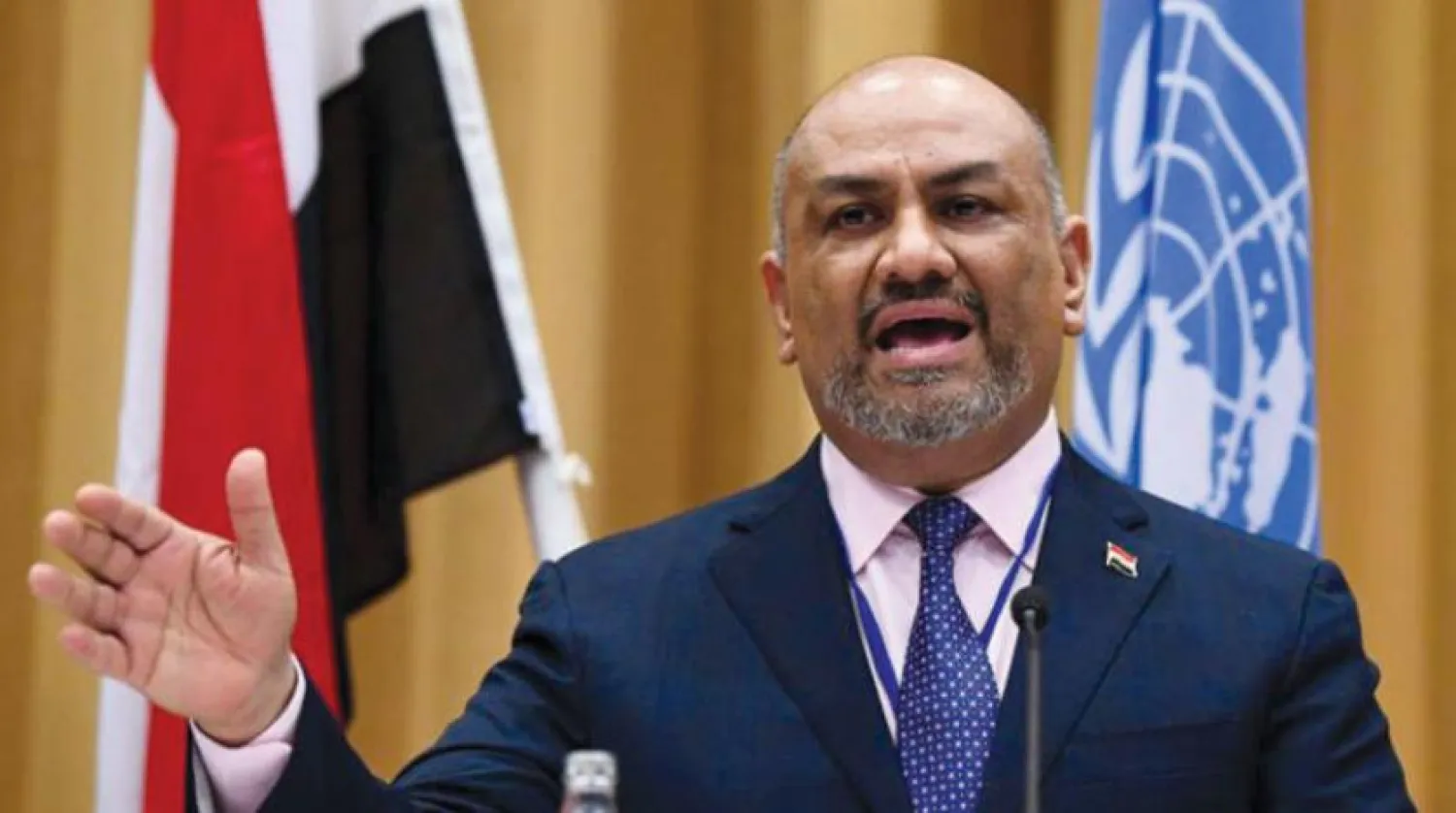
Former Yemeni Foreign Minister Khaled Alyemany, AFP
TT

Current Peace Initiatives Are the Most Realistic, Says Yemen’s Ex-FM

Former Yemeni Foreign Minister Khaled Alyemany, AFP

Current peace initiatives offered to Yemen’s internationally recognized government and the Iran-backed Houthi insurgents are as realistic as they can get, according to former Yemeni Foreign Minister Khaled Alyemany.

“There is no magic recipe for a solution in Yemen,” said Alyemany, who is also a non-resident senior fellow at the Atlantic Council.

While criticizing Washington’s current policy on Iran, the veteran diplomat pointed out the presence of some contingencies to finding a settlement for the ongoing Yemeni war.

“It depends on the convergence of the will of all Yemenis, political parties, civil society, and the new forces that resulted from the conditions of the protracted Yemeni war,” he told Asharq Al-Awsat.

“If all these forces do not come together to stop the vicious cycle of violence and end the fighting, no one in the world will be able to stop this crazy war,” said Alyemany, emphasizing that unilateralism in conflict resolution is inefficient in Yemen’s case.

“Yemen’s millennia-spanning history is linked to compromises and conciliations,” he stressed in a remark against Houthi militias and warlords seeking to extend the war for personal and strategic gains.

Regarding international community initiatives put forth by the UN, Saudi Arabia, and the US, Alyemany said he believes they are identical in terms of “ending the war and entering into final settlement negotiations.”

Alyemany also explained that future proposals by international envoys would most likely remain within the margins of already tabled settlement packages.

As for the ongoing Houthi offensive against the northeastern Yemeni governorate of Marib, Alyemany condemned the campaign and said it was a “futile jab” at controlling the oil-rich basin.
“Can’t Houthis see the level of killing witnessed during the past two months?” he questioned.

Describing the attempt to control Marib as a nihilistic venture, Alyemany revealed that battles there have killed at least 6,000 Houthi combatants.

“Is this what they want… a homeland built by skulls and blood?!” he exclaimed.


Lebanon Ex-central Bank Chief's Corruption Case Being Dent to Top Court

The BDL headquarters in Beirut (NNA) 
TT

Lebanon Ex-central Bank Chief's Corruption Case Being Dent to Top Court

The BDL headquarters in Beirut (NNA) 

The corruption case of Lebanon's former central bank governor, who is widely blamed for the country’s economic meltdown, has been transferred to the country's highest court, judicial officials told The Associated Press on Tuesday.

Riad Salameh was released on $14 million bail in September after a year in prison while awaiting trial in Lebanon on corruption charges, including embezzlement and illicit enrichment.

The trial of Salameh, 75, and his two legal associates, Marwan Khoury and Michel Toueini, will now be heard at the Court of Cassation, according to a copy of the notice obtained by the AP. Salameh and the others will be issued with arrest warrants if they don't show up for trial at the court.

No trial date has been set yet. Salameh denies the charges. The court’s final ruling can't be appealed, according to the four officials who spoke on condition of anonymity, because they weren't authorized to speak with the media.

In September 2024, he was charged with the embezzlement of $42 million, with the court later adding charges of illicit enrichment over an apartment rented in France, supposedly to be a substitute office for the central bank if needed. Officials have said that Salameh had rented from his former romantic partner for about $500,000 annually.

He was once celebrated for steering Lebanon’s economic recovery, after a 15-year civil war, upon starting his long tenure in 1993 and keeping the fragile economy afloat during long spells of political gridlock and turmoil.

But in 2023, he left his post after three decades with several European countries investigating allegations of financial crimes. Meanwhile, much of the Lebanese blame his policies for sparking a fiscal crisis in late 2019 where depositors lost their savings, and the value of the local currency collapsed.

On top of the inquiry in Lebanon, he is being investigated by a handful of European countries over various corruption charges. In August 2023, the United States, United Kingdom and Canada imposed sanctions on Salameh.

Salameh has repeatedly denied allegations of corruption, embezzlement and illicit enrichment. He insists that his wealth comes from inherited properties, investments and his previous job as an investment banker at Merrill Lynch.

Lebanon’s current central bank governor, Karim Souaid, announced last week that he's filing legal complaints against a former central bank governor and former banking official who diverted funds from the bank to what he said were four shell companies in the Cayman Islands. He didn't name either individual.

But Souaid said that Lebanon's central bank would become a plaintiff in the country's investigation into Forry Associates. The US Treasury, upon sanctioning Salameh and his associates, described Forry Associates as “a shell company owned by Raja (Salameh’s brother) in the British Virgin Islands” used to divert about $330 million in transactions related to the central bank.

Several European countries, among them France, Germany, and Luxembourg, have been investigating the matter, freezing bank accounts and assets related to Salameh and his associates, with little to no cooperation from the central bank and Lebanese authorities.

Souaid said that he will travel later this month to Paris to exchange “highly sensitive” information as France continues its inquiries.


Over 100 Children Killed in Gaza Since Ceasefire, UNICEF Says

Palestinians walk past tents used by displaced people, during a windy winter day, in Gaza City, January 13, 2026. (Reuters)
TT

Over 100 Children Killed in Gaza Since Ceasefire, UNICEF Says

Palestinians walk past tents used by displaced people, during a windy winter day, in Gaza City, January 13, 2026. (Reuters)

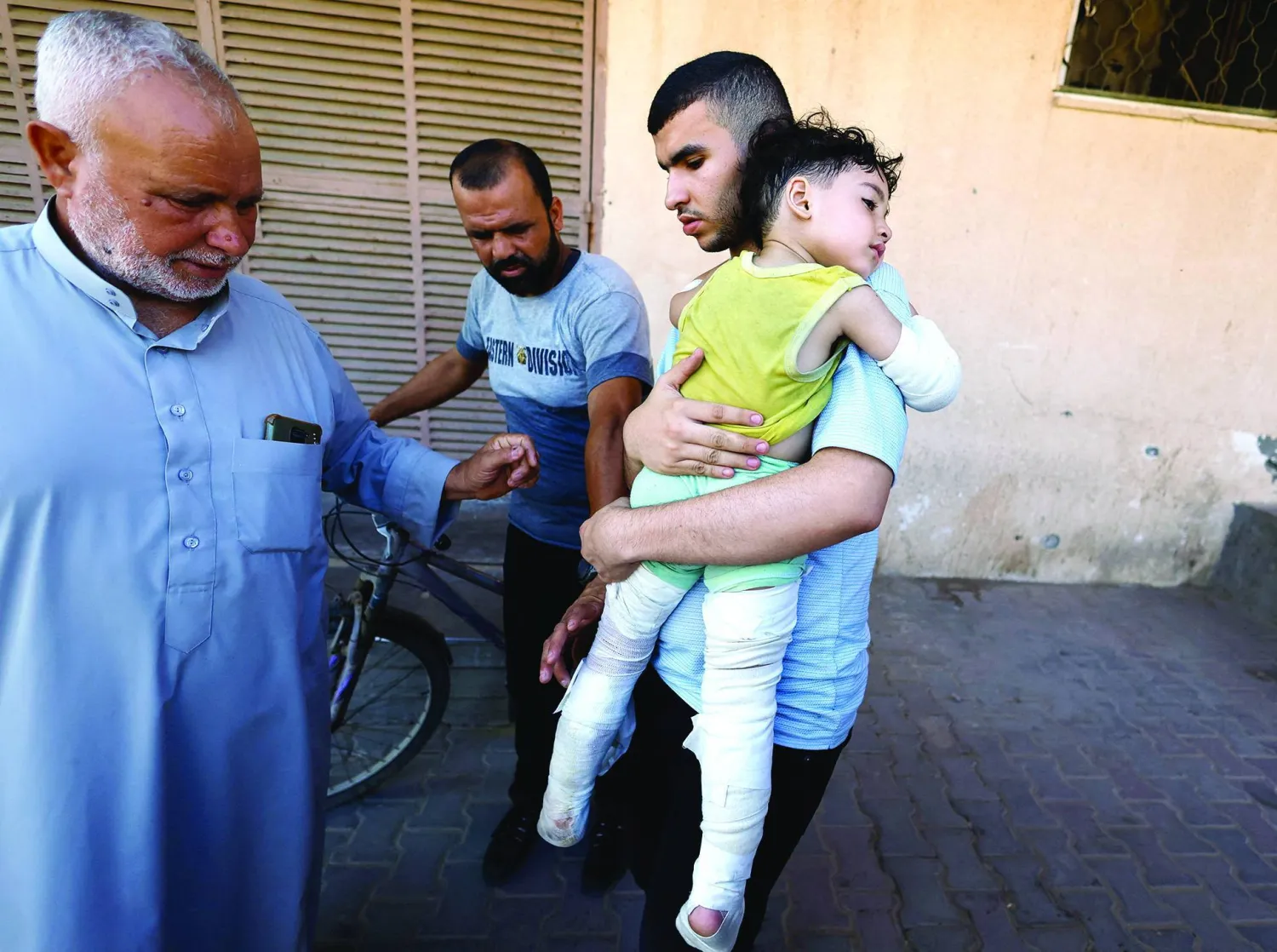
The UN children's agency said on Tuesday that over ​100 children have been killed in Gaza since the October ceasefire, including victims of drone and quadcopter attacks.

“More than 100 children have ‌been killed ‌in Gaza ‌since ⁠the ceasefire ​of ‌early October," UNICEF spokesperson James Elder told reporters at a UN briefing by video link from Gaza.

"Survival remains conditional, whilst ⁠the bombings and the shootings ‌have slowed, have ‍reduced during ‍the ceasefire, they have not ‍stopped."

He said that nearly all the deaths of the 60 boys and ​40 girls were from military attacks including air ⁠strikes, drone strikes, tank shelling, gunfire and quadcopters and a few were from war remnants that exploded.

The tally is likely an underestimate since it is only based on deaths for which sufficient ‌information was available, he said.


Syrian Army Tells Kurdish Forces to Withdraw from Area East of Aleppo City

Buses carrying displaced residents drive past a building in ruins as they return to the Achrafieh neighborhood after days of fighting between government forces and Kurdish fighters in the northern city of Aleppo, Syria, Monday, Jan. 12, 2026. (AP)
TT

Syrian Army Tells Kurdish Forces to Withdraw from Area East of Aleppo City

Buses carrying displaced residents drive past a building in ruins as they return to the Achrafieh neighborhood after days of fighting between government forces and Kurdish fighters in the northern city of Aleppo, Syria, Monday, Jan. 12, 2026. (AP)

Syria's army told Kurdish forces on Tuesday to withdraw from an area they control east of Aleppo after dislodging fighters from two neighborhoods in the city in deadly clashes last week.

State television published an army statement with a map declaring a large area a "closed military zone" and said "all armed groups in this area must withdraw to east of the Euphrates" River.

The area begins near Deir Hafer, around 50 kilometers (30 miles) east of Aleppo city and extends to the Euphrates further east, as well as towards the south.

On Monday, Syria accused the US-backed, Kurdish-led Syrian Democratic Forces of sending reinforcements to Deir Hafer and said it sent its own personnel there in response.

The SDF denied any build-up of its forces in the region.

An AFP correspondent saw government forces bringing military reinforcements including artillery to the Deir Hafer area on Tuesday.

On the weekend, Syria's government took full control of Aleppo city after taking over its Kurdish neighborhoods and evacuating fighters there to Kurdish-controlled areas in the country's northeast following days of clashes.

The violence started last Tuesday after negotiations stalled on integrating the Kurds' de facto autonomous administration and forces into the country's new government.

The SDF controls swathes of the country's oil-rich north and northeast, much of which they captured during Syria's civil war and the fight against the ISIS group.