


Premier: Iraq Doesn't Need US Combat Troops

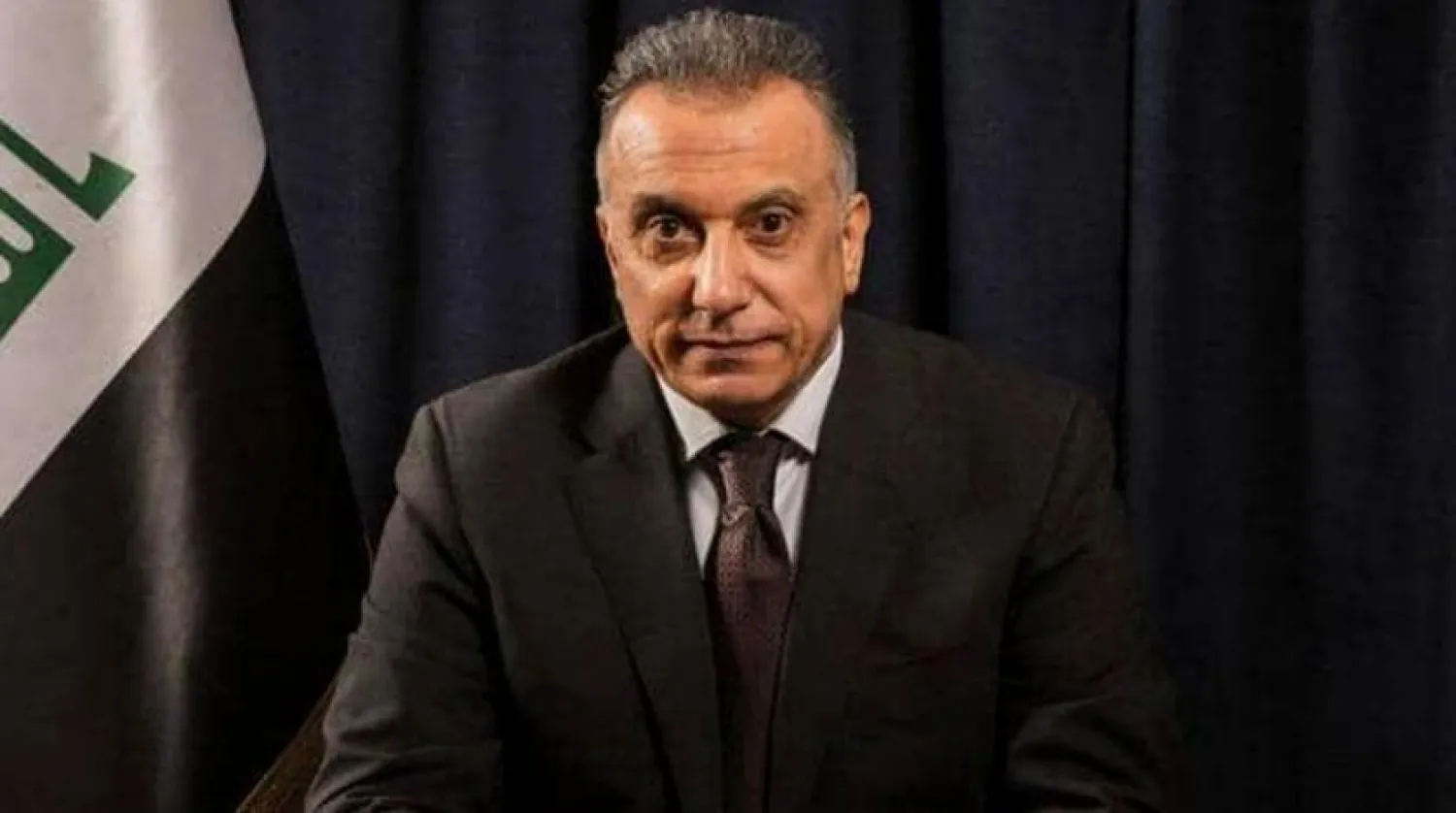
Iraqi Prime Minister Mustafa Al-Kadhimi (Asharq Al-Awsat).
TT

Premier: Iraq Doesn't Need US Combat Troops

Iraqi Prime Minister Mustafa Al-Kadhimi (Asharq Al-Awsat).

Iraq’s prime minister says his country no longer requires American combat troops to fight ISIS group, but a formal time frame for their redeployment will depend on the outcome of talks with US officials this week.

Mustafa al-Kadhimi said Iraq will still ask for US training and military intelligence gathering. His comments came in an exclusive interview with The Associated Press ahead of a planned trip to Washington, where he's slated to meet with President Joe Biden on Monday for a fourth round of strategic talks.

“There is no need for any foreign combat forces on Iraqi soil,” said al-Kadhimi, falling short of announcing a deadline for a US troop departure. Iraq’s security forces and army are capable of defending the country without US-led coalition troops, he said.

But al-Kadhimi said any withdrawal schedule would be based on the needs of Iraqi forces, who have shown themselves capable in the last year of conducting independent anti-ISIS missions.

“The war against ISIS and the readiness of our forces requires a special timetable, and this depends on the negotiations that we will conduct in Washington,” he said.
The US and Iraq agreed in April that the US transition to a train-and-advise mission meant the US combat role would end but they didn't settle on a timetable for completing that transition. In Monday’s meeting at the White House, the two leaders are expected to specify a timeline, possibly by the end of this year.

The US troop presence has stood at about 2,500 since late last year when former President Donald Trump ordered a reduction from 3,000.

The US mission of training and advising Iraqi forces has its most recent origins in former President Barack Obama’s decision in 2014 to send troops back to Iraq. The move was made in response to the ISIS group's takeover of large portions of western and northern Iraq and a collapse of Iraqi security forces that appeared to threaten Baghdad. Obama had fully withdrawn US forces from Iraq in 2011, eight years after the US invasion.

“What we want from the US presence in Iraq is to support our forces in training and developing their efficiency and capabilities, and in security cooperation,” al-Kadhimi said.

The Washington trip comes as the premier’s administration has faced one setback after another, seriously undermining public confidence. Ongoing missile attacks by militia groups have underscored the limits of the state to prevent them and a series of devastating hospital fires amid soaring coronavirus cases have left dozens dead.

Meanwhile, early federal elections, in line with a promise al-Kadhimi made when he assumed office, are less than three months away.

Chief on the agenda in Washington, however, is the future of American-led coalition forces in Iraq.

Iraq declared victory over ISIS in late 2017 after a ruinous and bloody war. The continued presence of American troops has become a polarizing issue among Iraq’s political class since the US-directed drone strike that killed powerful Iranian general Qassim Soleimani and Iraqi militia commander Abu Mahdi al-Muhandis on Iraqi soil last year.

To quell the threat of widespread instability following the targeted killings, the US and Iraq have held at least three rounds of strategic talks centering on Iraq’s military needs in the ongoing fight against ISIS and to formalize a timeline for withdrawal.

Four years since their territorial defeat, ISIS militants are still able to launch attacks in the capital and roam the country’s rugged northern region. Last week, a suicide bomber killed 30 people in a busy Baghdad marketplace. That attack was later claimed by ISIS.

Al-Kadhimi has faced significant pressure from mainly Shiite political parties to announce a timeline for a US troop withdrawal. Ongoing rocket and, more recently, drone attacks targeting the American military presence have also heaped pressure on the government. They are widely believed to be perpetrated by Iran-aligned Iraqi militia groups.

An announcement that combat troops will withdraw might serve to placate Shiite parties but will have little impact on the ground: The coalition’s combat mission ended effectively in November when the Pentagon reduced US troops in the country to 2,500, according to Foreign Minister Fuad Hussein. Shiite parties have said they do not object to trainers or advisors who may remain as part of the coalition.

US and coalition officials have maintained that US troops are no longer accompanying Iraqi forces on ground missions and that coalition assistance is limited to intelligence gathering and surveillance and the deployment of advanced military technologies. Iraqi military officials have stressed they still need this support going forward.

“Iraq has a set of American weapons that need maintenance and training. We will ask the American side to continue to support our forces and develop our capabilities,” al-Kadhimi said.

Al-Kadhimi assumed power as a consensus candidate following months of political jockeying between rival parliamentary blocs. The blocs were firebrand cleric Muqtada al-Sadr’s coalition on one side and paramilitary commander and former minister Hadi al-Ameri’s Fatah group on the other.

The stakes were high: Al-Kadhimi's predecessor had resigned facing pressure from historic mass anti-government protests. At least 600 people were killed as Iraqi forces used live ammunition and tear gas to disperse crowds.

Al-Kadhimi presented himself as a champion of protester demands and set a lofty agenda: He promised to hold early elections, now scheduled for Oct. 10, and to bring to account the killers of activists, including whoever killed prominent commentator Hisham al-Hashimi outside his home last summer.

The arrest of an Interior Ministry employee in the shooting death of al-Hashimi fell short, many said, because it did not reveal which group ordered the killing.

Critics say al-Kadhimi has not gone far enough. This is partly because the very conditions that facilitated his rise to the premiership have also served as his chief limitation in parliament.
Political opposition watered down ambitious economic reforms that targeted Iraq’s bloated public sector when the country faced a disastrous financial crisis after falling oil prices. Without a party backing him in parliament, and with rival parties vying to control ministries and other state institutions, al-Kadhimi’s government has appeared weak.

Repeated standoffs with Iran-backed militia groups following the arrests of militiamen suspected of launching attacks against the US Embassy and US troops have further tarnished the government’s credibility.

Activists whose cries for elections once resonated in the squares of the capital now say they will boycott the October polls, distrustful that the political establishment could ever produce free and fair elections.

A UN monitoring mission has been established in hopes of boosting voter turnout. But protesters have taken to the streets recently and expressed outrage over the rise in killings of prominent activists and journalists. Even al-Kadhimi conceded certain forces were actively seeking to undermine the polls.

“We are in a sensitive situation. We need to calm the political situation until we reach the elections," he said.

Al-Kadhimi has managed to prove his mettle in one arena: That of regional mediator.

Iraq’s friendly relations with Saudi Arabia and Iran have brought both regional foes to the negotiation table for at least two rounds of talks in Baghdad.

“Iraq has succeeded in gaining the trust of these countries, and accordingly, it is working toward the stability of the region.”



Israel Says US Gaza Executive Board Composition Against its Policy

FILE - A displacement camp sheltering Palestinians on a beach amid stormy weather is seen in Gaza City, Jan. 13, 2026. (AP Photo/Jehad Alshrafi, File)
TT

Israel Says US Gaza Executive Board Composition Against its Policy

FILE - A displacement camp sheltering Palestinians on a beach amid stormy weather is seen in Gaza City, Jan. 13, 2026. (AP Photo/Jehad Alshrafi, File)

Prime Minister Benjamin Netanyahu's office said on Saturday that this week's Trump administration announcement on the composition of a Gaza executive board was not coordinated with Israel and ran counter to government policy.

It said Foreign Minister Gideon Saar would raise the issue with US Secretary of State Marco Rubio.

The ⁠statement did not specify what part of the board's composition contradicted Israeli policy. An Israeli government spokesperson declined to comment.

The board, unveiled by the White House on Friday, includes Turkish Foreign Minister Hakan Fidan. Israel ⁠has repeatedly opposed any Turkish role in Gaza.

Other members of the executive board include Sigrid Kaag, the UN special coordinator for the Middle East peace process; an Israeli-Cypriot billionaire; and a minister from the United Arab Emirates.

Washington this week also announced the start of the second phase of President ⁠Donald Trump's plan, announced in September, to end the war in Gaza. This includes creating a transitional technocratic Palestinian administration in the enclave.

The first members of the so-called Board of Peace - to be chaired by Trump and tasked with supervising Gaza's temporary governance - were also named. Members include Rubio, billionaire developer Steve Witkoff and Trump's son-in-law Jared Kushner.


Sisi Says he Values Trump Offer to Mediate Egypt-Ethiopia Dispute on GERD

FILE PHOTO: US President Donald Trump points as he attends a meeting with oil industry executives, at the White House in Washington, D.C., US, January 9, 2026. REUTERS/Evelyn Hockstein/File Photo
TT

Sisi Says he Values Trump Offer to Mediate Egypt-Ethiopia Dispute on GERD

FILE PHOTO: US President Donald Trump points as he attends a meeting with oil industry executives, at the White House in Washington, D.C., US, January 9, 2026. REUTERS/Evelyn Hockstein/File Photo

Egyptian President Abdel Fattah al-Sisi said he valued an offer by US President Donald Trump to mediate ⁠a dispute over Nile River waters between Egypt and Ethiopia.

In a post on ⁠X, Sisi said on Saturday that he addressed Trump's letter by affirming Egypt's position and concerns about the country's water ⁠security in regards to Ethiopia's Grand Ethiopian Renaissance Dam (GERD).

"I am ready to restart US mediation between Egypt and Ethiopia to responsibly resolve the question of 'The Nile Water Sharing' once and for all," Trump wrote to Sisi in the letter that was also posted on Trump’s Truth Social account.

Addis Ababa's September 9 inauguration of GERD has been a source of anger ⁠in Cairo, which is downstream on the Nile.

Ethiopia sees the $5 billion dam on a tributary of the Nile as central to its economic ambitions.

Egypt says the dam violates international treaties and could cause both droughts ⁠and flooding.

Sudan, another ​downstream country, has expressed concern about the regulation and safety of ⁠its own water supplies and dams.

Sudan's army leader Abdel Fattah al-Burhan also welcomed Trump's mediation offer on Saturday.


Kurds Say Sharaa's Decree Falls Short, Syrian Government Forces Enter Deir Hafer

Syrian army convoys enter the Deir Hafer area in the eastern Aleppo countryside, Syria, after the Kurdish-led Syrian Democratic Forces (SDF) announced the handover of the area west of the Euphrates to the Syrian government, 17 January 2026. EPA/AHMAD FALLAHA
TT

Kurds Say Sharaa's Decree Falls Short, Syrian Government Forces Enter Deir Hafer

Syrian army convoys enter the Deir Hafer area in the eastern Aleppo countryside, Syria, after the Kurdish-led Syrian Democratic Forces (SDF) announced the handover of the area west of the Euphrates to the Syrian government, 17 January 2026. EPA/AHMAD FALLAHA

Syria's Kurds on Saturday said a presidential decree recognizing the minority's rights and making Kurdish an official language fell short of their expectations as Syrian government forces entered the outskirts of a northern town.

In a statement, the Kurdish administration in Syria's north and northeast said the decree issued by President Ahmed al-Sharaa on Friday was "a first step, however it does not satisfy the aspirations and hopes of the Syrian people".

It added that "rights are not protected by temporary decrees, but... through permanent constitutions that express the will of the people and all components" of society.

Al-Sharaa’s decree affirmed that Syrian citizens of Kurdish origin are an integral and original part of the Syrian people, and that their cultural and linguistic identity is an inseparable component of Syria’s inclusive national identity.

The decree commits the state to protecting cultural and linguistic diversity and guarantees Kurdish citizens the right to preserve their heritage, arts, and mother tongue within the framework of national sovereignty.

It recognizes Kurdish as a national language and allows it to be taught in public and private schools in areas where Kurds make up a significant proportion of the population.

It also grants Syrian nationality to all residents of Kurdish origin living on Syrian territory, including those previously unregistered, while ensuring full equality in rights and duties.

The decree further designates Nowruz, celebrated annually on March 21, as an official public holiday.

Syrian government forces entered the outskirts of the northern town of Deir Hafer Saturday morning after the command of Kurdish-led fighters said it would evacuate the area in an apparent move to avoid conflict.

This came after deadly clashes erupted earlier this month between government troops and the US-backed and Kurdish-led Syrian Democratic Forces in the city of Aleppo, Syria’s largest.

It ended with the evacuation of Kurdish fighters from three neighborhoods taken over by government forces.

An Associated Press reporter saw on Saturday government tanks, armored personnel carriers and other vehicles, including pickup trucks with heavy machine-guns mounted on top of them, rolling toward the town of Deir Hafer from nearby Hamima after bulldozers removed barriers. There was no SDF presence on the edge of the town.

Meanwhile, the Syrian military said Saturday morning its forces were in full control of Deir Hafer, captured the Jarrah airbase east of the town, and were working on removing all mines and explosives. It added that troops would also move toward the nearby town of Maskana.

On Friday night, after government forces started pounding SDF positions in Deir Hafer, the Kurdish-led fighters’ top commander Mazloum Abdi posted on X that his group would withdraw from contested areas in northern Syria. Abdi said SDF fighters would relocate east of the Euphrates River starting 7 a.m. (0400 gmt) Saturday.

The easing of tension came after US military officials visited Deir Hafer on Friday and held talks with SDF officials in the area.

The United States has good relations with both sides and has urged calm.