Baghdad Invites Neighbors to Regional Summit, Assad Participation Unclear

Iraqi Prime Minister Mustafa Al-Kadhimi. (AFP file photo)
TT

Baghdad Invites Neighbors to Regional Summit, Assad Participation Unclear

Iraqi Prime Minister Mustafa Al-Kadhimi. (AFP file photo)

Baghdad has stepped up its preparations for a key summit for regional leaders it plans on holding by the end of August. Iraqi Prime Minister Mustafa Al-Kadhimi has sent state representatives to deliver formal invitations to attend the conference.

Foreign Minister Fuad Hussein has handed Turkish President Recep Tayyip Erdogan an official invitation to attend the summit.

Last week, Planning Minister Khaled Battal Al-Najm handed a written letter from Kadhimi to the Emir of Kuwait Sheikh Nawaf Al-Ahmad Al-Sabah that included an invitation to attend the conference, according to the Iraqi news agency.

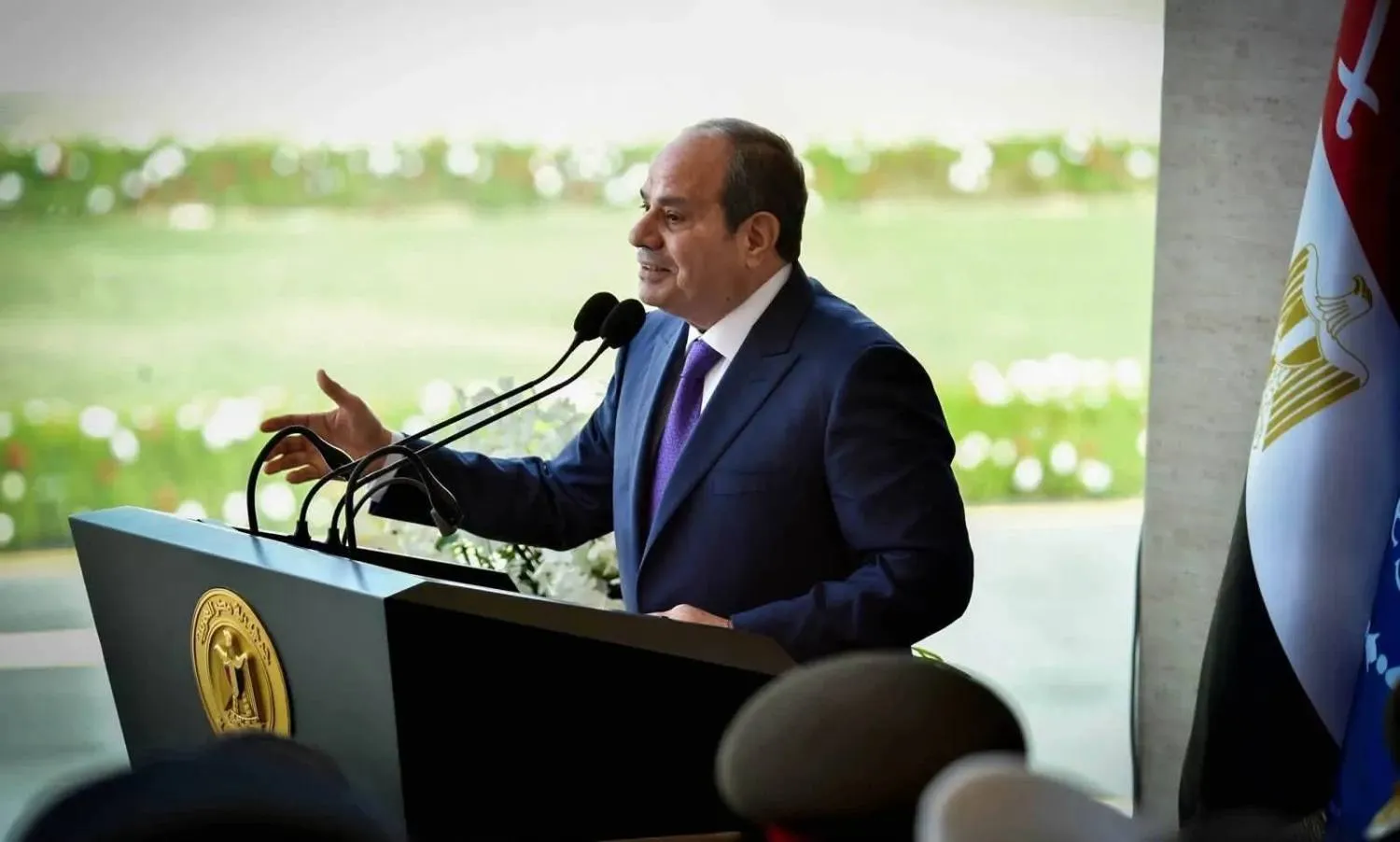
On Saturday, Egyptian President Abdel Fattah al-Sisi received the Iraqi Defense Minister Lieutenant-General Juma Inad Saadoun.

On Sunday, Saudi Arabia’s Foreign Minister Prince Faisal bin Farhan held talks with his Iraqi counterpart in Riyadh.

They reviewed aspects of Saudi-Iraqi relations and ways to support and enhance them to serve the two countries’ interests.

The two sides also discussed strengthening joint bilateral coordination to contribute to regional stability and preserve international peace and security.

Hussein handed Prince Faisal an invitation from Kadhimi for Custodian of the Two Holy Mosques King Salman bin Abdulaziz to attend the summit in Iraq.

“Iraq hopes to expand the scope of the regional summit and has sent out invitations to European countries and the US,” an official Iraqi source told Asharq Al-Awsat, adding that Baghdad is looking forward to the participation of Egypt, the United Arab Emirates and Qatar.

As to whether Syrian President Bashar al-Assad would be invited, the source, who requested anonymity, said they don’t have any information on the matter.

However, they reaffirmed that discussing the situation in Syria is one of the topics slated on the conference’s agenda.

Last June, Baghdad hosted the tripartite summit between Iraq, Egypt and Jordan, within the framework of what Kadhimi called “the New Orient.”


Israeli Minister Calls for Annexation of Southern Lebanon

Israeli soldiers stand next to tanks near the Israeli side of the border with Lebanon, March 23, 2026. REUTERS/Tyrone Siu
TT

Israeli Minister Calls for Annexation of Southern Lebanon

Israeli soldiers stand next to tanks near the Israeli side of the border with Lebanon, March 23, 2026. REUTERS/Tyrone Siu

Israel should extend its border with Lebanon up to the Litani River deep inside the country's south, Israel's finance minister said on Monday as Israeli troops bombed bridges and destroyed homes in the area in an escalating military assault.

The comments by Finance Minister Bezalel Smotrich were the most explicit yet by a senior Israeli official on seizing Lebanese territory in a fight Israel says targets Iran-backed Hezbollah militants.

Lebanon was pulled into the regional war on March 2 when Hezbollah fired missiles into Israel. Since then, Israel has ordered all residents to leave the area south of the Litani River as it pummels the area with air strikes, viewing it as a Hezbollah stronghold.

Lebanese authorities say the Israeli air and ground assault has killed more than 1,000 people, and more than a million have been driven from their homes with Israel having ordered residents to flee swathes of the country.

'THE NEW ISRAELI BORDER MUST BE THE LITANI'

Smotrich told an Israeli radio program that the military campaign in Lebanon "needs to end with a different reality entirely, both with the Hezbollah decision but also with the change of Israel's borders."

"I say here definitively...in every room and in every discussion, too: the new Israeli border must be the Litani," Smotrich said.

Smotrich, leader of a small far-right party in Prime Minister Benjamin Netanyahu's cabinet, often makes comments that go beyond official Israeli policy.

Netanyahu's office did not immediately respond to a request for comment on the remarks. Defenسe Minister Israel Katz hinted earlier this month at plans to capture land, saying Lebanon could face "loss of territory" if it did not disarm Hezbollah.

Smotrich's remarks were deeply resonant in Lebanon, which is trying to emerge from a decades-old cycle of invasions and occupations by its neighbor. Israeli forces have launched repeated assaults on Lebanon since 1978 and occupied the south from 1982-2000.

A Lebanese official told Reuters that Beirut was still counting on foreign powers to put enough pressure on Israel to put an end to the war, through an offer from President Joseph Aoun to hold direct talks.

Smotrich also called for Israel to annex territory it now controls in the Gaza Strip, up to an armistice line with Hamas. A ceasefire signed in October left Israel in control of 53% of Gaza, where it has ordered residents out and bulldozed buildings.

The Israeli military says its troops in Lebanon are carrying out ground maneuvers and targeted raids on Hezbollah militants and weapons stores, aimed at protecting residents in northern Israel from Hezbollah fire.

The Lebanese government has outlawed Hezbollah military activity and said it wants to engage in direct talks with Israel.

ROUTES TO NORTH BEING CUT OFF

Over the weekend, Israel struck a main bridge linking south Lebanon with the rest of the country after ordering its military to destroy all crossings over the Litani River and to step up the demolition of homes near the southern border.

International law generally prohibits militaries from attacking civilian infrastructure, and the United Nations human rights chief has criticized Israel's actions in Lebanon, particularly its use of widespread evacuation orders.

Israeli strikes hit two more crossings on the Litani River on Monday -- a road running near a main bridge hit on Sunday and another small bridge on another section of the river.

Hanna Amil, the mayor of Christian border town Rmeish whose residents have refused to leave their homes, told Reuters that it was getting increasingly difficult to move around.

"Once or twice a week, a convoy from the Lebanese army accompanies us as we try to get basic goods from nearby areas," he said.

"Already, we have no state electricity, no water and we have diesel shortages. If all the routes to the north get cut off, who knows what the future could hold for us," Amil said.


Israeli Airstrike Destroys Bridge on Litani River in South Lebanon

Smoke and flames rise after an Israeli strike targeting the Qasmiyeh bridge near Tyre, in southern Lebanon, 22 March 2026. (EPA)
TT

Israeli Airstrike Destroys Bridge on Litani River in South Lebanon

Smoke and flames rise after an Israeli strike targeting the Qasmiyeh bridge near Tyre, in southern Lebanon, 22 March 2026. (EPA)

An Israeli airstrike destroyed on Monday another bridge on the Litai River in southern Lebanon.

The strike on the bridge in the southern village of Qaaqaaiyet al-Jisr cut a main link between the southern city of Nabatieh and al-Hujair valley region farther south.

The state-run National News Agency gave no further details.

On Sunday, Israel struck the Qasmiyeh bridge near the southern port city of Tyre.

Lebanese President Joseph Aoun called Israel’s new targeting of bridges in the south “a prelude to a ground invasion.”

The Israeli military announced Sunday it was expanding its ground campaign against Hezbollah in Lebanon, warning of a lengthy operation, after Beirut condemned what it called Israel's flagrant violations of Lebanese sovereignty.

Israeli forces were ordered earlier Sunday to destroy bridges they said were used by the Iran-backed group Hezbollah to cross the Litani River.

"The operation against the Hezbollah terrorist organization has only begun... This is a prolonged operation," Lieutenant General Eyal Zamir said in a statement.

"We are now preparing to advance the targeted ground operations and strikes according to an organized plan," he added.

In a separate statement Sunday, military spokesman Brigadier General Effie Defrin said the expansion of the ground operation would begin within the coming week.

Lebanon was pulled into the Middle East war when Hezbollah began firing rockets into Israel on March 2 to avenge the killing of Iran's supreme leader Ali Khamenei in an Israeli-US strike.

Lebanon's health ministry said four people were killed on Sunday in two strikes in the south, while authorities have reported 1,029 dead in three weeks of conflict and more than one million displaced.

Israeli Defense Minister Israel Katz said he and Israeli Prime Minister Benjamin Netanyahu had instructed the military "to immediately destroy all the bridges over the Litani River that are used for terrorist activity, in order to prevent Hezbollah terrorists and weapons from moving south".

The Litani River runs around 30 kilometers (20 miles) north of the Israeli border.

Earlier this week, Israel attacked two bridges spanning the Litani, also alleging they were being used by Hezbollah.

Katz said the military was also instructed to "accelerate the demolition of Lebanese houses in the contact villages in order to thwart threats to Israeli communities".


First Israeli Civilian Killed in Lebanon Border War Was Hit by Israeli Fire

Smoke rises after an Israeli strike, following an escalation between Hezbollah and Israel amid the US-Israeli conflict with Iran, as seen from Marjayoun, Lebanon, March 22, 2026. REUTERS/Karamallah Daher
TT

First Israeli Civilian Killed in Lebanon Border War Was Hit by Israeli Fire

Smoke rises after an Israeli strike, following an escalation between Hezbollah and Israel amid the US-Israeli conflict with Iran, as seen from Marjayoun, Lebanon, March 22, 2026. REUTERS/Karamallah Daher

Israel said on Monday its own forces had misfired artillery that killed an Israeli farmer near the Lebanese frontier, the first Israeli civilian killed in a border conflict being waged in parallel with the war in Iran.

Ofer Moskovitz, 60, an avocado farmer in the town of Misgav Am, had spoken with Reuters just last week and said he was worried about the fighting at the border.

In a ⁠statement, Major General ⁠Rafi Milo, who heads the military's northern command, said: "Moskovitz was killed by our own forces’ fire during an operation whose entire purpose was to protect them."

The military had initially blamed cross-border fire from Lebanon when it first reported the incident on Sunday.

Israel has ⁠launched a major ground assault and air campaign into Lebanon to root out Hezbollah, a powerful Iran-backed militia, which fired into Israel in support of Tehran two days after the start of the Israeli-US air attacks on Iran.

Lebanese authorities say more than a thousand people have been killed and more than a million driven from their homes in Lebanon. The death of Moskovitz was the first reported in Israel. The ⁠military ⁠says two Israeli soldiers have been killed in combat.

"Every five minutes you can hear the bombs," Moskovitz told Reuters last week.

The military's statement said troops had opened fire to support soldiers operating in southern Lebanon, but "severe issues and operational errors" had taken place.

"The artillery fire was carried out at an incorrect angle and did not follow required protocols," it said. "As a result, five artillery shells were fired at the Misgav Am ridge instead of toward the enemy target."