


Iran Says Hopes for ‘Constructive’ Visit by IAEA Chief

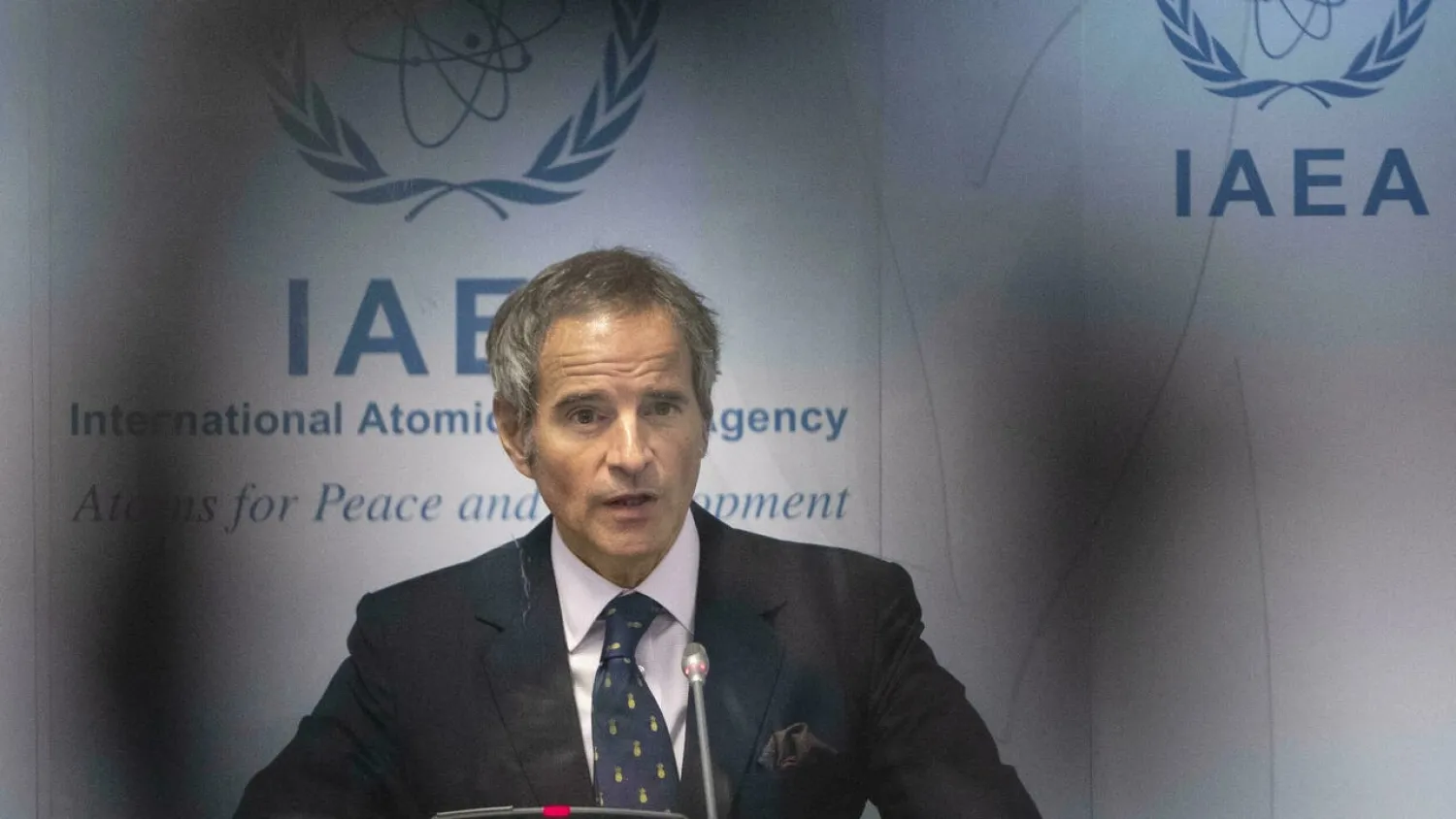
Director General of the International Atomic Energy Agency (IAEA) Rafael Grossi, pictured at agency's headquarters in Vienna on September 13, 2021. (AFP)
TT

Iran Says Hopes for ‘Constructive’ Visit by IAEA Chief

Director General of the International Atomic Energy Agency (IAEA) Rafael Grossi, pictured at agency's headquarters in Vienna on September 13, 2021. (AFP)

Iran said it hoped a visit by the head of the UN's atomic watchdog that started Monday would be "constructive", a week ahead of the resumption of talks seeking to revive the 2015 nuclear deal.

Rafael Grossi, chief of the International Atomic Energy Agency (IAEA), was greeted on arrival by the spokesman of the Atomic Energy Organization of Iran (AEOI), Behrouz Kamalvandi, state news agency IRNA reported.

He is expected to meet on Tuesday with Foreign Minister Hossein Amir-Abdollahian and AEOI head Mohammad Eslami, who is also one of Iran's vice presidents.

"We hope that Rafael Grossi's visit will be as constructive as the previous ones," foreign ministry spokesman Saeed Khatibzadeh told reporters.

"We have always advised the IAEA to stay on the path of technical cooperation, and to not let certain countries pursue their political orientations on behalf of the IAEA."

On Friday, the IAEA said Tehran had again increased its stockpile of highly enriched uranium, many times in excess of the limit laid down in the 2015 agreement.

Grossi's visit comes as Iran readies for talks with world powers in Vienna on November 29 with the aim of saving Tehran's 2015 deal with world powers, that promised it sanctions relief in return for curbs on its nuclear program.

On November 12, Grossi had described as "astonishing" his lack of contact with the new Iranian government of President Ebrahim Raisi.

Days later, Tehran responded by announcing that it had invited the watchdog chief to visit.

"We will leave for Vienna with a full team and a serious will to lift the sanctions," Khatibzadeh said Monday.

"The other parties should also try to come to Vienna to reach a practical and comprehensive agreement."

'Psychological atmosphere'

The landmark deal was torpedoed in 2018 by then US president Donald Trump's unilateral decision to withdraw Washington from it and impose a punishing sanctions regime.

Iran has since stepped away from many of its commitments, but the administration of US President Joe Biden has advocated a return to diplomacy to save the agreement.

The remaining parties to the deal -- Britain, China, France, Germany and Russia -- will join the talks while the United States will participate indirectly.

Grossi was last in Tehran on September 12, where he clinched a deal on access to monitoring equipment at Iran's nuclear facilities.

On Saturday, US Defense Secretary Lloyd Austin warned Washington was capable of deploying "overwhelming force", and that all options would be open if diplomacy fails to halt Iran's nuclear program.

Tehran says its nuclear program is for peaceful purposes.

Asked whether Iran feared a US military intervention if negotiations fail, Khatibzadeh pointed to the US military pullout in Afghanistan in August.

"We have seen all their options in a country like Afghanistan and they have seen the outcome of those options; do not believe what they say," he said.

Robert Malley, the US envoy for Iran, also warned on Friday that Tehran was approaching the point of no return and that "time is short" for reviving a nuclear deal.

But Khatibzadeh accused the US of trying to "sell a false narrative to the international community in order to create a psychological atmosphere in the run-up to the Vienna talks", adding that it "will not help them at all".



Ukraine’s New Defense Minister Reveals Scale of Desertions as Millions Avoid the Draft

Ukraine's newly appointed Defense Minister Mykhailo Fedorov attends a parliamentary session in Kyiv, Ukraine, 14 January 2026. (EPA)
TT

Ukraine’s New Defense Minister Reveals Scale of Desertions as Millions Avoid the Draft

Ukraine's newly appointed Defense Minister Mykhailo Fedorov attends a parliamentary session in Kyiv, Ukraine, 14 January 2026. (EPA)

Wide-scale desertions and 2 million draft-dodgers are among a raft of challenges facing Ukraine's military as Russia presses on with its invasion of its neighbor after almost four years of fighting, the new defense minister said Wednesday.

Mykhailo Fedorov told Ukraine's parliament that other problems facing Ukraine’s armed forces include excessive bureaucracy, a Soviet-style approach to management, and disruptions in the supply of equipment to troops along the about 1,000-kilometer (600-mile) front line.

“We cannot fight a war with new technologies but an old organizational structure,” Fedorov said.

He said the military had faced some 200,000 troop desertions and draft-dodging by around 2 million people.

President Volodymyr Zelenskyy appointed 34-year-old Fedorov at the start of the year. The former head of Ukraine’s digital transformation policies is credited with spearheading the army's drone technology and introducing several successful e-government platforms.

His appointment was part of a broad government reshuffle that the Ukrainian leader said aimed to sharpen the focus on security, defense development and diplomacy amid a new US-led push to find a peace settlement.

Fedorov said the defense ministry is facing a shortfall of 300 billion hryvnia ($6.9 billion) in funding needs.

The European Union will dedicate most of a massive new loan program to help fund Ukraine’s military and economy over the next two years, European Commission President Ursula von der Leyen said Wednesday.

Fedorov said Ukraine’s defense sector has expanded significantly since Russia’s full-scale invasion in February 2022. At the start of the war, he said, the country had seven private drone companies and two firms developing electronic warfare systems. Today, he said, there are nearly 500 drone manufacturers and about 200 electronic warfare companies in Ukraine.

He added that some sectors have emerged from scratch, including private missile producers, which now number about 20, and more than 100 companies manufacturing ground-based robotic systems.


France Explores Sending Eutelsat Terminals to Iran Amid Internet Blackout

 Protesters hold up placards with pictures of victims as they demonstrate in support of anti-government protests in Iran, outside Downing Street, in London, Wednesday, Jan. 14, 2026. (AP)
Protesters hold up placards with pictures of victims as they demonstrate in support of anti-government protests in Iran, outside Downing Street, in London, Wednesday, Jan. 14, 2026. (AP)
TT

France Explores Sending Eutelsat Terminals to Iran Amid Internet Blackout

 Protesters hold up placards with pictures of victims as they demonstrate in support of anti-government protests in Iran, outside Downing Street, in London, Wednesday, Jan. 14, 2026. (AP)
Protesters hold up placards with pictures of victims as they demonstrate in support of anti-government protests in Iran, outside Downing Street, in London, Wednesday, Jan. 14, 2026. (AP)

France is looking into sending Eutelsat satellite terminals to Iran to help citizens after Iranian authorities imposed a blackout of internet services in a bid to quell the country's most violent domestic unrest in decades.

"We are exploring all options, and the one you have mentioned is among them," French Foreign Minister Jean-Noel Barrot said on Wednesday in ‌the lower house ‌after a lawmaker asked whether France ‌would ⁠send Eutelsat ‌gear to Iran.

Backed by the French and British governments, Eutelsat owns OneWeb, the only low Earth orbit constellation, or group of satellites, besides Elon Musk's Starlink.

The satellites are used to beam internet service from space, providing broadband connectivity to businesses, governments and consumers in underserved areas.

Iranian authorities in recent days have ⁠launched a deadly crackdown that has reportedly killed thousands during protests against clerical rule, ‌and imposed a near-complete shutdown of internet ‍service.

Still, some Iranians have ‍managed to connect to Starlink satellite internet service, three people ‍inside the country said.

Even Starlink service appears to be reduced, Alp Toker, founder of internet monitoring group NetBlocks said earlier this week.

Eutelsat declined to comment when asked by Reuters about Barrot's remarks and its activities in Iran.

Starlink’s more than 9,000 satellites allow higher speeds than Eutelsat's fleet of over 600, ⁠and its terminals connecting users to the network are cheaper and easier to install.

Eutelsat also provides internet access to Ukraine's military, which has relied on Starlink to maintain battlefield connectivity throughout the war with Russia.

Independent satellite communications adviser Carlos Placido said OneWeb terminals are bulkier than Starlink’s and easier to jam.

"The sheer scale of the Starlink constellation makes jamming more challenging, though certainly not impossible," Placido said. "With OneWeb it is much easier to predict which satellite will become online over a given ‌location at a given time."


China Says It Opposes Outside Interference in Iran’s Internal Affairs

Iranians walk next to a billboard reading "Iran is our Homeland" at Enqelab Square in Tehran, Iran, 13 January 2026. (EPA)
TT

China Says It Opposes Outside Interference in Iran’s Internal Affairs

Iranians walk next to a billboard reading "Iran is our Homeland" at Enqelab Square in Tehran, Iran, 13 January 2026. (EPA)

China opposes any outside interference in Iran's ​internal affairs, the Chinese foreign ministry said on Wednesday, after US President Donald Trump warned that Washington ‌would take "very ‌strong action" ‌against Tehran.

China ⁠does ​not ‌condone the use or the threat of force in international relations, Mao Ning, spokesperson at ⁠the Chinese foreign ministry, said ‌at a ‍regular ‍news conference when ‍asked about China's position following Trump's comments.

Trump told CBS News in ​an interview that the United States would take "very ⁠strong action" if Iran starts hanging protesters.

Trump also urged protesters to keep protesting and said that help was on the way.