


Iran Jails Anew French Academic

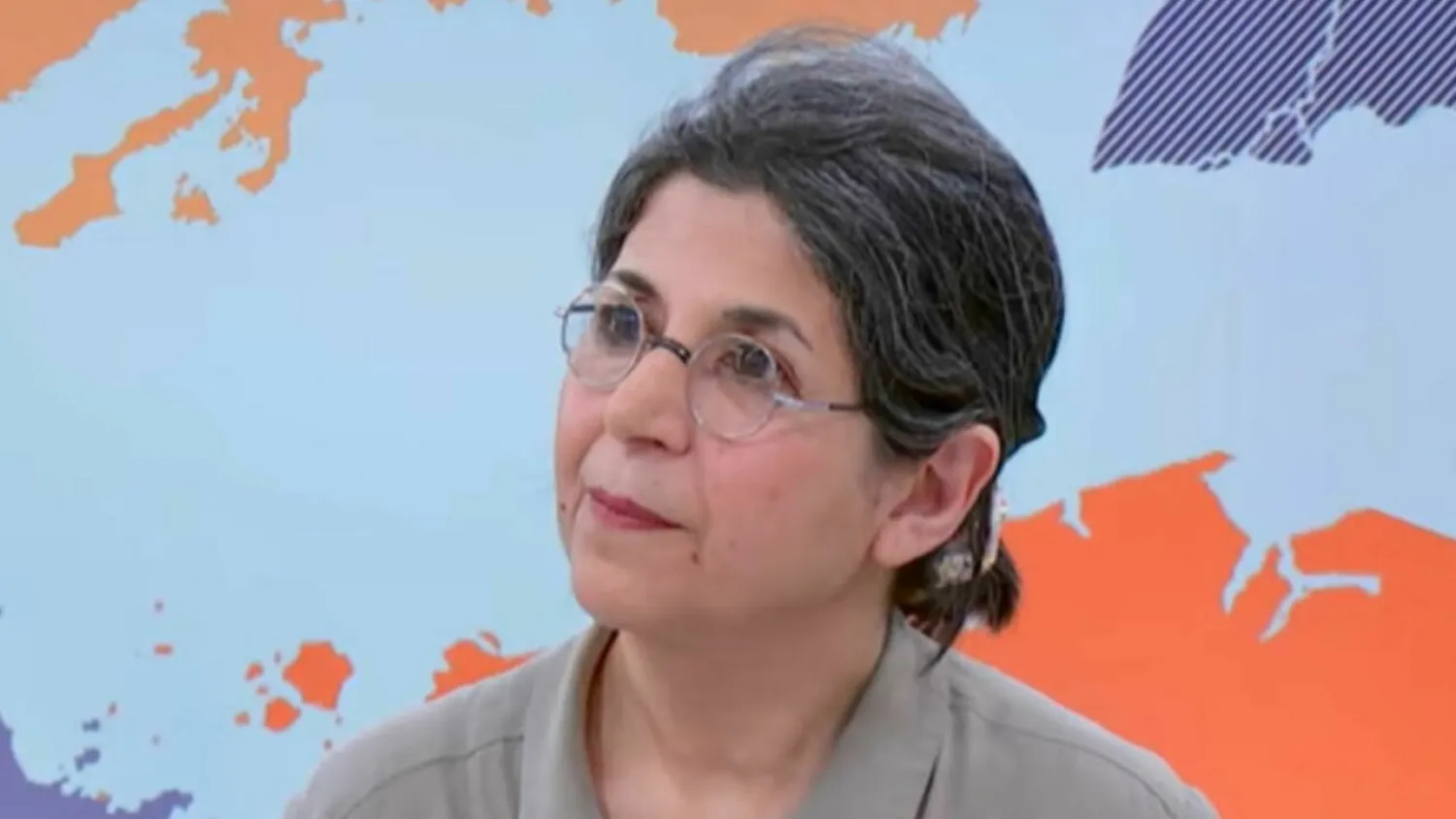
Fariba Adelkhah during a FRANCE 24 program in partnership with France Info for the 40th anniversary of the Iranian Revolution, in February 2019. Screengrab FRANCE 24
TT

Iran Jails Anew French Academic

Fariba Adelkhah during a FRANCE 24 program in partnership with France Info for the 40th anniversary of the Iranian Revolution, in February 2019. Screengrab FRANCE 24

French-Iranian academic Fariba Adelkhah was jailed anew for breaking house arrest restrictions, an official from Iran's judiciary authority said on Sunday.

Her Paris-based support group had on Wednesday announced "with great shock and indignation" her reincarceration, which comes during sensitive talks in Vienna aimed at reviving a 2015 nuclear deal which offered Tehran sanctions relief in exchange for curbs on its nuclear program.

"Ms Adelkhah... has unfortunately knowingly violated the limits of house arrest dozens of times," Kazem Gharibabadi, deputy head of the judiciary, was quoted as saying by Mizan Online, the authority's news agency.

"She has insisted on doing so despite repeated warnings from judicial authorities. So now, like any other prisoner who has violated the same rules... she has been returned to prison," AFP quoted him as saying.

Adelkhah, 62, an expert on Iran and Shiite Islam at France's prestigious Sciences Po university, was arrested on June 5, 2019, at Tehran airport.

She was sentenced in May 2020 to five years' imprisonment for conspiring against national security, accusations her supporters have always denounced as absurd. In October of that year, she was placed under house arrest with an electronic bracelet.

The French foreign ministry said the reimprisonment "can only have negative consequences on the relationship between France and Iran and reduce confidence between our two countries."

French President Emmanuel Macron on Thursday called the decision "entirely arbitrary", adding that "the whole of France" was "mobilized for her release".

Gharibabadi insisted that Adelkhah is "a citizen of the Islamic republic of Iran", adding that Tehran "firmly condemns the intervention of other countries in (its) judicial process."

Iran does not recognize dual nationality so denies French consular staff access to Adelkhah.

"It is very unfortunate that the French authorities... by issuing hasty statements, make baseless and unfounded remarks that are definitely unacceptable," Gharibabadi said.

She is one of at least a dozen Western nationals believed to be held in Iran who rights groups abroad say are being detained for political reasons to extract concessions from the West.



Erdogan Warns Black Sea Should Not Be 'Area of Confrontation' after Strikes

Turkish President Recep Erdogan addresses the media after the conclusion on the G20 Summit held at the Nasrec Expo Center in Johannesburg, South Africa, 23 November 2025. EPA/HALDEN KROG
TT

Erdogan Warns Black Sea Should Not Be 'Area of Confrontation' after Strikes

Turkish President Recep Erdogan addresses the media after the conclusion on the G20 Summit held at the Nasrec Expo Center in Johannesburg, South Africa, 23 November 2025. EPA/HALDEN KROG

Turkish President Recep Tayyip Erdogan on Saturday warned that the Black Sea should not turn into an "area of confrontation" between Russia and Ukraine, after several strikes in recent weeks.

"The Black Sea should not be seen as an area of confrontation. This would not benefit Russia or Ukraine. Everyone needs safe navigation in the Black Sea," he was quoted as telling reporters aboard his plane, according to the official Anadolu news agency.


Indonesia Flood Death Toll Passes 1,000

The deadly torrential rains are one of the worst recent disasters to strike Sumatra. (AFP)
TT

Indonesia Flood Death Toll Passes 1,000

The deadly torrential rains are one of the worst recent disasters to strike Sumatra. (AFP)

Devastating floods and landslides have killed 1,003 people in Indonesia, rescuers said Saturday as the Southeast Asian nation grapples with relief efforts.

The disaster, which has hit the northwestern island of Sumatra over the past fortnight, has also injured more than 5,400, the National Disaster Mitigation Agency said in its latest toll.

The deadly torrential rains are one of the worst recent disasters to strike Sumatra, where a tsunami wreaked havoc in 2004 in Aceh province, which lies at the northern tip of the island.

The final toll is expected to rise, with the disaster agency reporting 218 people are still missing.

With vast tracts of territory hit, 1.2 million residents have been forced to take refuge in temporary shelters.

Frustration has grown among flood victims, who have complained about the pace of relief efforts.

President Prabowo Subianto said Saturday the situation has improved, with several areas which had been cut off now accessible.

"Here and there, due to natural and physical conditions, there have been slight delays, but I checked all the evacuation sites: their conditions are good, services for them are adequate, and food supplies are sufficient," Prabowo said after visiting Langkat in North Sumatra province.

Costs to rebuild after the disaster could reach 51.82 trillion rupiah ($3.1 billion) and the Indonesian government has so far shrugged off suggestions that it call for international assistance.


Moscow, Tehran ‘Working Closely’ on Nuclear Program

Russian President Vladimir Putin and Iranian President Masoud Pezeshkian on the sidelines of the Peace Summit in Ashgabat, Turkmenistan, on Friday (Tasnim). 
TT

Moscow, Tehran ‘Working Closely’ on Nuclear Program

Russian President Vladimir Putin and Iranian President Masoud Pezeshkian on the sidelines of the Peace Summit in Ashgabat, Turkmenistan, on Friday (Tasnim). 

Russian President Vladimir Putin said on Friday that relations between Moscow and Tehran are “developing very positively,” stressing that the two countries are working in close coordination at the United Nations on Iran’s nuclear program.

He made the remarks during talks with Iranian President Masoud Pezeshkian on the sidelines of the International Peace and Trust Summit in Ashgabat.

According to Russian media, Putin said Russia is cooperating with Iran at the Bushehr nuclear power plant and on major infrastructure projects, including the North–South Transport Corridor.

He added that the two sides are also exploring cooperation in the gas and electricity sectors.

Pezeshkian, quoted by Iranian and Russian media, reaffirmed Tehran’s commitment to implementing the comprehensive strategic partnership agreement with Moscow.

He said Iran is “determined to activate the agreement” and expects Russia to accelerate implementation of joint understandings, particularly in energy, transport and strategic transit corridors.

The Iranian president said Iran would complete its share of the groundwork for the North–South Corridor by the end of the year, noting growing economic and trade cooperation between the two countries.

He also called for strengthening multilateral partnerships within frameworks such as the Shanghai Cooperation Organization and BRICS to counter what he described as “unilateralism.”

Russia and Iran aim to expand economic ties through projects such as the International North–South Transport Corridor, a multimodal route linking northern and southern Asia via sea, rail and road networks.

The corridor is intended to speed up cargo transport between Russia and India through Iran and other countries while reducing costs compared with traditional routes. The project is seen as part of Moscow’s efforts to deepen trade links with Central Asia and Europe and to lessen reliance on longer maritime routes.

Putin said bilateral trade between Russia and Iran increased by 13 percent last year and by 8 percent in the first nine months of the current year, underscoring continued cooperation in energy and infrastructure. He added that coordination between Moscow and Tehran on international issues remains “close and ongoing.”

On the sidelines of the summit, Pezeshkian also met Pakistani Prime Minister Shehbaz Sharif, with both sides agreeing on the need to accelerate implementation of bilateral agreements and enhance cooperation in transport, transit, energy and border infrastructure, according to Iran’s Mehr News Agency.